












Drainage in commercial kitchens: no room for compromise
Text and images Kessel
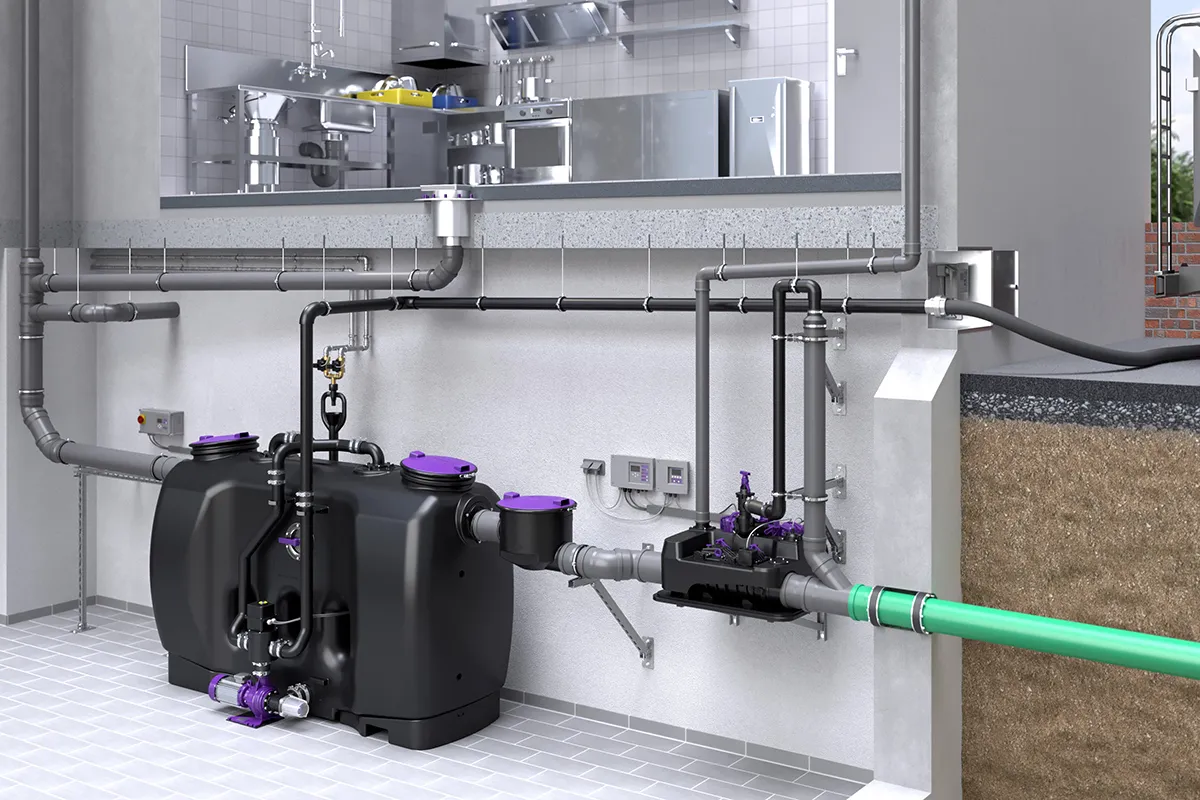
Drainage in commercial kitchens is complex and critical to food safety. Compromise is not an option: technical errors or defects in workmanship can quickly lead to hygiene risks, operational disruption and high costs. The answer lies in project-specific, optimally coordinated system solutions that also take the kitchen’s operational requirements into account. And you’ll find them at KESSEL.
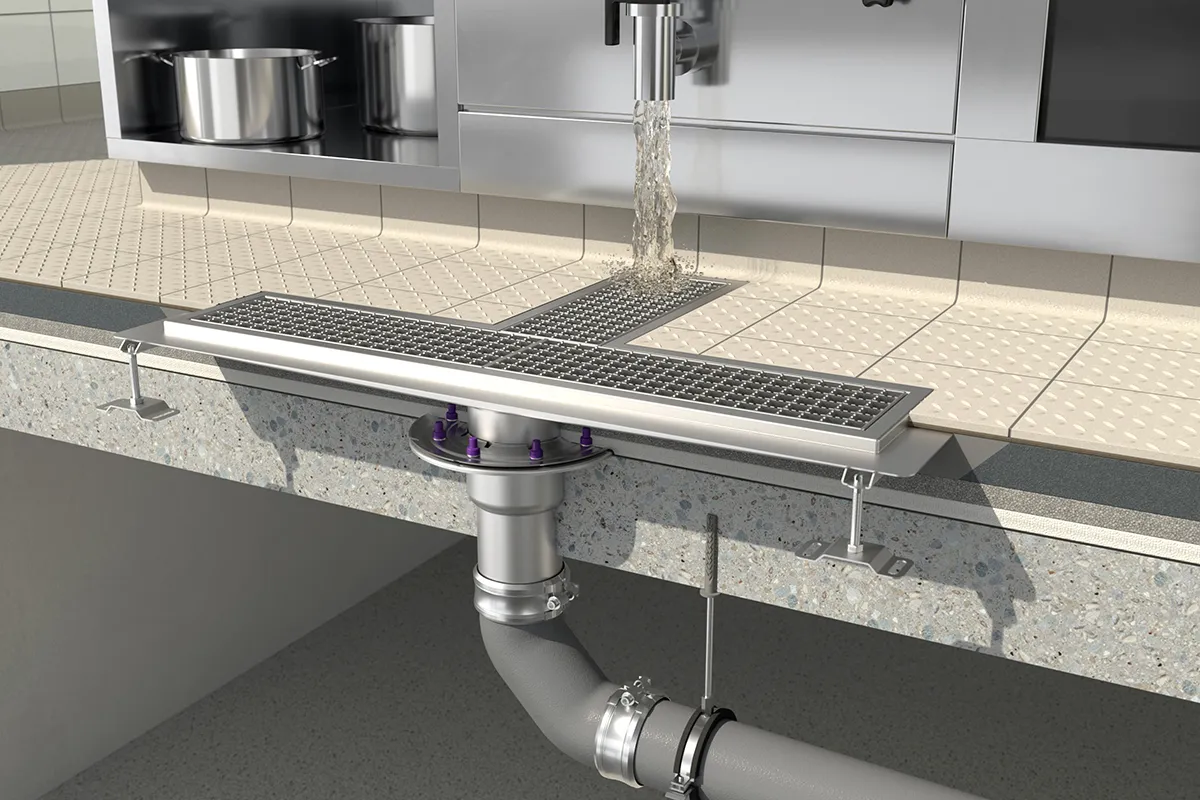
One of the few manufacturers to offer a complete product and service portfolio for drainage in commercial kitchens from a single source, KESSEL covers everything from drainage technology, grease separators and food waste disposal to pumping stations and backwater protection. Its system solutions fit together safely and reliably, can be individually adapted and are complemented by digital planning tools, maintenance and service options. This holistic approach brings clear benefits. Commercial kitchens often require bespoke solutions. Restricted installation space, complex floor structures and specific requirements for fire safety, cleaning and maintenance call for a high degree of flexibility and expertise. KESSEL has its own stainless steel centre of expertise and a dedicated team for individual solutions. It draws on experience gained from more than 20,000 project-specific variants and bespoke solutions.
Drainage technology: stainless steel, built to last
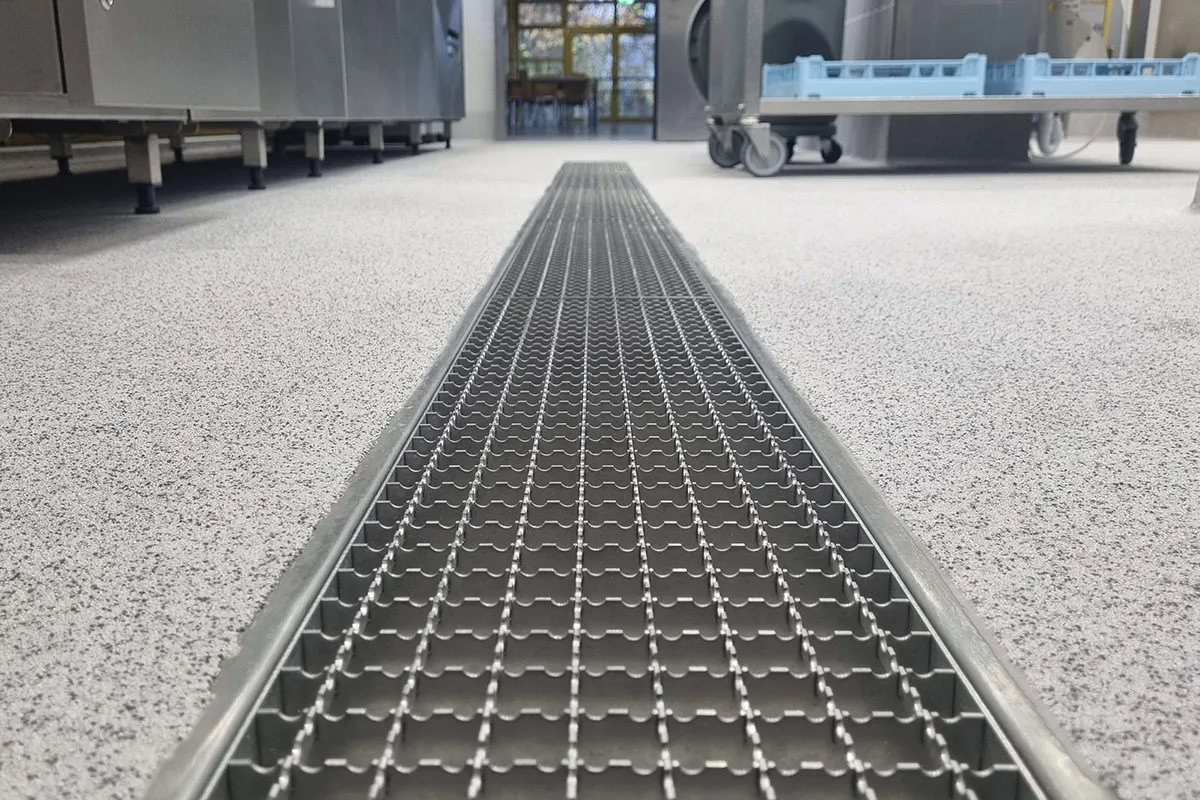
Stainless steel channels and floor drains are the standard in hygiene-sensitive areas. These solutions are mechanically robust, corrosion-resistant and unaffected by wide temperature fluctuations, chemicals and acids. The material is not the only decisive factor: so too are the expert integration of drainage technology into the floor structure and the reliable connection of all components. This is often a challenge, particularly in renovation projects. Poor workmanship can lead to leaks that put the building structure at risk. As a supplier of a complete range of stainless steel drainage technology, KESSEL offers various flange options for different floor coverings and, in collaboration with system partner Codex, suitable sealing materials carrying the Kiwa quality mark.
Grease separators and backwater protection
In commercial kitchens, grease separators must comply with DIN EN 1825 and DIN 4040-100, because effective wastewater treatment at source helps prevent problems further down the line. Grease separators often reduce the level of lipophilic substances in wastewater to the required limits. Where stricter limits apply, KESSEL supplements its built-in grease separators with biological post-treatment using BIFENA or the chemical-physical DOS solution. Another critical issue in commercial kitchens is installing grease separators with backwater protection. Here too, KESSEL offers modern system solutions with a hybrid pumping station. In normal operation, wastewater flows to the sewer by gravity. Only when backwater occurs is it pumped away via the backwater loop. This saves up to approximately 70% energy compared with conventional systems. Hybrid systems also increase operational reliability, as wastewater can continue to drain even during a power cut. This innovative technology has been approved by the German Institute for Building Technology.
Waste disposal: compact, hygienic, cost-effective
Food waste is a classic hygiene risk. In conventional collection bins, it causes not only odours, pests and a great deal of work, but also additional cooling costs, especially in summer. Disposal costs are rising too. Food waste collection systems are therefore becoming increasingly attractive: the feed unit shreds waste at the point where it is produced. Even coarse materials such as bones are processed without difficulty and automatically conveyed to an airtight PE tank, without odours or the need for additional cooling. Other benefits include lower transport, cleaning and disposal costs for waste containers, as grease separators and collection tanks are often emptied at the same time. In addition, a compact feed unit fits into standard kitchens, can be installed retrospectively with ease and quickly pays for itself.
Planning, commissioning and maintenance: service from a single source
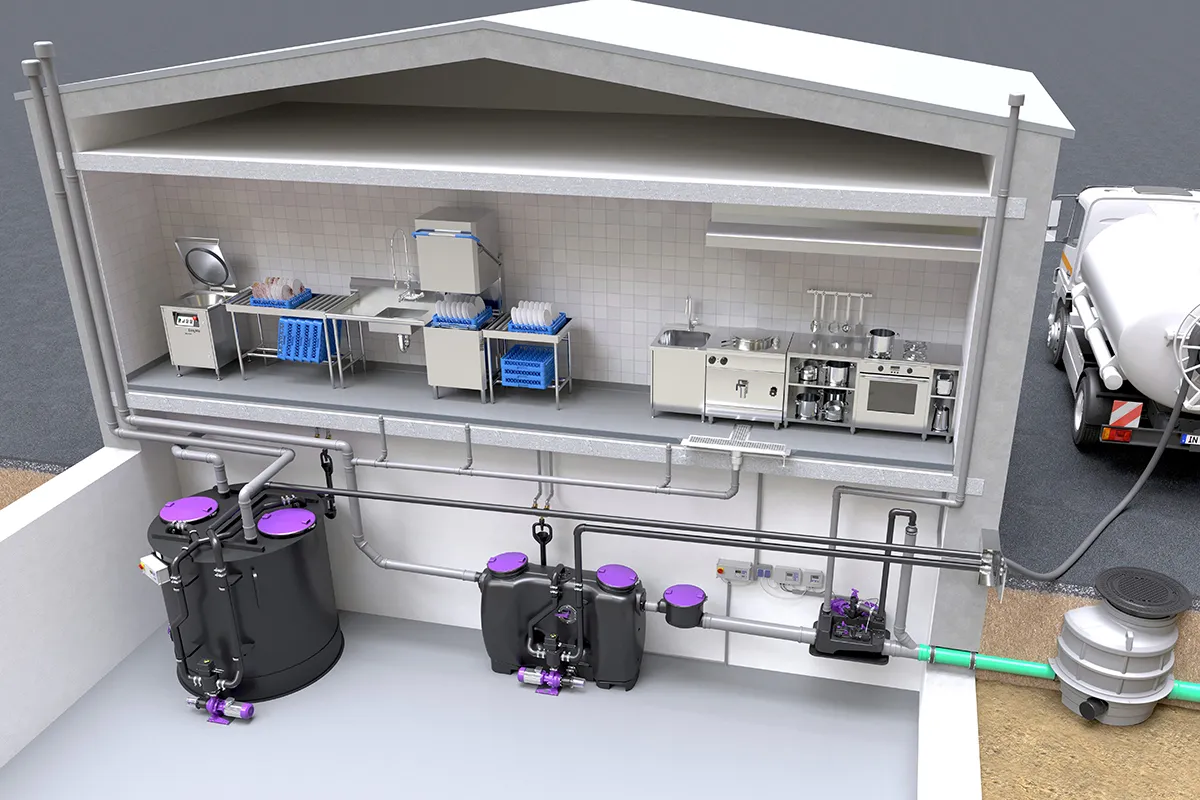
Complex requirements, short construction times and a lack of coordination between planning and installation are the most common causes of damage, operational disruption and additional costs. KESSEL’s SmartSelect planning tool helps you select and design pumping stations, grease separators, drains and backwater protection for your commercial kitchen. The free online assistant guides you intuitively through the configuration process and provides specific design data, product recommendations and other services based on project-specific information, simply, quickly and in accordance with standards. What’s more, the drainage specialist supports you through every project phase, from advice, planning and installation to commissioning and legally required maintenance. This helps ensure that product solutions for components vital to operations, such as grease separators and pumping stations, form a complete system that is reliably safe over the long term.
Conclusion
Commercial kitchens must meet the highest standards of hygiene, technology and safety. High-performance, reliable drainage solutions installed by skilled professionals are essential. Coordinated system components, project-specific advice and ongoing service from a single source are decisive in preventing drainage problems in kitchens or resolving them quickly, ensuring maximum safety and efficiency. Because in a commercial kitchen, there is no room for compromise.
Question about this story? Ask your question
Keep following this
Get an email when a new story is published. No account needed.
- ThemeFood safety from design to audit
- SubjectFood safety







