












How sorting technology helps ensure food safety and profitability
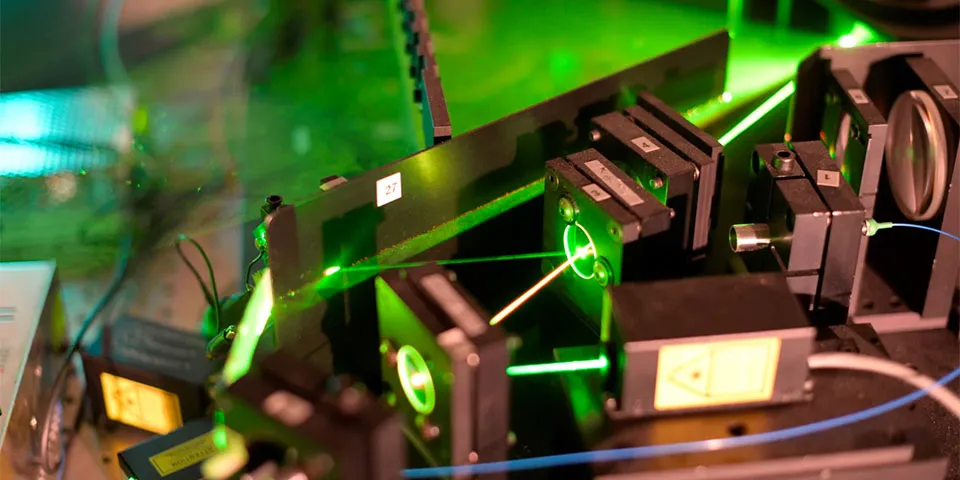
Food companies are increasingly turning to automated sorting machines to remove contaminants from food streams.
Where manual inspection can fall prey to inconsistency or subjectivity, sorting machines use cameras and/or lasers to inspect products with the same efficient eye every time. They also help reduce labour costs, improve operational processes and even boost sales. And that is necessary, as more and more customers are imposing zero tolerance for the presence of contaminants in products.
To optimise the differentiation between ‘good’ and ‘bad’ products, it is important to identify the right wavelengths.
Sorting machines can use different techniques, such as cameras or lasers, or a combination of the two, to inspect products from top to bottom. They can monitor various parameters: colour, size, shape and even certain structural physical properties, such as chlorophyll content. The product being inspected will determine the most suitable sorting machine configuration. However, some basics apply to every application. Products are best fed to the sensor in a single layer on the conveyor belt. This is usually done mechanically and can also carry out an initial sort by size. The sensor takes measurements and sends the captured data to an image processing system, which then controls a mechanical or air-blast system to remove detected defects from the conveyor belt. Typical applications can handle up to 25 m³ tonnes of product per hour.
Sorting technology has moved from being a competitive advantage to becoming a crucial part of food producers’ operations.
IDENTIFYING THE RIGHT WAVELENGTHS
To optimise the differentiation between ‘good’ and ‘bad’ products, it is important to identify the right wavelengths. They give an object its own signature, making it easy to detect. Cameras use different light spectra, both visible and invisible (red, green, blue, infrared or ultraviolet), to detect contaminants and defects based on colour, size and shape. Lasers, by contrast, are mainly used to examine the structural properties of a material. They can reveal contaminants and certain product defects.
What they can do that cameras cannot is detect the chlorophyll content of each product in a bulk stream. Tests will show which wavelength, or combination of wavelengths, is best for your product. Modern detection systems now offer a huge range of capabilities. They can identify millions of subtle colour variations, as well as pick out defects and contaminants measuring 1 mm or less. This gives food producers greater control over optimum product quality.
This identifies potatoes with an abnormal chemical structure and an increased risk of acrylamide formation.
MORE THAN JUST FOOD SAFETY
Depending on the application, it may be necessary to illuminate products from both sides to achieve the desired results. It is not just about identifying specific defects. Take peaches, for example. Sorting machines can detect damage caused by insects, disease or mould, as well as products that are overripe or underripe. They can also ensure that products of exactly the same colour end up in a jar. This means producers need not contend with the customer’s mistaken perception that the more yellow pieces are not ripe, leading them to leave the jar on the shelf. Applying this sorting technology gave sales a substantial boost. And there are many more opportunities for producers to increase their profitability.
Lasers, by contrast, are mainly used to examine the structural properties of a material.
HOW TO CHOOSE THE RIGHT SORTER
When choosing between systems, the resolution of the cameras and lasers is an important first parameter. Also consider the quality of the lighting. The better the products are illuminated, the easier it is to sort them correctly. The detection algorithms in the software are another important differentiator. They turn raw data into usable information and compare it with the thresholds you set. Modern sorting machines continue to evolve rapidly. It may therefore be worth considering modular solutions for your production, as these are easy to upgrade or reconfigure. Finally, as with any machine purchase, the service the manufacturer can provide, from engineering through to after-sales support, will be decisive.
When choosing between systems, the resolution of the cameras and lasers is an important first parameter.
CONCLUSION
Sorting technology has moved from being a competitive advantage to becoming a crucial part of food producers’ operations. Customers are increasingly asking for these techniques to be used to ensure consistent product quality and trace all incidents involving the presence of contaminants in products. Can you afford to be left behind?
Question about this story? Ask your question
Keep following this
Get an email when a new story is published. No account needed.
- ThemeFood safety from design to audit
- SubjectFood safety







