












Hygienic process piping for the food industry
Text and images Pivaco
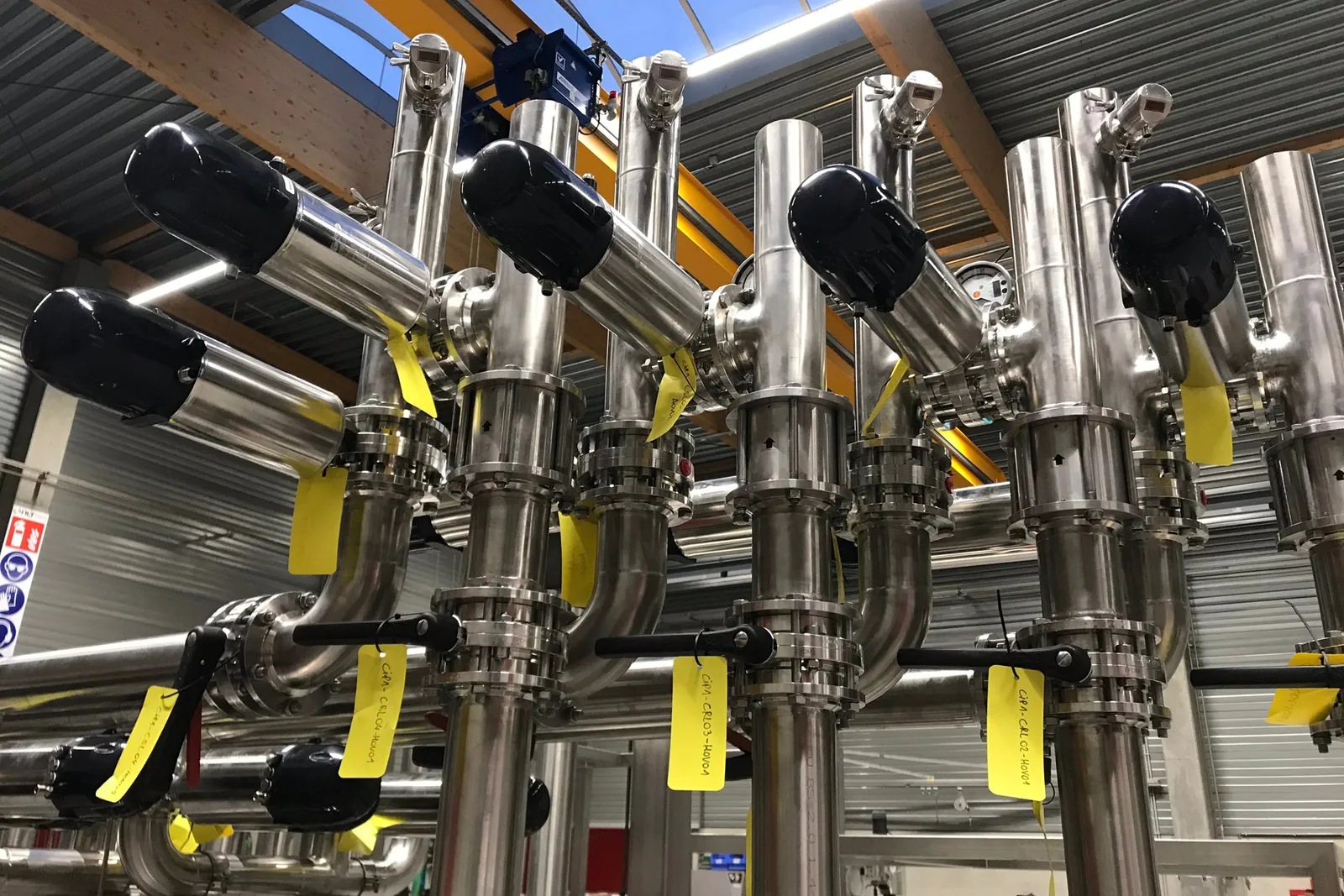
In modern food production plants, pipework forms the process circulation system. Product flows, CIP media, utilities and additives are continuously moved under strictly controlled conditions. The reliability of this system largely determines the performance of the entire plant. Pivaco specialises in the design, prefabrication and installation of stainless steel process piping and associated structures for the food industry. With an integrated approach to engineering and execution, the company positions itself as an installation partner offering strong technical input at the early stages of a project.
In many projects, inefficiencies arise from a gap between theoretical process designs and practical feasibility. Pivaco works explicitly at this interface. Starting from P&IDs and layouts, the following aspects are critically assessed:
- pipe routing and gradients (for drainage and CIP efficiency);
- positioning of valves and instrumentation (accessibility and maintenance);
- minimisation of dead zones;
- thermal expansion and mechanical stresses;
- integration with existing plants (brownfield context).
Where necessary, proposals are made to adapt the design before installation. This prevents subsequent rework, which is often complex and costly in food production environments.
Hygienic welding and material selection
The choice and processing of materials are decisive for a plant’s hygienic performance. Pivaco mainly uses stainless steel 304 (1.4301/1.4307) for standard applications and stainless steel 316 (1.4401 / 1.4404) for more corrosive environments or aggressive cleaning agents. Welding is carried out using qualified procedures (TIG) or orbital welding, with a focus on full penetration, minimal oxidation (backing gas) and controlled heat input. Correct post-treatment (pickling/passivation) is essential to ensure a long service life. Depending on the application, additional measures include internal inspection of critical welds, as well as documentation and traceability. For process piping in direct contact with product, weld quality is often more critical than the base material itself.
Prefabrication as a driver of quality and speed
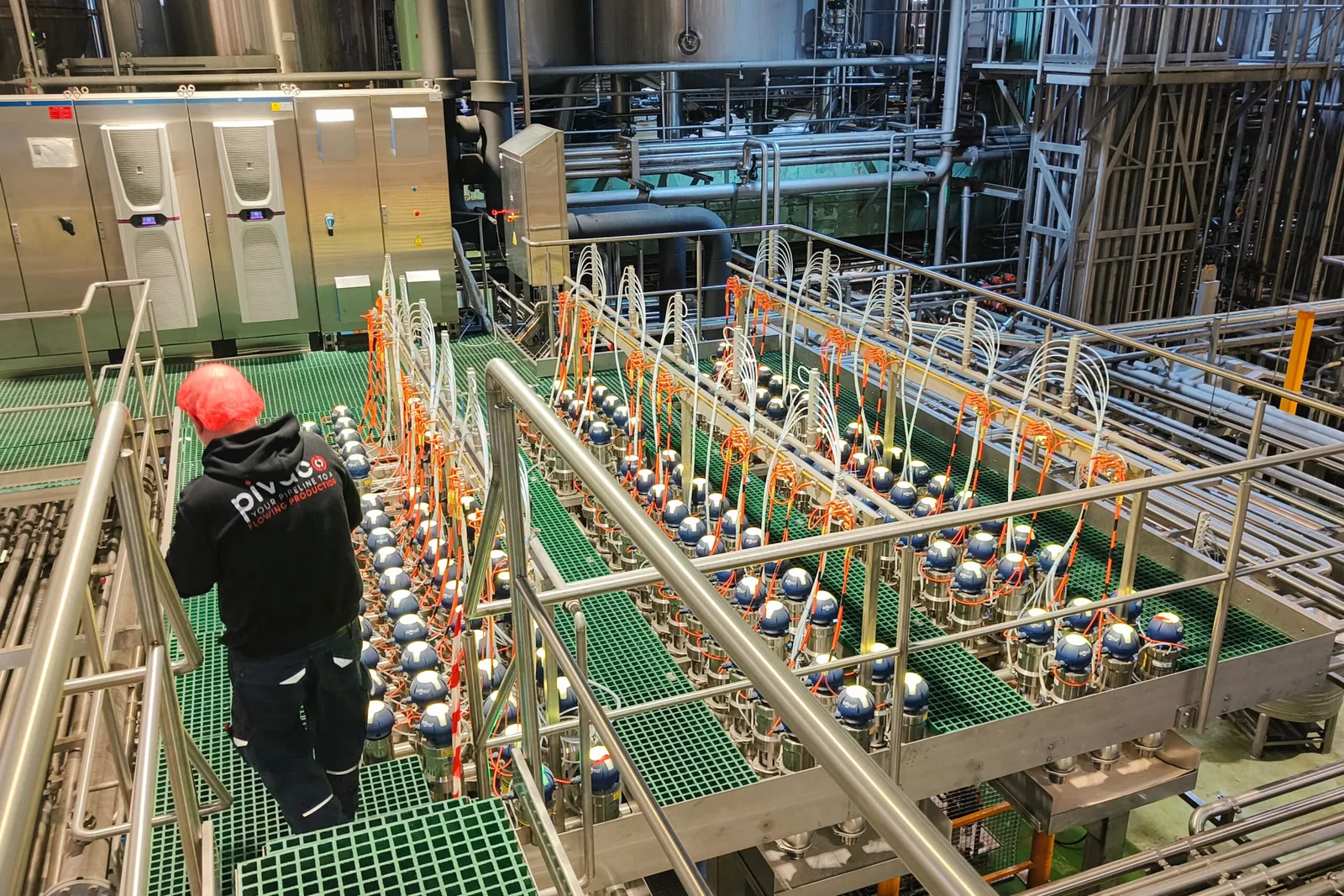
A large proportion of piping systems is prefabricated in the workshop. This offers several technical advantages:
- consistent working conditions, resulting in higher weld quality;
- better dimensional control, resulting in less stress during installation;
- shorter installation times on site;
- less interference with other contractors.
Prefabrication is based on isometric drawings and 3D models where available. For more complex projects, clear spool drawings are used to organise installation on site.
Installation in production environments
Installations are often carried out in existing, operational factories. This places specific demands on site work:
- working during controlled production shutdowns or at weekends;
- strict separation of dirty and clean areas;
- control of contamination risks;
- continuous coordination with production and maintenance.
Pivaco organises its installation teams so that critical phases are completed within short time windows.
CIP and process reliability
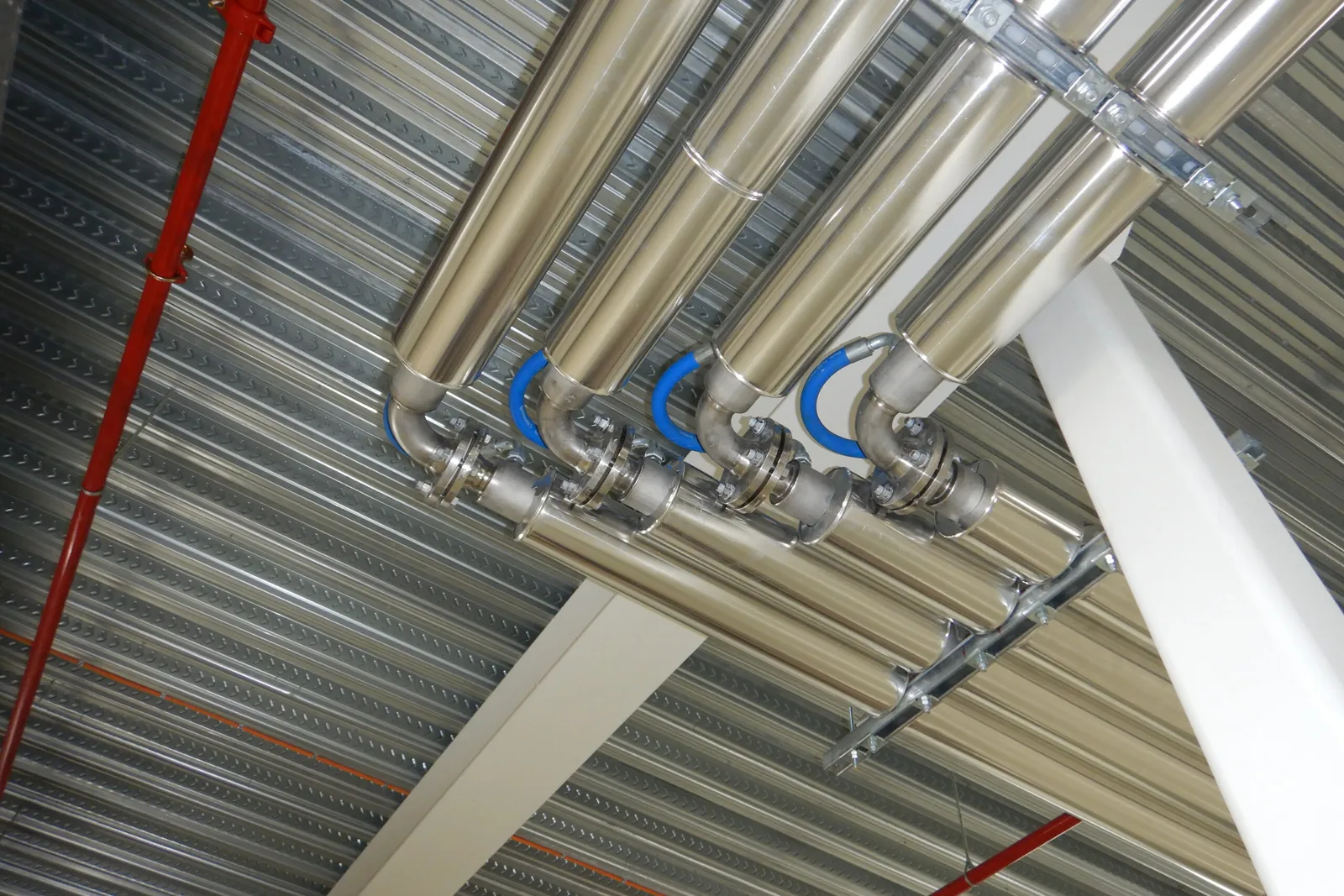
A correctly designed piping system must be fully cleanable without dismantling. CIP performance depends directly on the correct choice of pipe diameter and flow velocities, avoiding product retention points and providing sufficient gradient for complete drainage. These factors are explicitly considered during installation. Small deviations (for example, a slight adverse gradient or a poorly positioned fitting) can lead in practice to residue build-up and microbiological risks.
Mechanical supports and structures
In addition to pipework, Pivaco also builds supporting stainless steel structures such as platforms and frames. These are essential for safe access to valves and instrumentation, for maintenance and inspection, and for the structural support of pipes. The design takes account of loads and deflection, as well as hygienic design (preventing dirt build-up).
Project approach tailored to scale and complexity
The nature of the project determines its organisation and methodology. Small projects (less than 50,000 euros) focus on rapid interventions and limited modifications, often with direct execution and no extensive study phase. Medium-sized projects 50,000 to 500,000 euros) typically involve complete sub-plants, with engineering, prefabrication and installation carried out as an integrated process. In large projects (more than 500,000 euros), work is carried out in phases, with an emphasis on planning, interfaces with other disciplines and extensive coordination. This differentiation enables the company to work both reactively and on a project basis, depending on the customer’s needs.
Integration with automation and process control
Although Pivaco does not carry out automation work itself, interaction with control systems is crucial. This includes the positioning of flow meters, pressure and temperature sensors, correct integration of control valves and actuators, and accessibility for calibration and maintenance. In practice, this requires close cooperation with automation partners.
Plant efficiency and service life
Technical choices in pipework directly affect energy consumption (pressure losses, pump load), cleaning time and agents, maintenance frequency and downtime. By focusing on quality of detail in the design and installation, the plant’s TCO is significantly influenced.
Conclusion
In the food industry, industrial pipework is not merely an installation discipline, but a decisive factor in process reliability and hygiene. Pivaco combines practical experience with technical expertise in engineering and execution. By actively contributing to the design and placing a strong emphasis on prefabrication and high-quality installation, the company helps deliver robust, easy-to-maintain plants. For project managers and technical leads, this means a partner that not only carries out the work, but also identifies risks early and translates them into practical solutions on the shop floor.
Een zakelijke vraag aan Pivaco? Get in touch
Companies in this story
Keep following this
Get an email when a new story is published. No account needed.
- ThemeFood safety from design to audit
- SubjectFood safety
- CompanyPivaco







