












Hygienic validation of closed systems
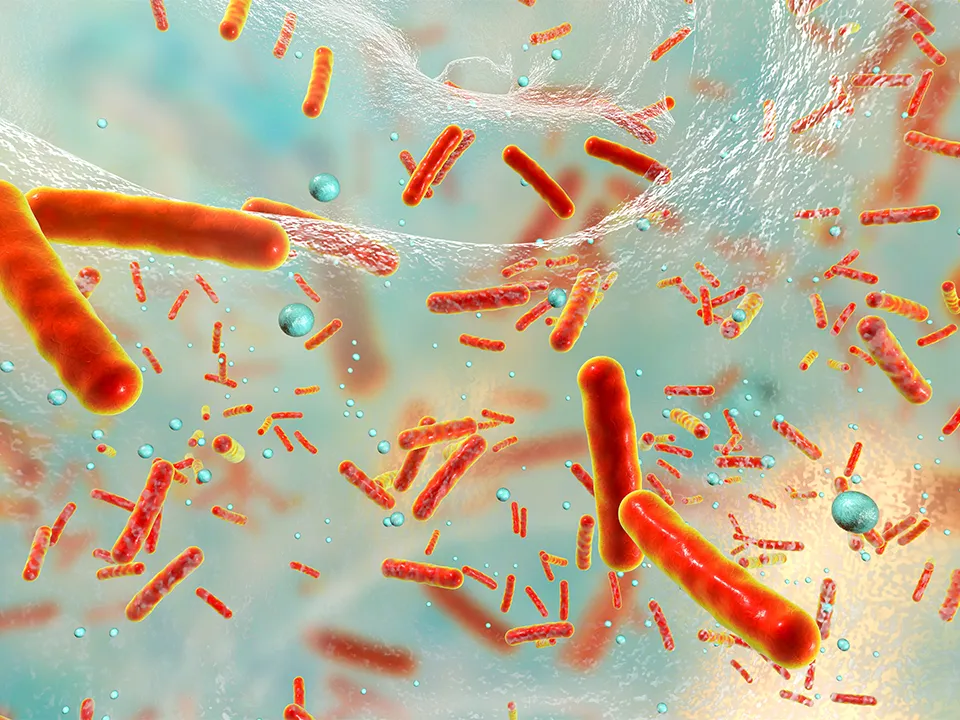
Closed food processing systems offer food safety benefits, particularly in terms of protection against external risks. However, they also have drawbacks.
How can companies be sure that a closed circuit is sufficiently clean? In EHEDG Connects, EHEDG trainer Martin Barnickel shares valuable insights into optimising the food safety of closed systems through the use of cleaning validation techniques.
How important is validation in ensuring food safety?
Whether you work as a safety manager in a food business or develop components for closed food processing or packaging systems, nothing offers greater reassurance than thorough, quantifiable validation of cleaning processes. To ensure food safety, certain physical, chemical and biological hazards must be considered and validated against.
What are the specific challenges of closed processes?
Closed processes increase the risk of a wide range of food safety hazards, including micro-organisms and their toxins, residues from products or cleaning, disinfection or lubrication agents, and unwanted food ingredients from previous production batches that may contain allergens. Regular and effective cleaning is therefore always necessary, with or without disinfection and sterilisation. However, not every installation is easy to clean thoroughly, with potentially serious consequences ranging from mild physical symptoms to food poisoning and, in some cases, even death.
In your publications, you discuss the kinetics of contamination. Could you explain this?
Let’s look at a process from the dairy industry: pasteurisation. In these closed systems, microbial growth and contamination often occur during preheating and the heat recovery phase, when temperatures drop below 55 °C. Precise control and documentation of conditions during pasteurisation, usually 75 °C for at least 15 seconds, are essential to ensuring food safety. As a general rule, no one should settle for disinfection techniques alone if sterilisation is technically feasible.
Could you give us another example?
Another example of the kinetics of contamination is the risk associated with a leak in a plate heat exchanger. Pathogenic micro-organisms can then contaminate the product. Plate heat exchangers should therefore be checked for leaks at least twice a year. The plates themselves should not be used for more than five years. As a general rule, pasteurised products should not be processed for more than 20 hours without CIP, even if the equipment was sterilised at the outset. Other hazards arise as hygienic conditions deteriorate due to ageing installations. Processing facilities should therefore be tested regularly for cracks, cavities, voids and leaks. Given that sterile products are sometimes processed for days on end without cleaning in between, the installation must be completely free of voids, bacteria-tight and operated professionally to prevent it from becoming a source of contamination.
What are the main validation criteria?
The effectiveness of a cleaning programme is assessed first and foremost using differential TOC analysis of the rinse water. Visual inspection alone, or the absence of odours and biofilms, is wholly inadequate as a control measure. TOC analysis is the basis of any validation. UV light and certain dyes can also help trace product residue (> 4µg/cm²). An endoscope can be used for visual inspection of areas that are difficult to access and clean. Nevertheless, periodic dismantling of the closed system will be appropriate in many cases. However, since it is virtually impossible to rule out all contamination at all times, hygienic factory design, the use of residue-free cleaning agents and effective sterilisation are essential in practice. The monitoring techniques used must quantify the level of hygiene before and during production. Problematic biofilms can only be prevented by cleaning in good time. An increase in differential pressure can serve as an alarm. In addition, biological parameters such as ATP content, TDC, AOC/TOC and BFR are useful for assessing hygiene levels after CIP or SIP.
Question about this story? Ask your question
Keep following this
Get an email when a new story is published. No account needed.
- ThemeFood safety from design to audit
- SubjectFood safety







