












Key steps for a perfect clean
Text Valérie CouplezImage iStock
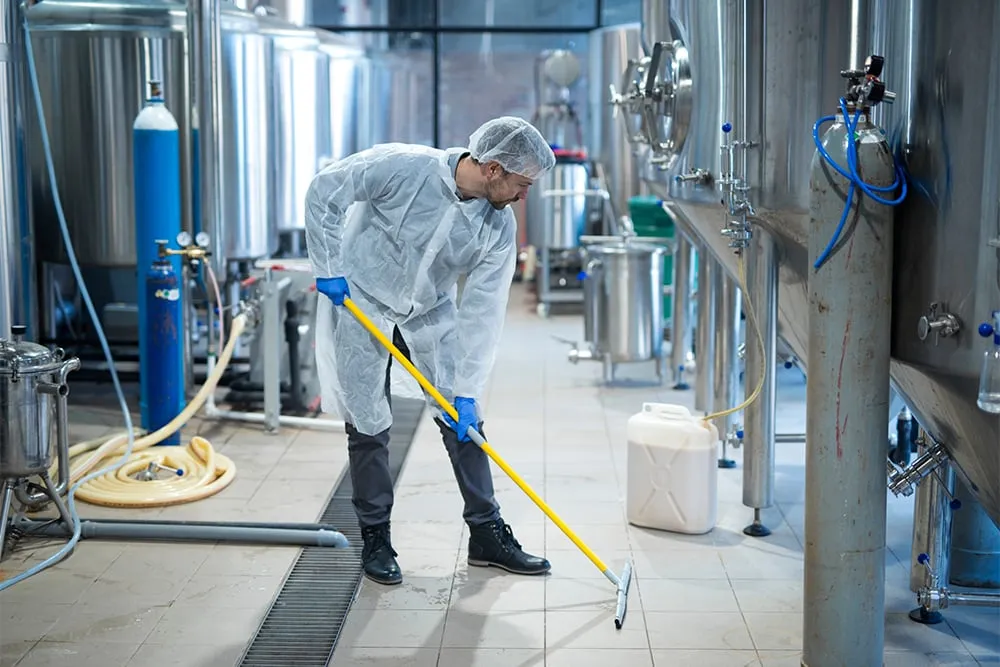
As a food and beverage manufacturer, you want to make the most of every minute. The shorter the production downtime, the more you can maximise productivity. But when it comes to food safety and cleaning procedures, you cannot and, of course, do not want to compromise. They are a critical and regular part of all food production. They should therefore not be seen as an interruption, but as an important part of the operation. Here are the steps to a perfect clean.
There are several ways to clean and disinfect food and beverage processing equipment. These include CIP systems, foaming, COP procedures, spraying and high-pressure hoses, all of which are well established in the food industry. There are also newer techniques, such as fogging and dry ice blasting. Regulatory bodies each have their own interpretations of the right way to clean and disinfect surfaces and equipment. This article covers the universal steps involved in every cleaning procedure, along with a few points to consider. Ideally, these processes and the chemicals used should, of course, be validated against worst-case scenarios. Training the operators responsible for these tasks is also crucial, so they know exactly what they are doing and how it contributes to a food-safe production environment.
Removing contaminants
Residues can always remain on food contact surfaces. These may be food residues, but also dust, dirt, mineral salts, proteins, lubricants and more. Surfaces can be cleaned using scrapers, brushes, steam and vacuuming.
Rinsing
Use warm, potable water to rinse surfaces and equipment. A temperature of around 50 °C is sufficient. Higher temperatures could cause certain particles to adhere to the surface, making them harder to remove. The use of high-pressure equipment is not recommended, to avoid the risk of recontamination. Dirt and chemicals could be dispersed into the air and reach areas and equipment that have already been cleaned and disinfected. Not all equipment can withstand high-pressure cleaning either.
Using detergents
Detergents are a good next step for removing any remaining fat and proteins. Make sure they are mixed properly with the water by checking dilution rates and contact times. Follow the manufacturer’s instructions carefully to ensure food safety is not compromised.
Thorough visual inspection
Before applying disinfectants, it is advisable to rinse the surface thoroughly with water to remove any detergent residue. Check for any visible signs of contamination, especially in hard-to-reach areas. CIP procedures are available for cleaning equipment internally. These must also be validated and adjusted if a new product passes through the tanks or pipes.
Sanitising and disinfecting
To safely reduce the number of bacteria, use an effective sanitiser or disinfectant suitable for food processing environments. Apply it according to the manufacturer’s instructions. Make sure the disinfectant is distributed evenly and given enough time to work. Test strips can indicate whether the correct concentration has been used. Store them hygienically and replace them regularly. Afterwards, inspect the production line to check that it is clean and hygienic. Document the entire disinfection process, including the date, time and test results. Keep these records for at least a year.
Drying
If using a rinse-off sanitiser or disinfectant, the product must be removed completely with potable water. Air-drying is the ideal way to dry surfaces, as wiping can lead to recontamination. For surfaces that need to remain dry or cannot be air-dried, a no-rinse product is recommended. When using products that do not air-dry, it is important to follow the instructions on drying times.
Question about this story? Ask your question
Keep following this
Get an email when a new story is published. No account needed.
- ThemeFood safety from design to audit
- SubjectFood safety







