












New module for environmental monitoring explained
Text Valérie CouplezImage Normec
Recent outbreaks of infections such as salmonella and listeria at established food businesses have prompted the FAVV to tighten its rules. From March, food businesses must also systematically incorporate environmental monitoring into their quality control. Developed in collaboration with UGent, this module will be included in audits of the self-checking system. Normec Foodcare is guiding its clients through the process and translating the rules into practical measures they can implement.
Most food businesses currently carry out only a limited amount of testing for environmental pathogens. “The exceptions are slaughterhouses and cutting plants, where environmental testing for pathogenic micro-organisms is already a requirement,” explains Grietje Van Weert, Business Partner Knowledge & Regulatory Centre Normec Foodcare, describing the current situation. “At most businesses, the number of swabs is limited to just a few a month, usually for salmonella and listeria. They already monitor the usual suspects, such as evaporators, chillers and drainage channels, but not always in a sufficiently structured way. The new regulations will change that.”

More testing in high- and low-risk zones
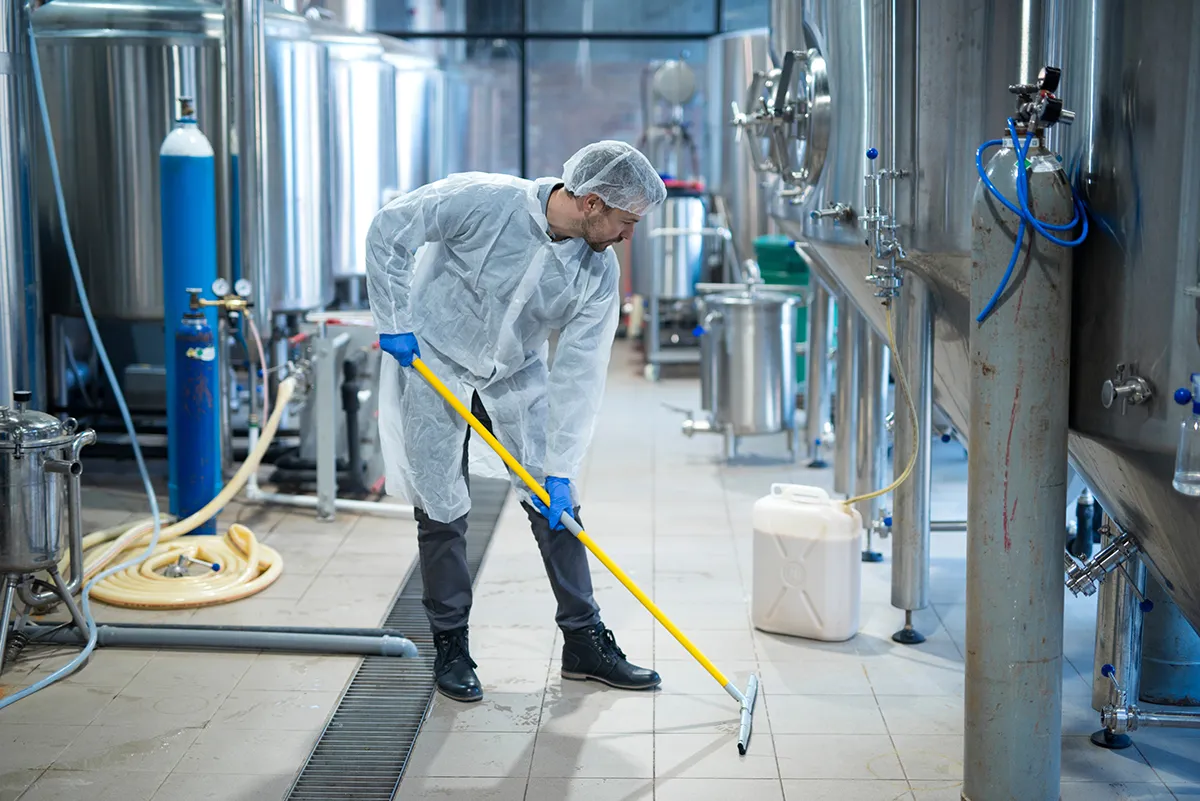
Specifically, businesses are expected to conduct a risk assessment to establish which pathogens may be present in the production environment. “They will need to assess this against a sound understanding of their processes by identifying the higher- and lower-risk zones. For some sectors, the FAVV module already does this: for example, dairy businesses are considered to be at high risk of listeria. The main difference lies in how they will handle these zones. The focus will need to extend beyond high-risk zones alone. To prevent cross-contamination, environmental monitoring must also take place in areas with no direct contact with food, and at a sufficiently high frequency. Food businesses must also justify how they allocate their testing. In addition, testing must be carried out both before and after cleaning, including in hard-to-reach places such as the inside of machinery.”
Identifying resident strains
The reasons are clear to Van Weert. “New techniques such as genome sequencing have made it easier to link pathogens found in food businesses with cases in humans. That is not always a direct one-to-one link yet, but it is certainly the way of the future. That is why it is important for food businesses to strengthen their own food safety rules. Outbreaks can cause enormous reputational damage.” The FAVV believes that food businesses can identify resident strains more easily by systematically carrying out environmental monitoring before and after cleaning. This enables them to take appropriate action to prevent hotspots from developing. “This will require significant changes for the quality department: carrying out more tests, setting up a new workflow for before and after cleaning, and keeping the paperwork in order. That is why Normec Foodcare has already incorporated the module into work instructions, procedures and documents. We develop a tailored action plan for each client.”
Supporting and easing the burden on quality departments
It starts with a gap analysis, a kind of baseline assessment. “Where are we now? What needs to be done to comply? Roughly how much will it cost?” Van Weert sums up. Those who attended Normec’s knowledge event on 20 February heard all the details. “The turnout made it clear that many businesses are still grappling with the new rules. They are looking for guidance on translating the scientific text into concrete measures on the shop floor. By proactively thinking things through with clients, we aim to make a real difference, tailored to their production. Thanks to our broad expertise, we take the pressure off everyone involved in quality within a business: from training and coaching for the quality department to our laboratories standing ready to test samples, as well as, for example, trend analyses for the quality manager.”
Een zakelijke vraag aan Normec Foodcare BV? Get in touch
Companies in this story
Keep following this
Get an email when a new story is published. No account needed.
- ThemeFood safety from design to audit
- SubjectFood safety
- CompanyNormec Foodcare BV







