












Precision in agri-food: the role of reliable instrumentation
Text CaTeC, Evi HussonImage CaTeC
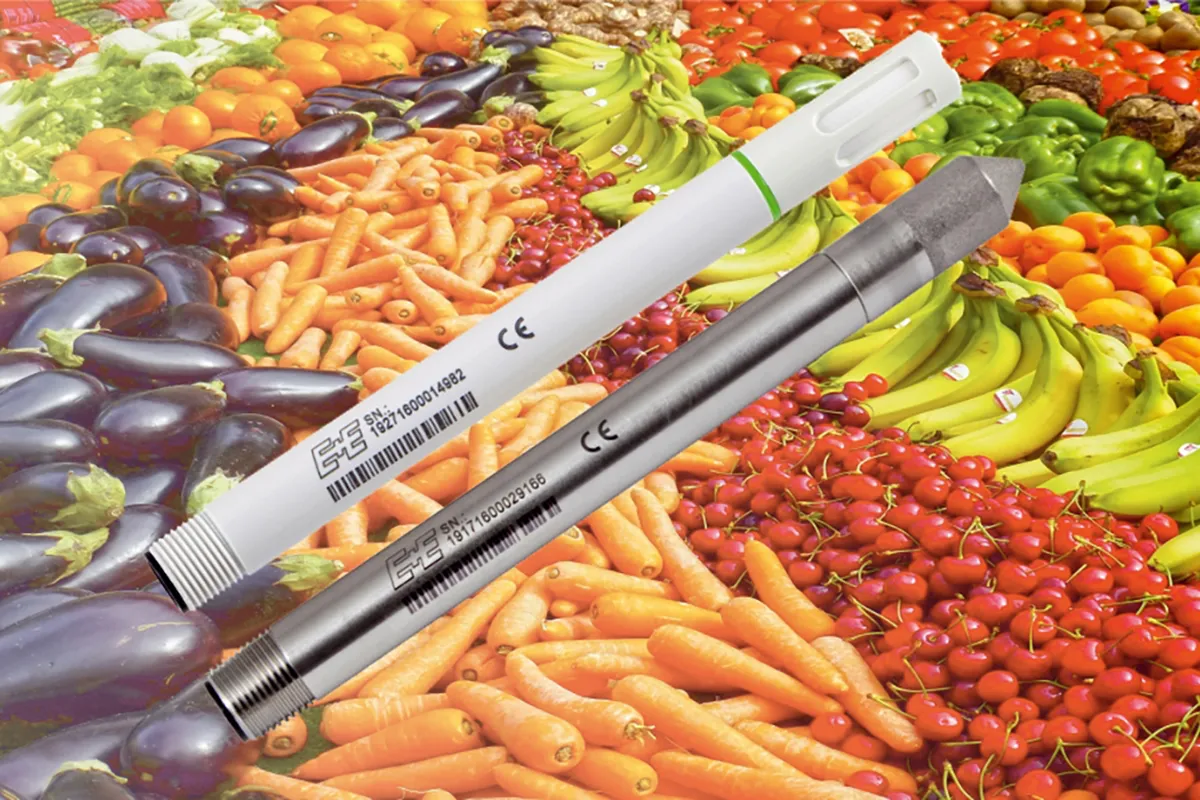
Hygiene, quality and process reliability are crucial in the food industry. Small deviations in temperature, humidity, gas concentrations or airflow can lead to loss of quality, spoilage or even safety risks. This is where instrumentation from CaTeC in Wateringen, including products from suppliers such as E+E, comes in. It provides the measurement capability to monitor, correct and optimise processes.
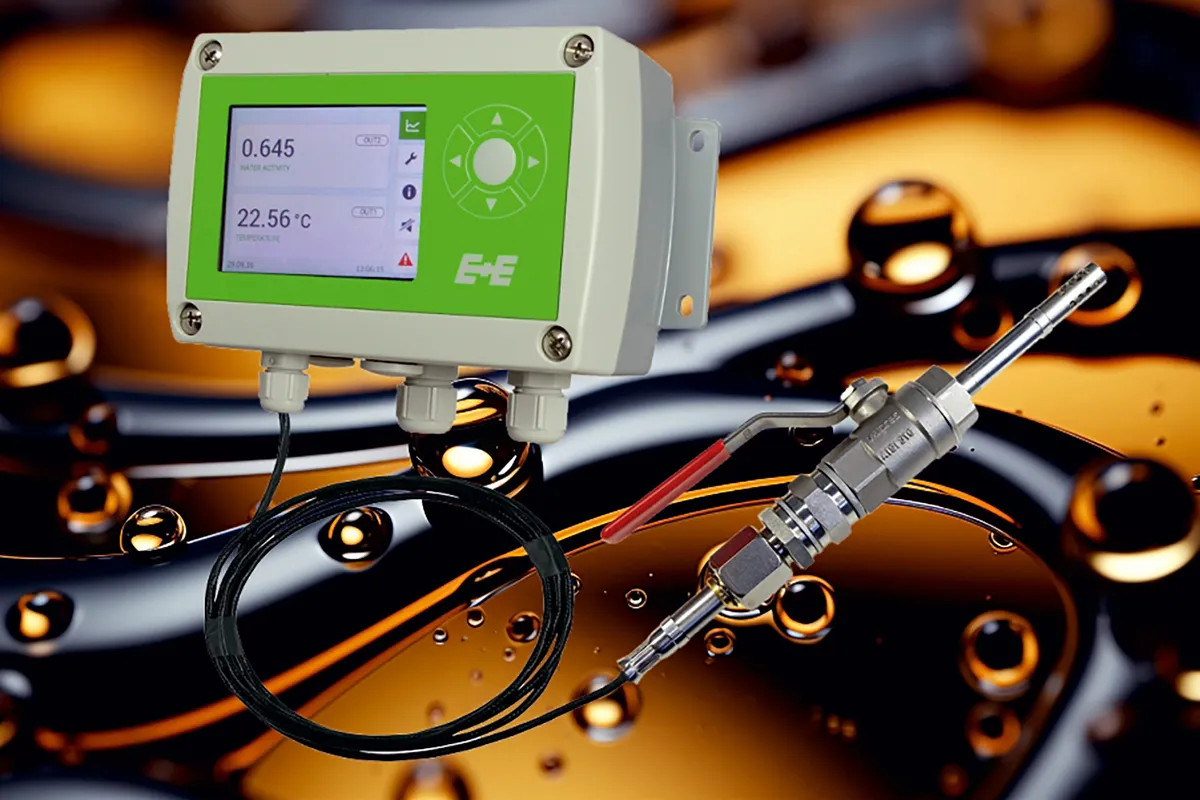
CaTeC is the importer for the Benelux of a wide range of measuring instruments and sensors for climate parameters. Its services go beyond supplying equipment: calibration, maintenance, system integration and technical support are among its core activities. Its range includes products relevant to the food industry, such as sensors and transmitters for relative humidity, dew point and temperature; CO₂, air pressure and air velocity meters; flow meters for air and gases; and moisture-in-oil sensors (such as the EE360), which can be important in systems using lubricating oils or hydraulics.
Purpose-built instruments for food processes
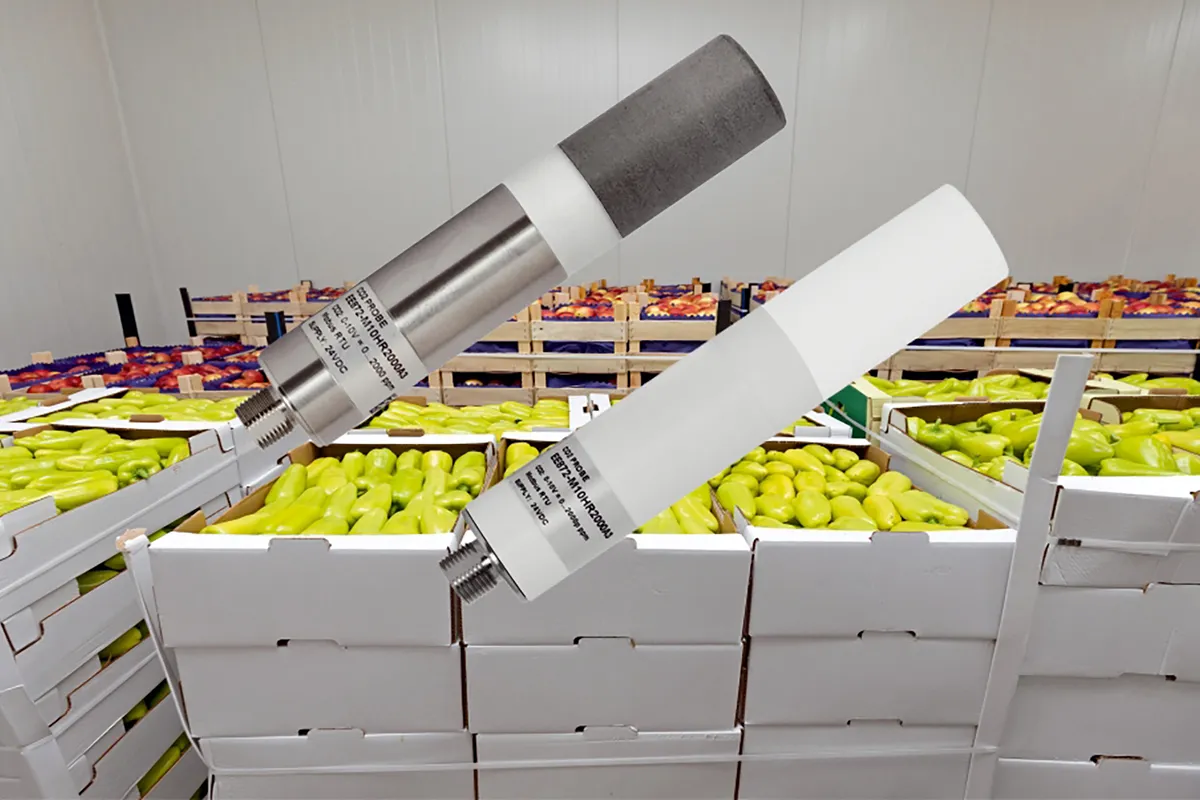
One instrument that stands out is the EE072, a humidity sensor and temperature probe with a digital interface. It is important in environments where relative humidity and temperature must be strictly controlled, for example in drying rooms and storage or holding areas. The EE872, a combined sensor for CO₂, humidity, temperature and ambient pressure, is ideally suited to factory spaces and the storage or processing of fresh produce, where CO₂ levels and air quality are crucial.
Airflows
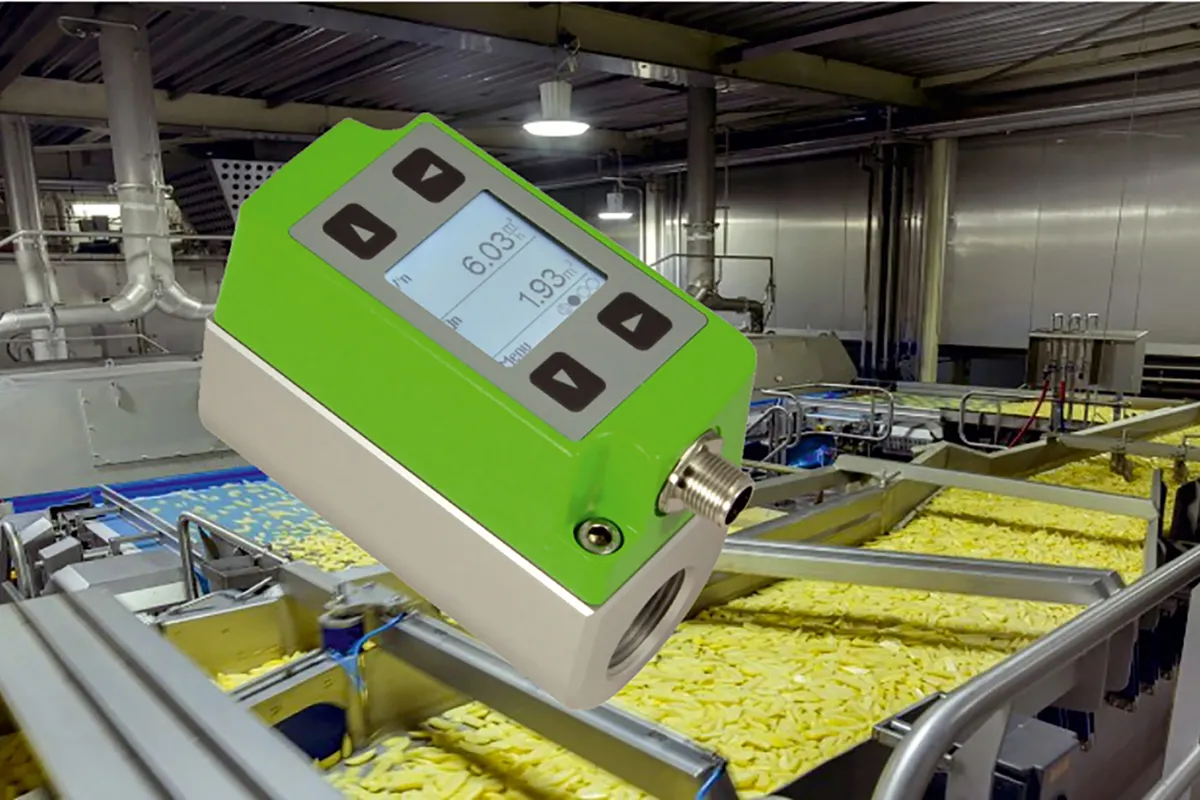
In the food industry, airflows are often part of conveying, packaging or cooling systems. Precise flow measurement prevents energy losses and product contamination. To meet this need, CaTeC offers the EE741, an in-line flow sensor for compressed air and technical gases. Also worth mentioning is the EE360 moisture-in-oil transmitter. Although it has less direct relevance to product safety, it is important in auxiliary systems, where moisture in oil can cause faults, for example in the lubrication systems of mechanical equipment.
Importance and impact in the food industry
Reliable instrumentation is crucial in the food industry for four key reasons: (1) preserving quality, (2) food safety and hygiene, (3) process optimisation and efficiency, and (4) preventive maintenance and reliability.
Preserving quality
Humidity and temperature have a direct effect on spoilage and microbial growth. Sensors such as the EE072 help maintain strict climate control, thereby extending shelf life.
Food safety and hygiene
CO₂ and air quality sensors (such as the EE872) can detect deviations at an early stage, for example those caused by fermentation or unwanted gases. They ensure that ventilation or air treatment systems respond accordingly.
Process optimisation and efficiency
Accurate flow measurements (EE741) can optimise air consumption, helping to cut costs and improve sustainability. This is becoming increasingly important in the food industry.
Preventive maintenance and reliability
Instruments such as the EE360 prevent moisture in oil from damaging mechanical components or causing downtime or loss of quality. CaTeC’s calibration and service help keep these systems reliable.
Challenges and outlook
Despite reliable technology, challenges remain: stringent hygiene requirements (cleaning, steam and disinfection), corrosive environments, rapid temperature fluctuations, and the need for certification (food safety, HACCP, AIB/IFS). Instruments must withstand these conditions, and E+E and CaTeC address this with features including high IP ratings, special coatings, heating and removable modules. This helps ensure long-term reliability and stability.
Een zakelijke vraag aan CaTeC bv? Get in touch
Companies in this story
Keep following this
Get an email when a new story is published. No account needed.
- ThemeFood safety from design to audit
- SubjectFood safety
- CompanyCaTeC bv







