












Smart QA managers use smart tools
The food industry has changed considerably in recent years. Extensive automation, Industry 4.0 and stricter laws and regulations have left quality managers with their hands full as they work to keep everything on track. Smart QA managers therefore use smart tools that take a lot of work off their hands.
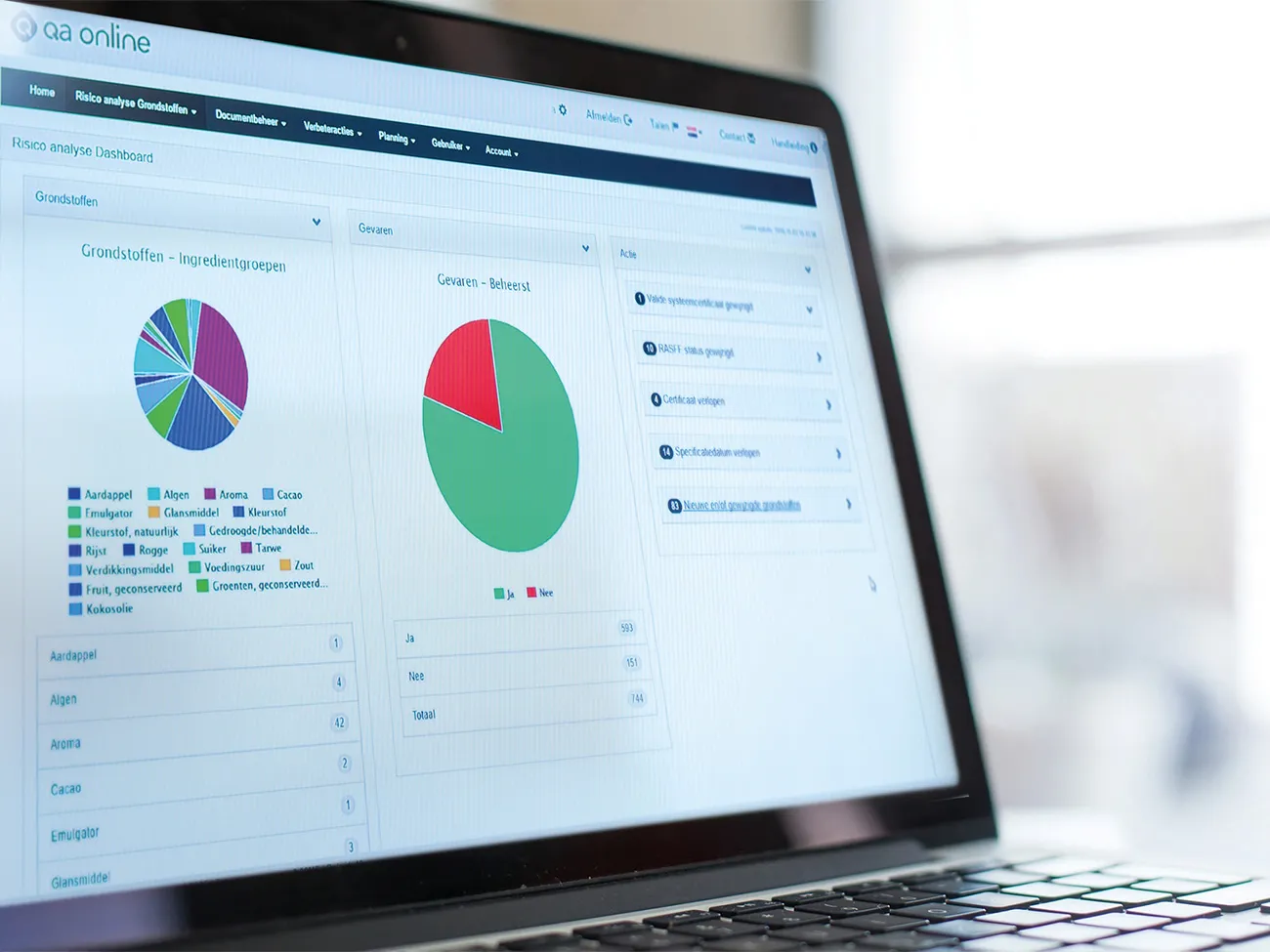
“Digitalisation is growing rapidly in the food industry. Quality managers who rely solely on paper and Excel spreadsheets to keep track of everything have become administrative workers, when it is so important for them to be present on the shop floor too. That is why digitalising processes is becoming increasingly important. It takes the burden off quality managers and improves quality,” says Klaartje Eeckhaut. She is a senior quality assurance consultant at KTBA. The company supports manufacturers and suppliers in the food industry with quality, safety, laws and regulations. Eeckhaut is involved in developing KTBA’s digital programme QA OnLine. “QA Online is an online, real-time quality application, developed specifically by and for quality managers in the food industry. The software package consists of several modules: Document Management, Plan-Do-Check-Act, Specification Management, and raw material hazard identification and risk analysis.”
Document Management
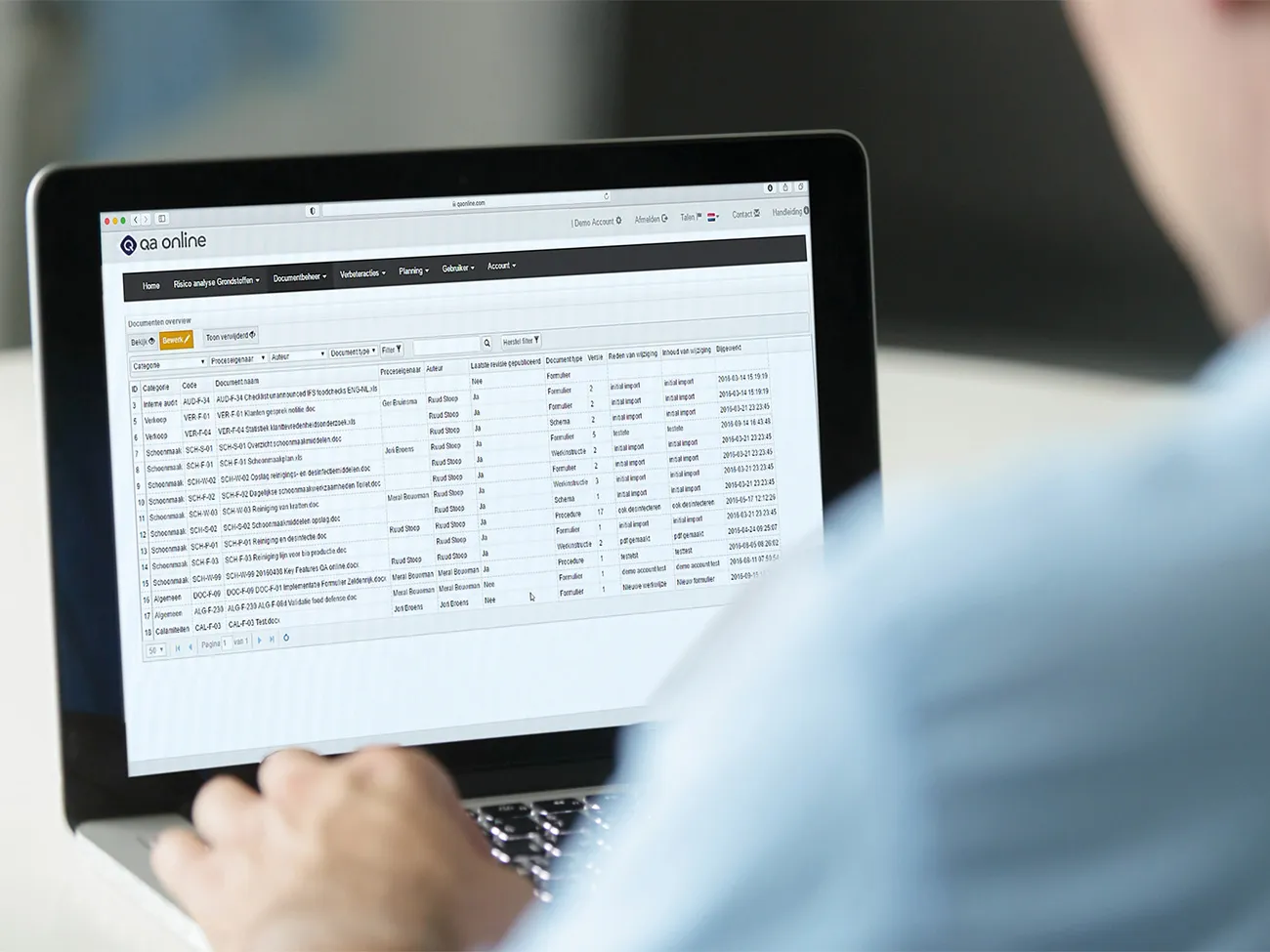
Eeckhaut explains the Document Management module. “This module allows employees to manage documents and reports online and in real time, wherever they are working. This is a particularly useful option when working from home is necessary, as it was during the coronavirus crisis. Every employee who logs into the system sees a personal dashboard with actions, documents and reports, while a workflow ensures documents are automatically sent to the right person for approval and signature. The system also has an access rights structure, so only authorised people can access certain information.” The dashboard also shows when certificates are due to expire. “This can save a great deal of time. There is no longer any need to regularly check that all documents are up to date, particularly ahead of audits. The system automatically sends an alert when documents are due to expire soon.”
Plan-Do-Check-Act
A second module is Plan-Do-Check-Act. “It gives a clear overview of which tasks require immediate action and what else is on the schedule. Each action is assigned to a person responsible, and its status is also visible. This means everyone involved knows what still needs to be done, when and by whom. The person responsible for quality therefore always remains ‘in control’ of all actions.”
Growth and further development
QA Online continues to grow. “We stay in constant contact with our consultants and customers. We map out requests for additional features so that we can continue to improve QA Online. For example, feedback led to the development of the Specification Management module. This module lets you enter raw material data using an extensive ingredient database, create recipes and automatically calculate nutritional values, as well as manage supplier certificates. This provides visibility across the entire process, from raw material supplier to finished product specification. A supplier assessment module may also be added before the end of the year. We continually seek feedback from the market and use it to keep pace with the latest trends and developments.”
Indispensable
The food sector has responded very positively to the system, Eeckhaut says. “Quality managers realise they can keep track of everything very easily in one system, reducing the risk of human error. They are seeing major time savings as a result.”
Investment
Digitalising quality management does require an investment. “The time saved means the system’s investment costs are quickly recouped. However, as with any digitalisation project, you will need to set aside time for implementation at the outset.” Eeckhaut therefore recommends taking a step-by-step approach. “Choose one module to start with so that everything remains manageable. After a module has been implemented, a QA Online specialist remains available as a point of contact for questions, so companies can quickly start reaping the benefits of the system.”
Question about this story? Ask your question
Keep following this
Get an email when a new story is published. No account needed.
- ThemeFood safety from design to audit
- SubjectFood safety







