












Stainless steel calls for consistent surface quality
Text Valérie CouplezImage Straaltechniek
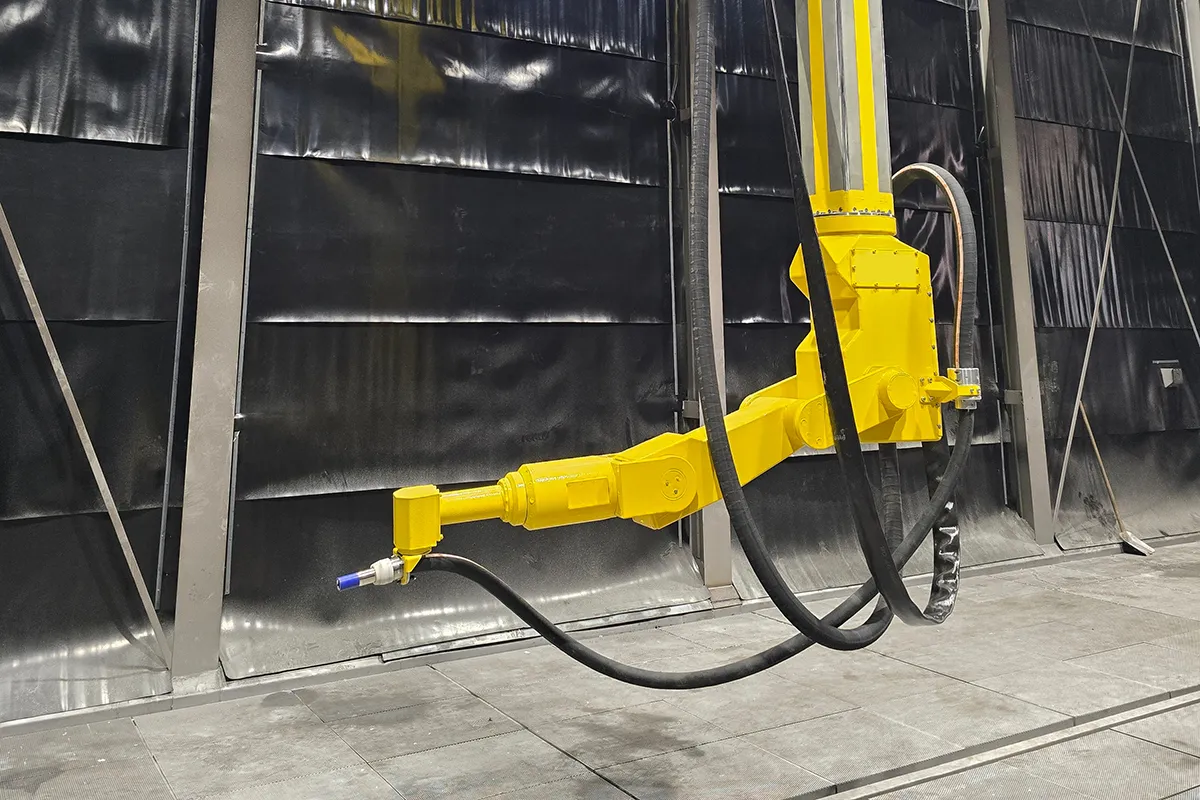
The importance of consistent surface quality cannot be overstated when it comes to stainless steel. The material is often used in the food industry, where an impeccable finish is required for food safety. That is why interest is growing in automated and even robotic solutions for glass bead blasting. They also make the work more ergonomic and safer. Straaltechniek has the expertise and experience to ensure that projects like these also deliver an attractive return on investment.
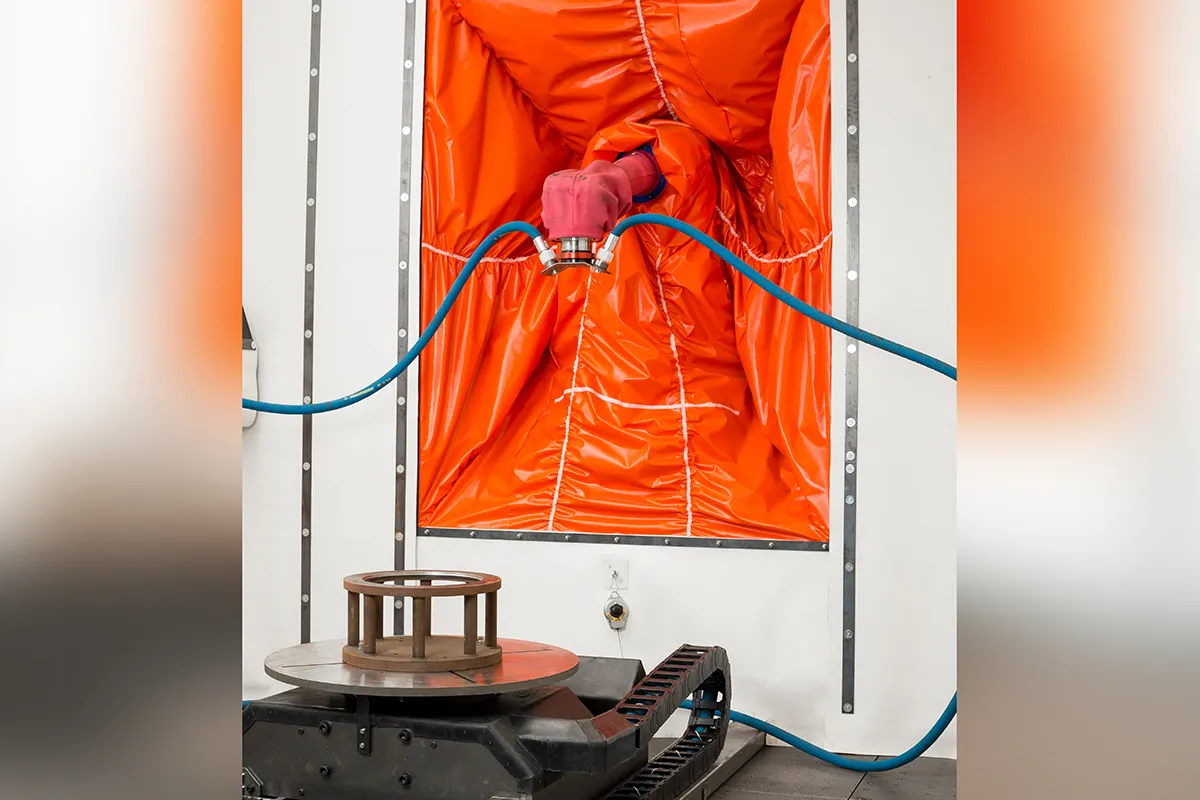
“Blasting is pretty hard work,” begins Straaltechniek managing director Edwin Houweling. “You’re standing there holding a blasting hose operating at, say, 6 bar pressure, and doing highly repetitive work, keeping as much as possible to the same distance and angle across the entire surface. Consistency is paramount for a good result on stainless steel. It is the only way to achieve the roughness required for food industry applications. In 2025, machines or robots can take over the work and make the process much more efficient.” Houweling predicts a ‘boom’ in robotic blasting over the coming years. “We’re definitely seeing growing demand for these kinds of solutions, partly because robots have become much more affordable. This puts them within reach of SMEs. But you do need to pay sufficient attention to protecting the robot. Abrasives are aggressive. That’s why only the robot arm enters the booth, and we fit it with a custom-made ‘heavy-duty jacket’.”
Good return on investment
To meet all the customer’s requirements, Straaltechniek always starts with the product. “We design the booth around it. The aim is to use as many standard components as possible to keep the price down. Then we add the creativity and technical insight of our engineers to come up with some excellent solutions. By automating this part of your production, you can make better use of your employees, reduce their workload and achieve a good return on investment.”
Programming barrier removed
Straaltechniek provides the complete solution: the booth, the protected robot, automatic abrasive recovery, the filtration system and all the automation behind it. “This means the operator only has to select the right product and blasting starts. If anything changes later, they can easily teach the robot themselves using teach-in, detection or by entering coordinates. The barrier to operating these systems has been completely removed,” says Houweling. “Of course, the batch size still needs to be large enough. Or, more accurately, you need enough products that fit within the robot’s reach.”
Fully automatic booths
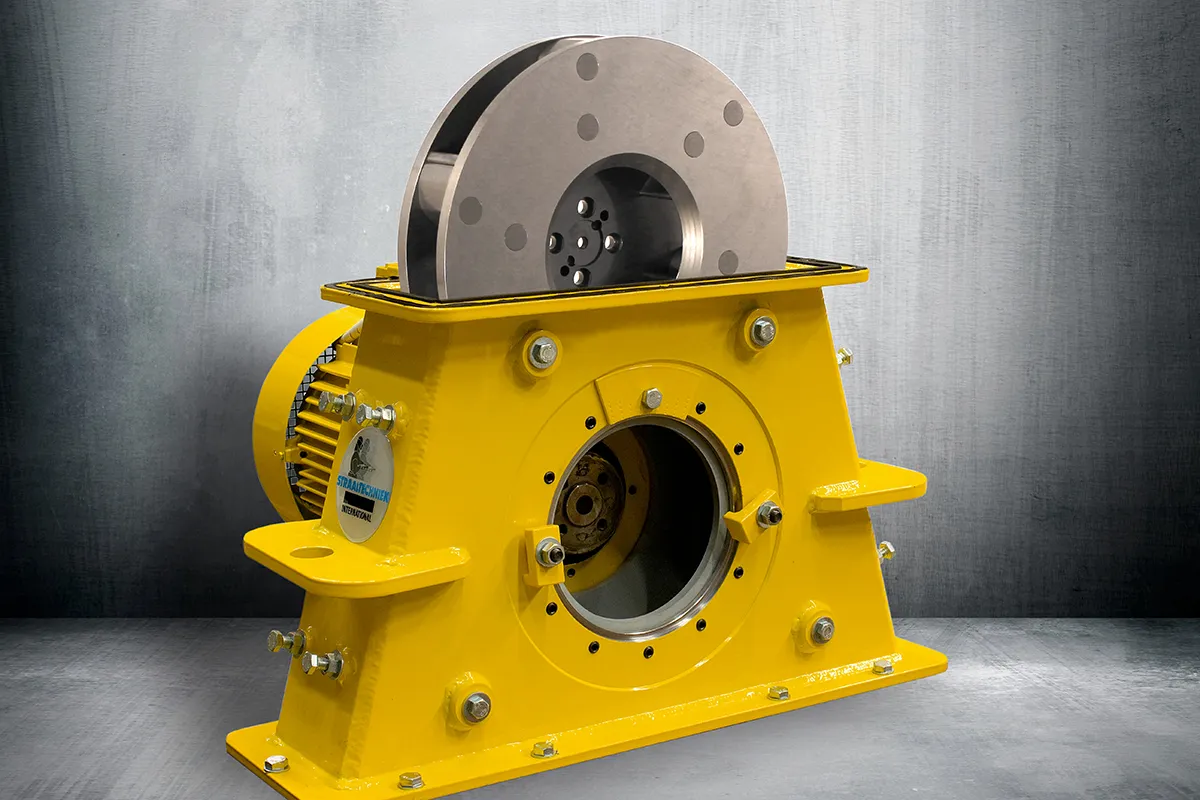
However, there is no need to panic if investing in a robot is not viable. Even with a more conventional blasting booth, there are plenty of ways to automate the blasting of steel and stainless steel products. “Automatic blasting is even more popular than robotic blasting. It all depends on your product when determining the most suitable solution. For example, you cannot use glass beads for turbine blasting. That’s why we always discuss the customer’s products and how to achieve the desired result,” Houweling emphasises. Greater automation also provides more insight. “You get all the blasting data: how much abrasive you have used, how much compressed air was required, which paths were followed, how long it took … You can use these figures to carry out a thorough post-calculation.”
A different role for the operator
The operator’s role also changes, both with robotic blasting booths and fully automatic blasting machines: from carrying out the work to overseeing it. “They need to make sure the installation is running properly and check the quality of the parts coming out. The technology is robust, but it is subject to wear. You can see and monitor this. We can even automate this part of the process by programming certain alerts in the PLC. The operator can then intervene before quality suffers.” Houweling also highlights the importance of good maintenance. “I was recently at a customer’s site where they had bought their machine in ’99. They run it for two shifts every day, yet the installation still looked as good as new. Keeping everything well maintained pays off in the long run.”
Een zakelijke vraag aan Straaltechniek International? Get in touch
Companies in this story

Keep following this
Get an email when a new story is published. No account needed.
- SubjectFood safety
- CompanyStraaltechniek International







