












The right cleaning procedure is the starting point for a perfect production process
It is essential to clean all equipment, work surfaces, the surroundings and tools thoroughly to prevent (cross-)contamination. But what does thorough cleaning involve, and are there procedures for doing it correctly?
To answer this, let’s go back to the basic principles of cleaning. The main purpose of cleaning in the food industry is to remove dirt, so that food is not contaminated by waste in the first place.
We also want to prevent chemical contamination and microbiological spoilage. Cleaning also helps extend the service life and maintain the functionality of the equipment used in production. In addition, it ensures a healthy, clean working environment for employees.
There are 2 key elements to distinguish: cleaning and disinfection.
Cleaning
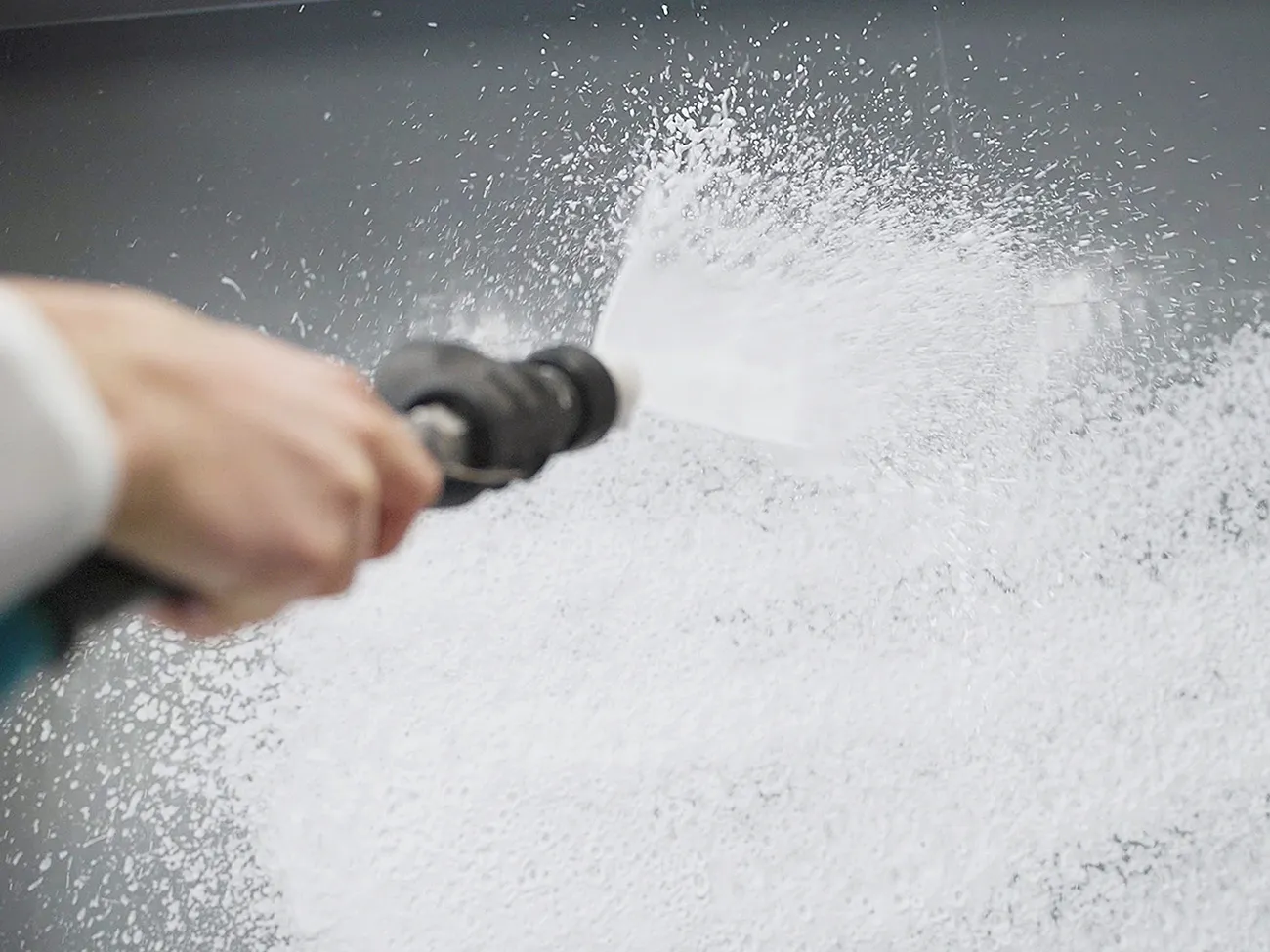
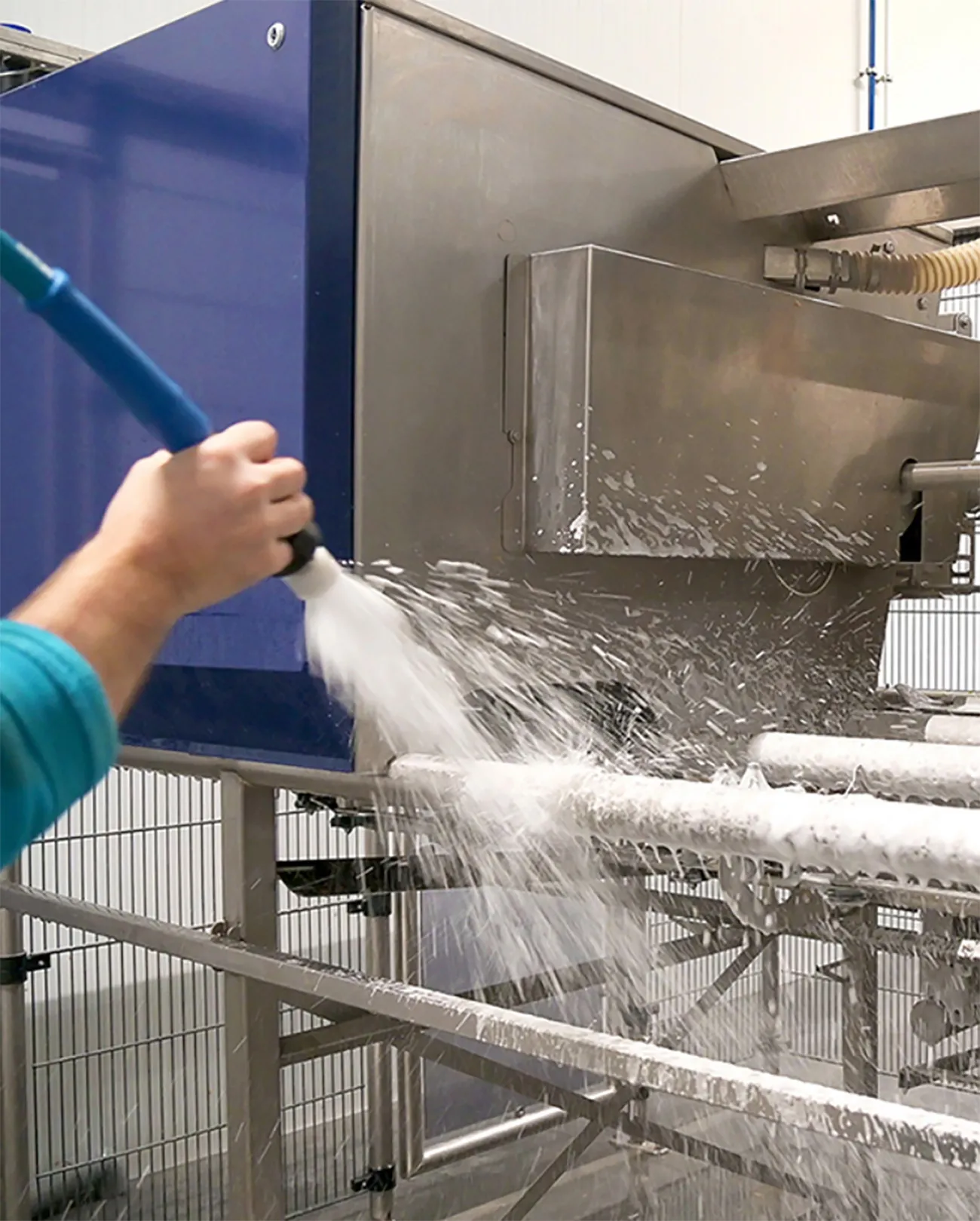
The first stage of cleaning in the food industry is to remove all visible dirt and product residues. A cleaning agent is then applied, preferably as a foam. The foam has the advantage of adhering to the parts and surfaces being cleaned for longer, giving the product more time to work. This contact time can be set in advance for each production run. Once the cleaning agent has had time to work, it is rinsed off with clean water.
Disinfection
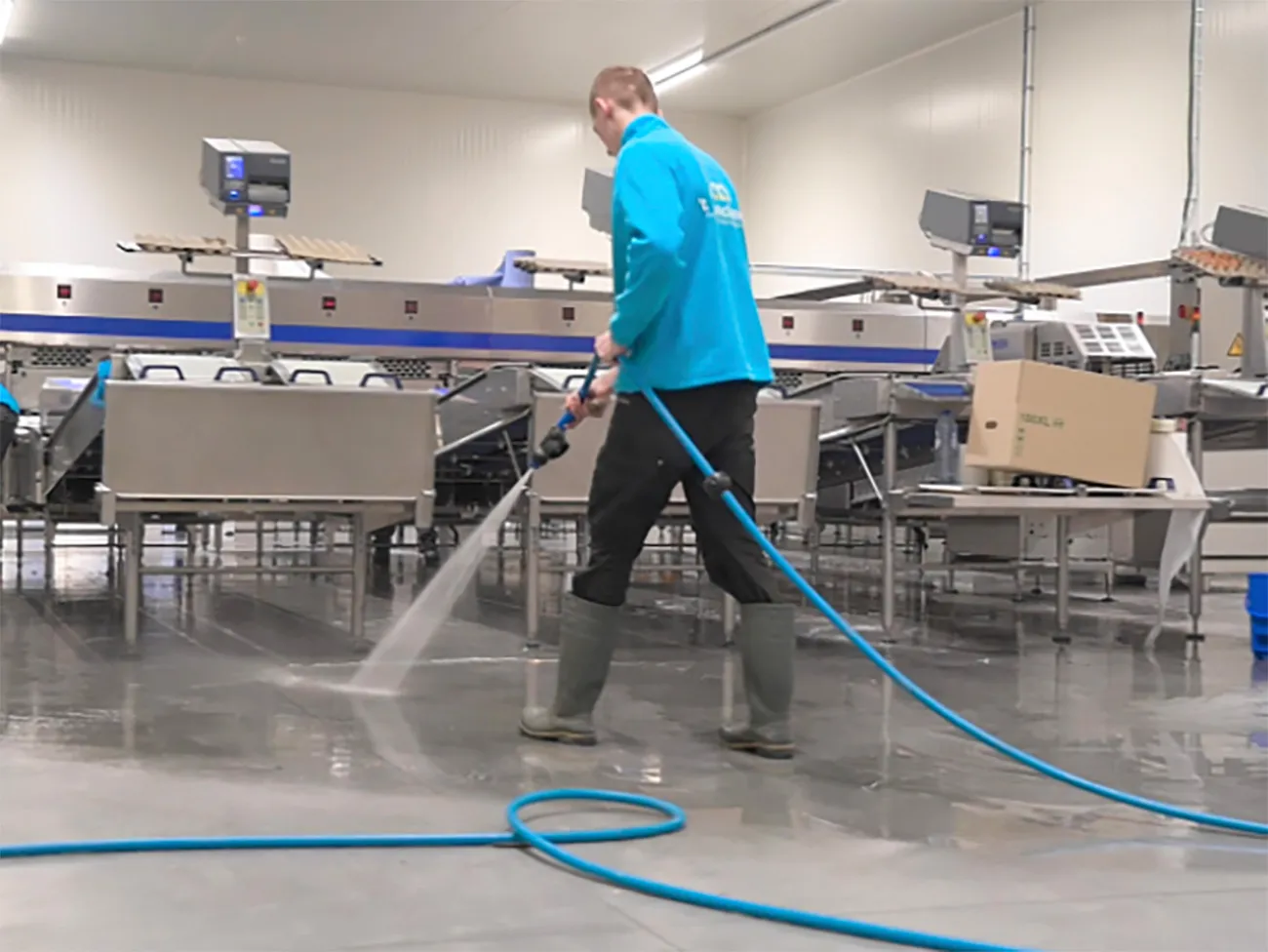
A disinfectant is applied to the cleaned parts and surfaces after cleaning. Here too, the contact time must be observed, after which everything is rinsed with clean water. Employees responsible for cleaning can simply select the required function using the selector button on BOONS FIS equipment: foaming, rinsing or disinfecting. It’s straightforward: the BOONS FIS cleaning systems are controlled by a pressure-boosting unit that supplies the right product, pressure and flow rate for each cleaning function. Everything at the touch of a button!
High-pressure cleaning often gives the false impression that it cleans better. Effective cleaning depends on several factors and how they interact, particularly in the food industry.
‘Sinner’s Circle’
The four universal factors in a cleaning cycle are brought together in the ‘Sinner’s Circle’: time, temperature, chemical action and mechanical force. Increasing one of these factors improves the cleaning result or allows another factor to be reduced.
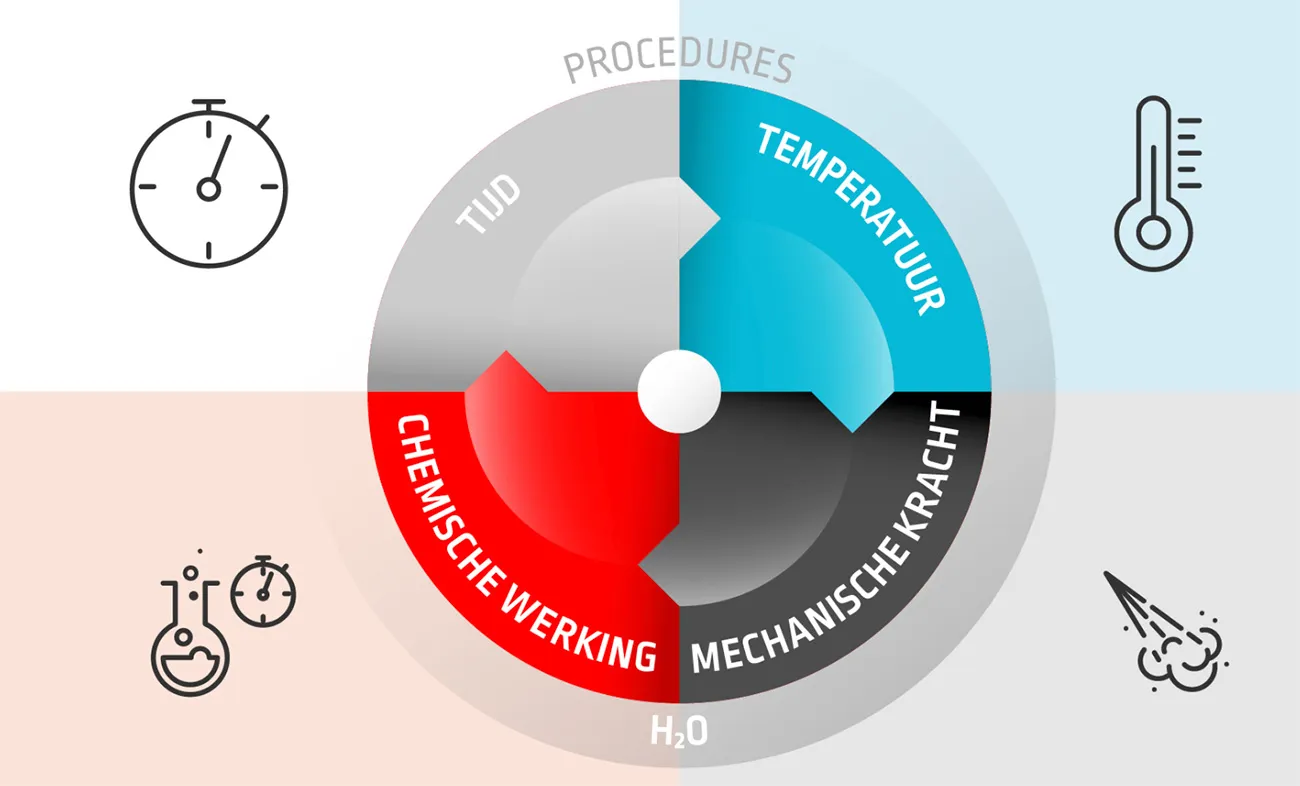
For a particular type of cleaning, one factor may be given greater emphasis, requiring an adjustment to one or more of the others.
Time is the period required for the (chemical) agent to do its work and tackle the contamination. The chemicals must, of course, be given time to adhere. BOONS FIS therefore places great importance on using A-components for venturi systems and compressed air, which ensure that chemicals can be used under optimum conditions.
Temperature is highly important in a cleaning process. As a rule of thumb, the higher the temperature, the better the cleaning. However, there are also limitations relating to safety, corrosion, protein coagulation and the effects on materials such as seals. BOONS systems are equipped as standard to handle temperatures of up to 70°C. High-temperature applications can also be provided as an option.
Chemical action is based on the effectiveness of the agent used and its concentration in relation to the contamination.
Mechanical force is a matter of finding the right balance between pressure and flow rate. It is generally accepted that cleaning becomes more effective as more mechanical action is applied, but this does not always mean using higher pressure. In the food industry, for example, cleaning is much more effective at a lower pressure, around 20, 25 or 40 bar, combined with an appropriate flow rate.
A fifth element, ‘procedures’, has also been added here. This sets out how the cleaning or disinfection protocol is to be carried out. In principle, a good cleaning and disinfection procedure provides the ideal starting point for every production process in the food industry. These procedures specify in the smallest detail what the cleaning process must meet, every time. Which products, which steps, the time to be observed, the equipment used, and so on.
A risk of an incorrect cleaning procedure: the formation of biofilms!
If cleaning procedures are not followed or carried out correctly, or are not effective enough, micro-organisms can attach themselves to equipment, conveyor belts or surfaces, alongside dirt and product residues. This leads to the formation of a biofilm. Biofilms are difficult to remove and can be a source of contamination in the production process and of food products.
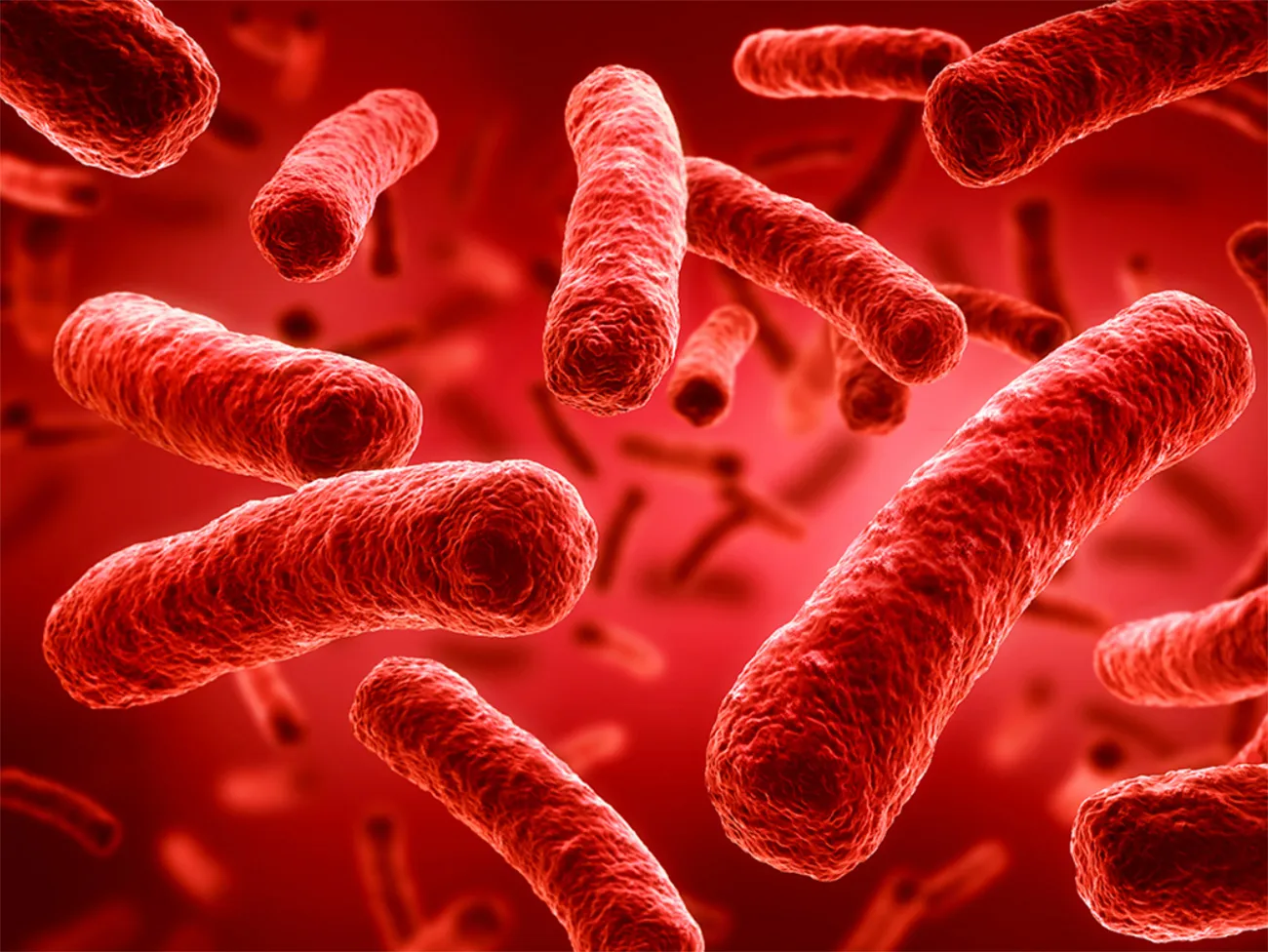
One strategy for tackling biofilms that have already formed is to use enzymes in combination with a disinfectant. Disinfectants are also used against biofilms. For example, chlorine dioxide (ClO2) is a fast-acting, broad-spectrum antimicrobial agent that can be used in the food industry, subject to the necessary approvals and certificates.
Question about this story? Ask your question
Companies in this story
Keep following this
Get an email when a new story is published. No account needed.
- ThemeFood safety from design to audit
- SubjectFood safety
- CompanyBoons Fis







