The robots of today and tomorrow
Text Valérie CouplezImage Stäubli Robotics
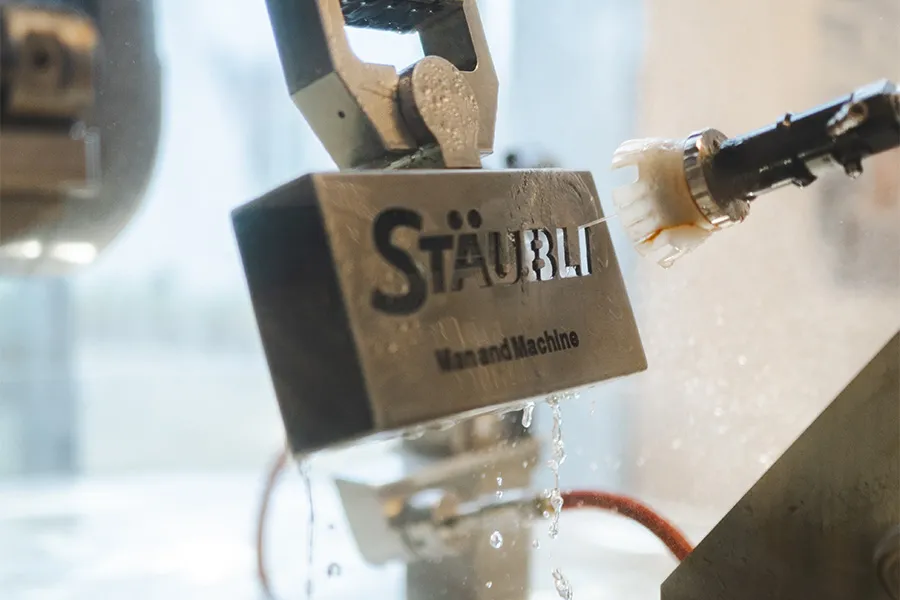
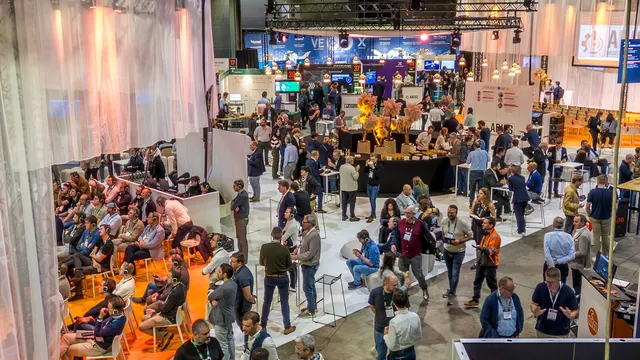
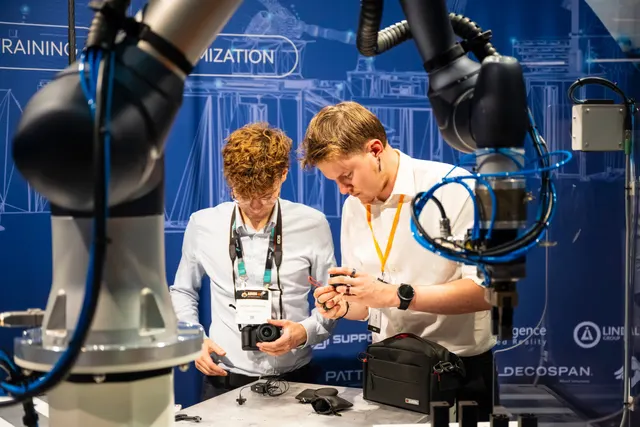
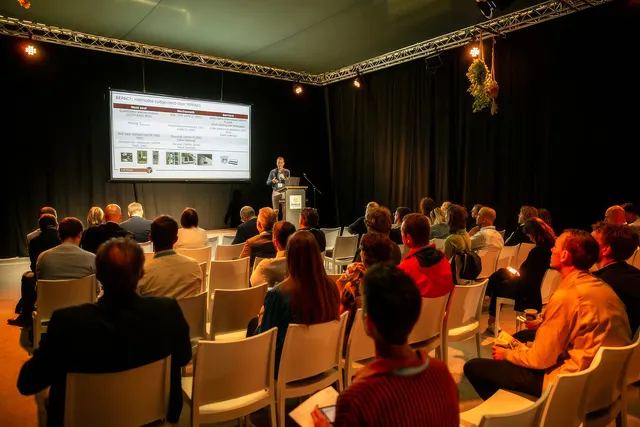
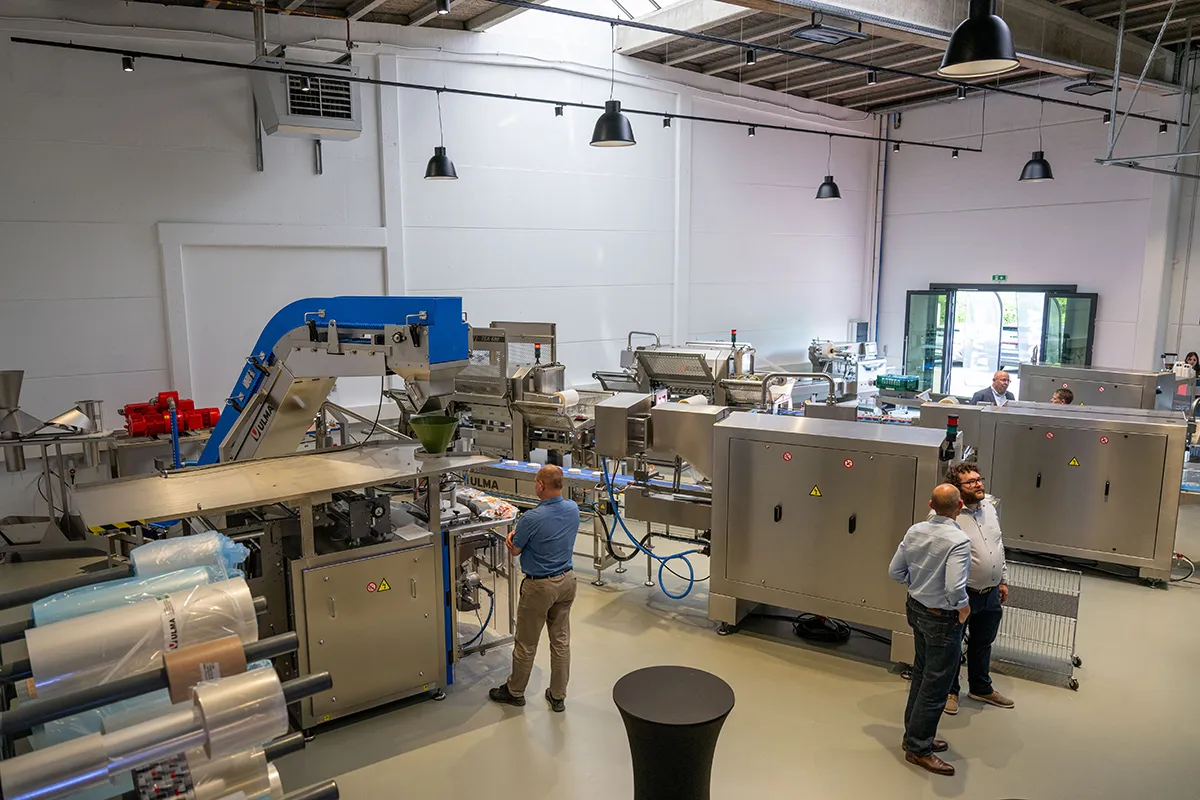
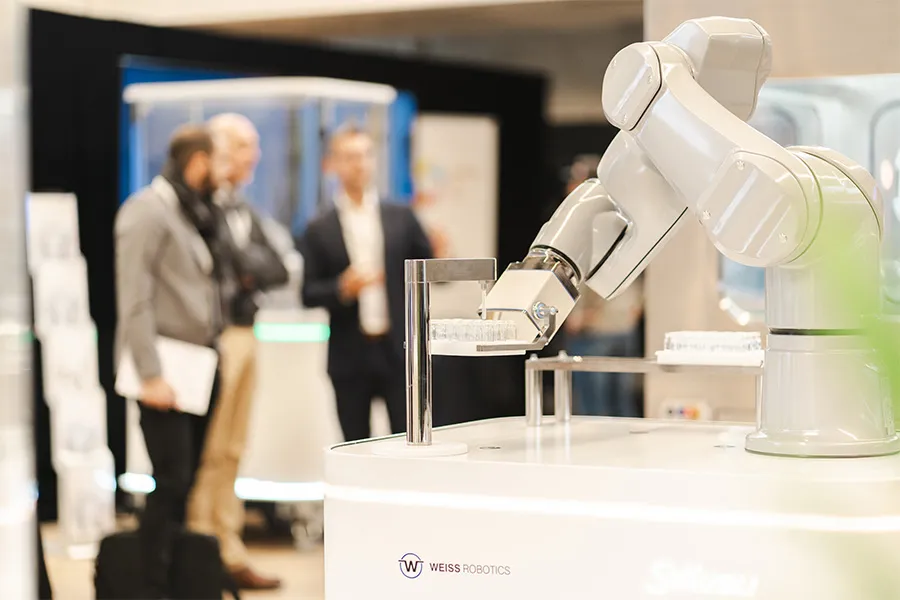
On 22 and 23 November, around 250 people made their way to Technopolis in Mechelen for the Stäubli Robotics Days. Held every two years, the event brings visitors fully up to date with the latest developments in robotics and the wider ecosystem in which robots operate. Stäubli does not do this alone. No fewer than 21 partners were there to show how robots can be turned into complete solutions. Stäubli technology stands for openness and innovation.
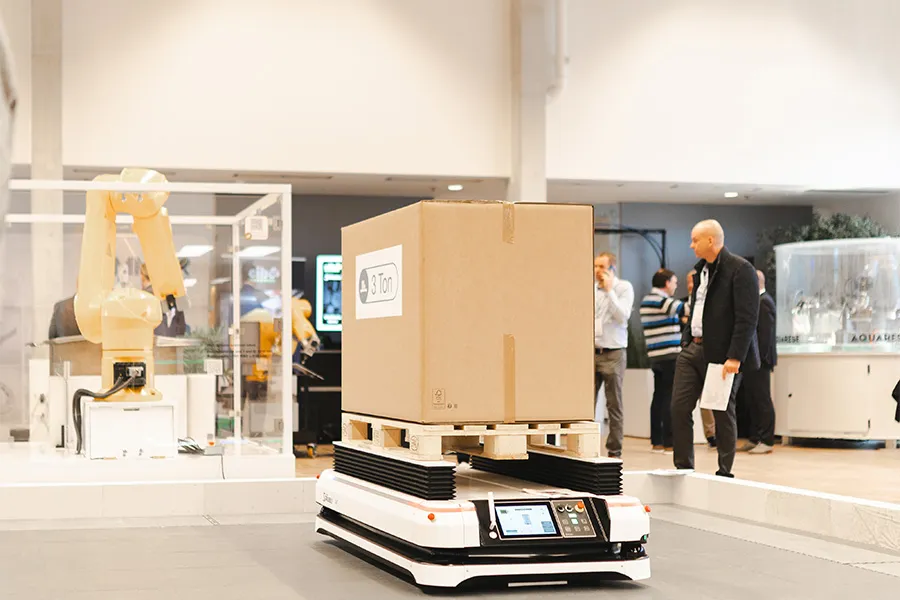
Visitors were immediately greeted by the biggest new arrival, quite literally too if you count the size of the box it was carrying: the new AGV PF3. It was making its first appearance in the Benelux. Laurent Mattheys, Stäubli Director Robotics Benelux, explains what makes it so special. “Five years ago, Stäubli acquired a company that delivered bespoke AGVs. We combined that expertise with our own and turned it into a standard product. The PF3 is the first example of this. The plan is to roll out more models over the coming years, each with its own characteristics, but all based on the same platform, just as we do with our industrial robots.” Its compact size might not suggest it, but this powerhouse can move loads of up to 3 tonnes, with a high positioning accuracy of +/- 5 mm. “That makes it ideal for moving heavy components in a very flexible way.” And in any environment, too. Its enclosed design, a Stäubli hallmark, also opens the door to applications in food and pharma.
Future developments spark curiosity
There are new possibilities, then. But Stäubli also had plenty to spark the curiosity of those looking further ahead. “Teleoperation is one such development,” Mattheys predicts. It allows the robot’s actions to be controlled remotely by following the operator’s movements. “We can’t yet supply it as a ready-to-use solution, but here we’re showing just how close this technology is to user applications. It’s on its way.” A second example in this category is the hollow wrist. “Although our robots already have an enclosed structure, there was still an external cable. Not any more, thanks to the addition of a hollow wrist joint. This isn’t the first time we’ve shown this application. The technology is now almost ready. It’s interesting to hear visitors’ feedback and incorporate it into the final development.”
Belgian proof of concept highlights ease of programming
This also led to a fruitful collaboration with CIBO, one of the partners at the event. At the Automatica trade fair, CIBO immediately recognised the potential of the latest software, VALblocks, a user-friendly teach pendant. It brings the ease of programming associated with cobots to industrial robots. Together with CIBO, Stäubli Benelux developed a proof of concept showing how easily components can be robotically deburred. “We and our partner invested a lot of time in taking that extra step. They brought their deburring expertise to the table, and we brought our knowledge of robots. The result is that you can teach the robot to deburr components in a very intuitive way, even when the paths are more complex.” It demonstrates the added value of the openness of the Stäubli platform in creating complete solutions. “For this application, we integrated VALblocks with CAD/CAM software.”
Robots as data miners
The step from software to digitalisation is a short one. Mattheys also has developments to report in this area. “We’re getting a lot of requests from customers to share data from our robots, especially for preventive and predictive maintenance,” he explains. For Stäubli, this is not about ‘big data’. “We don’t want to overwhelm customers with information, but only extract the data that can help them make progress. A simple current measurement or temperature monitoring, for example, can already enable a great deal of analysis.” Stäubli’s efforts in this field are brought together in part in SCOPE, an open system that uses captured data to create a dashboard. “The hardware is already equipped to perform these analyses. We can also build cyber-secure solutions. But real business cases also require customers to be open to linking data from the robot to the right systems. Those developments are still to come.”
Better sense of direction for AMRs
Robots have even made their way into our living rooms, at least for those with a robot vacuum cleaner. The most common reason for these vacuum cleaners, and mobile robots more generally, to fail? They lose track of where they are. Ellen van Nunen of Flanders Make came to explain the latest developments in SLAM (simultaneous localisation and mapping). This clever algorithm uses on-board sensors to build a map and determine the vehicle’s position within it. The technique already works well in static environments, but dynamic ones require greater robustness. Flanders Make is building this in in three ways. The first approach combines SLAM with other localisation techniques, such as visual markers or Wi-Fi. The second priority is to improve understanding of the surroundings through the integration of artificial intelligence. Each pixel is assigned its own category, static, movable or dynamic, so that the right elements, the static ones, can be used for localisation. Thirdly, a recovery plan is needed. The AMR must be able to return to its last known position or follow a predefined route to find the right direction again. Thanks to this three-pronged approach, Flanders Make was crowned champion in every trial at this year’s ICRA BARN challenge.
A business enquiry for Stäubli? Get in touch
Companies in this story

Keep following this
Get an email when a new story is published. No account needed.
- SubjectEvents
- CompanyStäubli