More than rules: the power of human skills
Aida Afrasiaby - KTBA
The importance of human skills
In the food industry, ensuring food safety is about more than strict procedures and technical knowledge. The key to a robust Food Safety Culture lies with the people in your organisation. How well can they work together, communicate and cope with pressure or change? A recent food safety crisis at a European producer showed that it is not just systems, but also human skills that are crucial to preventing risks.
Human skills as the foundation of Food Safety Culture
A strong food safety culture begins with shared norms and values, but its success depends on the human element. Communication, for example, plays a central role: how clearly are food safety guidelines communicated? Do employees understand and embrace the message, or does it remain confined to a paper exercise?
Mental resilience and the ability to cope with pressure are also essential. This includes responding to unexpected situations, such as identifying a potential risk or taking responsibility when something goes wrong. An employee who feels heard and can cope well with challenges contributes directly to the safety culture.
Sustainability and Food Safety Culture
Sustainability is playing an increasingly important role in the broader context of Food Safety Culture. Customers and consumers expect not only safe food, but also companies to manage their environmental impact responsibly and follow ethical practices. Sustainability is therefore no longer a separate dimension: it is now an integral part of food safety culture. In this context, communication is crucial. Employees need to understand not only how sustainability contributes to food safety, but also how to communicate sustainable practices effectively within their teams and to customers. This calls for specific skills, such as the ability to integrate sustainability and quality into day-to-day processes and to discuss complex, often technical topics in an accessible way.

The example of Acomo
A great practical example comes from our client Acomo, an international group of companies that sources, trades, treats, processes, packages and distributes conventional and organic food ingredients for the global food and drink industry. Aldert van der Kamp, Sustainability Manager at Acomo, says: ‘’As responsibilities and workloads continue to broaden and become more demanding, it is important for the QA manager to be confident and well-grounded, both professionally and personally. The Mental Resilience training has made a valuable contribution in this regard.’’
“In our field, at the intersection of sustainability and quality, we face a lot of change, often driven by legislation and regulations or customer requirements in different countries. Colleagues are not usually eager to hear my message straight away, because it often calls for new or additional effort. This creates tension, and it is important to keep a cool head in these situations. The training helped me become more aware of the effects of tension on both my body and my brain, and to respond more effectively in stressful situations. It is a valuable combination of theory and practice, applicable to everyone.”
Miranda Pieron, Sustainability & Compliance Specialist at Van Rees Group
“After completing the ‘Mental Resilience’ training, my inner battery has been recharged with tips on how to respond effectively in stressful situations, which inevitably arise in a role as a quality and safety manager. I would therefore recommend this training to everyone, because it strengthens you as a person in your interactions with others. Being resilient is not a weakness, but a strength that helps you handle more difficult situations. For me, training in social skills was therefore a useful addition to the many other knowledge-based specialist courses in QA/QC and Safety.”
Veerle Wancour, Quality Control & Safety Manager at SNICK EuroIngredients.
Our approach: from technical expertise to the human touch
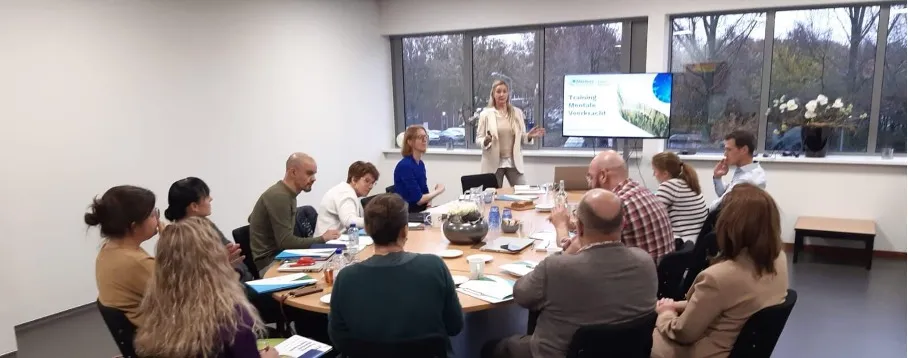
At Mérieux NutriSciences, we support organisations not only with implementing systems and guidelines, but also with developing the human skills that underpin these systems. Our training courses are specifically designed to strengthen the human side of food safety:
- Mental resilience: Coping with pressure and change, which is crucial in a dynamic industry.
- DISC training: Understanding behavioural styles to improve collaboration and communication.
- Tactful communication: Creating a culture in which people feel heard and dare to report risks.
- Perfectionism: Letting go of unhealthy perfectionism, which can lead to excessive stress and inefficiency.
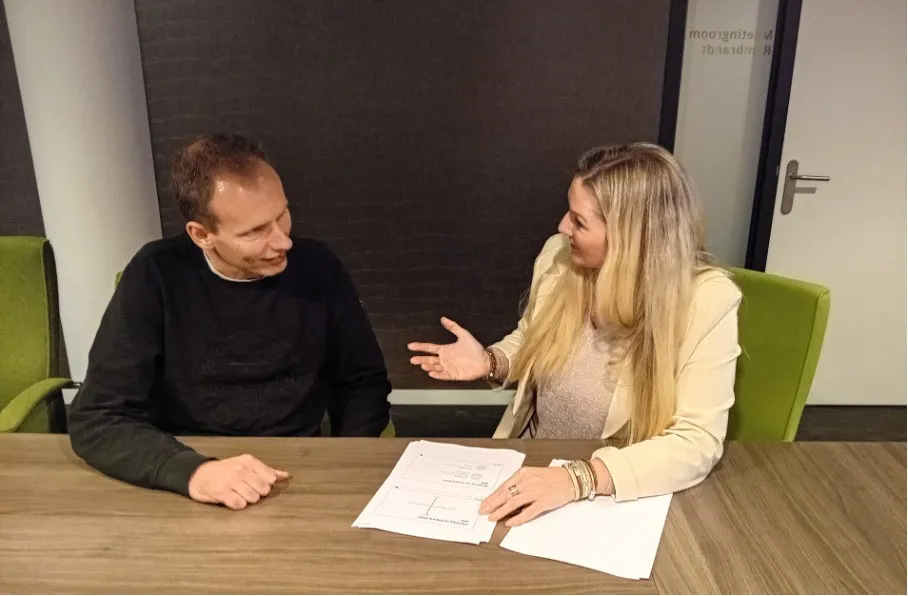
Human Skills Trainer Nathalie Steenmeijer is also a professional coach affiliated with NOBCO (Dutch Association of Professional Coaches). By offering one-to-one coaching, we help employees with personal development, wellbeing and working more effectively. This can range from improving how they deal with change and manage stress to developing personal insights into thought patterns and behaviour. A one-to-one coaching programme can be the key to strengthening both individual performance and the broader culture within your organisation.
Een zakelijke vraag aan Mérieux NutriSciences | Expert Partners? Get in touch
Companies in this story

Keep following this
Get an email when a new story is published. No account needed.
- ThemeFood safety from design to audit
- SubjectPeople & training
- CompanyMérieux NutriSciences | Expert Partners