












120 trays per minute
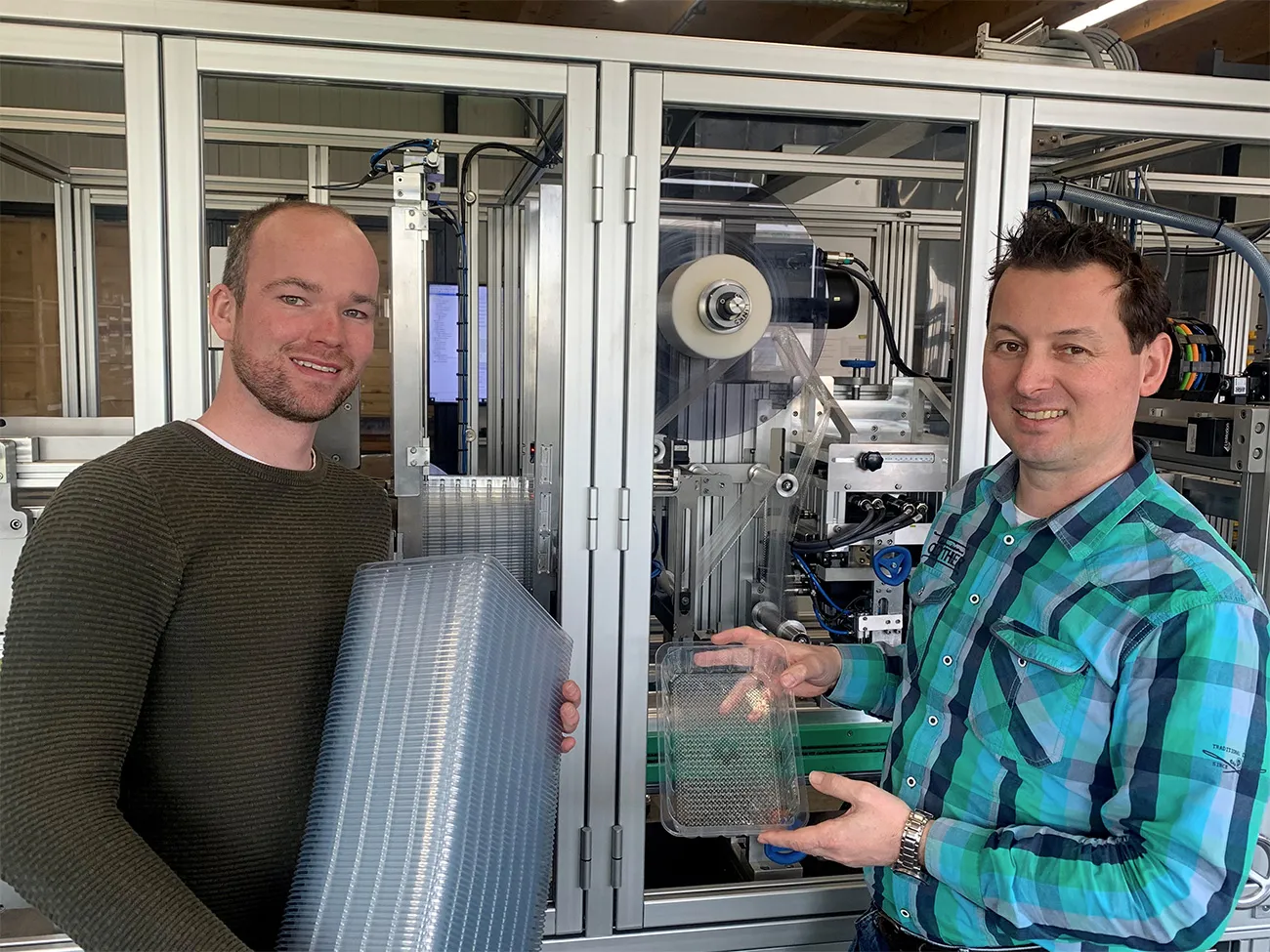
By 2025, packaging materials must be fully recyclable. Developments in this area are therefore hugely important. Dampack came up with the concept for a so-called BeeMagicTray, while Klebo Techniek developed the machine, incorporating a wealth of Lenze technology and expertise.
Packaging supplier Dampack, based in Werkendam, developed and patented a plastic tray. The base of the tray features a special honeycomb structure that reduces moisture loss and extends shelf life. Crucially, the tray is made from a single material, making it ready for 2025. The machines that produce these trays are built by Klebo Techniek in Holten, a machine builder with extensive expertise in thermal and ultrasonic welding processes. Lenze makes an important contribution to their design, helping to optimise not only output but also the machine’s OEE, flexibility and safety. The first machine had an output of around eighty to ninety units per minute. The target? One hundred and twenty trays per minute. Ideally, the system would be supported worldwide, while allowing Klebo to avoid relying on a system integrator. Klebo owner Johan Klein Leetink: “After speaking to a few other suppliers, we got in touch with Lenze. It quickly became clear that we could not only discuss our requirements with them, but also that we shared the same philosophy.”
Modular by design
Klebo Sales Director Rob Spekreijse saw that Lenze also embraced the desired approach to modularisation. “We saw similarities in every respect. Not just in the modular approach to control systems: you can see that Lenze is a family business, and that atmosphere suits our company too. Short lines of communication, no arrogance, and you really feel that they are committed to you and your project. We were genuinely impressed by their approach.” The entire machine concept was reviewed. “We had a clear goal in mind,” says Klein Leetink. “One hundred and twenty trays per minute. Every part of the process was scrutinised. Lenze’s sizing software led us to conclude that some movements could be handled better in a different way.”
Detailed control
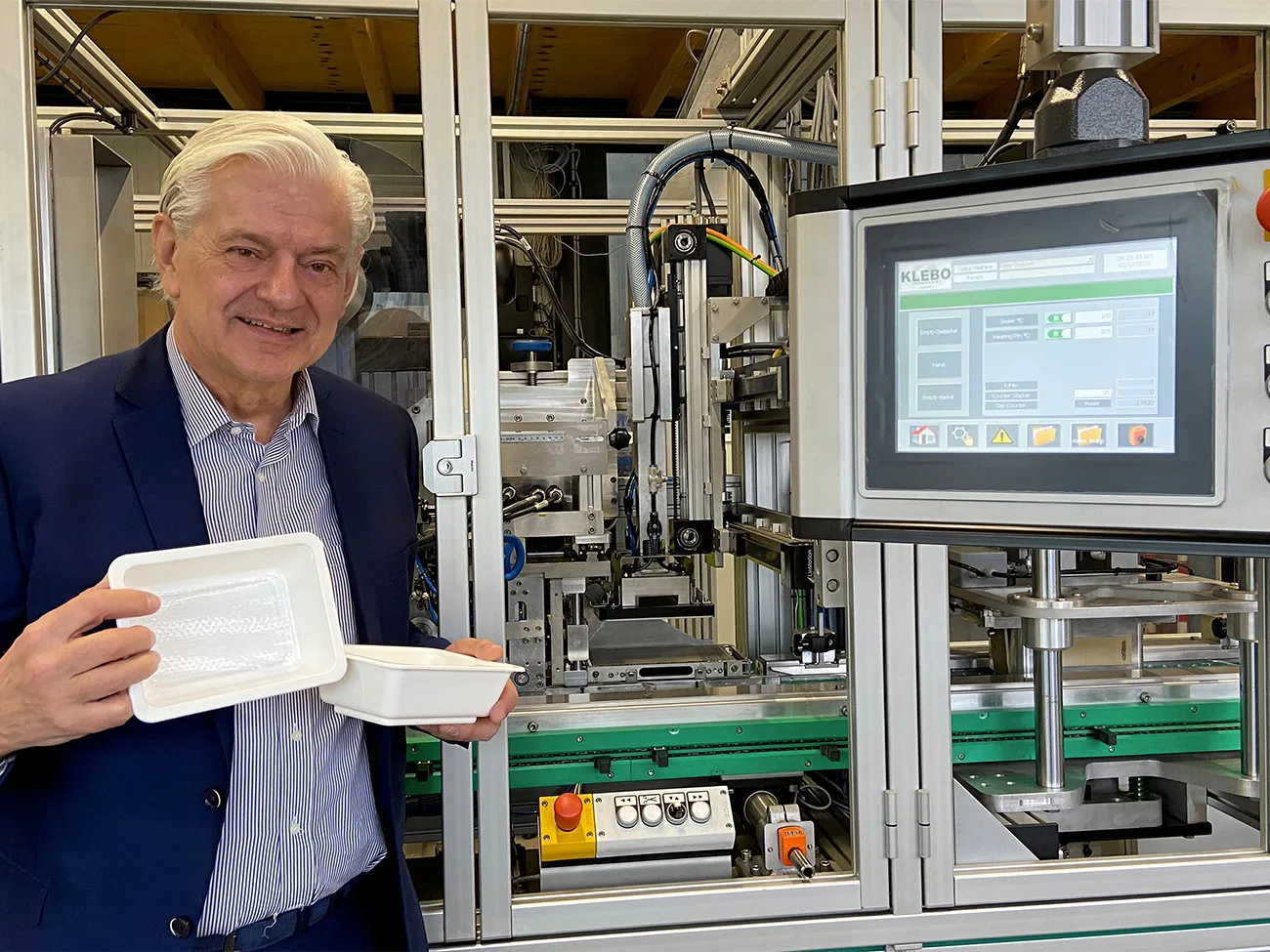
The modular design of the drive technology and process control allows the machine to be controlled in detail. That is already very important in itself, but Spekreijse explains that the real value goes beyond that. “We have a great deal of detailed information at our disposal for servicing, without needing product information or the recipe. This means we can monitor the status of the various components very effectively.” The modular design and division of the process into individual steps have also made a major difference to the process itself. “We had not yet got the positioning of the lidding film fully under control. Lenze’s servo technology made a real difference here. We use several servo motors and, with a little trick, the secret of the trade, so to speak, we were able not only to position the film very precisely, but also to increase the positioning speed enormously.”
Separate processes
The process involves a great many different steps. Spekreijse: “We have set up the individual operations as separate software function blocks, making it very easy to configure the machine flexibly. But the interplay between them has to be calculated very precisely to achieve the optimum coordination of the position controls. All the processes fit together beautifully with what we want. The added value of working with Lenze lies in several areas. Lenze offers good after-sales support, production facilities on every continent, extensive standardisation, an easy-to-program control system and access to a great deal of data. This helps us further improve OEE. We can immediately see where values are deviating, and combined with information about the drive systems, this gives us a clear picture of the situation. Using feed data, quality data, rejects, measurements and data from the process flow, as well as from the I/O modules and sensors, you can analyse every aspect in the smallest detail. Remote access, visualisation and the cloud connection make it possible to learn from the machine’s lifecycle and its impact on OEE. It is best to keep your analysis as open as possible, because that also gives you immediate insight into factors that are still unknown. We have divided that information into blocks too.”
Question about this story? Ask your question
Companies in this story

Keep following this
Get an email when a new story is published. No account needed.
- ThemeReliable machinery and drives
- SubjectSolutions
- CompanyLenze







