












A marking process that keeps pace with production
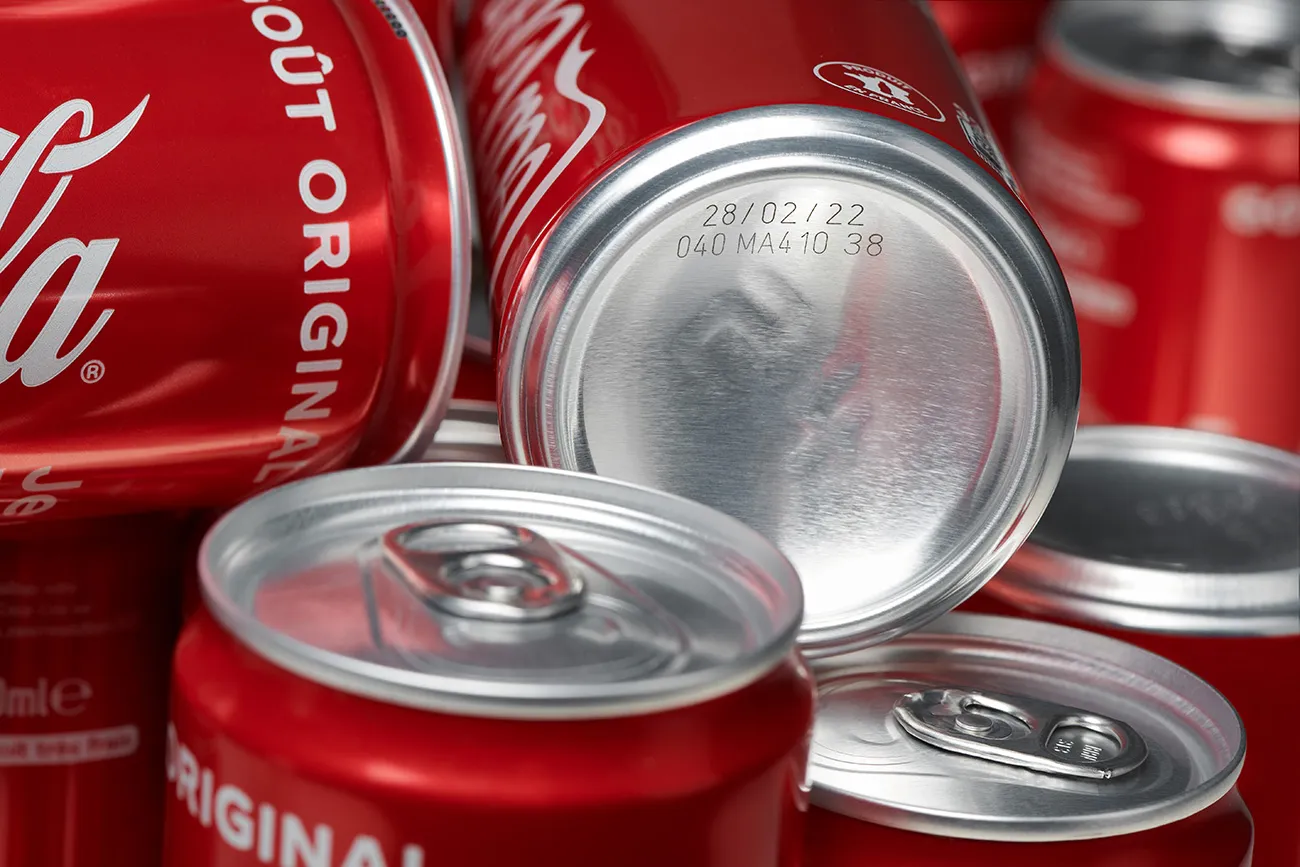
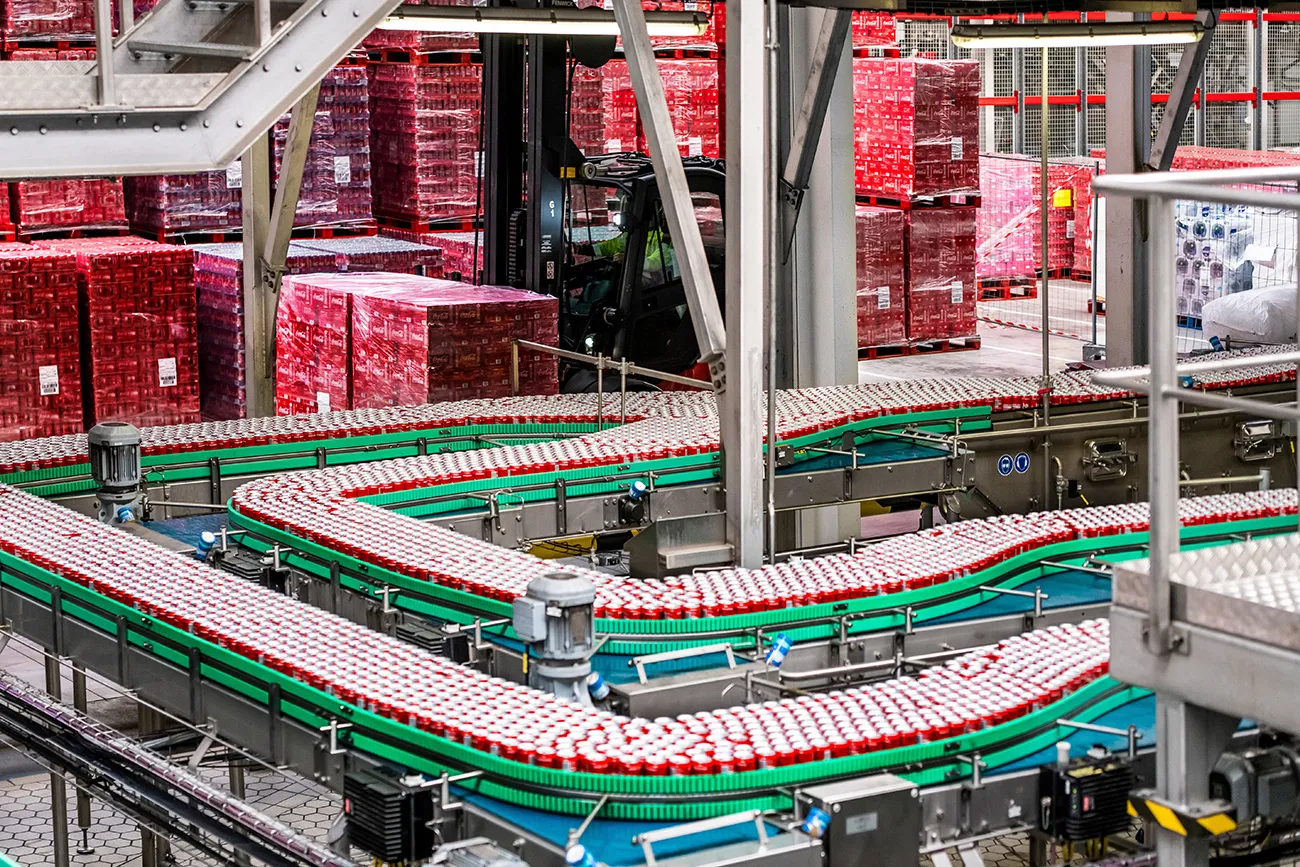
With production running at up to 25 cans per second, things move fast at the Coca-Cola European Partners (CCEP) factory in Marseille, France. To guarantee the quality of every finished product, the factory’s marking process must keep pace with production, a challenge Markem-Imaje has met with a bespoke solution.
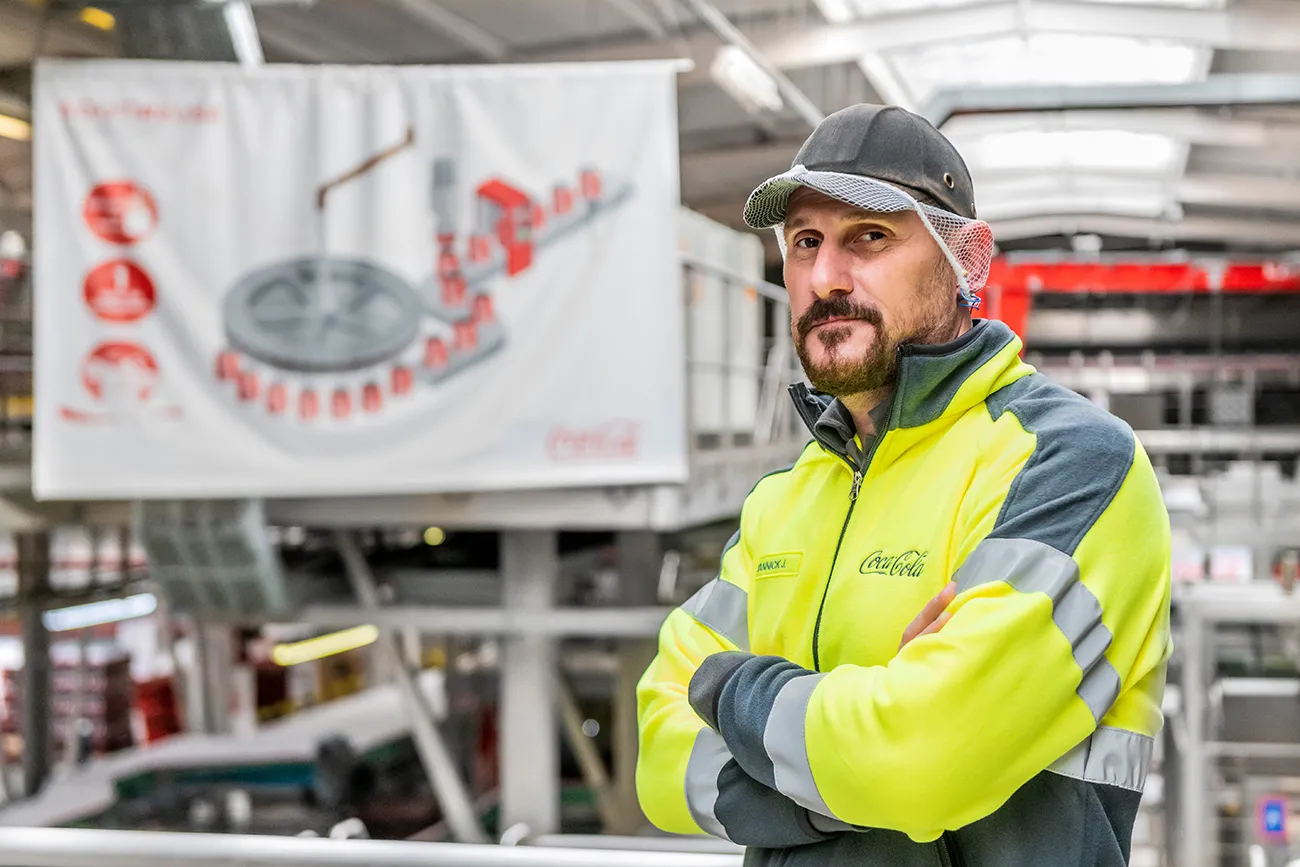
CCEP’s factory in Marseille opened its doors in 1970. Today, its 183 employees produce around 50 million cases of drinks each year. Up to 120,000 aluminium cans come off the production lines every hour, making them among the fastest in Europe. Reliable technology is therefore essential. Until recently, the factory used inkjet printers, a technology it wanted to replace with a more sustainable alternative: laser marking. “This switch would eliminate VOC emissions and make marking more precise, with better resolution,” says Yannick Joubert, senior manager Plant engineering & Technology at CCEP, summing up the main benefits. “These systems require less maintenance. We have to replace the filters annually and wipe the laser lens clean every hour, but that’s all. Previously, production across the entire plant would regularly stop so the inkjet printer heads could be cleaned. And because they could become clogged, we had a dual coding system to ensure marking could always take place.” CCEP can also save costs by no longer having to buy ink or provide explosion-proof storage.
A challenging production environment
Even so, the production environment presented its challenges. CCEP Marseille’s aluminium can production line is arranged in two lanes, with a combined output of up to 25 cans per second, an exceptionally high speed in Europe. The production line is installed approximately 10 m above ground and is exposed to temperatures of up to 50 °C in summer. That is twice the heat that traditional marking solutions can withstand. In addition, the production process releases aluminium dust, which can eventually damage the machines unless an effective extraction system is installed. In these challenging conditions, the base of every can must be marked with two lines of 18 characters. This must be done without errors, and without compromising accuracy or quality. No standard system can handle this task. Markem-Imaje can.
Reliable, high-performance laser coders
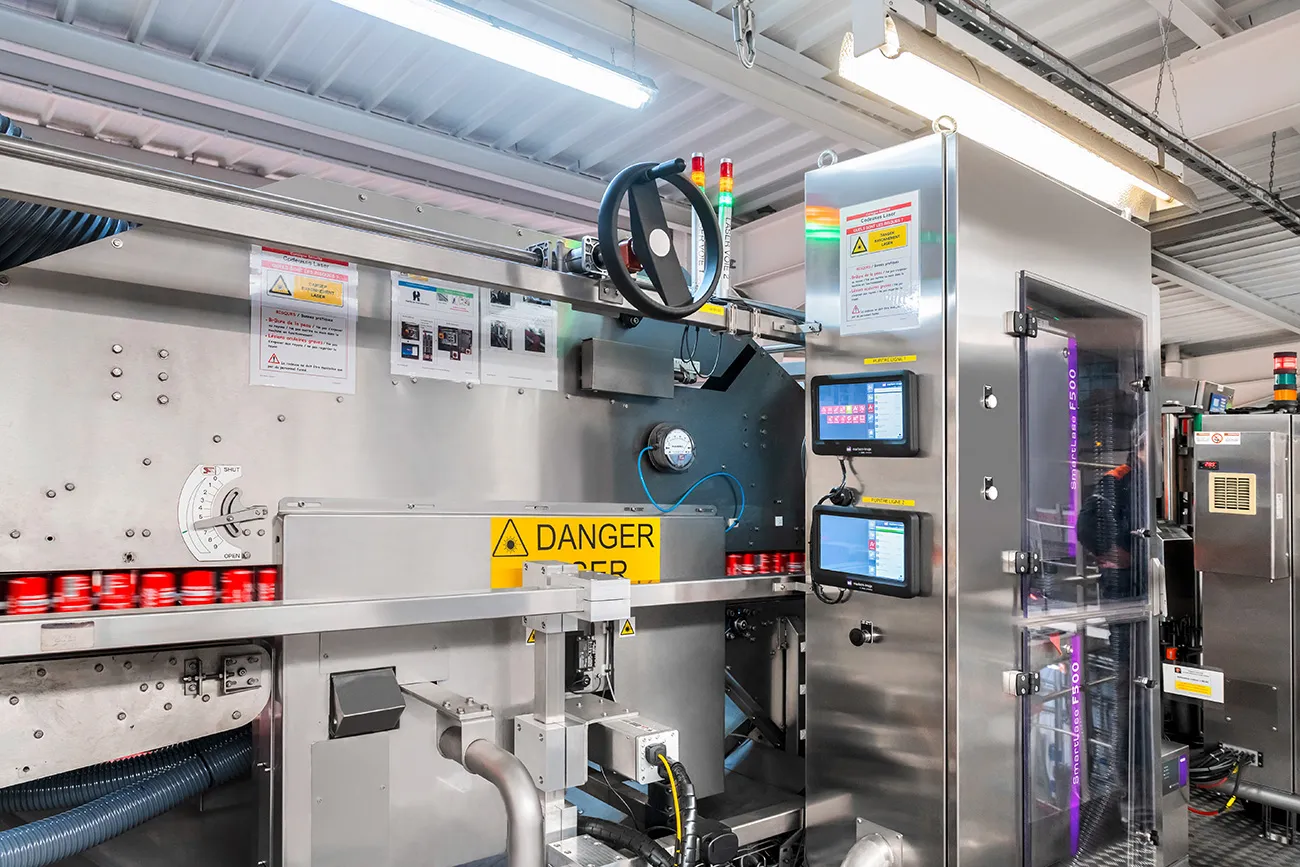
Ten years ago, Markem-Imaje had already supplied CO2 laser-based coding systems to mark PET bottles at CCEP. The fact that there had not been a single incident in all that time gave the company great confidence. “Markem-Imaje was the only supplier that could assure us it had a solution capable of handling our production speed,” Joubert adds. After consulting with the customer, Markem-Imaje replaced the four existing inkjet printers on the aluminium can production line with two SmartLase F500 fibre laser coding machines. The laser heads, which point upwards, mark the base of the cans in 0.004 seconds per product. The installation includes cooling units and aluminium dust extractors to protect the coding machines. CCEP opted for the full package, comprising laser markers, accessories, equipment protection, installation training, preventive and corrective maintenance, and consumables (filters).
Fast and error-free
“We also greatly appreciated Markem-Imaje’s responsiveness. They adjusted the cooling and print signal until everything was perfectly reliable. They also worked with our vision technology supplier, whose system checks the marking process.” All the checks confirmed that the laser technology worked without errors. Although the installation is already running at full capacity, Markem-Imaje’s teams are still adapting the laser shielding in response to a new request from CCEP to work with its supplier to optimise marking inspection. “We are the only company in our group, and even in the entire drinks industry, using a laser to mark cans at this speed. This achievement has already attracted the attention of our colleagues in Socx (northern France), Australia and England,” Joubert concludes.
Question about this story? Ask your question
Companies in this story
Keep following this
Get an email when a new story is published. No account needed.
- ThemePackaging and product traceability
- SubjectSolutions
- CompanyMarkem-Imaje NV







