












Air conditioning systems for mushroom cultivation: choosing the right sensors is crucial
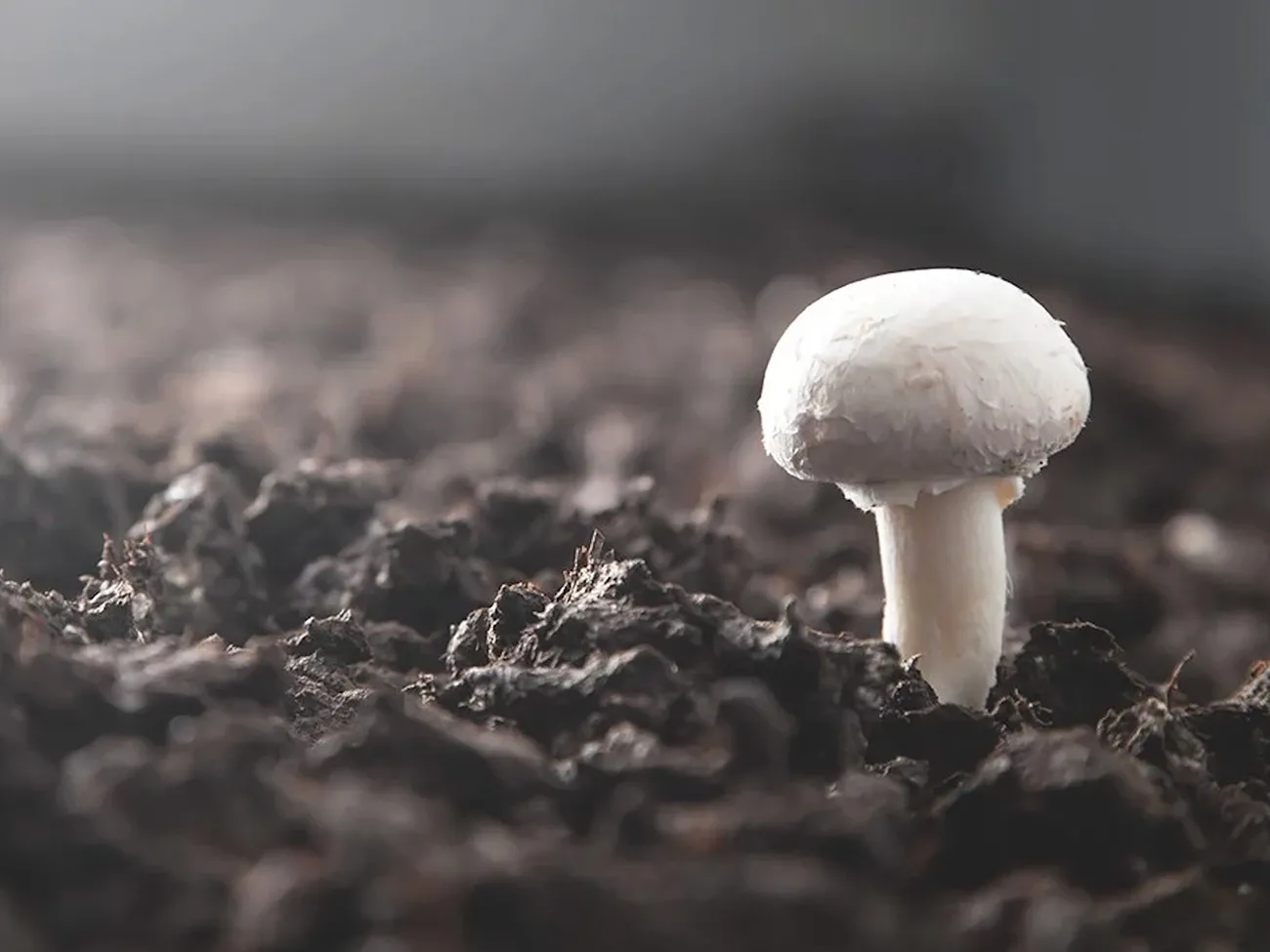
Growing edible mushrooms requires specific climatic conditions to ensure the highest-quality crop and maximum yield. From compost preparation and the growing phase through to harvesting, it is important to maintain optimum temperature, humidity and CO2 levels. The challenge for mushroom growers and system operators is to measure and control these climate parameters as accurately as possible. The requirements are demanding and must be considered from the outset.
Precision air conditioning creates natural conditions
Conditions that occur naturally only in autumn must be maintained all year round using air conditioning systems: optimum temperature and humidity, together with the right CO2 concentration for mushroom growth. The individual components of an air conditioning and humidification system, such as humidifiers and measuring equipment/data loggers for monitoring temperature, humidity and CO2, must therefore be carefully assessed. The challenge is that, in mushroom cultivation, the technology must cope with exceptionally high humidity and the spores released by the fungi.
The individual stages of mushroom production
Growing mushrooms indoors means reproducing natural growing conditions as accurately as possible. The requirements for an air conditioning system in mushroom cultivation are therefore determined by the individual stages of the growing process.
Stage 1: Compost preparation and spawning: constant temperature, high humidity and CO2 concentration
Fresh compost is the basis for mushroom cultivation. Mushroom spawn (mycelium) is spread over it and completely penetrates the compost within 2-3 weeks. During this stage, conditions must be very humid, warm and dark.
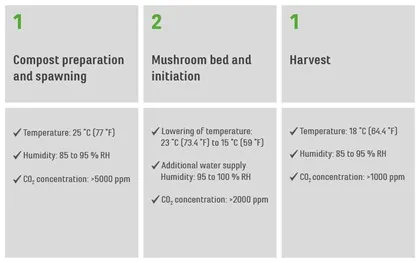
Stages of mushroom production
Stage 2: Mushroom bed preparation and initiation: gradual reduction in temperature
In the next step of industrial mushroom cultivation, the mature compost is spread across mushroom beds in specialised growing rooms. This is followed by a precisely defined process, which begins with maintaining a constant temperature and supplying light and air regularly. The mushroom bed is then watered for several days, while the humidity is increased to 100% RH by gradually lowering the temperature. This causes the mycelium to contract and form small pinheads, from which the mushrooms develop.
Suitable sensors: EE872 CO2 transmitters, EE211 heated RH/T, EE212 with replaceable sensor tip.
- At this stage, temperature, humidity and CO2 concentration have a decisive influence on fungal growth.
Faulty measurement data affects the entire crop.
Stage 3: Growth and harvesting: maintaining constant conditions
During the growing phase, up to harvest, temperature, humidity and CO2 concentration are kept constant for up to seven days. Within a week, the mushrooms reach the ideal harvesting size of 3 cm (1.2 inches).
Measuring humidity, temperature and CO2 in mushroom cultivation
At each of these stages, the right form of climate control is crucial to successful mushroom cultivation. The sensors used play a vital role. They must measure temperature, humidity and CO2 concentration accurately and reliably in an exceptionally demanding environment. Any undetected deviation or inaccurate measurement results affect mushroom quality and cost money.
When choosing suitable sensors, it is worth defining the requirements precisely, taking the specific environmental conditions into account.
Mushrooms thrive in damp, dirty conditions, but sensors do not
Optimum environmental conditions are essential for the best possible mushroom growth. Constantly high humidity and contamination from released spores pose a particular challenge for measurement technology.
1. Condensation and condensation-related deposits on sensitive sensor elements can impair measurement performance and cause corrosion.
2. The spores released by the fruiting body, measuring 3-15 μm, settle throughout the system. The mycelium (fungal hyphae) that forms here coats surfaces and can cause false readings, potentially resulting in the loss of the entire crop.
Measurement technology for industrial mushroom production must be extremely robust. This means that particular care must be taken when deciding which sensors to integrate into the climate control system for mushroom cultivation.
For more information: www.catec.nl/nl-nl
Een zakelijke vraag aan CaTeC bv? Get in touch
Companies in this story

Keep following this
Get an email when a new story is published. No account needed.
- ThemeSmart production with data
- SubjectSolutions
- CompanyCaTeC bv







