Automating Easter egg mixing: Mondelez opts for electric drives
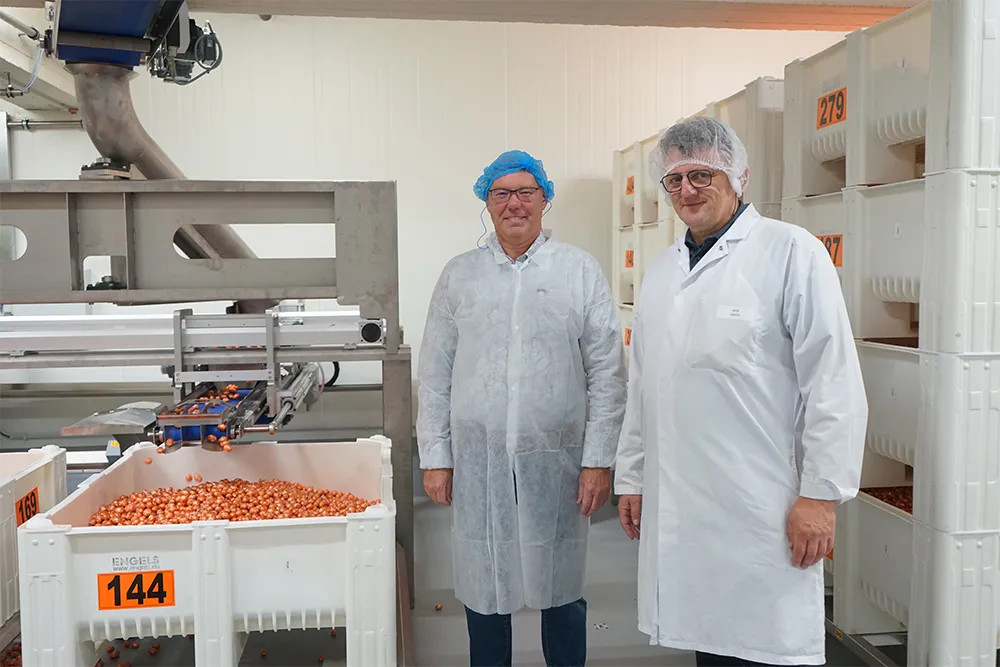
For a new installation to mix chocolate Easter eggs, Mondelez in Herentals opted decisively for electric drives. The main reasons were lower energy consumption, improved safety and greater flexibility in controlling speeds and positions. An ingenious conveyor system ensures everyone gets a tasty mix of flavours in their pack of chocolate eggs at Easter.
Mondelez is a major international player in the food industry, with dozens of well-known brands in its portfolio, including Côte d’Or, Milka and Oreo. The company has factories for both its biscuit and chocolate divisions in Herentals. The biscuit factory produces Lu biscuits, among other products. Mondelez Chocolats makes Leo biscuits, Côte d’Or bars and Easter eggs.
The new Ergomix project is part of Easter egg production, which runs for most of the year to build up enough stock to meet the sudden surge in demand for this seasonal product at Easter. The project takes its name from its initial objective: improving ergonomics for operators. Previously, eggs of different flavours were mixed by manually combining trays, a physically demanding task. The new installation does this fully automatically.
Positioning hoppers above the conveyor
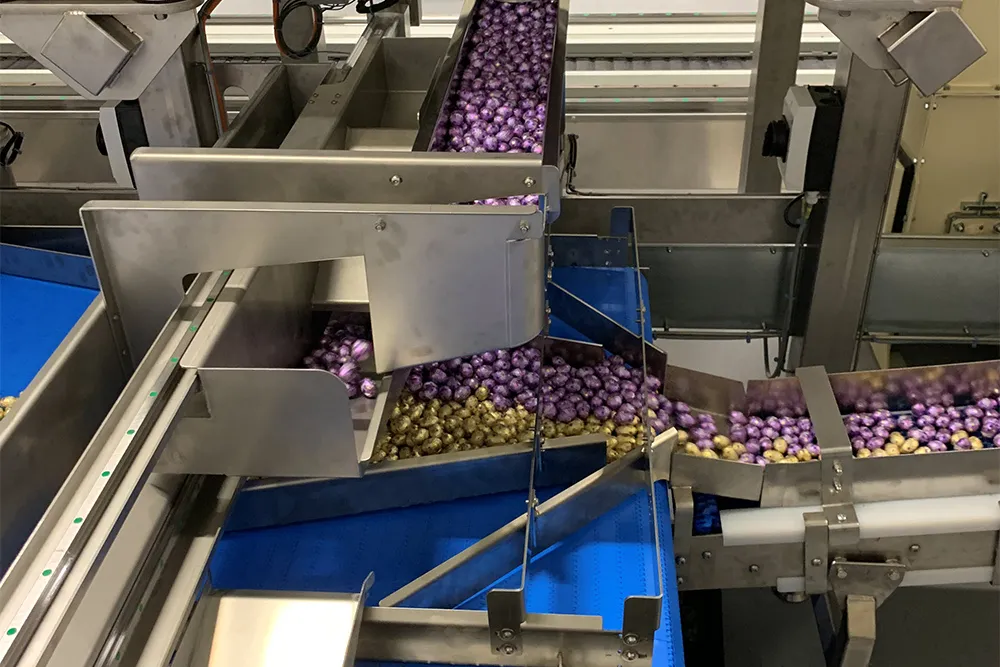
Once the eggs have left the moulding line and been individually wrapped, a conveyor takes them to the new installation downstairs, where they are first sorted by flavour into large pallet boxes. A robot then positions the boxes ready for mixing, or a mobile robot collects them for temporary storage in a warehouse. Once all the flavours needed for a mix are ready, the eggs are fed through hoppers onto specific positions on a wide belt, so that all the flavours lie side by side. At the end of the belt, the eggs are collected in a pallet box, now perfectly mixed.
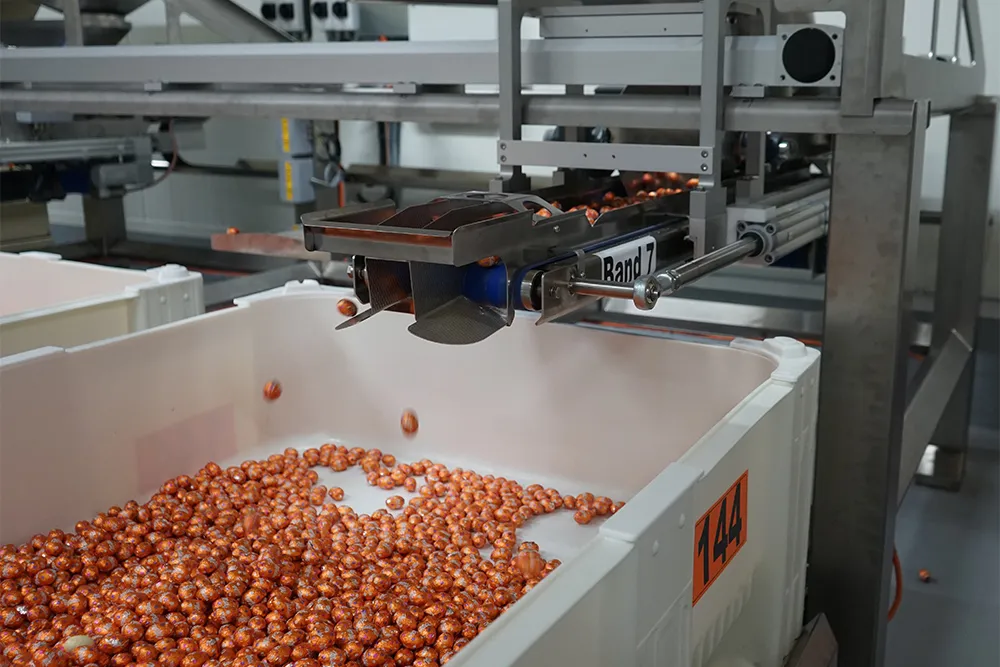
One of the first drive technology challenges was to ensure the eggs were spread evenly as the pallet boxes were filled. Otherwise, they would pile up, making it impossible to stack the boxes. The second challenge was positioning the hoppers over the conveyor on which the mix is assembled. This needed to be a flexible system, as not every mix contains the same number of flavours. Finally, a suitable drive also had to be found for the robot gripper, which moves the 150 kg pallet boxes.
Fewer design constraints
“Our starting point for this project was to avoid using pneumatics,” says Bob Aerts of Mondelez’s engineering department. “The reasoning was that electric drives offer better energy efficiency, and it is also easier to implement every aspect of machine safety. We presented this to Festo, and they not only understood our approach and the applications we wanted to build, but could also supply all the components needed to make it happen.”
Demand for electric drives is nothing new for Festo. “We’re seeing this segment grow by more than 20% a year,” says Johan De Pauw, sales engineer at Festo. “Some applications are difficult or impossible to achieve with compressed air because of the speeds involved or the need for flexible positioning. Electric drives offer far fewer constraints on how you want to design and build things. In addition, the total cost of ownership is lower with electric drives than with pneumatic drives in this application.”
Betecem was responsible for designing the installation, with Koen Roobaert, application engineer at Festo, advising on component selection. Alax Automation was brought in to handle the programming.
“The collaboration went very smoothly,” says Bob Aerts. “One advantage of working with Festo was that, from the quotation stage, links to all the documents and files that could be used in engineering and sizing tools were supplied for every component. This meant everyone had the right information from the outset and could get straight to work.”
Electric cylinders
To fill the pallet boxes evenly, a system was designed in which the conveyor carrying the eggs can be moved from side to side using two toothed belt axes with a servomotor and torsion shaft. A spindle-driven electric cylinder, aligned with the conveyor, can also extend and retract it. This allows the system to position itself and drop eggs anywhere in the pallet box. The control system receives feedback from the load cells beneath the box and the feed rate, allowing it to determine precisely where there is still room in the box.
Electric axes were also used to position the hoppers above the wide mixing belt. Their positions can be adjusted automatically to suit the number of flavours in a particular mix. Indeed, no manual intervention is needed anywhere in the installation. It is located in a temperature-controlled room in the basement and operates fully automatically.
The robot gripper that moves the pallet boxes was also equipped with an electric ESBF cylinder and servomotor. All the CMMT servomotor controllers are housed in the electrical cabinet just outside the temperature-controlled room. They communicate via Profinet with the PLC that controls the installation.
Changeovers managed in software
The new installation has now been operational for some time, and the benefits of electric drives have already been amply demonstrated. For example, some fine-tuning was needed to find the right parameters for filling the pallet boxes evenly. One advantage of electric drives is that speeds and positions can be adjusted easily in the software. Changeovers on the line where the mixes are made are also managed entirely in software.
“Another advantage of Festo was that it offers a complete range of components,” says Bob Aerts. “This includes not only mechanical drives, gearboxes, motors and drives, but also all the necessary mechanical fittings and accessories. This has helped enormously with standardisation and ensures that all the components work perfectly together. We wouldn’t have been able to achieve the flexibility we now have with this installation using pneumatic drives.”
For more information about Festo’s products and services, visit: www.festo.com/nl www.festo.com/be
Question about this story? Ask your question
Keep following this
Get an email when a new story is published. No account needed.
- ThemeSmart production with data
- SubjectSolutions