Bringing the virtual and real worlds together
More flexible and powerful machines and systems require not only more extensive control programmes, but also an increasingly complex development process.
Digital technology is already helping to address this challenge, and its positive impact will grow further in the future. Lenze offers integrated tools and services for the entire lifecycle to simplify processes, reduce costs and minimise the time and resources spent on engineering.
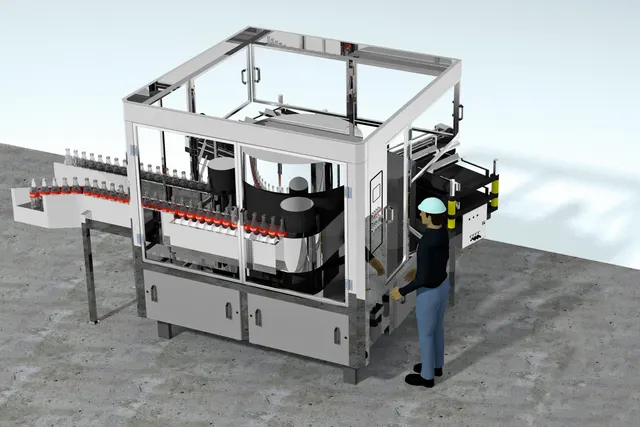
Modularisation has proved its value in machine development. Machine manufacturers and users benefit throughout the entire lifecycle: from system design, programming and commissioning to storage and logistics for replacement parts. The key requirement for reusing information from previous projects is that it is available in a standardised format. This is where the digital twin comes in. It creates a digital representation of physical components and machines, serving as a hub for all relevant information.
Already practical to use
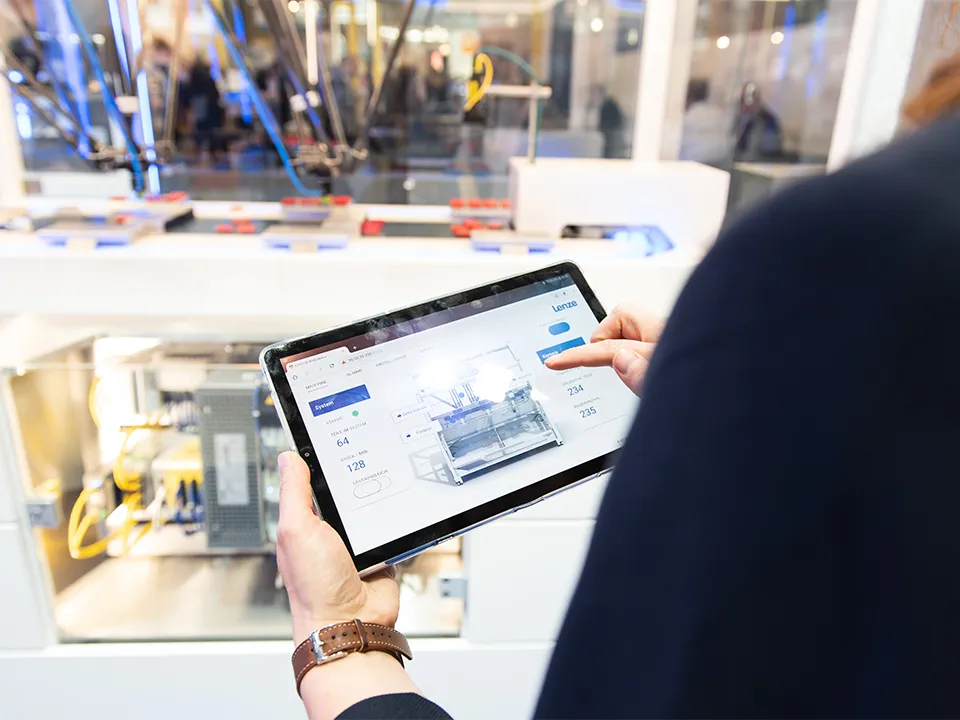
With its apps and tools, Lenze is already making this concept practical and contributing significantly to consistent data use. One of the key tools for digital engineering is the Lenze EASY System Designer, which covers the initial technical steps, from the idea and design through to detailed development. This web-based tool enables everyone involved in the planning process, across different disciplines, to plan complete automation solutions. Using integrated intelligence, the tool checks whether the system solution is feasible and documents everything required. This saves valuable planning time, shortens the decision-making process and reduces project risks.
Get machines up and running much faster
The next step is to prepare a PLC programme. The machine structure, selected hardware components and software modules, as well as application parameters and other relevant project data, are available to the programmer in their engineering environment. This enables them to complete the PLC programme more efficiently and commission the machine sooner. Information generated and collected in the digital twin is available throughout the subsequent stages of the lifecycle. Suitable interfaces also provide access to third-party tools for simulation and virtual commissioning. These options make it possible to detect and correct errors in the development process sooner, significantly reducing the time needed for delivery and commissioning.
Question about this story? Ask your question
Companies in this story

Keep following this
Get an email when a new story is published. No account needed.
- SubjectSolutions
- CompanyLenze