Contamination from compressed air
Text Sara DeckersImage BEKO TECHNOLOGIES B.V.
Moisture in compressed air networks compromises product quality and damages systems. Moisture carries microorganisms, dust, dirt and oil, which can contaminate the product.
So where do these risk factors come from? The answer is simple: the outside air. The compressor draws in air from outside and compresses it to an average of 7 or 8 bar(G). This means contamination levels are seven or eight times higher than in normal ambient air. And the warmer the outside air, the more moisture it can hold and the more microorganisms can enter the compressed air flow.
Compressor installation
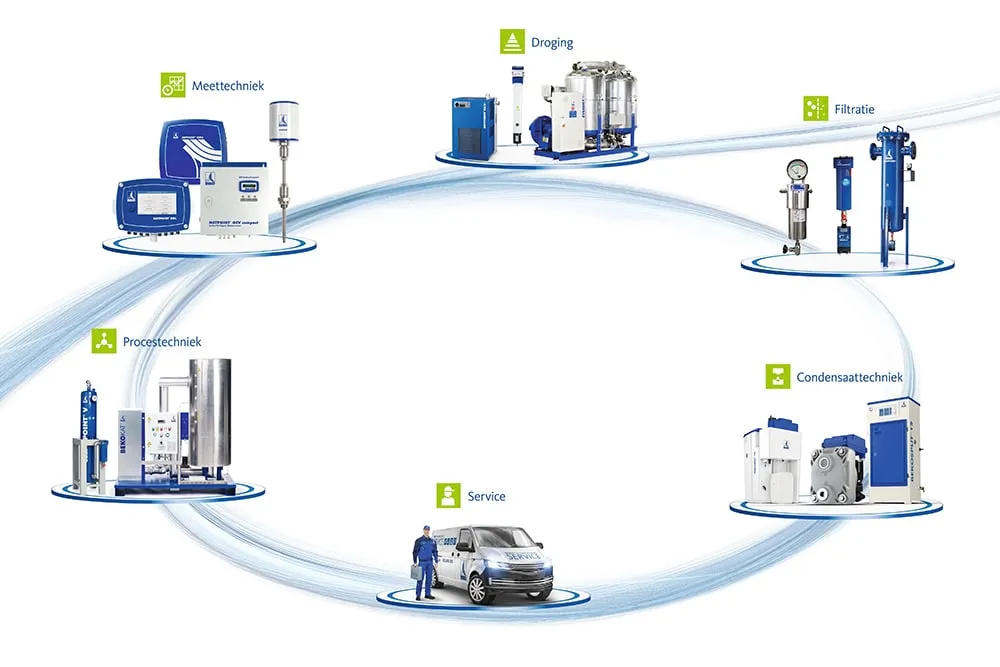
Many companies have a compressor installation consisting of a compressor, often oil-lubricated, a pre-filter, a dryer and a post-filter. There is nothing wrong with that, but is this air suitable when compressed air comes into direct contact with food? Not always. In that case, the air must be checked for contaminants.
Risk analysis
Many food companies assume that their compressed air is perfectly fine. After all, the compressor is serviced annually, and the auditor approves it each year based on the service reports. Air quality, however, is rarely checked.
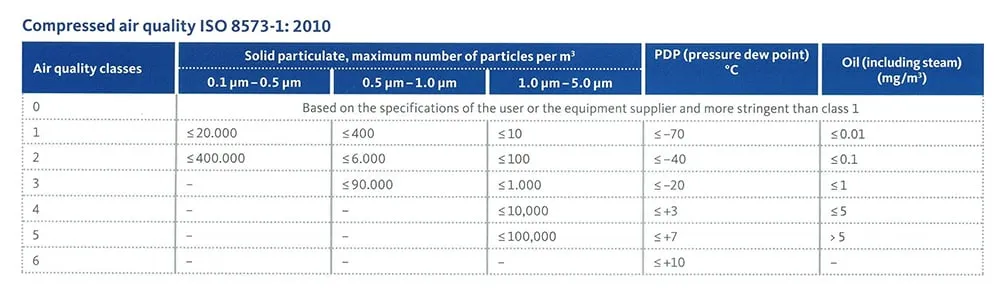
ISO-8573.1:2010
ISO-8573.1:2010 sets out quality classes that indicate compressed air quality. Values for particle, moisture and oil (vapour) content are given and assigned to a particular class. Compressed air quality in the food industry is still rarely measured. Even a simple dew-point sensor for measuring moisture content is often missing. How, then, can producers know how much moisture is actually present in their compressed air? Production areas have machine monitoring, inspection points, computers and sensors, and often even a whole control room. But compressed air is almost never included. If compressed air quality is measured, users gain insight into its actual quality and can improve compressed air quality, energy consumption and product protection.
What gets measured gets managed
An Air Quality Audit measures particle, moisture and oil content, as well as pressure and temperature. These data give producers certainty, confidence and clarity. With the right treatment plan, customers have proof that the compressed air quality is perfectly suited to the production process and poses no risk to the product. After all, the main task is to produce safe food.
A business enquiry for Beko Technologies? Get in touch
Companies in this story

Keep following this
Get an email when a new story is published. No account needed.
- SubjectSolutions
- CompanyBeko Technologies