Efficiently emptying and cleaning pipelines with pigging technology
Text Johan DebaereImage Armaturen Hötensleben GmbH
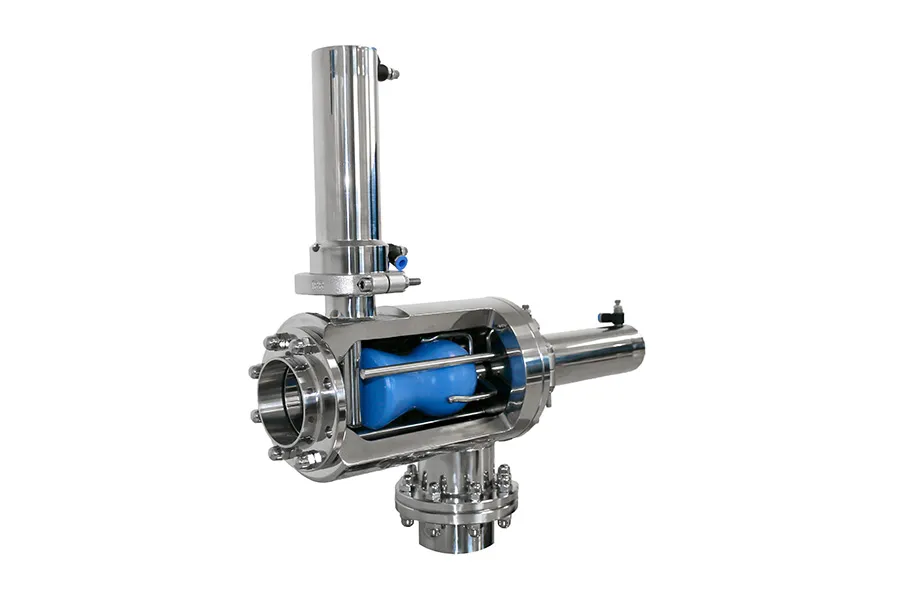
Pigging is popular with manufacturers that have extensive pipe networks. The process is very simple and effective. The cleaning plug, or ‘pig’, is precisely matched to the pipe’s internal diameter, leaving no room for the medium to flow past. Once sufficient pressure is applied, the pig moves through the pipe, pushing the product out. There is no mixing with rinsing agent and no product loss, which helps maintain quality. This technology is also used to protect products from contamination, oxidation or foaming, for example, when they come into contact with air.
Pigging significantly reduces the amount of water needed for rinsing. In a conventional rinsing process, the volume required depends on the size of the installation and the properties of the product. After the process, the water must be treated or even disposed of, which entails considerable costs. Wastewater treatment capacity is one of the factors that determines overall capacity. If there are bottlenecks, substantial investment is needed to increase production. It is therefore worth finding solutions that make optimum use of existing resources, helping to reduce costs. “Depending on the product and the production process, time savings are the main benefit of pigging. Simply rinsing pipelines to empty them can take a long time. Pigging can do this in just a few minutes. The system can be back in use soon after cleaning. Downtime is limited and boosts capacity on the production floor,” says Danny Prost, Product Manager, Pigging Technology at Armaturenwerk Hötensleben. “Versatility and flexibility are important requirements in every sector today. Producing small and very small batches means cleaning has to be carried out more frequently. Pigging offers significant benefits here, reducing costs while increasing efficiency and competitiveness. It also contributes to sustainability, an additional advantage that should not be underestimated today.”
Popular in the food industry
Pigging is used every day in almost every segment of the food industry. When milk is processed into quark, cheese and butter, this technology ensures that no valuable product is discarded. In bakeries, a pig is used to push sticky dough out of pipelines, while chocolate residues can practically only be removed in this way. Pigging also makes sausage production and fruit and vegetable processing easier and faster. In soft drinks production, it ensures that every last drop can be recovered. “The benefits of this technology increase as products become more viscous, stickier or less soluble in water. The varied and changing demands of the food industry mean that technical solutions are also constantly evolving,” the Product Manager continues. “The same applies to pigging technology. Hygiene and safety are paramount. Frequent product changeovers, and therefore frequent cleaning cycles, call for modern cleaning methods. Pigging is an ideal solution, even for demanding cleaning processes.”
The right pigging system for every application
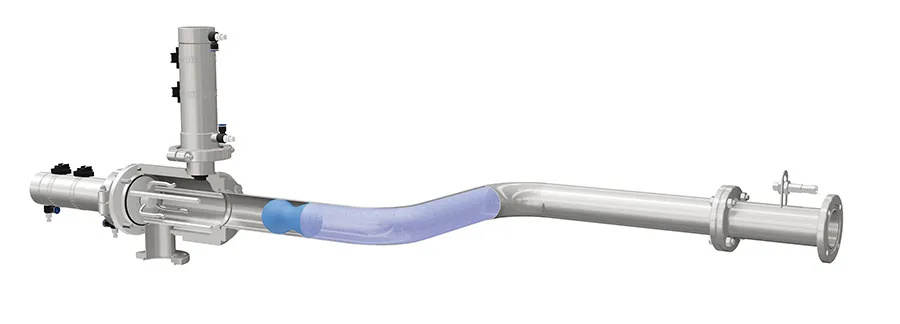
A pigging system consists, at a minimum, of the pig itself, two pig stations, a launcher and a receiver, and process control equipment. Armaturenwerk Hötensleben offers a complete range of solutions for a variety of applications. Simple manual systems are available as entry-level models, designed as open systems. In this type of application, the pig is inserted into the pipeline just before emptying begins. It follows the product flow through the pipe, pushing the product out, and is then collected at the end of the pipeline. “We are seeing more and more customers opt to automate the process, making it even more reliable and efficient,” says Prost. “The pig then operates in a pendulum mode, automatically travelling back through the pipework to its starting position after emptying. In this configuration, the pig remains inside the closed system and is removed only for maintenance. The pigging system is fully integrated into the main system and forms part of it.”
Optimising cleaning
Food production is subject to stringent requirements, with safety the top priority. Production must pose no risks to the product or consumer, for example from pathogens or impurities. Reliable and effective cleaning of production facilities is essential to prevent residues of preservatives and allergens from being left behind. This must also be done economically. Like the other components, the parts of the pigging system must fit seamlessly into the pipeline. Their use must not increase cleaning requirements. On the contrary, pigging is used precisely to optimise the cleaning of the installation. “In our Hygienic Inline System, the pig is integrated directly into the product flow, with a continuous flow around it. This prevents product blockages over extended periods. The cleaning agent used to clean the pipelines flows around the pig, removing all the product. The aim is to use pigging technology to carry out traditional cleaning processes such as CIP and SIP without any additional effort. The Aseptic Pigging System goes furthest. To prevent external contamination, all moving parts are additionally enclosed in PTFE bellows. This solution is used mainly in sterile processes, such as product filling,” Prost concludes. “Pigging concepts often also need to be adapted to high-level processes and systems. That is why we supply components specially manufactured to meet customer or process specifications. Temperature-sensitive processes, for example, require cooling or heating throughout the production facility. Chocolate production is a classic example. Pigging can significantly improve the efficiency and sustainability of a production process. Cost efficiency, flexibility and competitiveness are decisive factors, making this technology well worth taking a closer look at.” ■
Een zakelijke vraag aan Armaturenwerk Hötensleben GmbH? Get in touch
Companies in this story
Keep following this
Get an email when a new story is published. No account needed.
- ThemeFood safety from design to audit
- SubjectSolutions
- CompanyArmaturenwerk Hötensleben GmbH