From big bag to sack, or vice versa
Packaging and repackaging are everyday operations in the food industry, particularly when it comes to bulk goods. Whether large big bags need to be divided into smaller packs or different products need to be combined in a big bag to create a specific blend, the process always involves the same steps: positioning, opening, conveying, dosing, filling and closing.
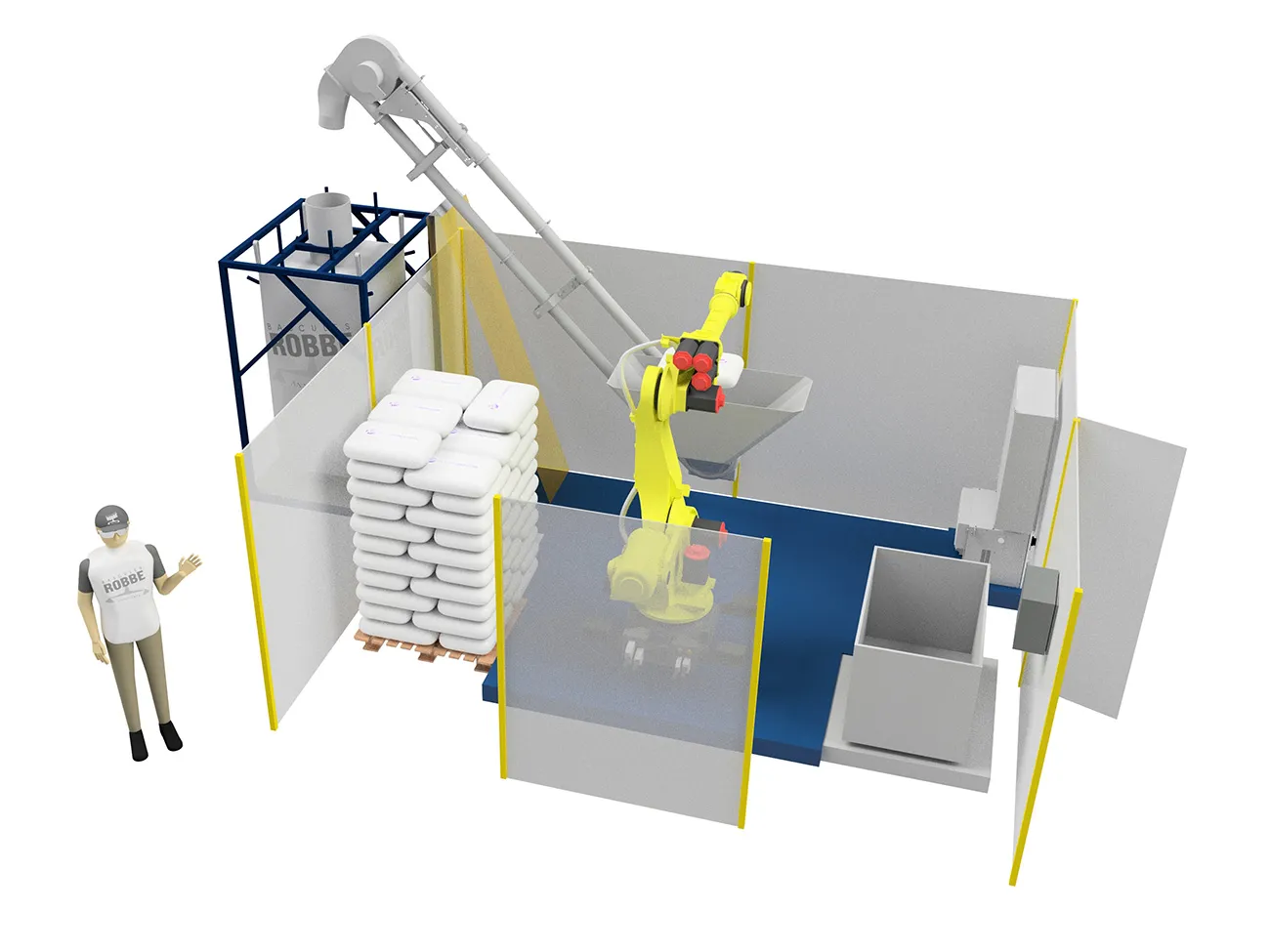
It is not unusual for some of these steps to be carried out manually. Examples include palletising or depalletising packs, or cutting sacks open. “However, an operator who spends all day opening packs represents a relatively high cost for a company”, says Cedric Pollet of Bascules Robbe. “Yet this task can usually be integrated into the filling line and automated with ease. It may take some preliminary research, but it pays to consider filling systems as a complete solution.”
Robots for automating bulk flows
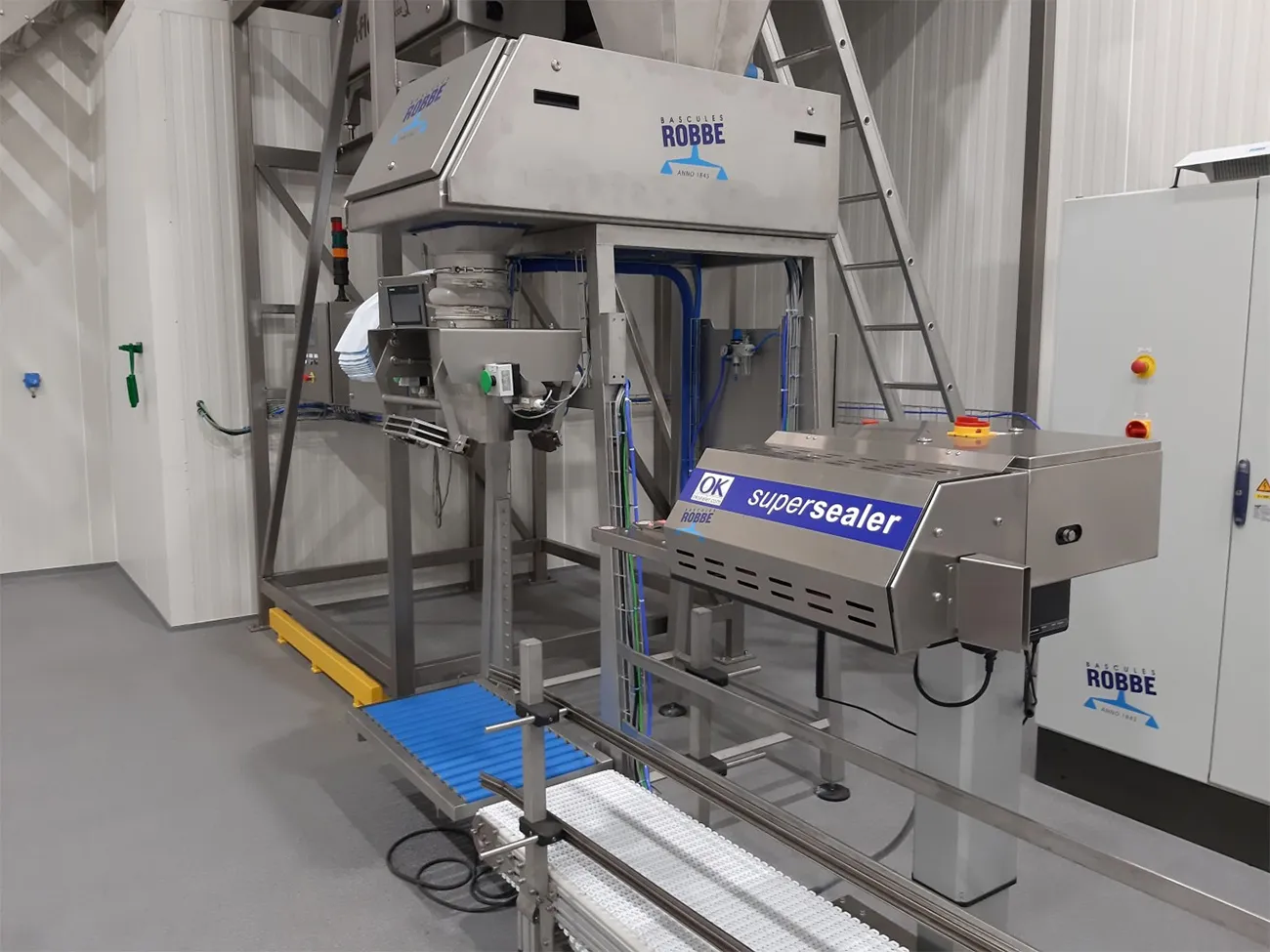
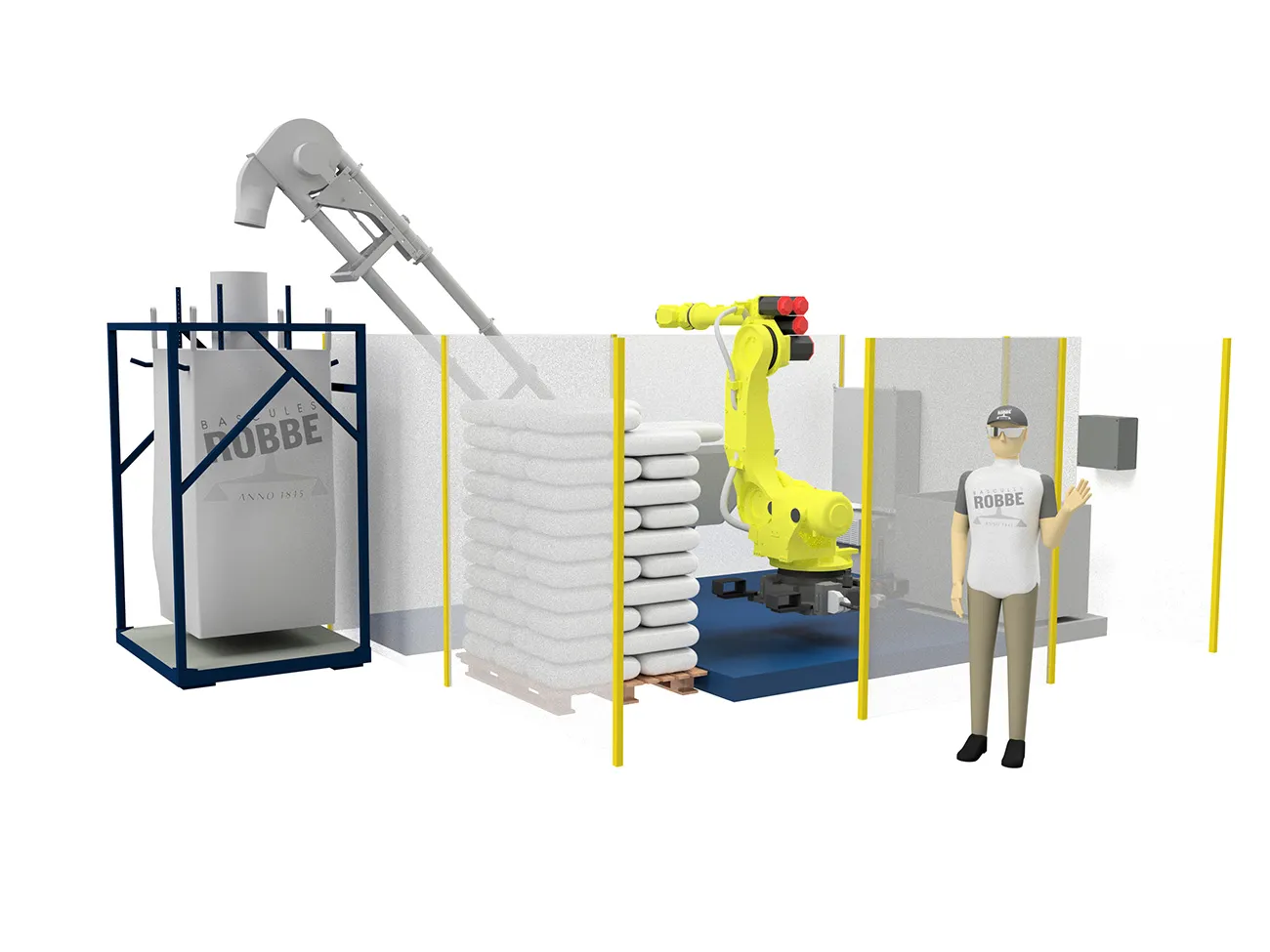
In recent years, the family business Bascules Robbe has evolved from a specialist in weighing into a full-service partner for the development, installation and integration of filling lines, including for the food industry. “This is the result of a pragmatic approach”, says Pollet, explaining that the search for complete solutions tailored to customers regularly leads to new insights and technical developments with wider applications. “For food company FISCe in the Netherlands, part of the Acomo Groep, we recently installed a complete filling line for sacks and big bags, including packaging sealing, a metal detector for inspection and various conveyors. Integrating the palletising of filled sacks into the filling line is also an option. In fact, we are currently working on a project in which sacks are automatically depalletised. Not everyone knows that this is possible too.”
Adapted conveying
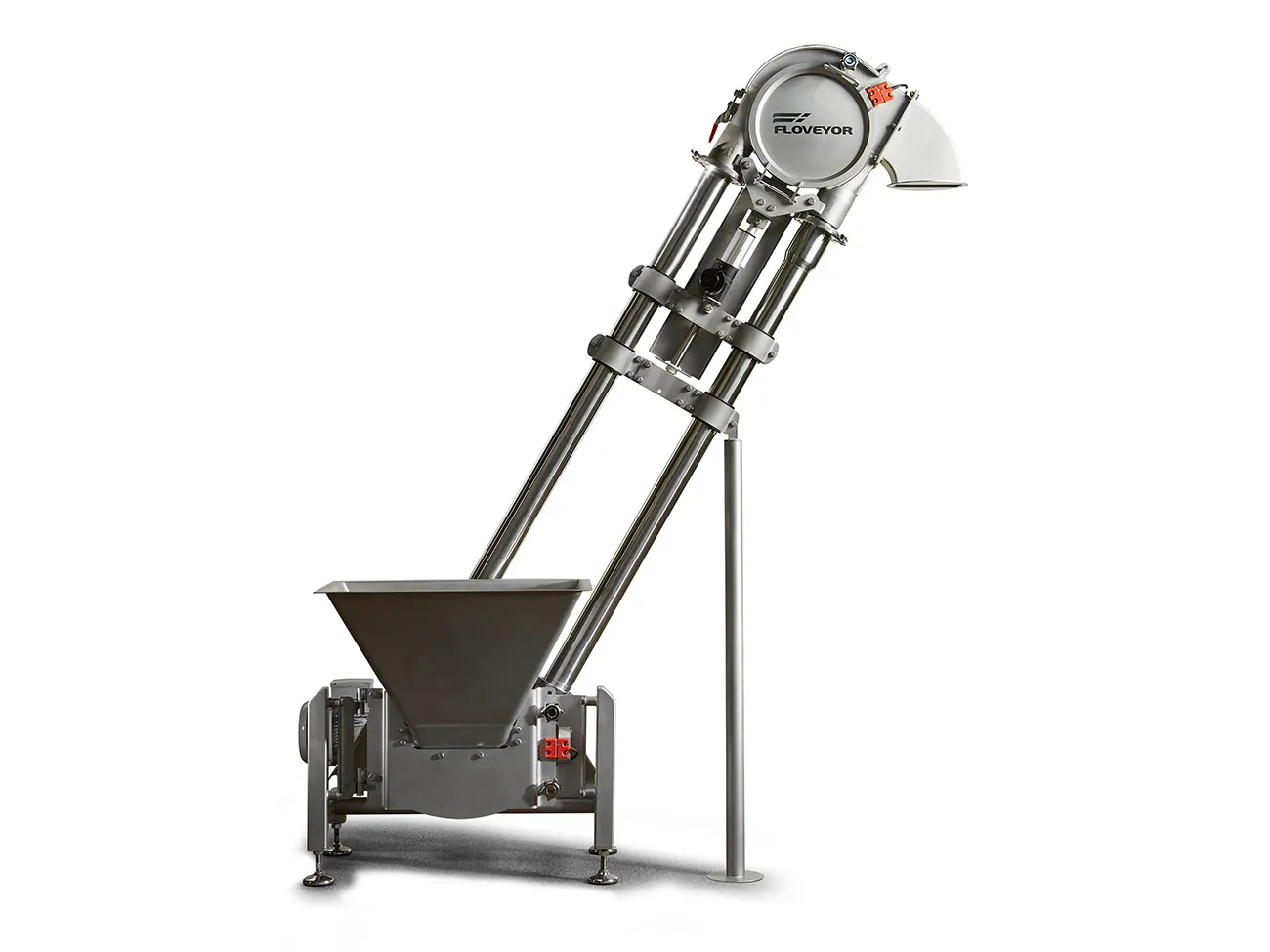
The project in question also incorporates a specially adapted cutting system to open the sacks, and an aeromechanical conveying system to transport the bulk goods to their destination, in this case big bags or a mixing silo. “It is one of the first projects in which we have integrated this aeromechanical system, but we see plenty of potential for this development. Compared with the screw conveyors commonly used to transport bulk goods, this system can operate at a much steeper angle and at a higher throughput. This means that the installation’s footprint can be significantly reduced.
The system itself is also compact, can be made mobile, is easy to rinse and is available in a hygienic design. In this first project, the contents of smaller sacks are transferred to big bags, but we also see major advantages in the opposite direction. If you want to divide the contents of a big bag between several small sacks, the traditional approach is to hoist the big bag above the sack filling machine. This usually requires a heavy and, above all, tall structure. With this aeromechanical conveying system, however, you only need to lift the big bag by a metre, just high enough for the contents to drop into the conveyor’s hopper. The aeromechanical system then efficiently conveys the bulk goods, including powders and ATEX products, all the way up to the sack filling machine in a fully food-safe manner. We also have a machine available at our test centre to test such applications and give customers handling more ‘exotic’ products the assurances they need about what is possible.”
Dust-free
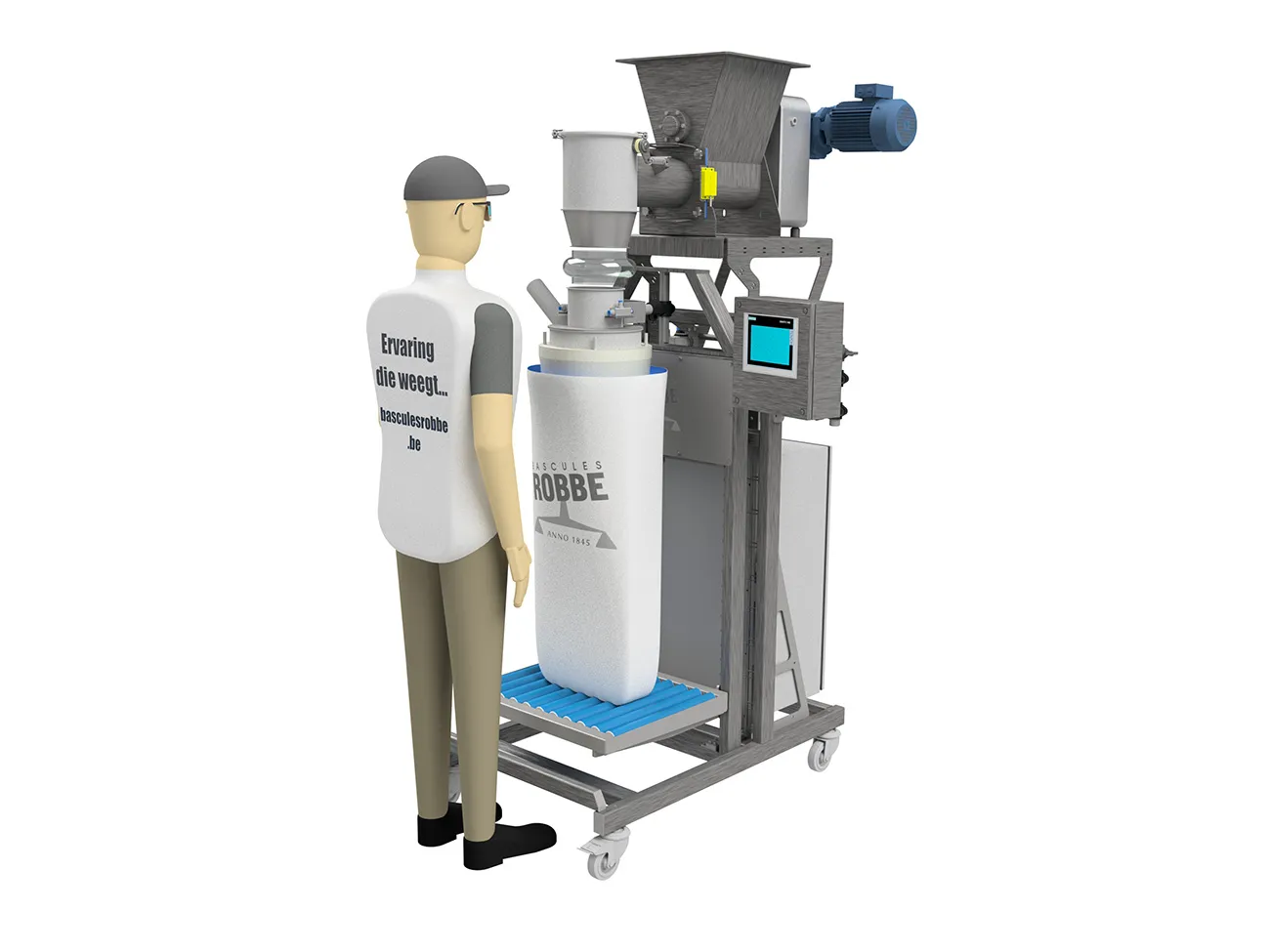
“The familiar screw conveyors are by no means obsolete”, Pollet stresses. “It all depends on the customer’s requirements, and screw conveyors are often still the best choice for horizontal conveying, for example. A special, very small, hygienic and easy-to-clean dosing screw also plays a central role in our new mobile filling machine, which is designed to convey and package difficult products such as flour, herbs and dry additives without creating dust. Everything in this machine is neatly enclosed, and at the discharge point we use a bellows to inflate and tension the sack, leaving no opportunity for dust to escape.”
Question about this story? Ask your question
Keep following this
Get an email when a new story is published. No account needed.
- ThemePackaging and product traceability
- SubjectSolutions