












How food & beverage can become plug & produce
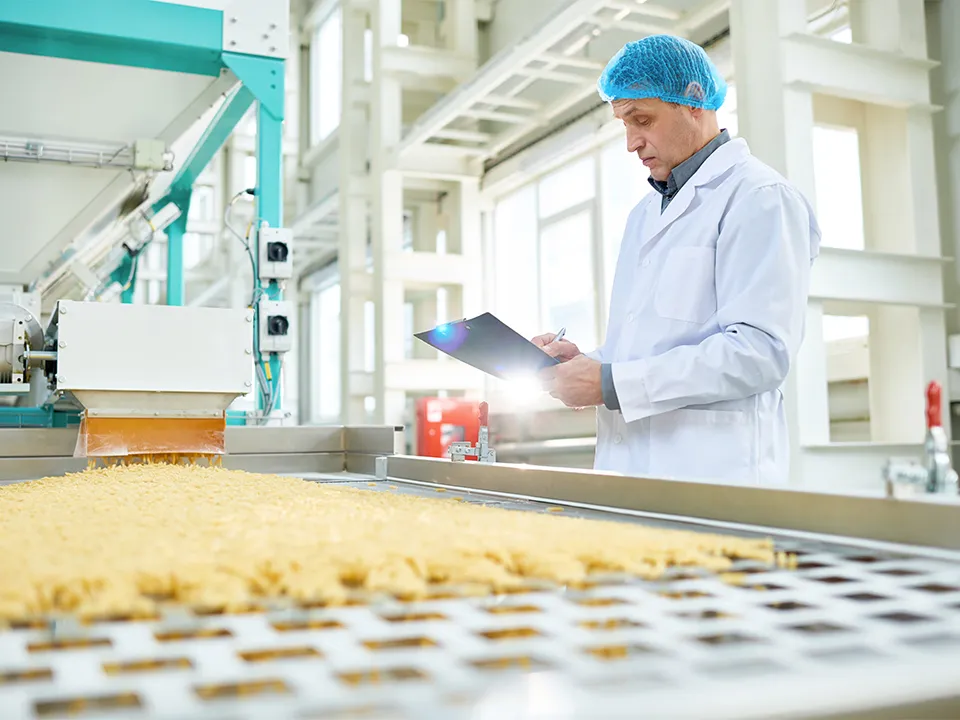
The food industry faces particularly major challenges. While products, and therefore production processes, could remain unchanged for years, consumers now want to see change more often and more quickly.
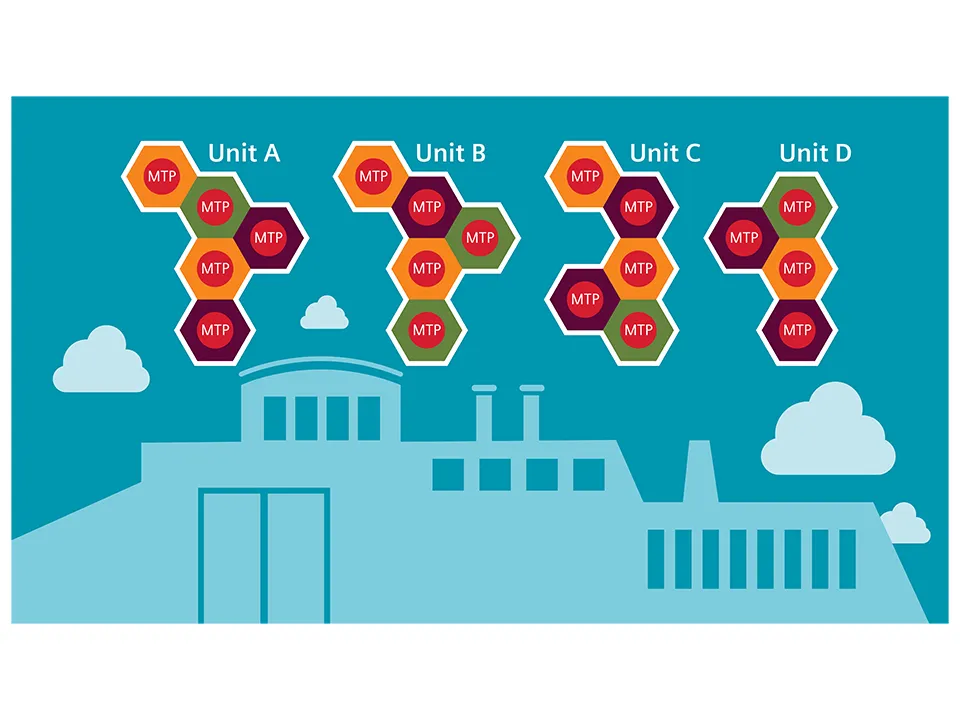
To remain profitable, production lines will therefore need to become flexible. In practice, production units will have to learn to communicate with one another in a standardised way. Module Type Package is the standard that gives shape to the concept of modular automation in the food industry. Siemens sees this as the answer to creating a plug & produce factory that can switch quickly between products.
Text Valérie Couplez | Image Siemens
Module Type Package (MTP) may sound like a foreign concept, but it is becoming increasingly established in the process industry, including in food & beverage companies. It is a standard developed by Namur, the users’ association for automation technology in the process industry. The MTP standard has one clear aim: to enable modularity. Kris Van Heurck, Sales Manager Process Industries at Siemens, explains why this matters. “Today, food production installations are physically connected. They are welded together and often anchored to the building, making it impossible to add a step to the process without the necessary engineering. The software used by these machines offers little flexibility either. It is tied to specific brands and not very open, making it difficult to extract data. The third obstacle to switching quickly between product batches is the close integration of the recipe and the engineering. Changes to either have a major impact.”

Standardised communication
To address these issues, each machine will have to learn to communicate with other production units and higher-level systems individually, using a standardised approach. The right machines can then be combined for each product. “The MTP standard is the answer to these challenges. It describes exactly what each module is and what services it can provide. A production line will be assembled from different modules depending on the product. These modules can be switched quickly, providing the flexibility needed to remain profitable when producing smaller batches. At the physical layer, an MTP interface connects the production units. The software then links and automates all the production steps flexibly. Unlike DCS systems, this approach uses an ‘orchestrator’, which integrates all the modules,” says Van Heurck.
Zero engineering
Siemens puts forward its TIA Portal and PCS neo for this purpose. “For the engineer, adding this extra step is child's play. All they have to do is provide the automation interface of each individual module as an MTP package and make it available to the orchestrator. In this case, PCS neo. TIA Portal already includes a library of different MTP types, because we believe this is the future. In fact, no engineering is required: everything is plug & produce,” says Van Heurck enthusiastically. Once all the modules and measurements have been configured individually, they can first be fully tested virtually using simulation software. This lets you check whether everything is working correctly. If it is, everything can be communicated to the orchestrator securely and reliably via OPC-UA. “The orchestrator brings everything together, tests the automation and links, provides the communications and exports the whole system in an MTP format, so it can be used in the physical world. All you then need to do is screw in the physical MTP interface and get started.”
Machine builders need to buy in
This way of working makes it easy to add extra steps. Van Heurck: “When developing a new product, for example, you can see whether an extra filtration step delivers the expected quality. Or respond more effectively to seasonal trends, or unexpected circumstances. During the first lockdown, for example, breweries temporarily produced hand sanitiser to meet high demand. With MTP, this becomes child's play.” It is now up to machine builders and end users to embrace this standard. The pharmaceutical industry is already further along. For example, it uses ‘ballroom’ concepts. “The equipment for a specific product is brought in and removed again to make room for other equipment when the batch is finished. This will also come to the food industry as soon as more equipment designed for the MTP standard comes onto the market. This will of course be less straightforward in existing production environments, but progress can already be made by getting all the machines to communicate with higher-level systems. That is already an important step towards modularity and therefore flexibility,” concludes Van Heurck.
Question about this story? Ask your question
Companies in this story
Keep following this
Get an email when a new story is published. No account needed.
- SubjectSolutions
- CompanySiemens







