












NORD’s efficient drive technology: the key to reducing TCO
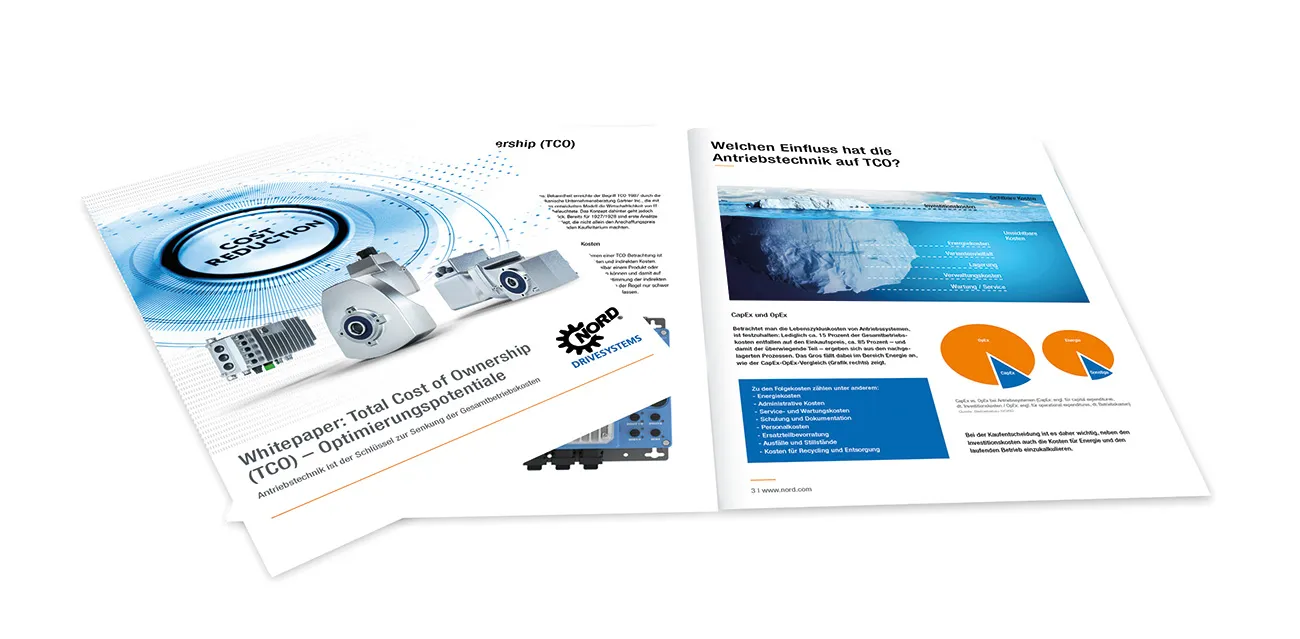
How economical can an investment be? Looking at the life cycle of drive systems, only 15 per cent of the Total Cost of Ownership is accounted for by the purchase price, while around 85 per cent is attributable to downstream processes. That is why, when making a purchasing decision, it is important to consider not only investment costs, but also energy and ongoing operating costs, including administrative processes, service and maintenance, spare parts inventory and disposal.
Carefully weighing up all the economic factors is therefore essential for reducing costs and improving efficiency in production. The Total Cost of Ownership (TCO) concept can help with this.
Energy efficiency and drive variant reduction
The two main factors in reducing TCO are energy consumption and the number of drive variants used. However, there is a conflict between approaches to optimising energy efficiency on the one hand and reducing the number of variants on the other. A system with drives designed for the most energy-efficient operating point delivers optimal investment costs and motors that operate relatively economically, regardless of their efficiency class. However, the various drive variants have to be managed and maintained throughout the entire life cycle of the installation.
While a drive concept focused primarily on saving energy costs leads to a large number of variants, reducing the number of variants aims for the opposite: supplying the required torques and speeds in an installation using as few different drive variants as possible. This can save on administration, service and storage costs, but energy costs will generally rise somewhat. It is therefore important to reconcile these conflicting objectives as far as possible in the drive design.
Condition monitoring for predictive maintenance
Condition monitoring and predictive maintenance also play a central role in reducing TCO in Industry 4.0 applications. Periodic or continuous recording of drive and status data makes it possible to detect changes at an early stage and reduce unplanned downtime. The result is greater system availability, less downtime, lower service and material costs, and a longer service life.
NORD’s approach to reducing TCO
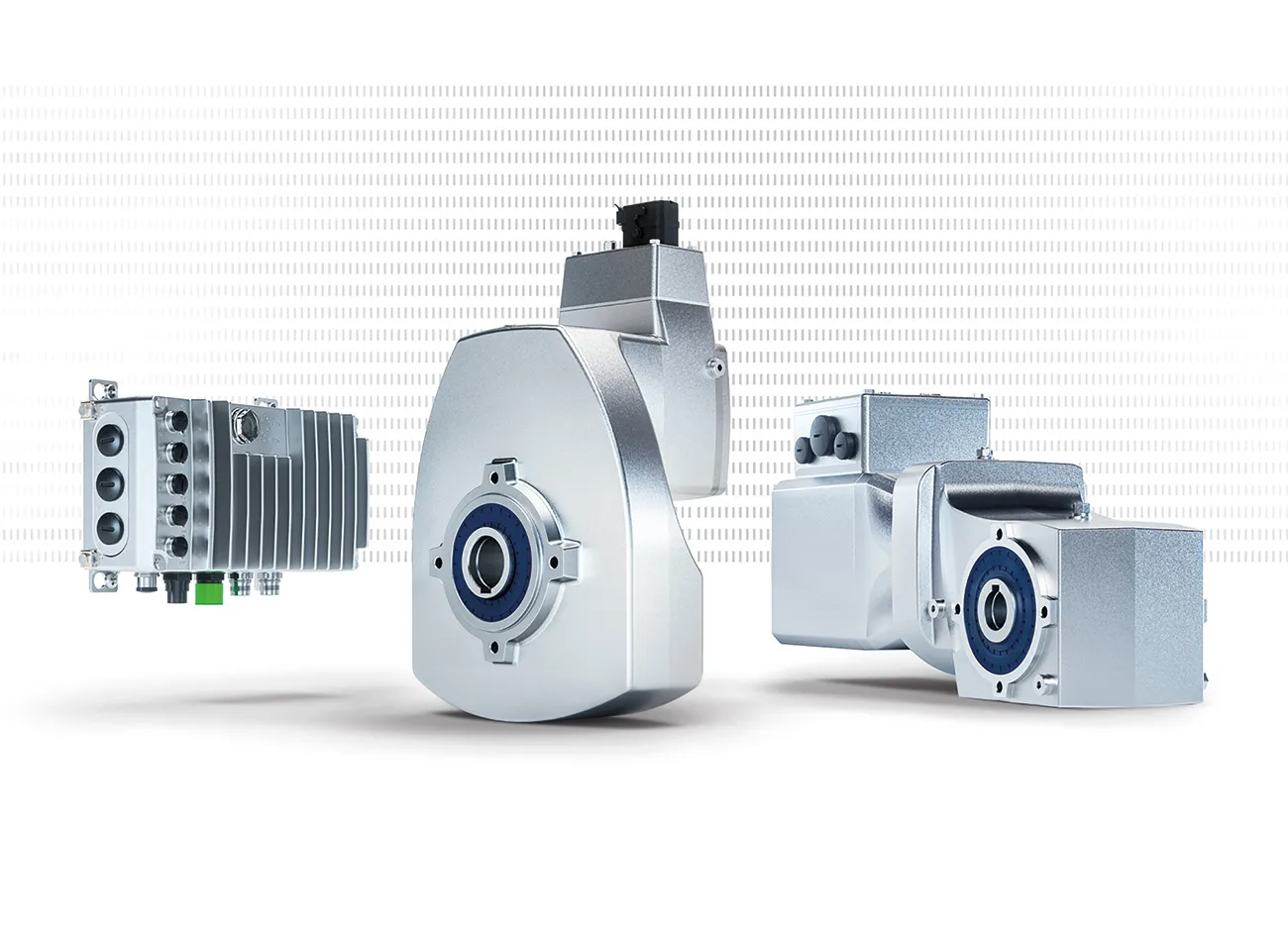
NORD DRIVESYSTEMS takes a holistic approach to reducing the Total Cost of Ownership, drawing on a comprehensive range of strategies to identify and increase efficiency potential: from its modular system and the use of powerful, durable and energy-efficient technologies to individual TCO calculations and intelligent service and maintenance concepts.
NORD offers drive solutions to reduce life-cycle costs, for example:
with its highly efficient product range, including the patented DuoDrive gear unit with integrated motor, IE5+ synchronous motor and decentralised NORDAC ON / ON+ frequency inverter
or with its LogiDrive solution portfolio.
Question about this story? Ask your question
Keep following this
Get an email when a new story is published. No account needed.
- ThemeReliable machinery and drives
- SubjectSolutions







