












Plenty of scope for further automation
Text Valérie CouplezImage Schunk
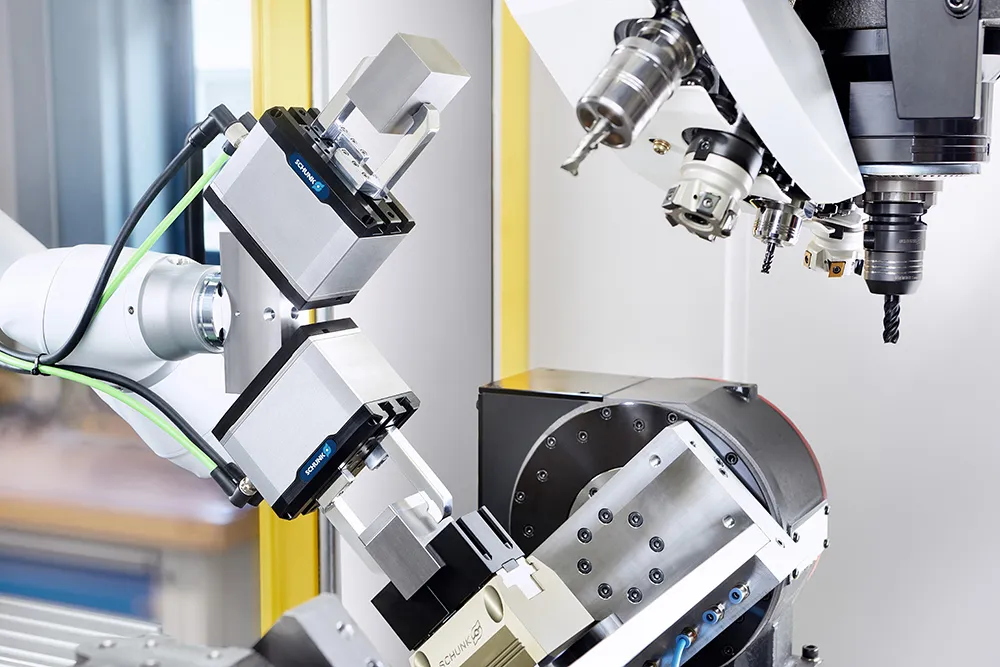
Reliable clamping and gripping
Although many companies in Belgium have already embraced automation, plenty are still lagging behind. SMEs in particular remain wary, thinking that automation is necessarily expensive and complex, and intended for batch production. Technological advances have already made this notion outdated. “For €10,000, I can put together a package that will easily give them a few extra hours of autonomous operation and significantly increase their spindle utilisation,” promises Werner De Ridder, general manager of Schunk.
The shortage of technical staff is more acute than ever. It is forcing companies to consider automation. “Any company that fails to take steps in this direction over the next five years will inevitably fall by the wayside. That is a bold statement, but it has everything to do with the added value that automation solutions bring to manufacturing. It all comes down to spindle utilisation. The higher you can get it, the stronger your competitive position can be.” There are no excuses any more, according to De Ridder. The barriers have been removed. “Automation is not just for batch production. On the contrary, automation is precisely what shortens changeover times, allowing you to produce more.”
Smart solutions that pay for themselves quickly
With its range of clamping and gripping products, Schunk offers solutions for everything from simple machine applications to complex robotic systems. For De Ridder, the VERO-S zero-point clamping systems are a good example. “If you work the traditional way, using clamping screws, for example, it can easily take half an hour to prepare the next workpiece. The machine sits idle in the meantime. Not so with a zero-point clamping system, where a changeover takes just one minute. This cuts setup times by around 90%. At the same time, it paves the way for greater precision, process reliability and stability. The RAPIDO jaw quick-change system is another example. It lets you change chuck jaws in seconds, without any tools. What’s more, this type of jaw-changing system opens up new possibilities for adapting the chuck quickly and easily to new clamping tasks. These are the kinds of smart solutions that make a difference and pay for themselves quickly.”
Shift towards electric systems and more data
One trend De Ridder sees in this broad range of automation solutions is the shift towards electric systems. “This reduces energy consumption, which is certainly a consideration today. But the main driver is the greater control and flexibility you get. Everything can be adjusted and monitored with great precision. We already have a wide range of electric solutions. Electric grippers, with the EGU series showing great promise in this market, and Remendo tools for robotic deburring. Next year, we’ll take the next steps with electric vices,” says De Ridder.
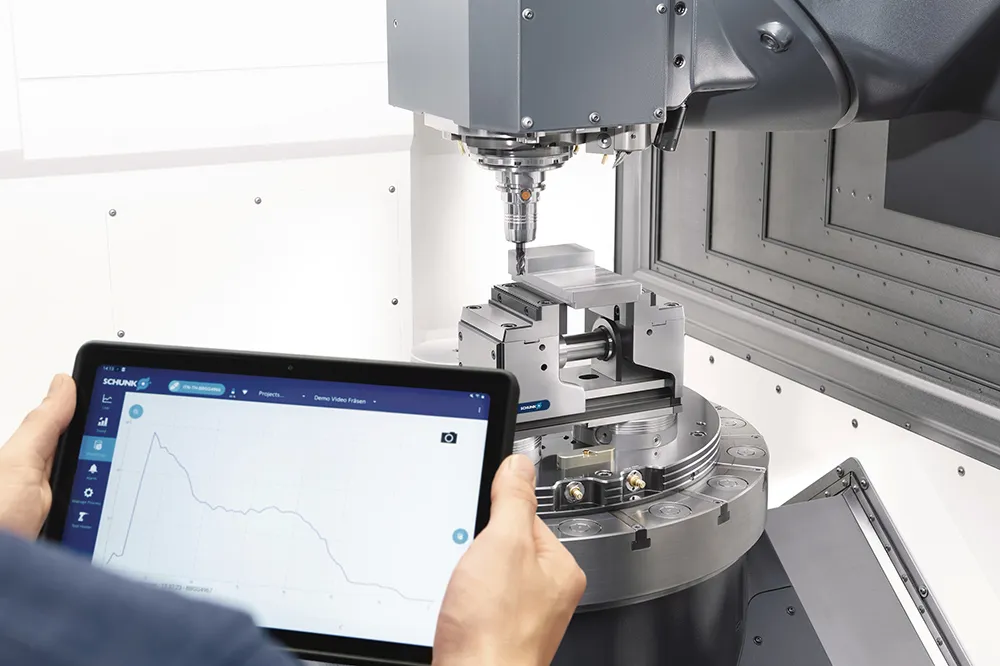
A second trend is, of course, big data. Major machine-tool manufacturers are increasingly making efforts to extract as much data as possible from their processes, including from the tools. With the iTendo toolholder, SCHUNK has been setting the standard in this field for years. “People are gradually realising what data can help us achieve: optimising processes, but also preventing breakage, which is important when automation is taken to this level.”
More attention to tooling
Finally, De Ridder cannot stress enough the importance of good tooling. “When a company wants to make a new product, it buys the machine first and only then considers the tooling. It should really be the other way round: start with the gripper or clamp that will hold the product. It needs to clamp the product reliably and enable stable machining. These choices will only become more important in an automated world.” Have I got hold of it? Is it held securely? Have I programmed it correctly? All these checks are built into SCHUNK products as standard. “So your application can always keep running reliably. That spindle utilisation, remember?”
Question about this story? Ask your question
Keep following this
Get an email when a new story is published. No account needed.
- ThemeSmart production with data
- SubjectSolutions







