












Strong coordination and preparation make the difference in piping project
Text Valérie CouplezImage Hyline
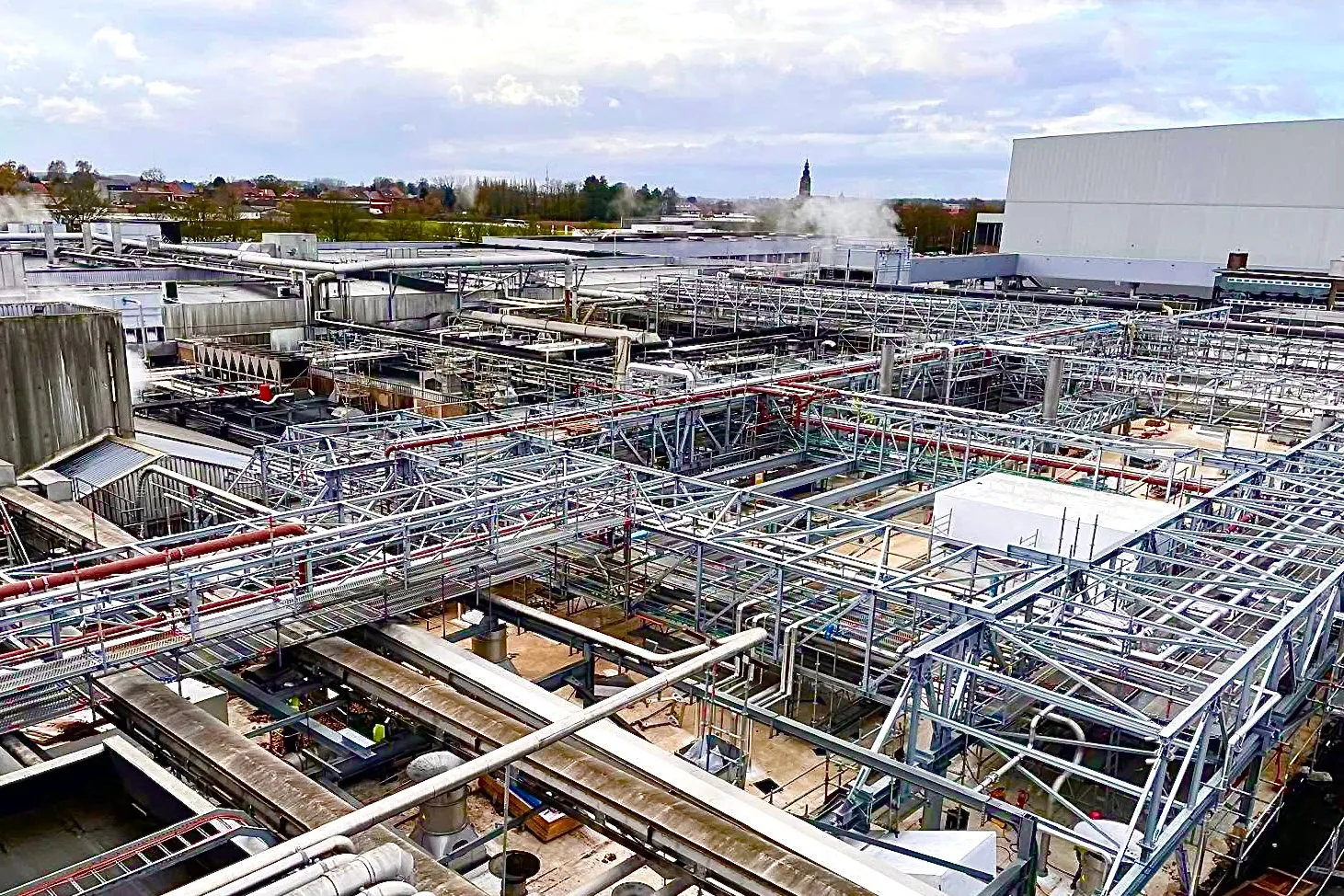
The potato sector is booming. Last year, a producer of potato products decided to expand capacity at one of its Belgian sites. An old production area is being converted into a brand-new production area for so-called specialities, not chips but other treats such as pommes duchesses. For the utility pipework for the new line, the company is relying on Hyline. Its experience with projects of this scale and the synergies with sister company Collignon, which was responsible for the electrical cabling and controls, proved to be clear advantages.
Sometimes the figures speak for themselves. Hyline’s package for the new speciality line comprised no fewer than 10 km of pipework, a 150-tonne pipe rack and the installation of 1,000 components. The challenge lay not so much in the technical complexity of the work, which Hyline knows inside out, but in the tight schedule and coordination. Hyline sales manager Bram Gevaert says: “That is why the client asked for an approach plan and schedule as early as the quotation stage. An investment on this scale brings together many different contractors on one site. Good coordination is crucial.” The pipe rack, for example, also had to support the roof structure, providing greater stability and load-bearing capacity. “We could only start work once the roof was in place. In addition, the work could not jeopardise existing production at the site.”
Flexibility is key
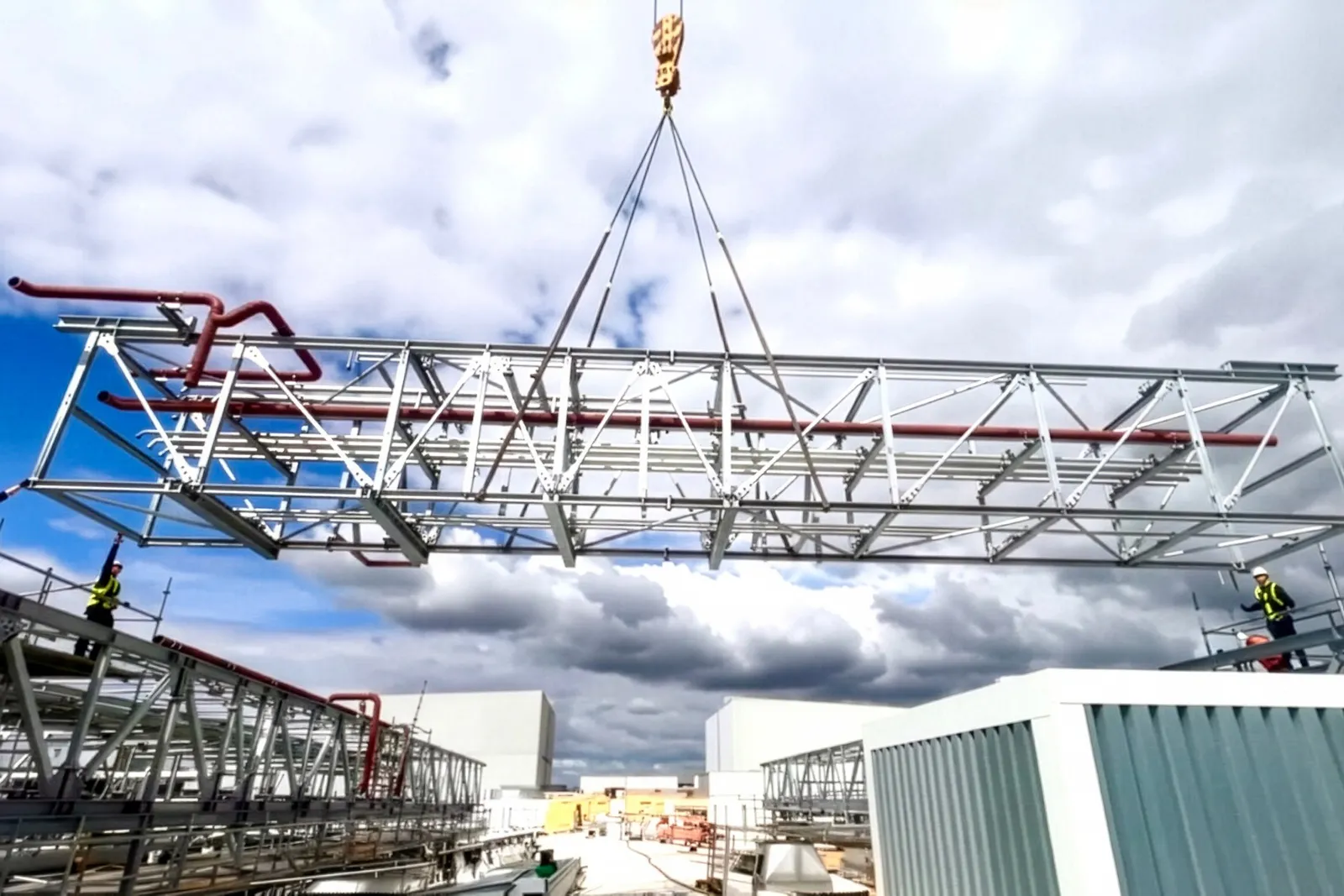
By responding quickly and working with the client to address every delay, Hyline kept construction of the new line as close to schedule as possible. One decision was to build the pipe rack in the workshop rather than on site, where there was more space and, above all, better equipment. “The pipe rack was divided into several sections and finished meticulously. We then worked on a call-off basis: as soon as the civil engineering work had progressed far enough, a section was sent to the site,” explains project manager Adil Lamrini. A piece of cake? Not at all. Given the dimensions of the sections, 5 m wide x 20 m long, they required abnormal-load transport. Hyline also managed this smoothly for the client. Handling the sections on site proved challenging too. The tower crane there could not lift all the sections into position. “We arranged an additional crane.”
Double-checking everything
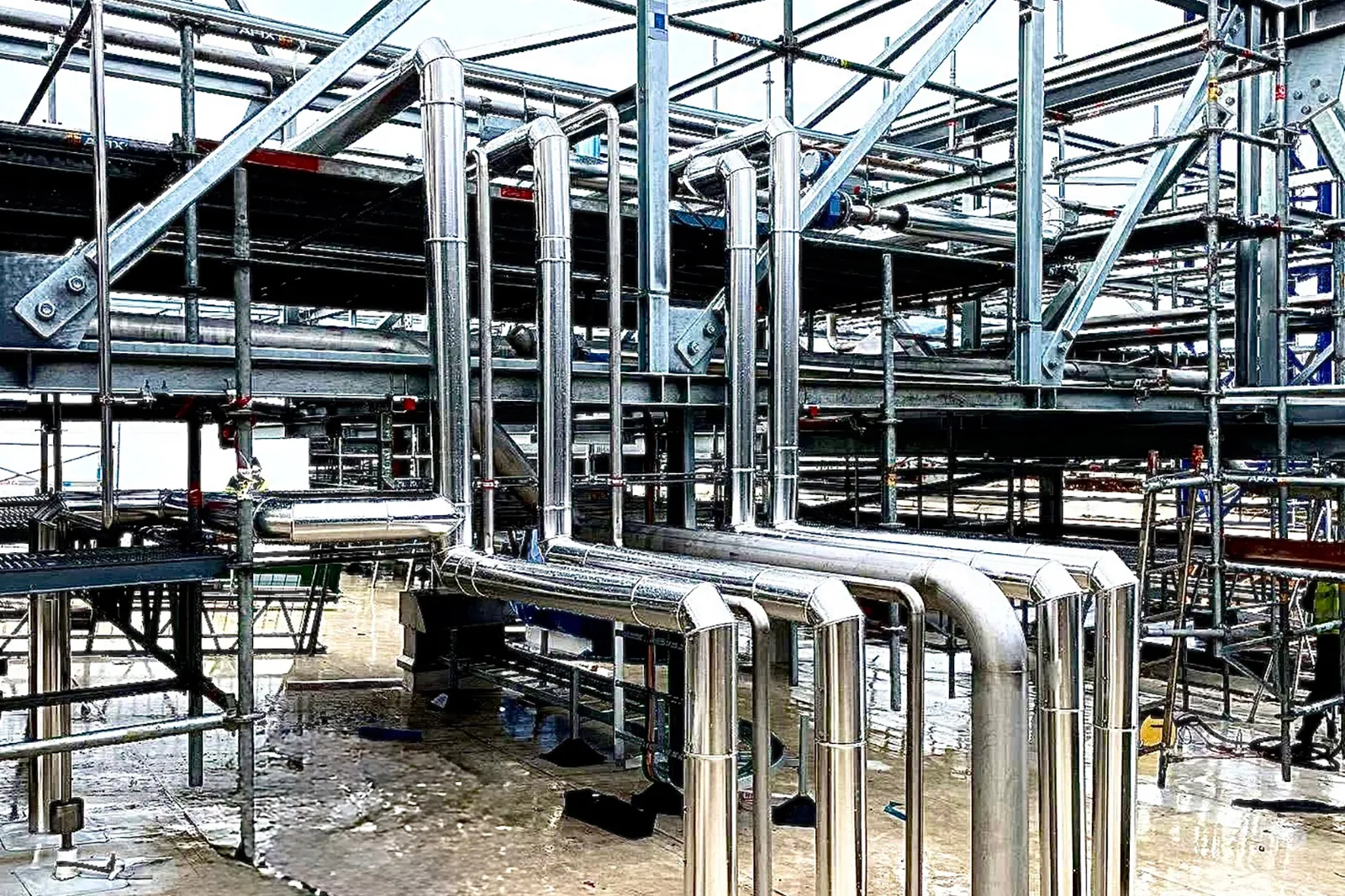
Before the pipe rack was lifted into the air, all the pipes were laid in it at ground level. They will carry steam, glycol, process water, condensate, compressed air, hot water, wastewater and heat recovery. The pipework was made from carbon steel or stainless steel, in accordance with the client’s specifications. Lamrini says: “Some changes to the P&ID were still needed. But that is fairly standard on a project of this scale. You only know exactly where the routes need to go once all the machinery has been installed in the production hall. We also try to be an extra pair of eyes for the client in this respect, double-checking everything and resolving potential problems in advance. That is how we work.”
Scaling up when needed
On average, 25 to 30 Hyline employees were on site at any one time to keep the work on track. “But when we had the opportunity to push ahead, we brought in extra manpower. That is also one of our company’s strengths. We believe in the end-to-end solutions we can offer through our different companies. In this case, three packages were handled by companies within the Eiffage group, making coordination easier for the client,” Gevaert concludes.
Een zakelijke vraag aan Hyline? Get in touch
Companies in this story
Keep following this
Get an email when a new story is published. No account needed.
- ThemeBuilding and upgrading food factories
- SubjectSolutions
- CompanyHyline







