












“There is still a long way to go in food sector robotics”
Text Brigitte de SwartImage Sandra Peerenboom
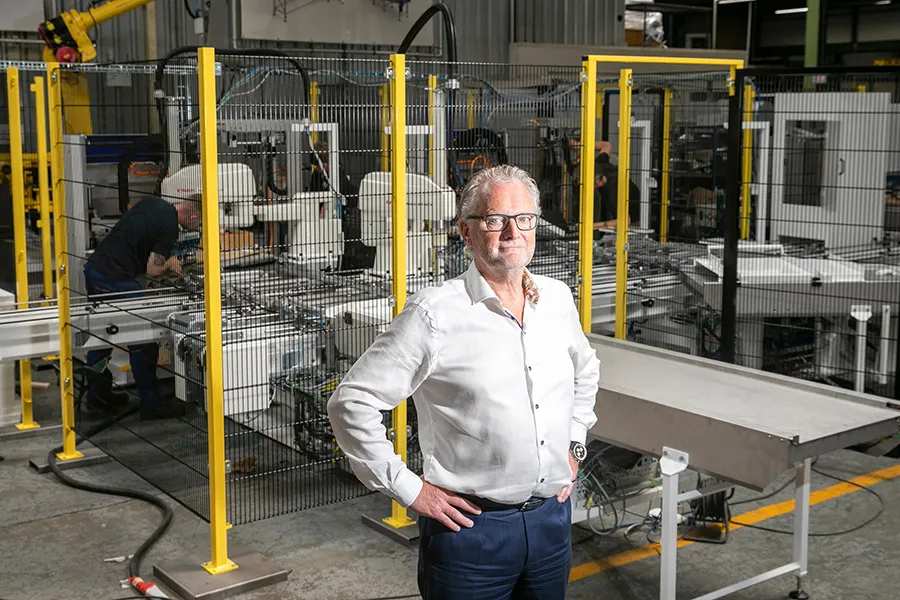
With the development of its mobile robot, Van Wees Waalwijk took a new step in the world of robotics. The robot takes over heavy, repetitive work from people, improves food safety, reduces food waste and makes businesses less reliant on a tight labour market. In this way, the company is helping to drive the food industry forward. But… “There is still a long way to go to raise the level of automation in this sector,” says managing director and owner Andries van der Werf.
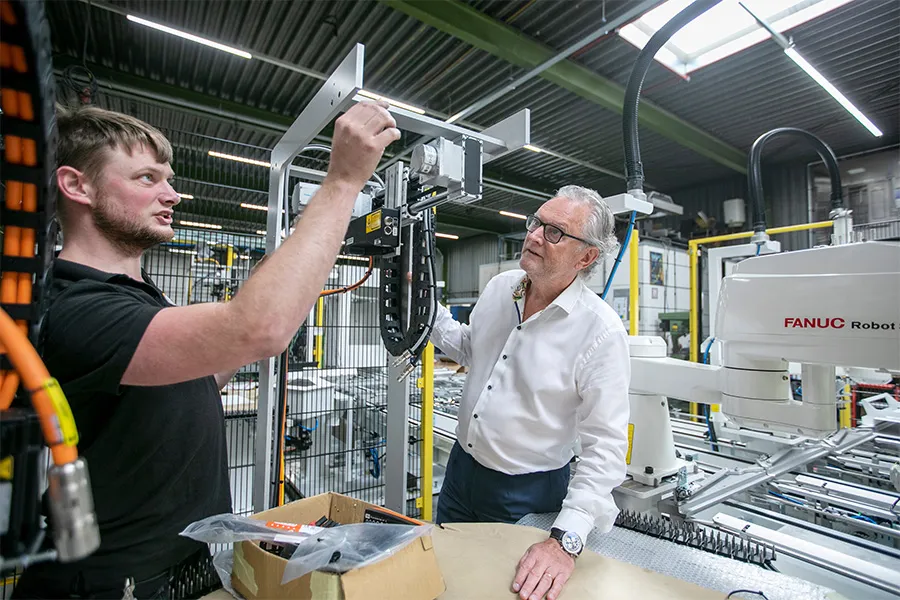
The workshop at Van Wees Waalwijk is filled with impressive automation systems. The machine builder makes bespoke systems in all shapes and sizes for companies in a range of sectors, and no machine leaves the premises until it has been thoroughly tested. Its creations range from a cigar drilling machine and a lid assembly machine to a flan ejection robot and even a candy necklace machine.
Mobile robot
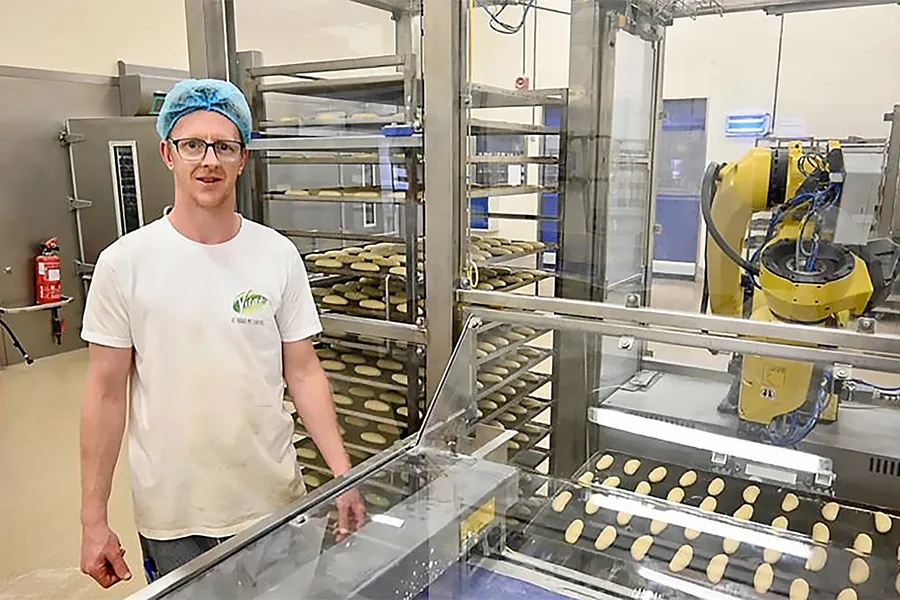
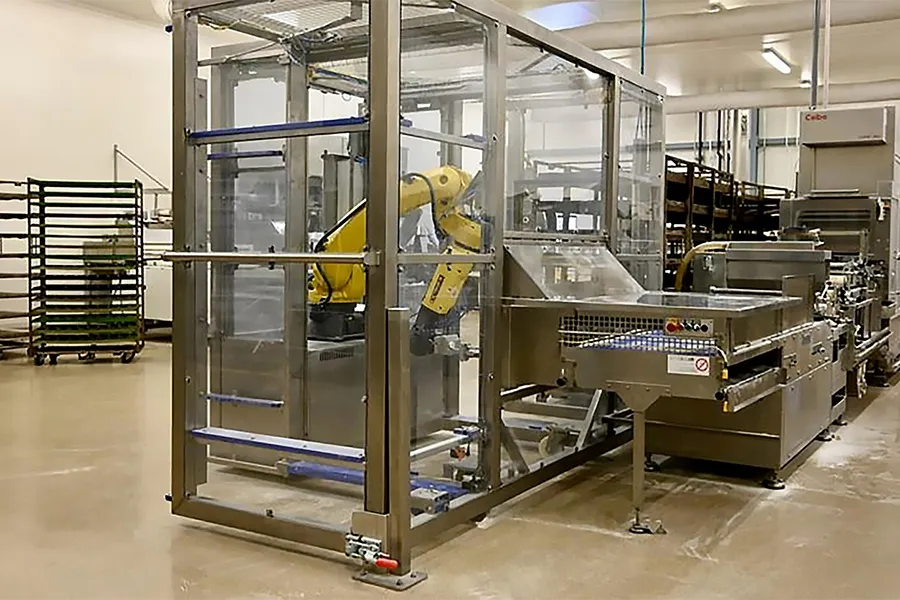
For the food industry, the arrival of the cobot, or collaborative robot, which works alongside people, is an important development. Batch sizes are getting smaller and production runs shorter, making it increasingly important to reduce changeover times. “In the past, production runs were long in the interests of production efficiency,” says Van der Werf. “Now, a different batch is produced every twenty minutes, so being able to switch over quickly is becoming more important.” Van Wees Waalwijk did not simply focus on ‘cobots’, however. It went straight on to develop a mobile robot, taking a new step in the world of robotics. Van der Werf says: “Many tasks that are suitable for automation take place in different parts of a business. This gave us an idea: instead of bringing the work to the robot, bring the robot to the work. In other words, a mobile robot. Versatile, easy to programme, space-saving and safe. And because it is a cobot, it does not need a separate safety cage.” The mobile robot also serves several purposes. First, it takes over heavy, repetitive work, easing the burden on employees and helping to prevent sickness absence. It also improves food safety, reduces food waste and makes businesses less reliant on a tight labour market.
A recipe for success
Through the networks of FoodTech Brainport and AgriFood Capital, interest has now been sparked among meal processors and several bakeries, including Mariën Meesterbakkers in Balen. “For this large bakery, we developed version 2.0 of the mobile robot. It has a larger industrial robot in a cage, but is still mobile,” says Van der Werf. “It is now operating at four locations in the bakery. We are looking at the possibility of integrating the mobile robot at more locations.” AgriFood Capital helped secure funding by supporting the application to S3FOOD and the subsequent application to HIGHFIVE. These are European initiatives run by various cluster organisations, including AgriFood Capital, which help food manufacturers digitalise their production processes. Van der Werf hopes to use these initiatives to introduce mid-sized players in the agrifood sector to automation and robotics. “Large companies know how to find their way, but smaller businesses with craft-based production processes often don’t. And heavy, repetitive work is done there too.” He adds: “We all know there is a tight labour market. So, agrifood businesses, look after your employees and improve their working conditions by leaving repetitive, heavy work to a mobile robot. This allows them to focus on the more enjoyable and interesting preparatory work, while the mobile robot takes care of the operational tasks. Businesses can also use the mobile robot to scale up production more quickly, serve more customers and offer even greater variety. That can only benefit the food sector. There is still a long way to go.”
■
Question about this story? Ask your question
Keep following this
Get an email when a new story is published. No account needed.
- ThemeSmart production with data
- SubjectSolutions







