












Tips for better coding on flexible film: optimising TTO printer performance
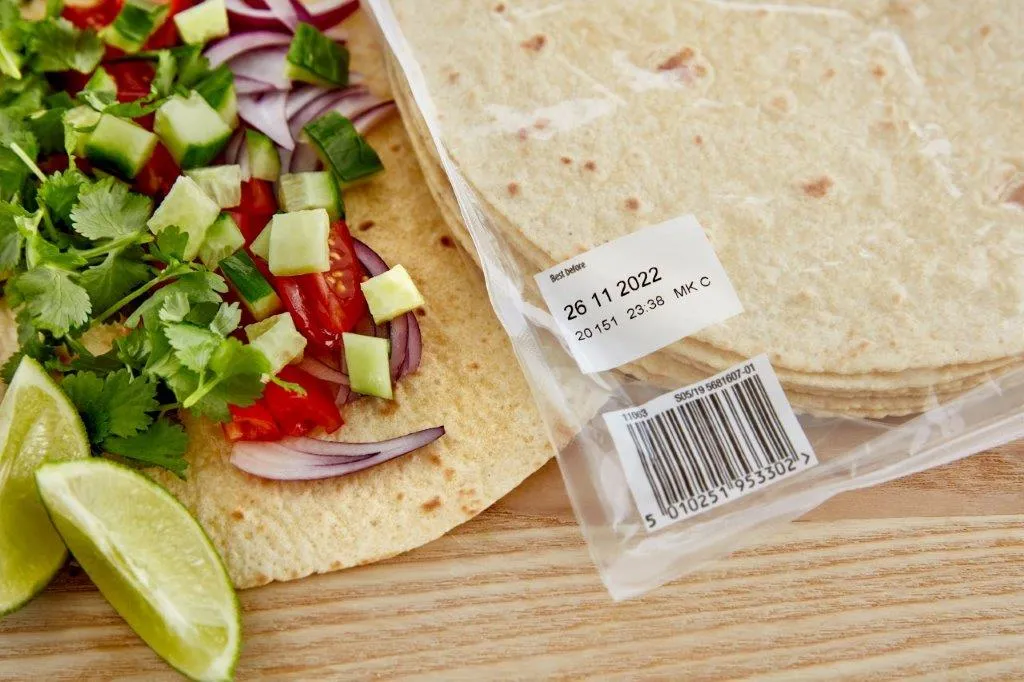
Flexible film is the fastest-growing packaging category today and is used for a wide range of products. Thermal Transfer Overprinting, or TTO, is a digital technology specifically designed for flexible film and offers many advantages over alternatives. However, to avoid unnecessary maintenance costs, restricted production speeds and poor print quality, manufacturers need to choose the right combination of printhead and ribbon.
Why TTO?
Our first tip is to use TTO. Compared with mechanical approaches such as hot stamping and rotary coders, TTO offers greater uptime and less waste, while meeting market demand for improved traceability through the inclusion of real-time data.
TTO not only prints data more clearly and easily, but also makes it quicker to change the data during production.
Compared with other digital technologies, such as continuous inkjet and thermal inkjet printers, TTO is generally easier to integrate into the packaging machine and delivers better print quality. It also offers a more flexible and larger print area. In addition, TTO is highly reliable, with a relatively low initial investment and low maintenance and operating costs. The equipment requires virtually no warm-up time and is usually ready to use within 60 seconds of being switched on. The method produces no odour or mess and requires no drying time. There is also no risk of perforating the film, unlike with mechanical methods, where broken stamps can pierce the packaging. The limitations of TTO technology are the need to print on unfilled packaging and lower maximum speeds.
For more information about the pros and cons of the different methods, read our white paper:
“Choosing the right coding technology for flexible film“.
How TTO works
Before discussing how to optimise TTO printing, it is important to understand the technology first.
TTO is best suited to marking flat flexible films before the packs or pouches are filled, with the printer mounted close to the packaging station.
The main components of a TTO printer are the printhead, the ink ribbon and the roller, or a flat plate for intermittent applications. The printhead consists of small heating elements within a ceramic unit. Each heating element can be heated individually to form characters such as letters and numbers.
When the printhead receives a signal to print a predetermined code, it moves down, pressing the ribbon and packaging film against the roller, which moves in the same direction as the packaging.
Understanding Thermal Transfer Overprinting (TTO)
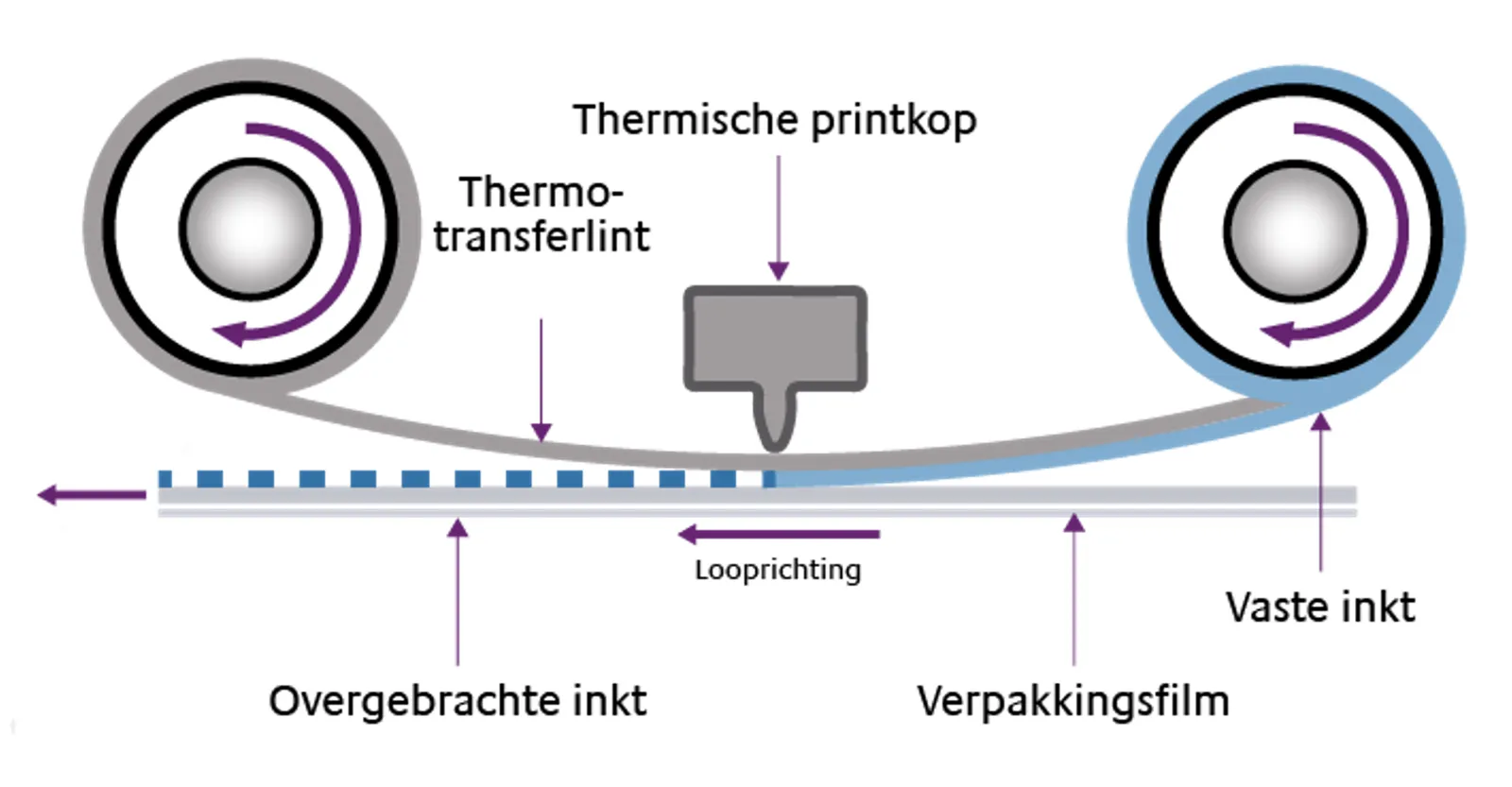
The heating elements required for the code heat up on the printhead, melting the ink on the ribbon. The molten ink is then transferred from the ribbon to the packaging film. Once the message has been printed, the printhead returns to its starting position inside the TTO coder. The printer is then ready to repeat the process with the same or a different code, as required. The printhead’s heating elements heat up and cool down rapidly and frequently.
With a high resolution of around 300 dpi and quality comparable to pre-printed packaging, TTO offers design versatility, allowing barcodes, logos and 2D codes to be applied. Depending on the application, average packaging speeds of up to 120-160 packs per minute (ppm) or 1,200 millimetres/second (mm/s) can be achieved, although more advanced units can reach up to 455 ppm or 1,800 mm/s.
The wide choice of ribbons available means that all applications can be catered for in terms of mechanical resistance, lightfastness, water resistance, heat resistance and solvent resistance. Most thermal transfer ribbons (TTRs) are some form of wax/resin blend. However, these ribbons are unsuitable in some situations.
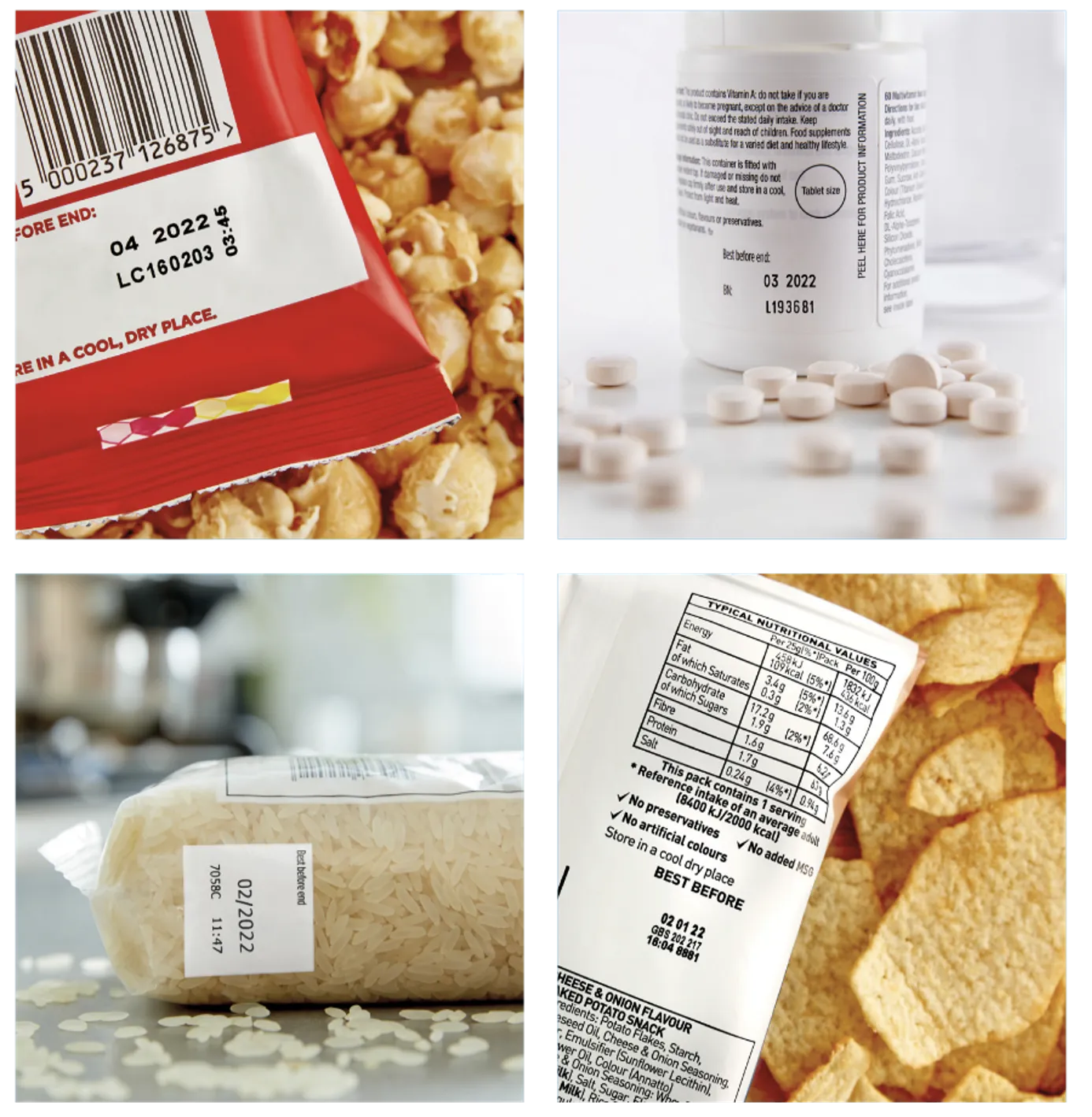
Oils inherent in the production of nuts, crisps and popcorn, for example, can form a barrier between the packaging material and the applied code, resulting in poor adhesion. Chemical solvents, such as those used in the manufacture of antibacterial wipes, are also problematic because they can dissolve the code.
Choosing the right printhead for your application
Freezing temperatures also hinder adhesion, while extreme heat can cause codes to smudge. In these situations, a high-resin ribbon is recommended, as it provides the resistance needed to overcome these factors.
Tips for choosing the best printhead and ribbon
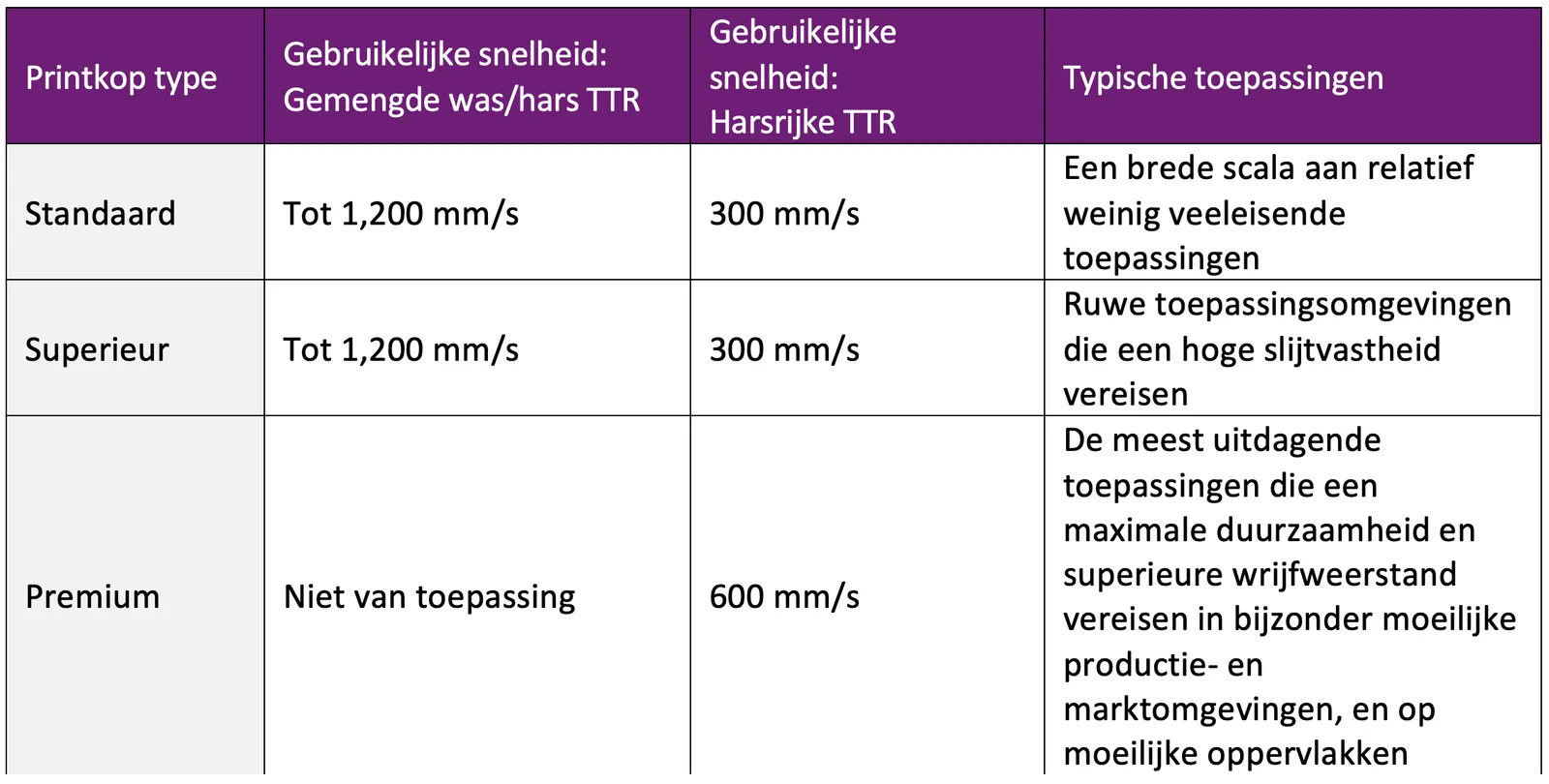
TTO printheads can generally be divided into standard, robust and premium categories, reflecting their suitability for different applications. These categories are based on the robustness of the coding equipment and the required durability of the code, taking into account expected production and market conditions.
As mentioned earlier, the heating elements that are crucial to creating characters are enclosed in a ceramic coating. This protects the heating elements as they transfer heat to the inked ribbon and print the message. These ceramic coatings vary in their ability to withstand repeated heating and cooling cycles and wear. Both factors affect printhead life and coding speed.
Standard printheads are robust enough for applications involving clean films in normal factory environments, such as printing on many food and drink products.
Robust printheads, with stronger ceramic coatings, support printing in more challenging environments, such as coding potato bags on a farm, where dirt and stones pose a significant risk of scratching the ceramic surface. Using a standard printhead in these conditions would result in more poor-quality prints, not to mention more frequent printhead replacement.
In normal conditions, the print speed of these two printhead types is comparable, at 1,200 mm/s. In the more challenging applications mentioned earlier, involving oily products, extreme temperatures or solvents, resin-rich TTRs are needed to ensure crisp, durable codes. In these applications, speed is usually reduced to around 300 mm/s. This is because more energy and heat must be applied to resin-rich TTRs to print codes successfully. As a result, the heating and cooling process between prints takes longer, limiting throughput. Equipment wear is also greater, so printheads wear out sooner.
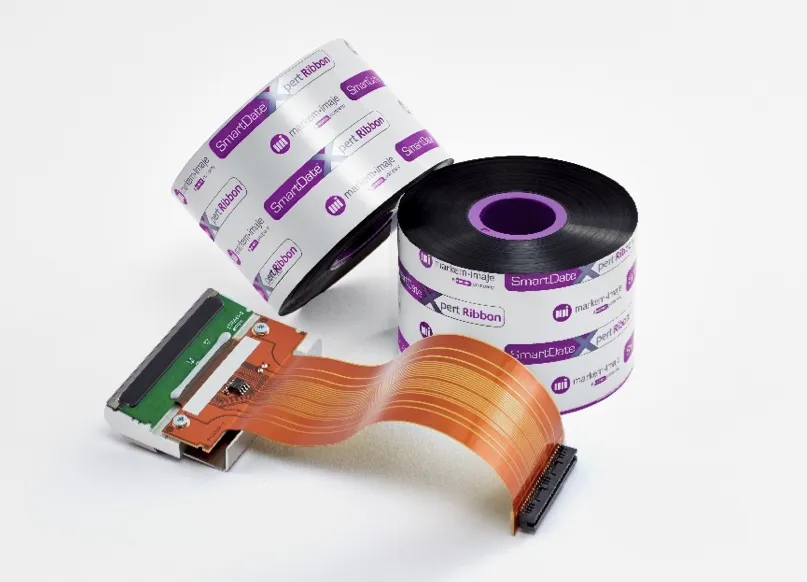
A new option, the premium printhead, has been introduced to increase coding speeds with resin-rich ribbons without compromising quality. This technology is currently available only in Markem-Imaje’s SmartDate® Xtreme Plus printhead. This innovative printhead technology, which handles temperature fluctuations more effectively, enables coding at 600 mm/s. That is twice as fast as the speeds achievable with most other printheads when using high-resin ribbons, at a comparable quality level.
More tips for better TTO coding
Using printheads correctly helps you maintain better print quality for longer and extends printhead life, reducing costs and downtime.
You can also improve uptime and sustainability by using long TTR rolls. Our ribbons, for example, are 50 to 83% longer than the industry average. With 80% more prints per roll, they need replacing less often, produce less roll waste and consume less energy.
Avoid third-party ribbons. Although they may seem cheaper than those supplied by the coding equipment provider, they can void the warranty and are more likely to cause premature printhead wear. This can lead to additional equipment costs that outweigh the savings on consumables. Our ribbons, for example, feature a proven back coating that can double printhead life compared with ribbons without this coating.
Regular printhead cleaning is also essential. It may sound obvious, but in our experience, line operators do not do it often enough. Inadequate cleaning leads to a build-up of dust, dirt and debris on the printhead, which in turn results in poor and potentially unreadable codes.
Because the heat from the printhead has to pass through the layer of dirt, it is less likely to reach the ink, reducing print quality.
Cleaning the printhead whenever the ribbon is changed prevents these problems. Operators can easily remember to do this, while keeping the impact on downtime to a minimum.
Printhead life can also be affected by the print mode, printhead pressure, intensity setting and print volume. Operator training can help businesses save money by minimising printhead replacement through better use of the equipment.
For example, if the ribbon has been in use for some time, printed characters may show streaks, gaps or fading. Some customers try to address this by increasing the print intensity (making it darker). This is normally set at 80 to 100%, but some users are known to set it to 140%, the maximum setting. Although this will improve the print, the additional heat involved will shorten the printhead’s service life. A better solution is usually to move the printhead slightly so that the heating elements make better contact with the film. This improves the print without putting extra strain on the components. Finally, choose a supplier that offers a printhead warranty as standard to further minimise your maintenance costs.
For more information: contact Kees Bink, T. +31 651 528 973
Question about this story? Ask your question
Companies in this story
Keep following this
Get an email when a new story is published. No account needed.
- ThemePackaging and product traceability
- SubjectSolutions
- CompanyMarkem-Imaje NV







