












Which conveying system is best suited to your application?
Text Valérie CouplezImage iStock
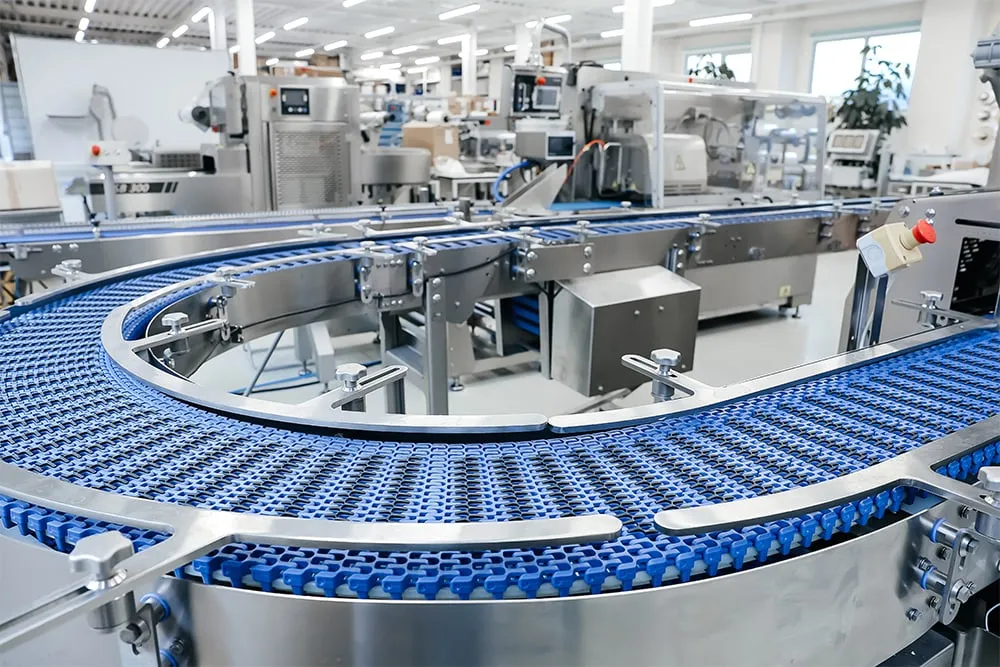
The right conveying system ensures the efficient and safe transport of ingredients and products. Naturally, you also want to preserve product integrity, meet industry standards and improve overall productivity. This article reviews some typical conveying systems used in the food industry, helping you make an informed decision for your business.
The most common conveying systems are pneumatic conveying systems, belt conveyors, elevators and screw conveyors. Each type meets specific needs and supports seamless, hygienic processes. Let’s look at the features and uses of each type of conveying system, along with their pros and cons.
Pneumatic conveying is ideal for lightweight materials
Pneumatic conveying solutions use compressed air to move materials through a pipeline. They are often used to convey lightweight, dry bulk materials such as grains, flour and sugar. Pneumatic conveying systems can operate under positive or negative pressure. In positive-pressure systems, a blower or fan pushes the material through the pipeline, while negative-pressure systems use a vacuum to draw it through. One advantage of these solutions is that they can convey material over long distances and around obstacles, as they can operate horizontally, vertically or at any angle in between. They are also relatively easy to clean and maintain because they have few moving parts. Pneumatic conveying systems are also relatively inexpensive and energy-efficient compared with other types. However, they cannot handle abrasive, sticky or wet materials and may be prone to segregation and degradation if the material being conveyed is not uniform in shape or size. Pneumatic conveying systems are also noisy and may be prone to leaks if they are not properly designed and maintained.
Belt conveyors: versatility is key
Belt conveyors use a continuous loop of belt material to transport items from one place to another. They are used to convey a wide range of products, including raw materials, finished products and packaging materials. A belt conveyor system can operate horizontally and on a slight incline. However, it is not the best choice if you need vertical conveying or conveying at a steep angle. One advantage of belt conveyors is their versatility and adaptability to different environments and materials. They can be made from a range of materials, such as rubber, PVC or polyurethane, to meet the needs of the product being conveyed. Options such as sidewalls or V-guides help prevent spillage or slippage. However, this conveying system is not suitable for extremely hot or cold food processing environments and may be subject to wear if it is not properly maintained. Belt conveyors also require a certain amount of tension to function correctly, which can be a challenge in some environments.
Elevator systems: quiet and flexible
Elevator systems, in which buckets, for example, are attached to a moving belt or chain, can convey materials vertically. They are often used for solid bulk goods such as grains, flour, sugar and similar materials. The design can be centrifugal or continuous, depending on the type of material. One advantage of this system is that it can handle a wide range of materials and capacities, as it can be adapted with different bucket sizes and shapes, belt or chain speeds, and discharge heights. They are also relatively quiet and take up little space. However, they contain a large number of moving parts, making them more difficult to clean and maintain. They are also not ideal for conveying mixtures.
Screw conveyors are ideal for semi-solid materials
Screw conveyors are a type of automated conveying system that uses a helical screw blade to move materials through a trough or tube. They are often used to convey semi-solid materials such as meat, animal feed, aggregates and similar products. However, they have some limitations. One limitation is that they are not suitable for areas where the conveyor needs to operate in multiple planes, such as around corners or bends. In addition, they are generally limited to operating in a single plane, as the screw blade is not designed to bend or flex. Another limitation is that they can cause significant material degradation, especially if the material is fragile or easily crushed. This is because the screw blade can exert considerable force on the material as it moves through the trough or tube.
Question about this story? Ask your question
Keep following this
Get an email when a new story is published. No account needed.
- SubjectSolutions







