Why producers and retailers must prepare for GS1 Digital Link 2D barcodes now
Maintaining customer loyalty, streamlining product recalls, adapting to changing consumer behaviour, reducing waste and tackling theft: producers and retailers are under constant pressure to find new ways to address major challenges. The drive to use 2D product codes as a result of new standards could prove to be an advantage in this process.
The first of these is GS1 Digital Link, the result of global standards organisation GS1’s move from 1D barcodes to a new 2D barcode format. 2027 will be the official sunrise period for Digital Link 2D codes, by the end of which the global industry must ensure that 2D codes are accepted at points of sale (POS).
Making digitally connected products the global standard
The change will upgrade barcodes from the traditional 1D barcode, with its 14-digit Global Trade Item Numbers (GTINs), to a unique 2D barcode containing the GTIN as well as a significant amount of additional embedded data that retailers and consumers can use. use. As this will be the first time that digitally connected products and dynamic, or ‘hot’, data are established as a global standard, the change will mark a crucial shift in product identification. As an important step towards making significantly more product information accessible across the entire supply chain, it also offers major opportunities for producers and retailers.
GS1 Digital Link is not the only new standard with the potential to bring additional benefits to retail businesses. The EU Digital Product Passport is expected to come into force from 2027, changing how retailers, manufacturers and other businesses share product information across the supply chain, particularly in the area of sustainability. The Digital Product Passport will effectively be a digital twin of a product, linked to the physical product through data identifiers and carriers, such as QR codes and RFID tags, to collect and share key product data from every stage of the supply chain and promote product circularity. The DPP will contain essential details such as a unique product identifier, compliance documentation and information about substances of concern. It will also include user manuals, safety instructions and product disposal guidance.
The DPP rollout is already just around the corner: the first products, car batteries, must have DPPs from 2026, followed by all textiles, clothing and footwear in 2028. The EU is currently planning for almost all products, with the exception of food, animal feed and medicines, to have a DPP by 2030.
Seamless connectivity
Although these changes may seem daunting at first, taking the right steps in response will benefit both retail businesses and their customers. One key advantage, particularly of GS1 Digital Link 2D codes, is the ability to embed a greater amount of personalised and variable information in a single code. This creates connected products that can be easily used by different stakeholders.
Advancing the FMCG market
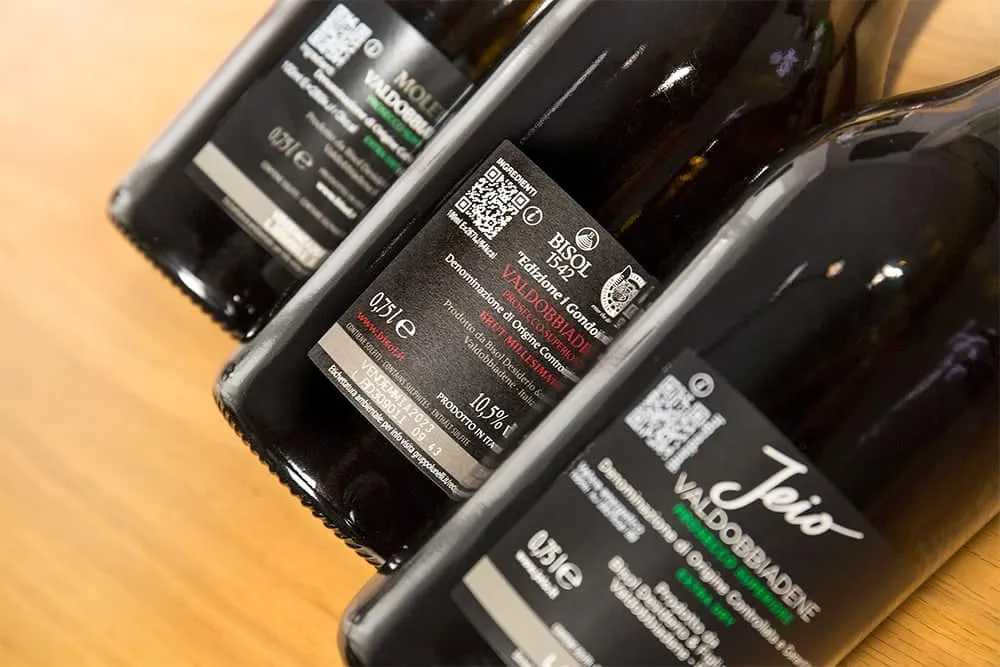
What does the emergence of the 2D code as a standard mean for the FMCG market, its producers and its retailers? For food brands, particularly those dealing with short shelf lives, 2D codes offer better ways to address issues such as managing prices in response to changes in demand, reducing waste, speeding up product recalls and tackling theft. By going beyond the limitations of static information, the use of 2D codes can enable brands to add more precise best-before or use-by dates, down to the individual item number. Another benefit of the dynamic nature of GS1 Digital Link is more adaptable product branding for products whose composition can change, such as wine. This potential to update label information at a late stage via the 2D code can make compliance easier to achieve and broaden the range of information provided to consumers.
All types of FMCG businesses can benefit from GS1 Digital Link to rethink their approach to product packaging. By moving beyond the constraints of having to add the full ingredients list in multiple languages to packaging, businesses may be able to benefit from more design space for stronger, more sophisticated branding in the future. This would enable them to optimise their SKU inventory and even go as far as removing all packaging material, where appropriate and compliant. It would also allow businesses to reduce the environmental impact of their packaging, optimise stock levels and potentially save space, helping them respond even faster to changes in demand.
An evolution in product information
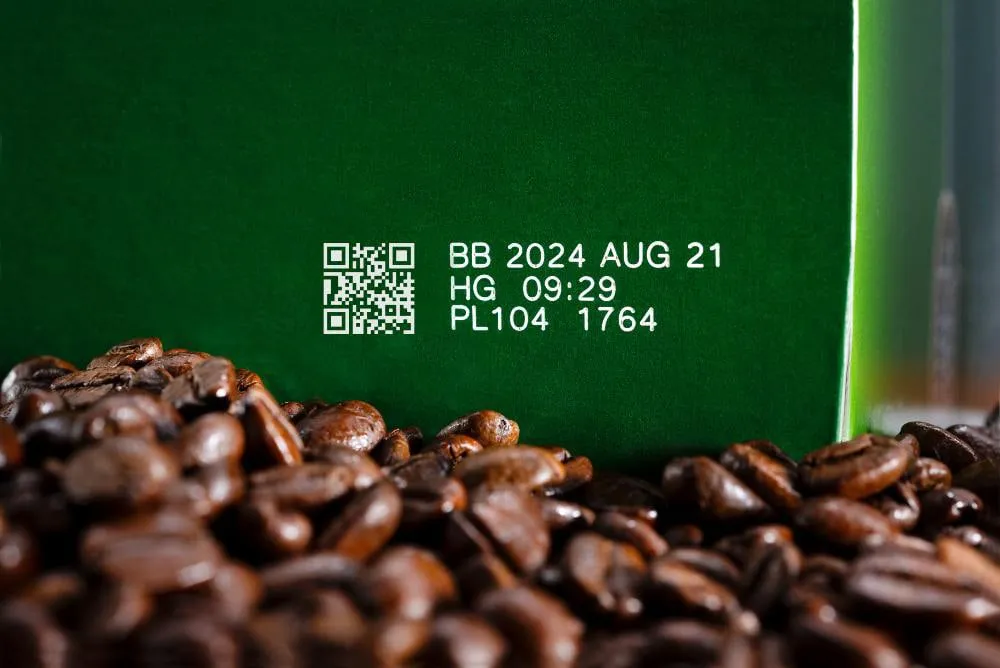
Retailers and manufacturers are constantly hampered by complex data management processes and reliance on centralised systems. Depending on the scanning device, the 2D code addresses these challenges by enabling a single QR code to provide a wide range of information, giving each product a unique identification. As a result, consumers can quickly and easily access nutrition tables, expiry dates, recall alerts and promotional offers on their smartphones. In addition, as only one QR code measuring at least 2 cm x 2 cm is needed to ensure scannability, businesses benefit from accurate product information that is available at every stage of the supply chain and in as many languages as required. This means not only that consumers can more easily access much more relevant data within seconds using any smartphone, but also that retailers can authenticate products, trace their origins, manage stock levels more effectively and adjust and update them more accurately in response to changing market demands.
From ‘deceptive’ to ‘non-deceptive’ counterfeit products, many brands are concerned about the potential impact of counterfeits. Once again, the standardisation of 2D codes points to a major change in how this issue is addressed. The precise, unique product identification they provide increases businesses’ control and visibility at every stage of the supply chain.
Rethinking product recalls
Slow and costly product recalls can be transformed by the additional information and more precise tracking provided by 2D codes. 2D codes also benefit US-based FMCG producers and manufacturers in another way, by enabling compliance with the Food and Drug Administration’s (FDA) Final Rule on Requirements for Additional Traceability Records for Certain Foods, also known as the Food Traceability Final Rule. This regulation requires businesses to be able to track the movement of certain fresh food products, from fruit to fish, at every stage of the supply chain. QR codes are recommended to ensure a high level of traceability and speed up the location process from days to just a few hours. This improvement could help retail businesses prevent contamination outbreaks and costly lawsuits, giving them a higher level of protection.
2D codes are better for traceability than serialised 1D barcodes for a number of reasons. Most importantly, they can ensure that key product and supply chain information is easily accessible to businesses and their customers outside the company’s production systems. They also allow the use of the smallest possible print format, making it possible to include more information on the packaging. Another advantage of 2D codes over serialised 1D barcodes is that they can still be read even if they are partially damaged.
Endless brand opportunities for consumer engagement
A positive customer perception is crucial for every retailer. For many types of businesses, 2D codes represent a valuable step forward in traceability. This end-to-end visibility provides better protection against product counterfeiting, helping to maintain brand integrity and customer loyalty while protecting profit margins.
2D codes also offer new and exciting ways for retail brands to build brand awareness and, more importantly, guarantee authentication and improve visibility. Their value in connecting physical products with digital content means that businesses can create product marketing content that is broader in scope, but also more precisely targeted to match the interests and tastes of specific demographic groups.
For brands, the dynamic nature of 2D codes offers endless opportunities for branding and B2C marketing, whether through a single URL that takes consumers to a carefully curated website showing every stage of the product’s development, or by delivering personalised post-purchase content that builds on a customer’s emotional investment in a brand. At a time when consumers are making their purchasing choices more carefully than ever, the ability to engage with them meaningfully, both in and out of the retail environment, is enormously valuable.
Preparing for 2D codes: next steps for retailers
For all retailers, a top priority should be upgrading their point-of-sale (POS) and mobile POS infrastructure so that their systems can read and process 2D codes and the associated attribute data before 2028. Retailers must also ensure they have the technology to print and encode individual items in 2D, with dynamic information, at high speed. In addition, businesses must ensure they can make use of all available data by fully integrating their inventory, supply chain management and merchandising systems.
The rollout of both GS1 Digital Link and the Digital Product Passport is just around the corner in terms of business planning. By taking the right steps now, retailers and retail brands can make full use of the benefits of the 2D code.
A business enquiry for Markem-Imaje NV? Get in touch
Companies in this story
Keep following this
Get an email when a new story is published. No account needed.
- ThemePackaging and product traceability
- SubjectSolutions
- CompanyMarkem-Imaje NV