World first: fully automatic brochette machine using robots
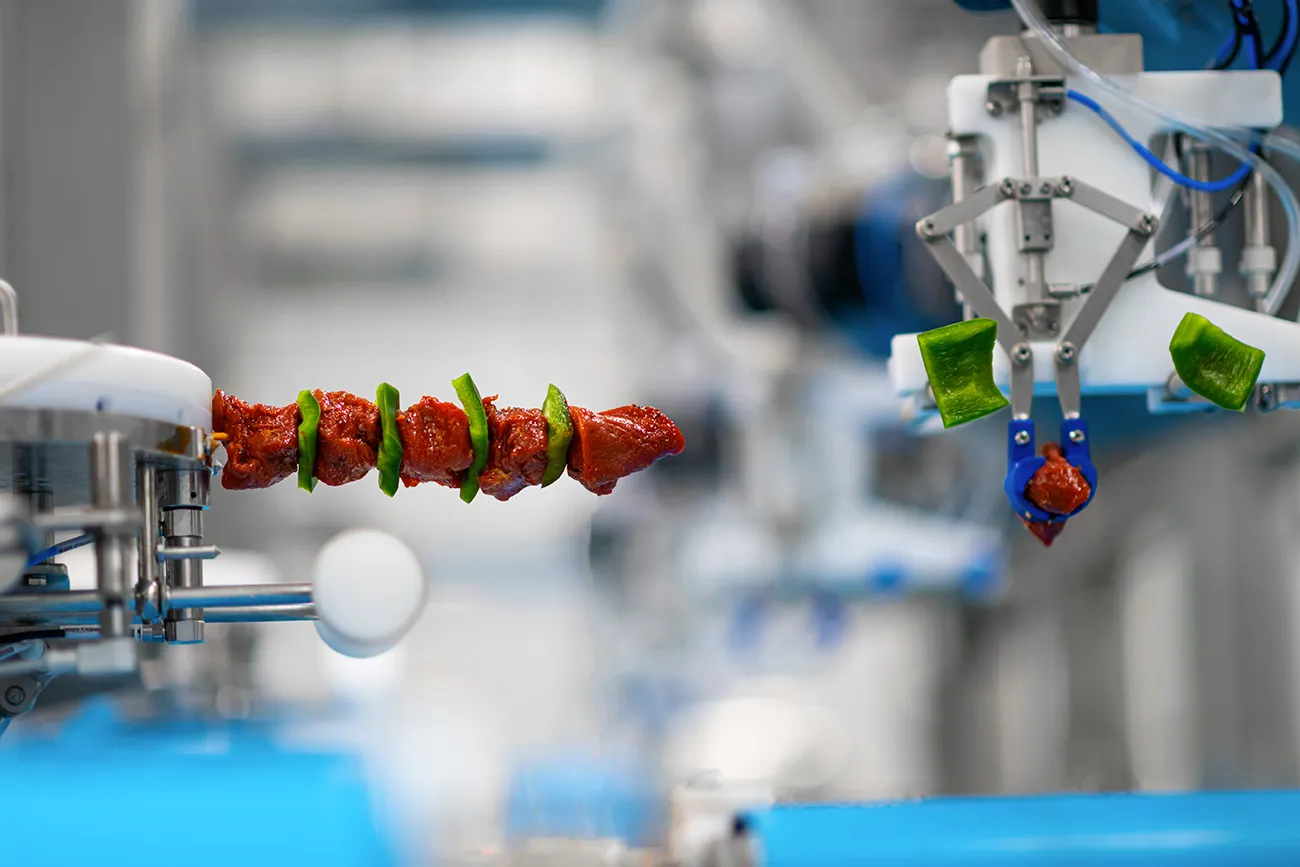
Automating production in the food industry presents manufacturers with huge challenges, not least because of stringent hygiene standards and the difficulties involved in handling products. PINTRO bv, a Belgian specialist in the design, manufacture and supply of machinery for the food industry, has developed an innovative solution. Its fully automated Pick & Skewer system for making brochettes is a world first. Stäubli TX2-60L robots, with their washable, hygienic design, handle the ingredients and skewer them with precision.
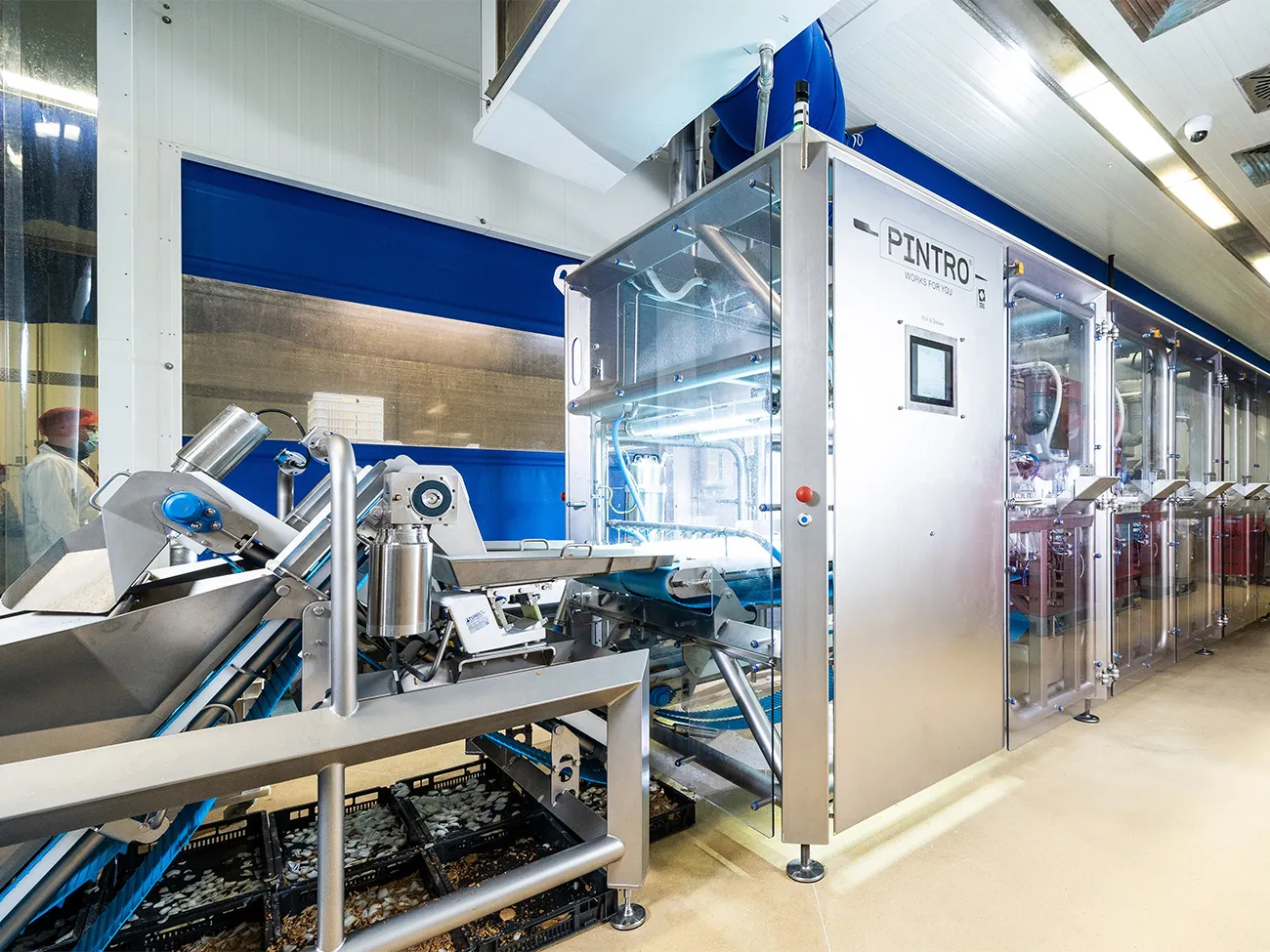
Different types of skewered meat, such as shashlik, souvlaki, kebab and satay, are hugely popular with consumers. At Beltaste in Morahalom, southern Hungary, 160 employees mainly produce shish kebabs (brochettes). For automation experts, the company is a pioneer in ‘Food Processing 4.0’, or the fourth generation of production technology. A year and a half ago, it became the first company in the world to put a fully automatic brochette machine into operation. A second unit has since been installed.
Brochettes made at high speed
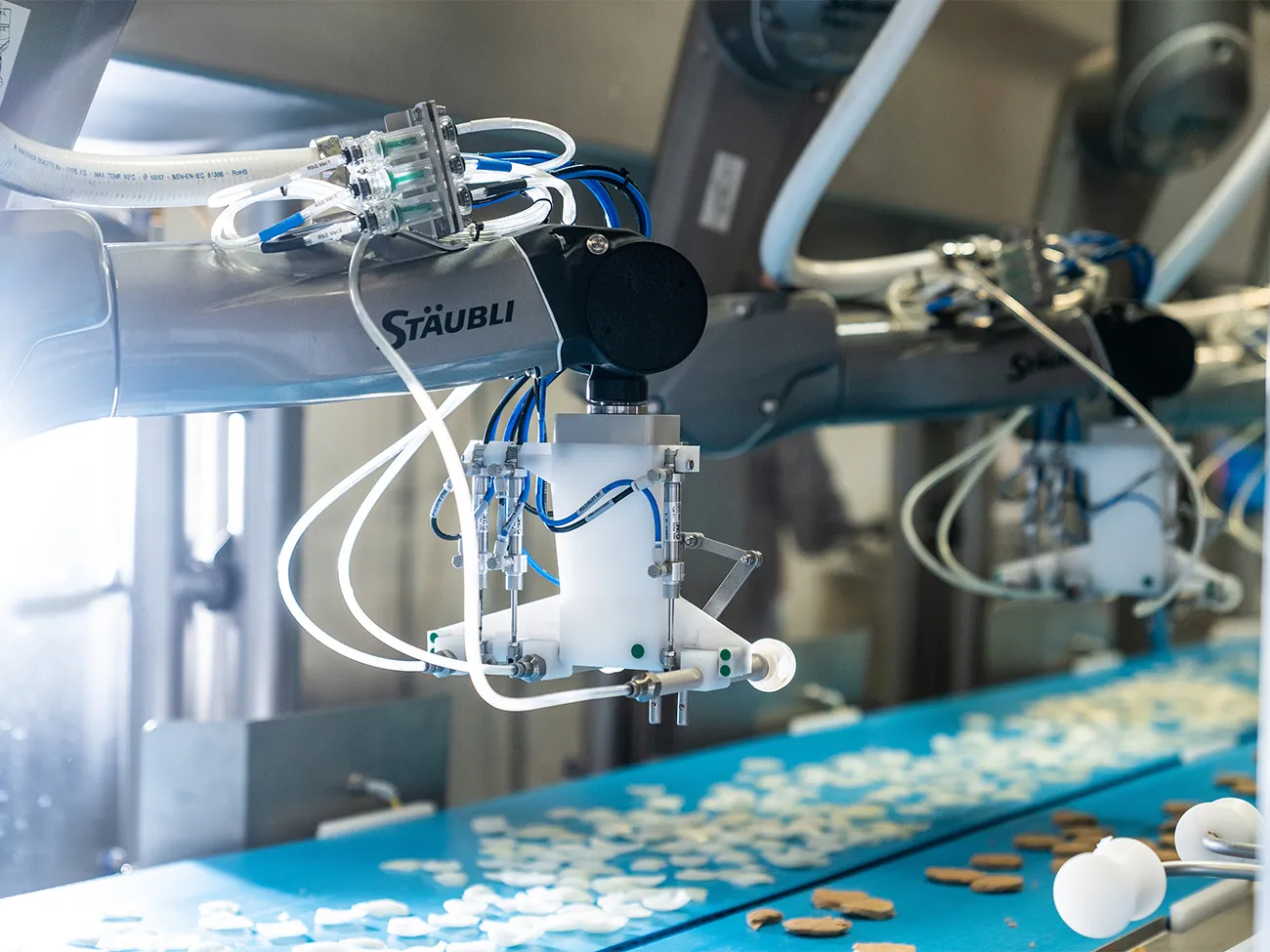
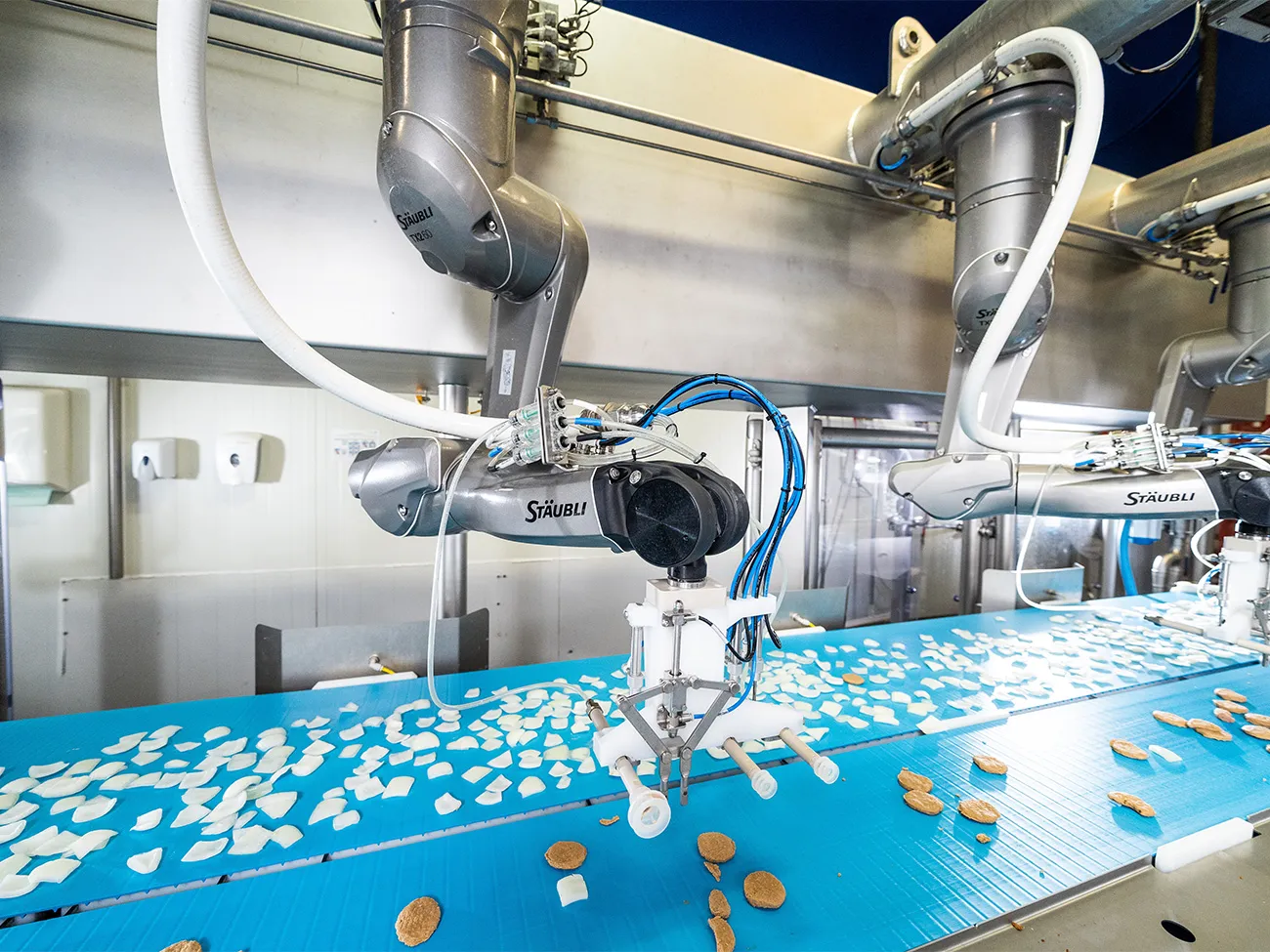
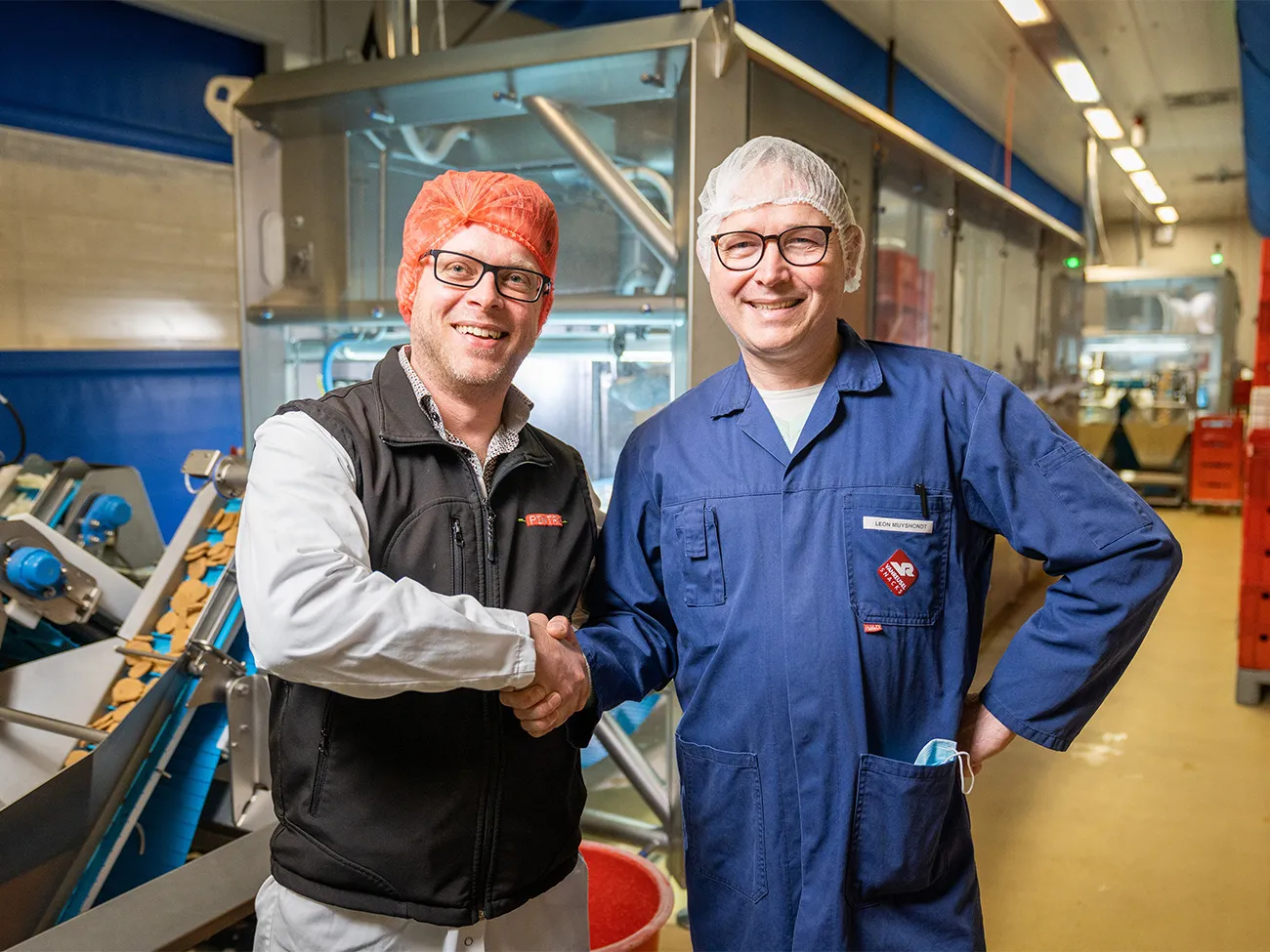
Anyone wanting to follow the fully automatic Pick & Skewer system in action with the naked eye needs to concentrate 100%. The production process runs at extremely high speed. All the ingredients are delivered on two conveyor belts to the central point of the production line: breaded, raw or marinated meat on one side, and onions, peppers, cherry tomatoes or whatever else the recipe calls for on the other. At the side of the system are mechanisms that separate the ingredients and hold them ready for horizontal skewering. The Stäubli robots have to ‘pick’ the ingredients and ensure that the skewer pierces each one precisely through the centre. The finished brochettes are then transported to the packaging station. The Beltaste system produces between 1,000 and 1,200 shish kebabs (brochettes) per hour without human intervention, each one of top quality. Its performance was precisely what led Beltaste’s senior management to invest in the world’s first Pick & Skewer system. Leon Muyshondt, Chief Technology Officer at Beltaste in Morahalom, explains: “We spent a long time looking for a solution that would increase productivity while also improving quality. None of the solutions met our requirements. When we saw the Pick & Skewer, we were immediately convinced. We believed in the concept and trusted its developer and manufacturer.”
Five robots process 15,000 different ingredients per hour
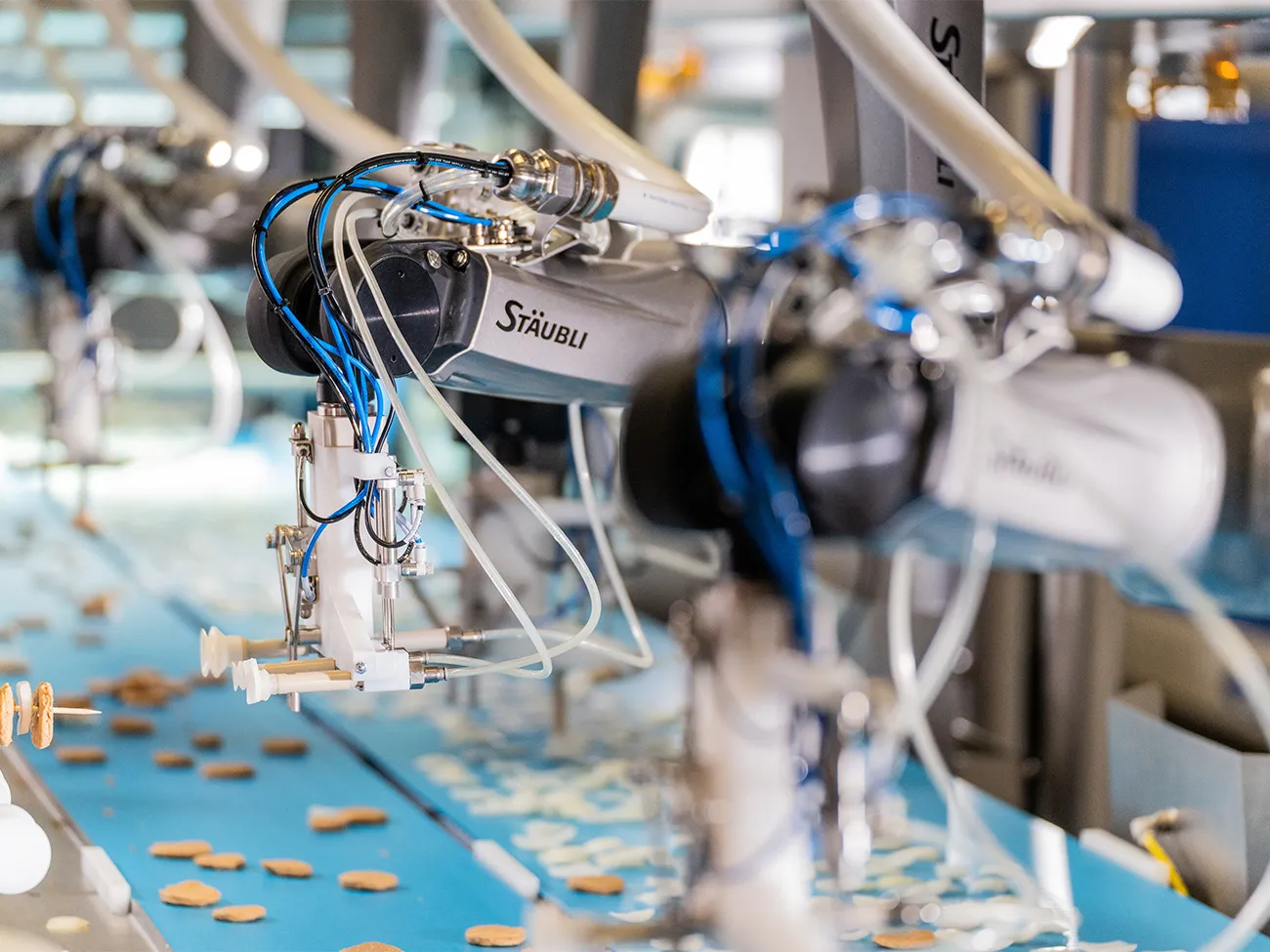
The system was developed by the Belgian company PINTRO. The name is a shortened form of the English ‘pin through’. Since 2007, this subsidiary of SMO bv, a specialist in custom machine building, has been manufacturing machines for manual and semi-automatic brochette production. The Pick & Skewer marked a major step towards fully automated brochette production, on a large scale. Depending on the required output, all ingredients are picked and held ready for skewering by between two and five robots. Beltaste chose the version with five high-performance Stäubli TX2-60L HE robots. Since one six-axis robot can pick and skewer up to 3,000 individual ingredients per hour, the system has a maximum processing capacity of 15,000 ingredients. At 10 pieces per skewer, this equates to 1,500 brochettes per hour.
Flexible changes to ingredients
The robots are guided by vision systems and operate according to recipes stored in the control system. They are not only fast, but also versatile. “We usually change the recipe every 16 to 20 hours. If that means changing the gripper, the quick-change systems make it a five-minute job,” says Muyshondt. PINTRO’s engineers invested considerable expertise in developing the grippers. The result is a combination of mechanical and vacuum grippers that picks up different ingredients in a single operation and then pierces them with extreme precision. Without this, the system would not be able to achieve its high performance. Each robot produces a brochette in a matter of seconds. Image processing systems check the exact position of every individual ingredient. Pieter Weyens, head of PINTRO, says: “The Stäubli robots, which are mounted on the ceiling, grip and position each ingredient with an accuracy of ± 0.1 mm. Precise positioning and alignment are not the only important criteria for this installation. The brochettes must look as though they have been made by hand.”
Choosing a robot: hygiene is the deciding factor
Alongside speed and precision, hygiene and cleanability also played an important role in choosing the robot. The cleaning procedures are rigorous, as Muyshondt describes: “Twice a day, we run an automatic cleaning and disinfection cycle for the tooling, which takes a minute and a half each time. After every shift, the equipment is thoroughly cleaned and disinfected: first, foam is applied, then it is rinsed with hot water from a cleaning lance at a pressure of 40 bar. The robots are cleaned in the same way each time.” The HE version of the six-axis Stäubli TX2 robot, designed specifically for humid environments, is waterproof and therefore ideally suited to this application. It is fully encapsulated and withstands the entire cleaning cycle without any loss of functionality. Even frequent, intensive cleaning processes, such as those used in the pharmaceutical and food industries, do not shorten its service life. HE robots are also designed to operate in sensitive environments. Their washable, hygienic design is considered unique. The robots used in the Pick & Skewer system are lubricated with food-grade NSF H1 oil. “The robots are heavily loaded because they perform many fast, delicate movements. The lubricant must therefore be effective while also meeting the requirements of the food processing industry,” says Muyshondt. The H1 oil, developed by Stäubli in collaboration with an established lubricant manufacturer, meets these criteria perfectly.
Easy to programme, even easier to use
Coordinating image processing and robot movements at this speed and with such a high degree of accuracy clearly places demands on the robot control system too. The machines also perform well in this respect: Stäubli CS9 controllers are known for their strong performance and excellent connectivity. Another advantage is how easy they are to programme. According to Muyshondt, operating the Pick & Skewer is even simpler: “The employee simply selects a recipe, loads the ingredients and presses the start button, and that’s it!” Ingredients can be added while the brochettes are being made. The image processing systems also monitor the quality of every individual skewer.
A concept with many advantages
With Pick & Skewer, PINTRO has developed a world first for the food processing industry, overcoming numerous challenges, including designing grippers that can pick and skewer pieces of onion and cherry tomatoes at a speed almost impossible for the human eye to follow. Since the system processes raw meat, the entire process must be carried out under the strictest hygienic conditions. This is no problem for Stäubli’s HE robots. The concept offers clear advantages. Muyshondt is enthusiastic: “The quality of the kebab skewers is consistently high. The ingredients are skewered accurately, and we have complete freedom of choice when it comes to ingredients. Cleaning and disinfection times are extremely short, and the robots can be cleaned at the same time. This is the future of kebab (brochette) production.” Following the great success of the first Pick & Skewer line, Beltaste recently put a second system into operation at its factory in Hungary.
Question about this story? Ask your question
Companies in this story

Keep following this
Get an email when a new story is published. No account needed.
- ThemeFood safety from design to audit
- SubjectSolutions
- CompanyStäubli