Belgian first: vertical flow-wrapper for ham and bacon cubes
Text Valérie CouplezImage Ekkow
A model of efficiency and sustainability
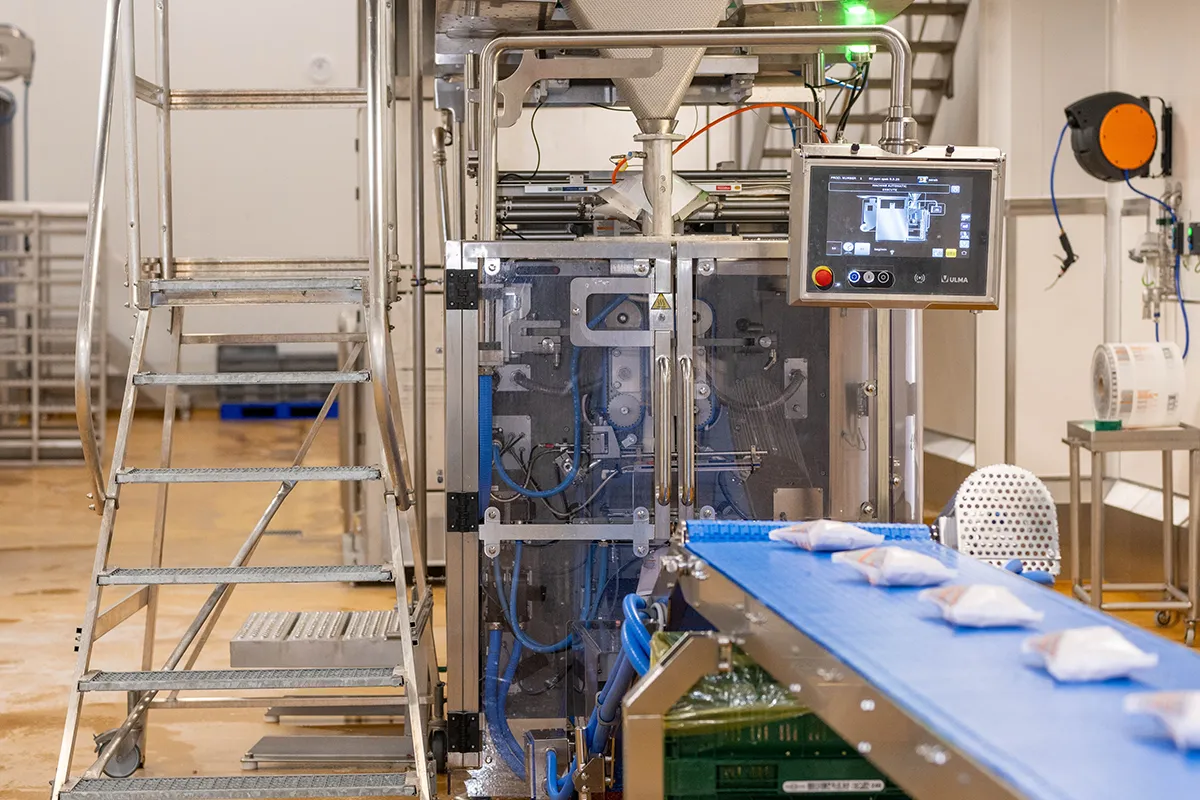
Sustainability is in Colruyt Group’s DNA. Not just on paper. When making new production investments, the company looks at how it can take further steps, even if that means taking a pioneering role. It was the first meat-processing company to use vertical flow wrapping for its product packaging. This saves 45.5 tonnes of plastic a year.
Colruyt Group is serious about becoming more sustainable. It is backing up its ambition with concrete targets. By 2030, for example, it wants to use only packaging that is reusable or recyclable. Its score today? 99.7%. “We’re almost there, but as with everything, the last few steps are the hardest,” says Glenn Coppieters, project manager, technics at Colruyt Group. The company also wants to reduce its use of plastic packaging as much as possible. “Plastic is and will remain a useful material for helping to guarantee the freshness of your products. But that doesn’t mean it can’t be improved. We’re trying to do our bit, step by step,” Coppieters adds.
The entire chain under one roof
A recent investment in the packaging line for ham and bacon cubes at Fine Food Meat, Colruyt Group’s meat-processing business, was another demonstration of this commitment. Meat processing has been part of the group’s activities since the 1950s. “We keep costs as low as possible for our customers by taking charge of the entire chain, from the recipes to the finished products. It’s really in the group’s DNA. And what you do yourself, you usually do better, don’t you?” Coppieters adds with a wink. Colruyt Group operates from an industrial estate in Halle, where it has now taken over the entire block, covering around 18,000 m². On one side of the street, fresh meat is boned; across the road, it is further processed into fermented products (bacon, streaky bacon, etc.) and cooked products (ham, ready meals, etc.). Spreads are made around the corner.
Ideal timing
The processing department wanted to kill two birds with one stone by installing a new packaging line. Coppieters: “On the one hand, we’re aiming for more efficient production through higher quality and fewer rejected packs. On the other, we want to improve sustainability by using less packaging material that is easier to recycle.” Until recently, packaging was done on a thermoforming line that placed twelve trays on the conveyor belt at a time. “This resulted in quite a lot of
‘rework’, with packs that weren’t filled or sealed properly. It was quite labour-intensive. I thought a vertical flow-wrapper could do the job better, to a higher standard and more sustainably. What’s more, the existing line was at end of life. So it was the ideal time to think ahead, rather than wait another fifteen years for an opportunity to improve sustainability.”
Saving 45.5 tonnes of plastic
The figures on paper confirmed his view: by switching to flow wrapping, Colruyt Group would save 45.5 tonnes of plastic a year on its 250 g packs of ham and bacon cubes.
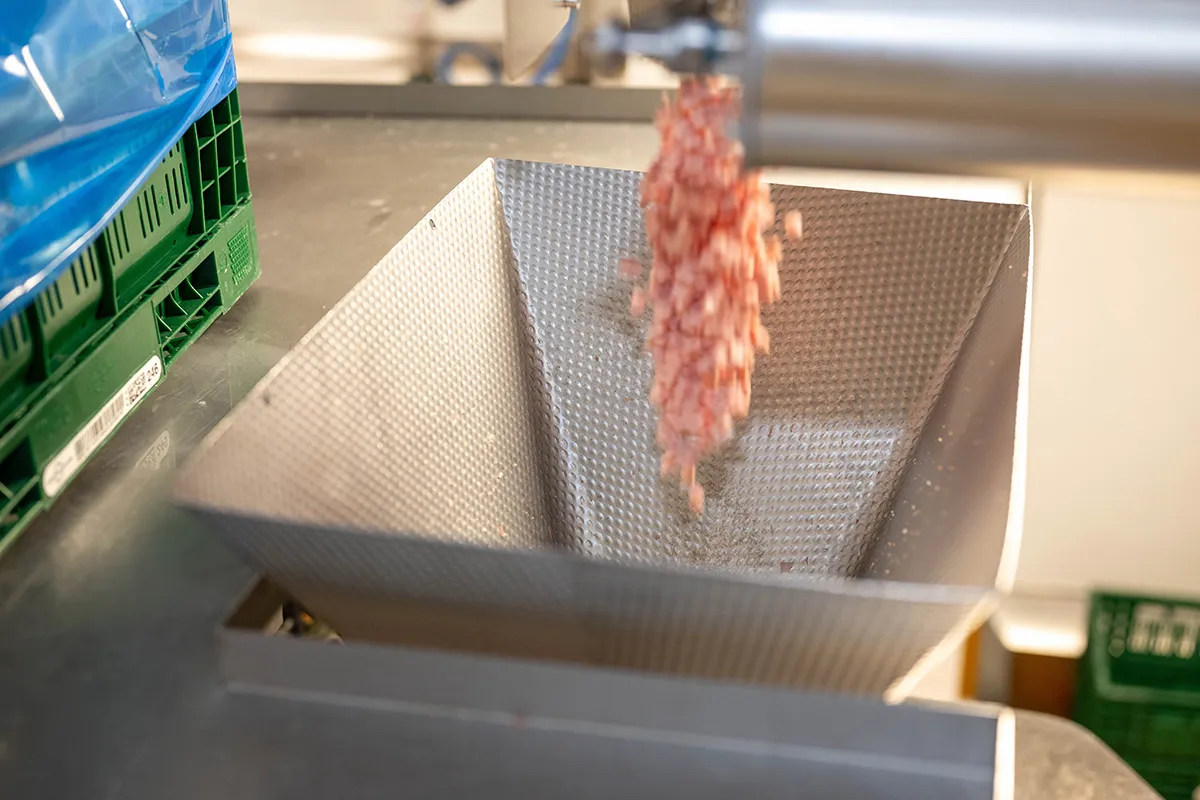
And vertical flow-wrappers had certainly proved their worth in the food industry. But packaging bacon and ham was a different matter because of the nature of the product. It was pioneering work. Coppieters explains why: “With vertical flow-wrappers, everything depends on the product falling freely. But the stickiness of the product, along with the cold and damp conditions, has a negative effect on that. We also wanted to package ham and bacon on the same machine. So we looked for a partner willing to work through this process with us. We were determined to make progress on sustainability.”
Taking the plunge
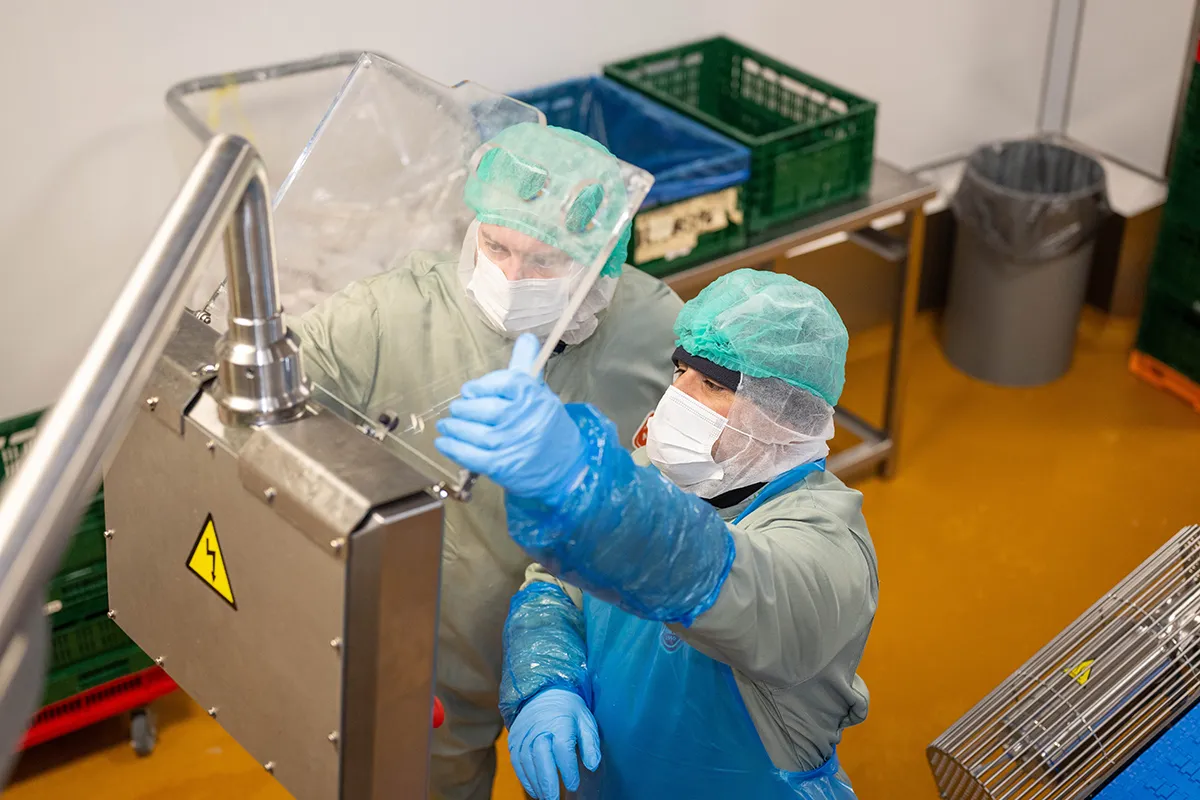
Ulma is a familiar supplier in several Colruyt Group departments. Coppieters therefore contacted the team in Schelle at the start of ’24, and they were more than happy to take up the challenge. “Our years of working together gave us enough confidence to take the plunge. Success was by no means guaranteed, given the complexity of the product, but everyone around the table was determined to make it work,” Coppieters recalls. An Ulma machine provided the starting point. “Tuning it to our needs often involved trial and error, both to feed the products into the machine in the best possible way and to facilitate the falling action. Among other things, we added timing hoppers between the multihead weigher and the flow-wrapper to optimise drop times so that the correct weight ends up in each pack. Achieving the result we have today required very close cooperation between us, the Ulma team and the film manufacturer.”
60 packs per minute
The results speak for themselves. The machine was delivered in January and fully commissioned in February. “We’re now packaging more than 60 packs per minute,” says Coppieters. “It’s hard to say exactly how much faster that is than the previous machine, precisely because we had so much waste before. But the quality and efficiency of packaging are now so much higher that we’ve been able to reduce the line team from five to four people.” Sustainability was a key objective, and the machine delivered more than just plastic savings, reducing material thickness from 562 µm to 64 µm. “The new machine allows us to switch to pre-printed films made from 100% mono-material, which improves recyclability. We’re also more accurate with the weight, saving an average of 7 g per pack. Maintenance costs are lower too.”
Capacity could still double
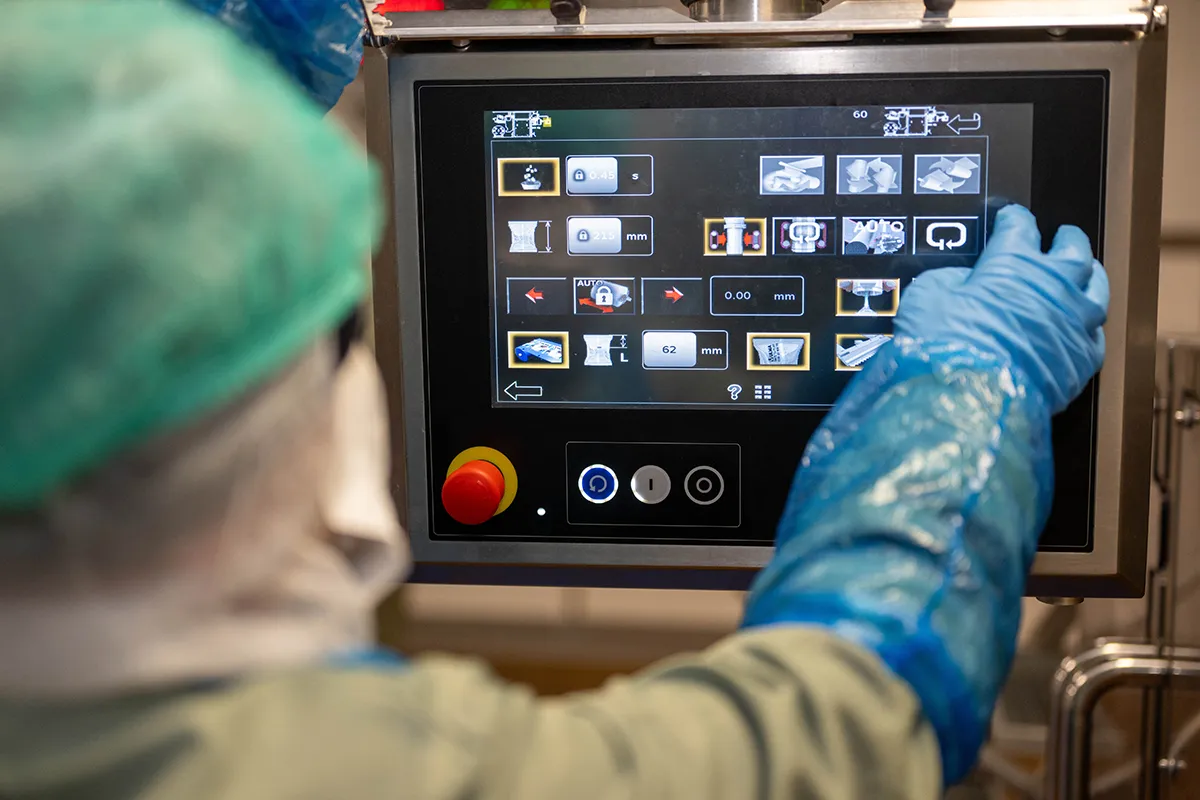
After a co-creation process lasting almost a year, everyone is delighted. Since Easter, the ham and bacon cubes have been on the shelves in their new packaging. Fine Food Meat can now claim to be the first Belgian meat-products manufacturer to use a vertical flow-wrapper. “It was a very pleasant collaboration because everyone approached it so constructively. We knew exactly what to expect from each other and could see that Ulma is just as committed to sustainability as we are.” And what do the operators think? “They see nothing but benefits. The HMI makes operation very intuitive, with everything clearly laid out. Film changes are very quick too. When one of the employees came up to me after installation and said his job had become so much more pleasant, that’s what makes it all worthwhile.” But Colruyt Group wouldn’t be Colruyt Group if it hadn’t already started thinking ahead. “In future, we can add a second line in the same space. Everything is already in place to double capacity.”
Een zakelijke vraag aan ULMA Packaging? Get in touch
Companies in this story
Keep following this
Get an email when a new story is published. No account needed.
- ThemePackaging and product traceability
- SubjectSustainability
- CompanyULMA Packaging