From compliance to strategy: how Trobas is embedding sustainability across its business
For many food businesses, compliance remains the measure of success. But in a sector where regulation, customer expectations and pressure to improve sustainability are rising rapidly, meeting standards is no longer enough.
Trobas, a producer of food ingredients, therefore made a conscious decision to take the next step: treating sustainability not as an obligation, but as a strategic part of the organisation. With an integrated approach, the company is building a system fit for the future and for stricter requirements such as CSRD.
From intrinsic commitment to strategic necessity
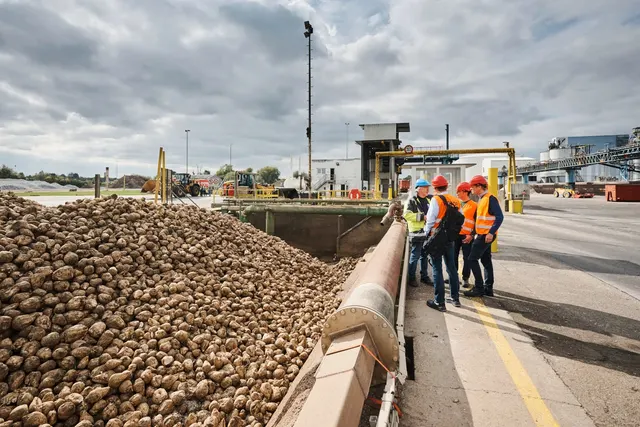
Sustainability has long been part of Trobas’s DNA. By making the best possible use of by-products, the company contributes to a circular economy. Improvements in energy and water use also reduce environmental impact and make production processes more efficient.
But the context changed rapidly. New regulations, including the forthcoming Corporate Sustainability Reporting Directive (CSRD), and rising customer demands, including around Scope 3 emissions and science-based climate targets, made it clear that a more structured approach was needed.
The limits of traditional quality systems
Although Trobas had a management system based on ISO standards, this was no longer sufficient to address broader sustainability and strategic challenges. The traditional approach to quality assurance proved too limited.
The solution was a broader approach: an integrated management system that brings together different areas, from quality and safety to IT and sustainability, in one coherent framework.
Building a future-ready system together
Trobas brought in external expertise to drive this transformation. The focus was not on building a complex system all at once, but on taking a step-by-step approach.
An important first step was conducting a stakeholder analysis and a double materiality assessment. This methodology, comparable to risk analyses in food safety, provided structure and made it feasible to apply the findings in practice.
From fragmentation to integration
The result is a clear evolution: sustainability initiatives that were once fragmented are now integrated into a single overarching system. Existing efforts, such as audits and certifications, are now better aligned and reinforce one another.
Although the CSRD deadline has been postponed, Trobas is already ‘CSRD-ready’. More importantly, the company now has a solid foundation for proactively responding to future regulations and customer expectations.
The next step: understanding the value chain
The challenge does not end here. An important next step is mapping Scope 3 emissions, often the most complex part of sustainability reporting. This requires a structured methodology and close cooperation across the entire value chain.
Lessons for the food industry
The Trobas case shows that sustainability can no longer be separated from quality or compliance. On the contrary, businesses looking to operate with the future in mind are integrating these areas into a single management system.
The key? Start small, focus on what is relevant and build integration. Looking beyond compliance today lays the foundations for a resilient, future-proof organisation.
Een zakelijke vraag aan Mérieux NutriSciences | Expert Partners? Get in touch
Companies in this story
Keep following this
Get an email when a new story is published. No account needed.
- SubjectSustainability
- CompanyMérieux NutriSciences | Expert Partners