From crisis to opportunity
The world is facing a growing water crisis. For the first time in human history, the hydrological cycle is out of balance, threatening a fair and sustainable future for everyone. We can resolve this crisis if we work together more collectively and with greater urgency. Restoring stability to the water cycle is not only valuable in its own right, but also crucial to preventing us from losing the fight against climate change.
Decades of collective mismanagement and undervaluing of water around the world have damaged our freshwater and terrestrial ecosystems and polluted water sources. We can no longer rely on them for our collective future. More than 1,000 children under the age of five die every day from diseases caused by unsafe water and sanitation. Women and girls spend 200 million hours a day collecting water. Food systems need freshwater, and cities are sinking as the aquifers beneath them dry up. In other words, we have placed the hydrological cycle itself under unprecedented pressure, with growing consequences for communities and countries everywhere.
Our policies, and the science and economics underpinning them, have also overlooked a critical source of freshwater: ‘green water’ in our soils and plants, which eventually circulates through the atmosphere and generates about half of all rainfall. The deterioration of our freshwater ecosystems, including the loss of soil moisture, has also become a driving force behind climate change and biodiversity loss. As a result, droughts are becoming more frequent. Floods, heatwaves and wildfires are also becoming more severe. A future of increasing water scarcity has serious implications for human security.
Almost 3 billion people and more than half of global food production are now in areas where total water storage is expected to decline. We must therefore think more boldly and in a more integrated way as we revise policy frameworks to address these challenges. The Global Commission on the Economics of Water (GCEW) is calling for a new economics of water: one that recognises the hydrological cycle as a global common good. We must understand that it connects countries and regions and is deeply intertwined with climate change, biodiversity loss and all the other SDGs.
One that transforms water management at every scale, from local to global river basins, to ensure it is governed more effectively and efficiently, provides everyone with equitable access, and sustains the Earth's ecosystems. One that brings together fundamental economic concepts and tools to give water the value it deserves, reflecting its scarcity and the many benefits it provides as the most precious resource on Earth.
One that addresses the externalities caused by water misuse and pollution. But at the same time, one that shifts the focus from solving problems after the fact to shaping economies that use water efficiently, equitably and sustainably from the outset. One that sparks a wave of innovation, capacity-building and investment, and assesses costs and benefits not in the short term, but in terms of how they can catalyse long-term benefits for the entire economy. One that recognises that the costs of these actions are very small compared with the damage that inaction will inflict on economies and humanity.
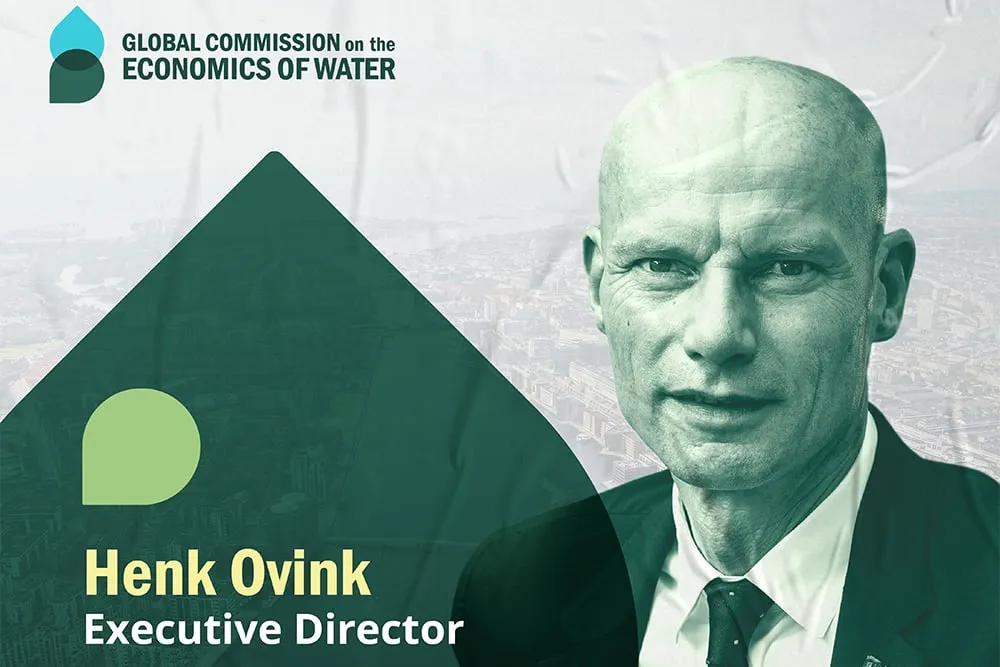
Henk Ovink
Executive Director, Global Commission on the Economics of Water
Question about this story? Ask your question
Keep following this
Get an email when a new story is published. No account needed.
- SubjectSustainability