Knowledge and experience key to the sustainable use of knife gate valves
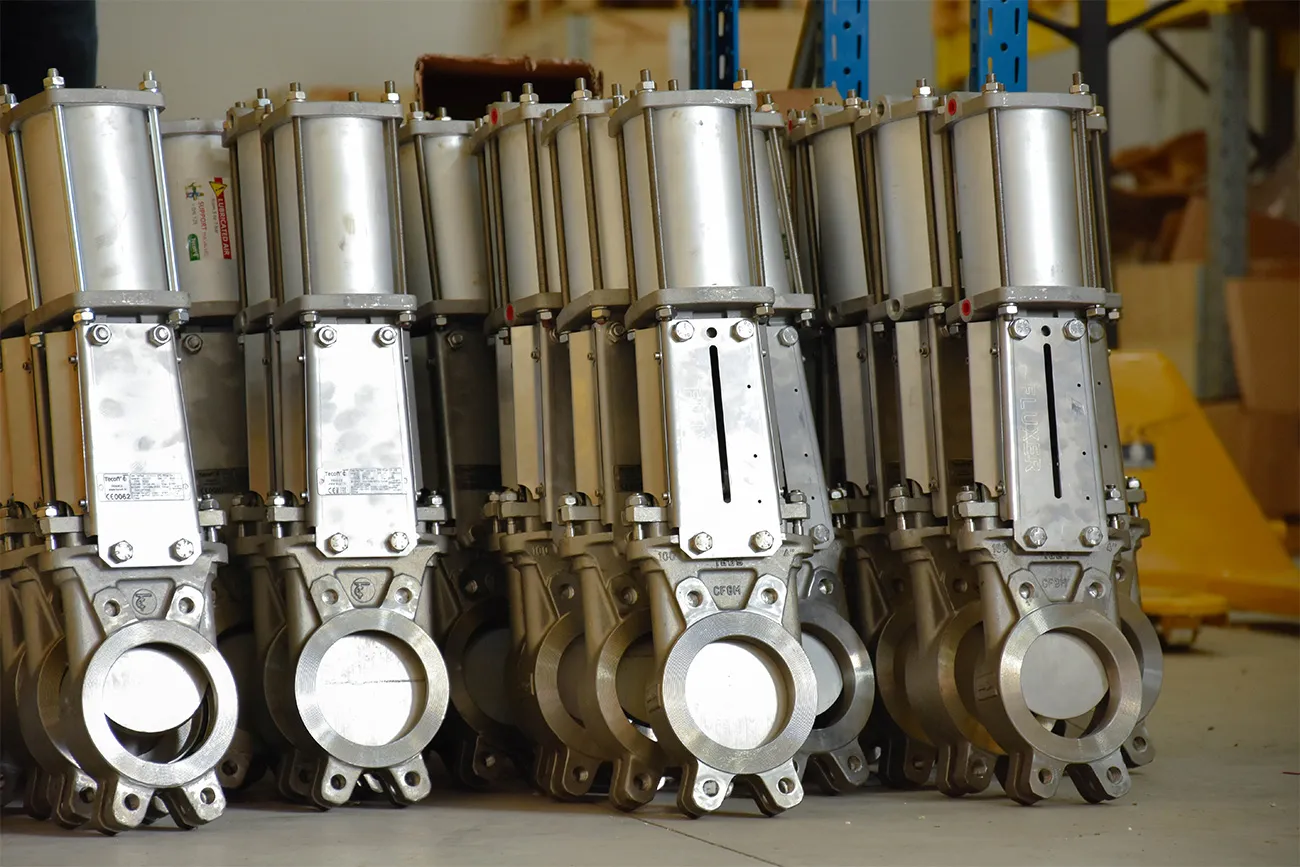
Valves have been around for centuries, but are more relevant than ever as pressure on food safety increases. Fortunately, the technology has advanced considerably since the time of the ancient Greeks and Romans. Today, users can choose from different types to suit their application. Knife gate valves, also known as knife-edge gate valves or slide gate valves, are particularly useful for contaminated liquids and bulk solids. But even then, there are important decisions to make. “The better your choice is tailored to your application, the more sustainable the solution,” says Jeroen Vandecasteele, a specialist in the field at Fluxer.
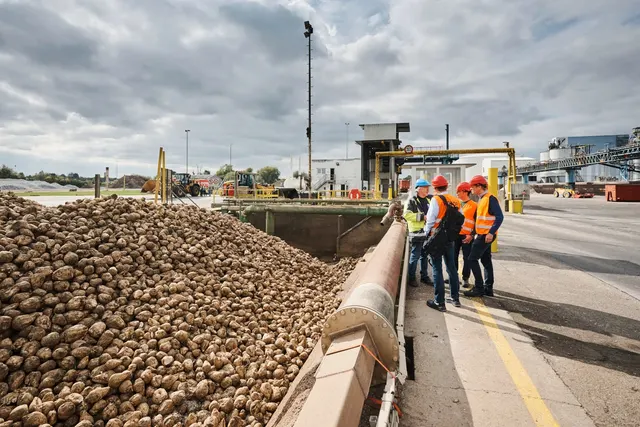
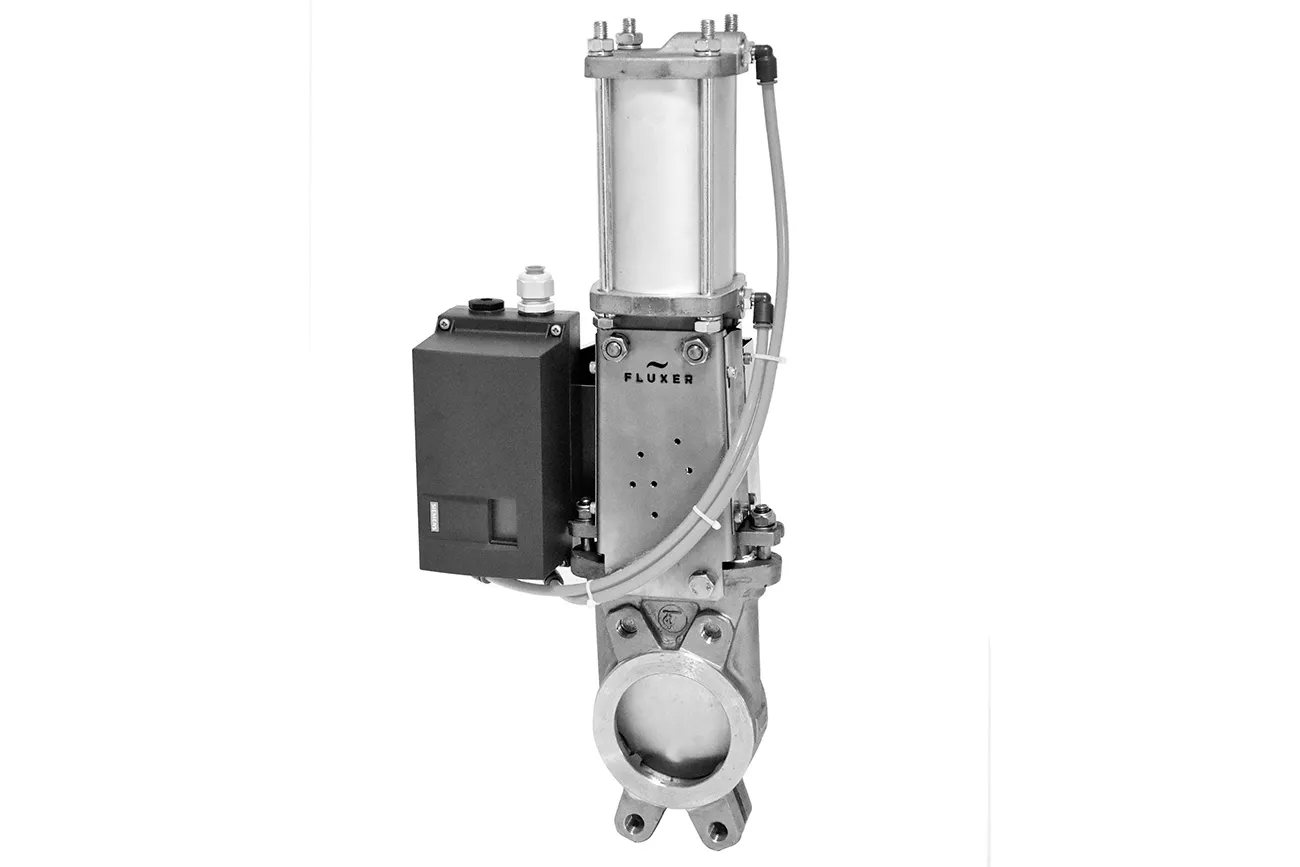
As the name suggests, a knife gate valve uses a blade to close off a pipe. “Where butterfly valves and ball valves both carry the risk of product build-up, knife gate valves are the ideal choice for liquids containing particles or solids,” says Jeroen Vandecasteele, sales engineer for process valves and instrumentation. They are also available in large sizes. “We can supply knife gate valves from DN50, and sizes larger than DN1000 are also possible. Ball valves would be much bulkier and more expensive at those sizes.” In the food industry, knife gate valves are used for powdery media such as flour or potato flakes, in water treatment, in vegetable and potato processing, and for certain viscous products.
Unidirectional or bidirectional?
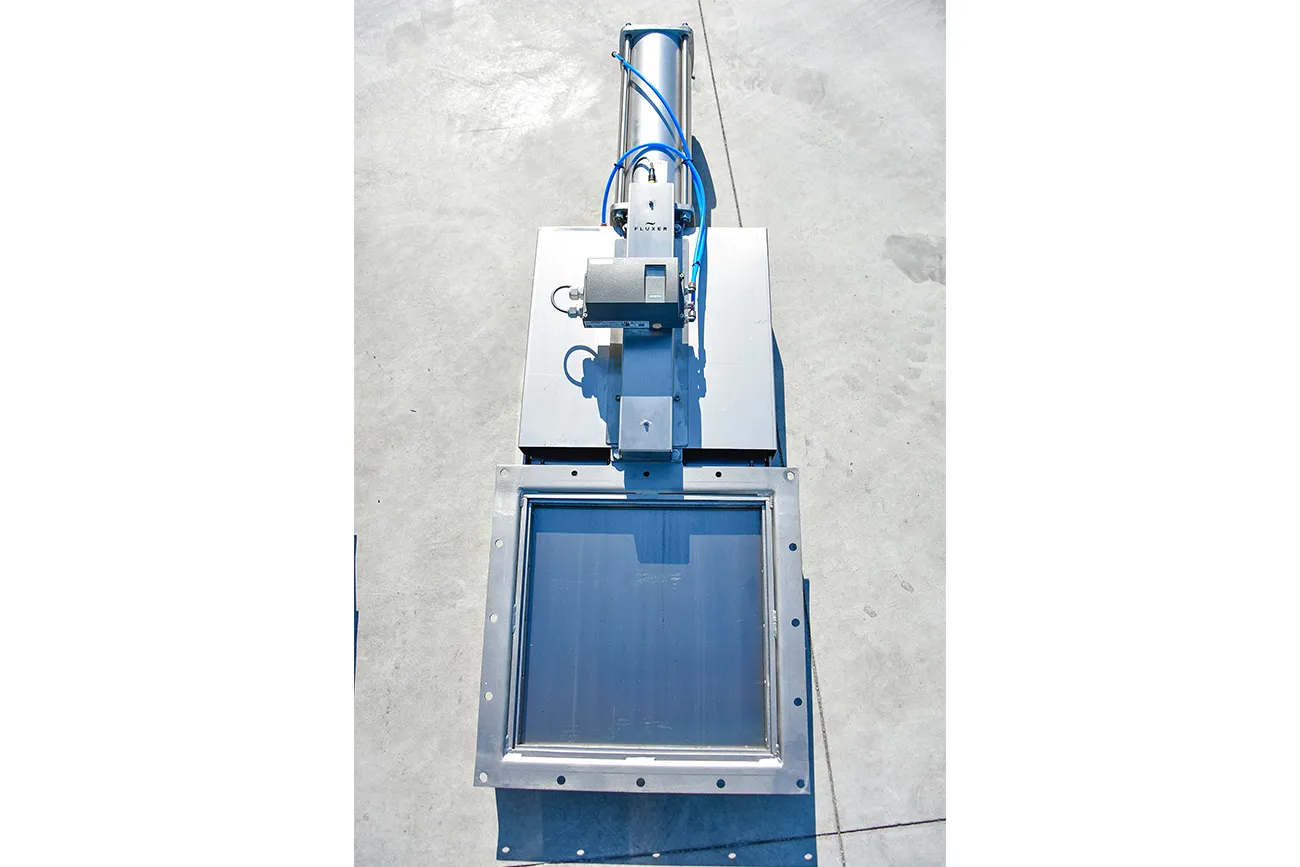
There are two main types of knife gate valve: unidirectional and bidirectional. “A unidirectional knife gate valve will be sufficient in 70% of cases,” says Vandecasteele, “provided you pay sufficient attention to the pressure direction on the blade.” If full pressure must be applied in both directions, a bidirectional knife gate valve is the right choice. For viscous products, it is best to opt for a version with a through-going blade. This reduces the risk of product build-up around the seat.
Automation tailored to your requirements
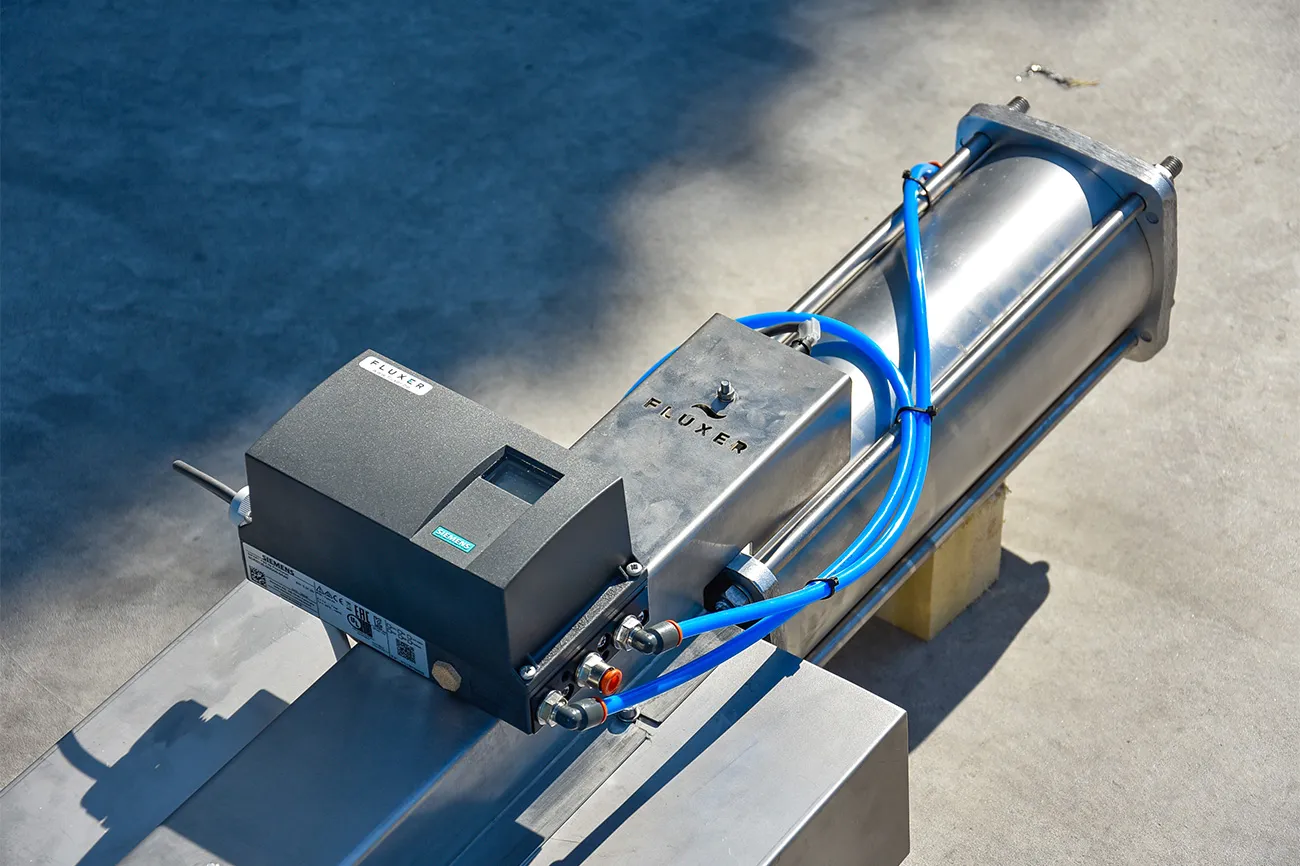
Once the type has been chosen, the actuator is selected. Options include manual, pneumatic, hydraulic or electric. “It always depends on what the application requires. Sustainability considerations are driving a trend towards electric actuators, but anyone looking for a knife gate valve with a fail-safe position will quickly find themselves opting for a pneumatic actuator. For very large valves, we can also provide an air receiver, ensuring there is always sufficient volume to operate the valve in an emergency.” Vandecasteele is keen to highlight one additional type: the knife gate valve with proportional control. “For this, we use Siemens’ SIPART PS2 positioner. However, even with proportionally controlled knife gate valves, a considerable flow can already develop when the valve is only slightly open, so we can add a control cone to achieve a more consistent flow curve.”
Solutions that keep working well
“We also offer special seals and materials suitable for contact with food. For ATEX zones, we select the right valve to meet the specified ATEX requirements. Fluxer can also go a step further with customised solutions. If a customer has a non-standard flange connection, we finish the valve to those dimensions. A knife gate valve is a simple valve in itself, but you have to consider the complete picture. The characteristics of your product, your process and your production environment all add up to a robust, reliable solution,” Vandecasteele concludes. “That is how our knowledge and experience make a real difference, enabling us to deliver solutions that work well and, above all, keep working well.” ■
Een zakelijke vraag aan Fluxer? Get in touch
Companies in this story


Keep following this
Get an email when a new story is published. No account needed.
- SubjectSustainability
- CompanyFluxer
- CompanySiemens