Sustainable and cost-saving: polymer bearings as an alternative to metal bearings
Text Johan DebaereImage igus
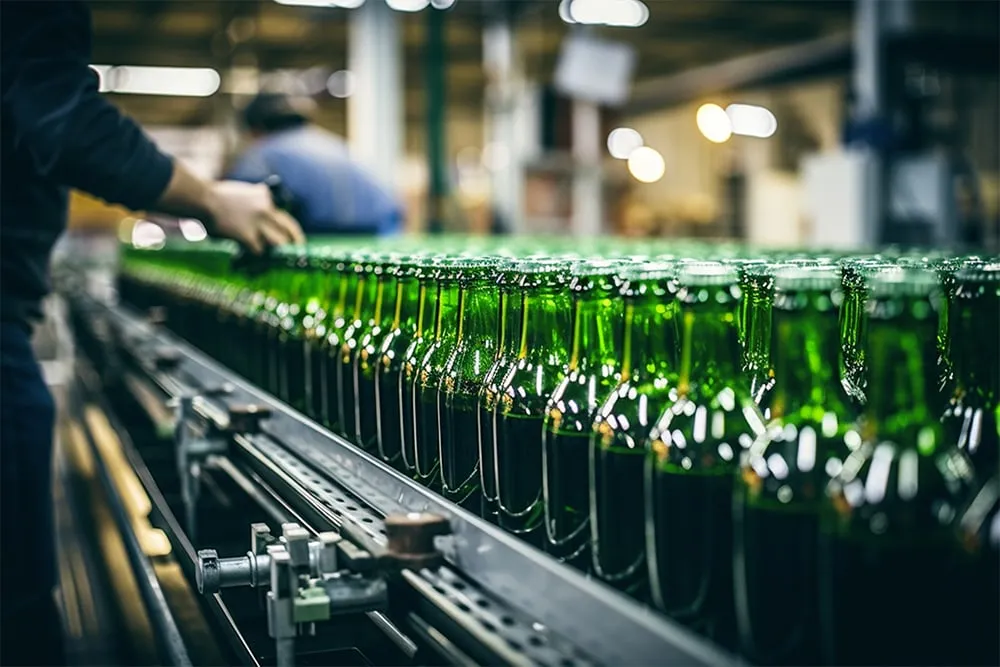
Conventional metal bearings need regular lubrication, which costs time and money. igus polymer plain bearings avoid this problem because they contain solid lubricants. This significantly reduces maintenance costs and environmental impact. A study by RWTH Aachen University has for the first time calculated precisely how much companies can save by switching to igus lubricant-free bearings. The financial and environmental savings are clearly evident in practice, as at the Heineken Brasil brewery.
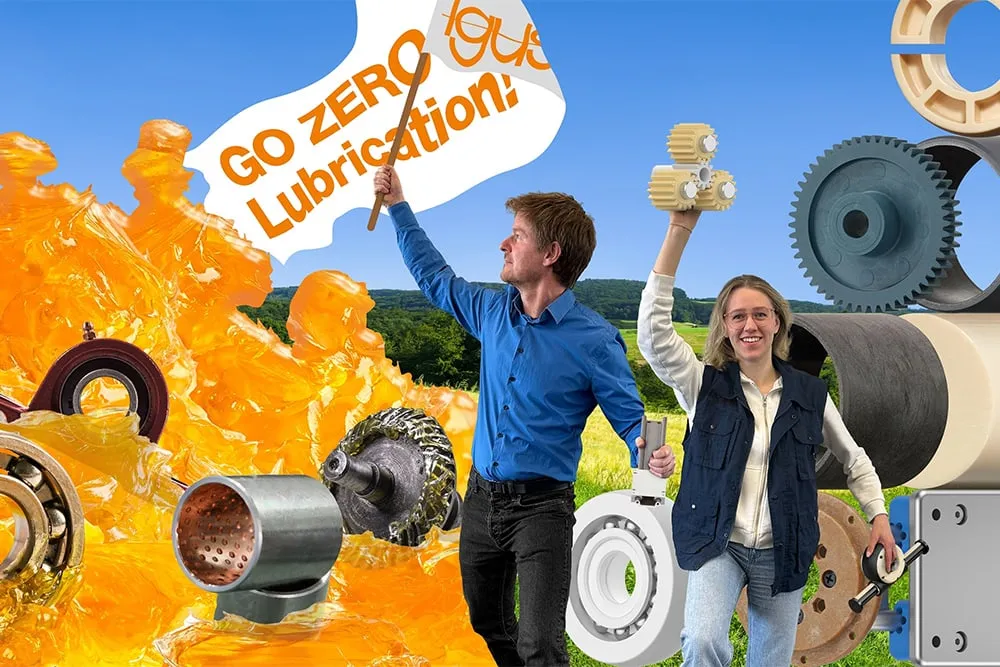
Many conventional metal bearings are still used in industry. They require regular lubrication to reduce friction and wear, and to protect the bearings from moisture, corrosion and dirt. However, lubricants are not cheap, and lubrication is often still done manually, leading to longer production stoppages. If lubrication is forgotten or not carried out properly, the consequences can be even more serious. More than 220 billion euros is spent on lubricants worldwide each year, while the cost of downtime caused by inadequate lubrication rises to almost 700 billion euros.
Switching to lubricant-free polymer bearings offers a sustainable solution to these challenges. igus polymer plain bearings do not require additional lubrication thanks to their integrated solid lubricants, effectively addressing these problems. igus continues to expand its range. At Hannover Messe, the company presented 247 new products, most of them under the ‘Go Zero Lubrication’ label. “Research by RWTH Aachen University shows that companies can make significant savings by switching to these bearings,” says Hanne Geelen, Country Manager igus Belgium. “Depending on the application, companies can save between 7,000 and 14 million euros a year on lubricants, and between 8,000 and 2 million euros on manual relubrication. This change not only reduces production costs, but also has a positive environmental impact.”
Heineken Brasil brewery
The independent study was carried out by WBA Werkzeugbau in collaboration with the Laboratory for Machine Tools (WZL) and the Fraunhofer Institute for Production Technology (IPT) at RWTH Aachen Campus, one of Europe’s largest research centres for production technology. The findings are based on interviews with nine companies from various sectors, including automation technology, mechanical engineering, agriculture, food, packaging and the bottling industry. The applications covered various types of bearings, including radial, axial and spherical bearings.
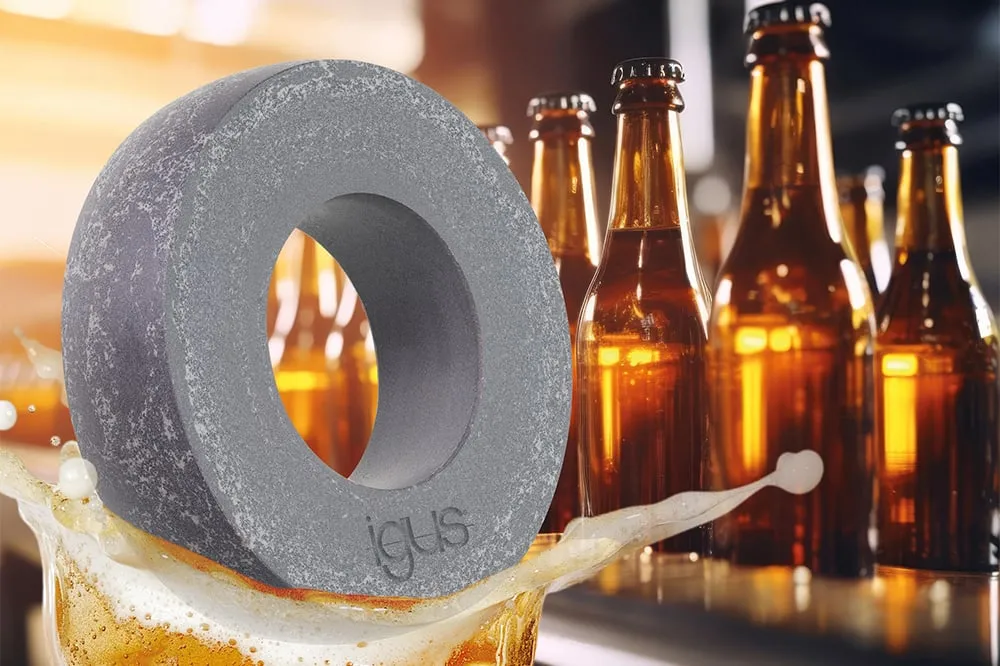
Heineken can save 20 tonnes of lubricant
“One of the participants in this study was the Heineken Brasil brewery,” says Geelen. “By replacing metal bearings with polymer bearings on the conveyor belts at all 160 of its sites worldwide, it could save 20 tonnes of lubricant and 450,478 euros a year, as well as a further 5.4 million euros in labour costs. It would also reduce CO2 emissions, saving 180 kg of CO2 equivalents a year by using high-performance igus polymer radial bearings at 600 bearing points. If Heineken made this change at all its sites, it could save a total of 28,814 kg of CO2 equivalents.” More and more manufacturers of machinery, systems and vehicles want to understand the carbon footprint of their products.
“Our customers are therefore pleased to have access to a scientifically substantiated assessment of the environmental benefits of our self-lubricating plain bearings,” says Geelen.
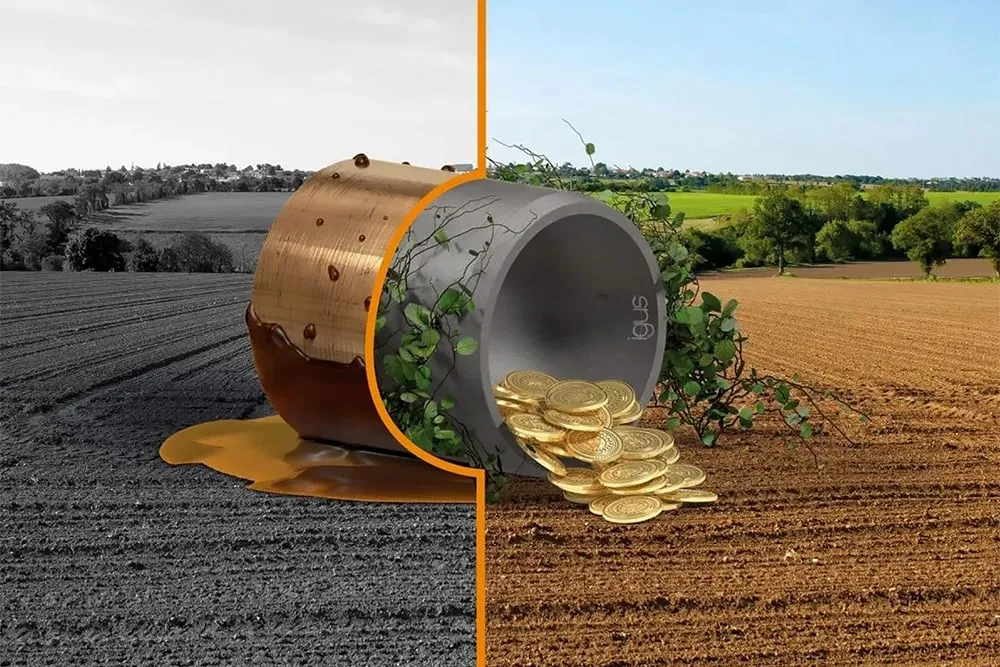
Chimay
igus polymer bearings are now used in breweries and soft drink production facilities around the world. One example is Chimay, one of the twelve Trappist breweries. The demanding production requirements posed a challenge for the bottling plants, particularly because of frequent breakdowns and conventional metal ball bearings sticking to the shafts. Replacing a faulty ball bearing could take up to a day and a half, causing significant production downtime. Chimay’s management contacted igus to find a solution. Following extensive testing, the igubal H3 bearing proved to be the ideal choice. “These bearings are perfect for applications like this,” explains Geelen. “They are made from tribologically optimised high-performance polymers, making them lubrication-free, maintenance-free and corrosion-free. They are easier to install and replace than metal bearings. They prevent wear-related shaft damage, extending the service life of the system. They are also resistant to chemicals and remain undamaged even during regular, intensive cleaning.” After successful testing on three conveyor belts, Chimay’s management decided to replace all its metal bearings with igubal H3 bearings.
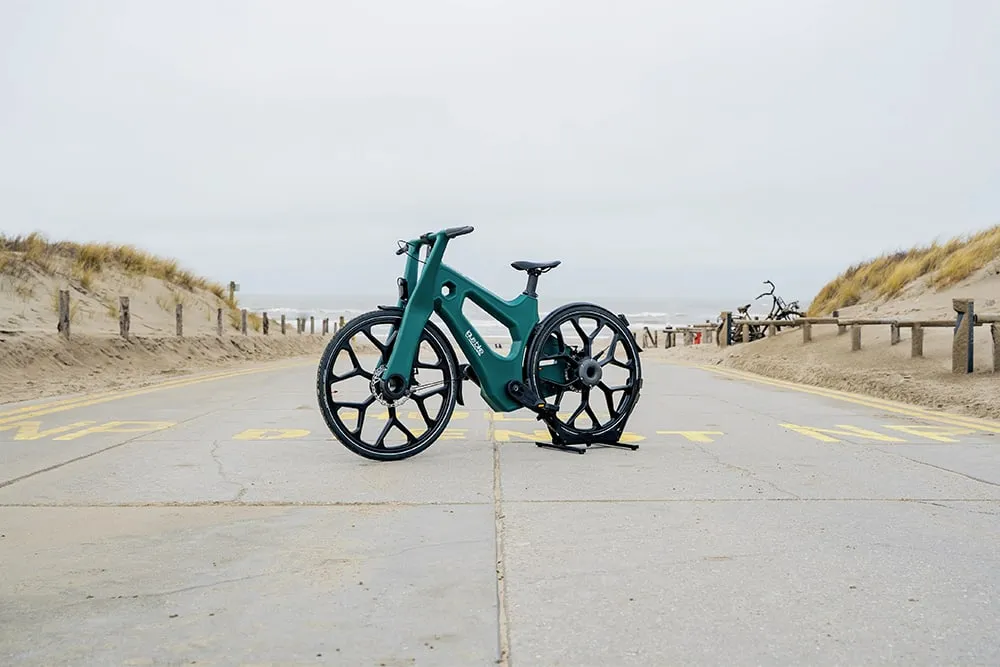
Igus:bike
In addition to breweries and food companies, many businesses in other sectors also use igus polymer bearings. One agricultural business, for example, had a tow hitch coupling that was always caked in grime from lubricants. Switching to polymer bearings removed the need for relubrication and immediately solved the problem. Did you know that igus has been supplying products for the cycling industry, such as plain bearings, rod end bearings, gears and guide rails, for more than 30 years? “We have even become a manufacturer of bicycle components,” says Geelen. “These products combine our expertise in polymers with the experience we gained developing the igus:bike around two years ago.” One notable example is the development and production of polymer frames for e-bikes, particularly city and trekking bikes. “At igus, we also offer handlebars, wheels, cranksets, pedals and various other bicycle components made from high-performance polymers.”
A business enquiry for Igus? Get in touch
Companies in this story

Keep following this
Get an email when a new story is published. No account needed.
- ThemeReliable machinery and drives
- SubjectSustainability
- CompanyIgus