What about plastic packaging?
Text Valérie CouplezImage iStock
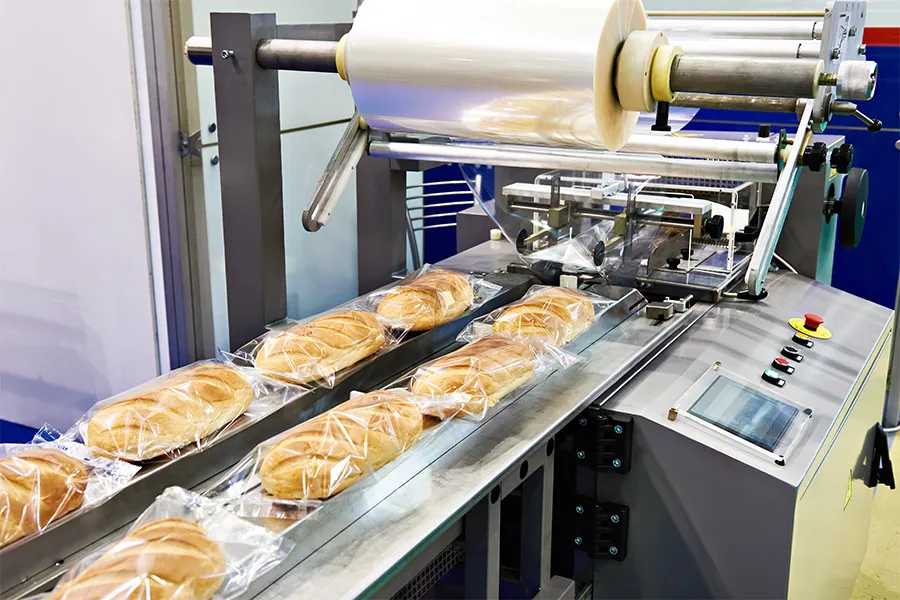
Plastic is an essential packaging material for the food industry. Compared with other materials, it is lightweight, flexible and inexpensive. It also has a positive impact on food safety and product shelf life, and makes logistics processes and product use easier. But, and it is a big but, plastic is also often blamed for environmental problems. This has become an incentive for many companies to aim for less packaging and better packaging. It is a complex puzzle involving shared responsibility: food companies must make sustainable choices, consumers must handle packaging in the right way, and governments must set out a clear framework.
Despite the negative image plastic has acquired in recent years, its use continues to grow. Global production increases by an average of 4% a year. The food industry is responsible for 8 million tonnes of plastic in Europe, used mainly for packaging. No change in this trend is expected for now: the population continues to grow, including in Europe. In addition, plastic use per person is increasing. This is linked to consumer behaviour and the growing share of convenience products. But plastic’s physical properties also often make it a good alternative to other packaging materials, and in some cases a more sustainable one. It is not a black-and-white issue. Some plastics are ‘good’, while some cardboard, for example, is ‘bad’. The more food companies and consumers know about packaging materials, the better.
A holistic approach
Despite this, consumers are increasingly seeing the downsides of plastic. One in three Europeans identifies it as one of the biggest environmental problems we face. However, reducing and improving plastic packaging calls for a holistic approach. Different departments will need to pool their knowledge and experience to develop a strategy and set measurable targets. External partners can also contribute expertise on recycling systems and the plastic supply chain. In many cases, the best packaging material will need to be assessed case by case and product by product, taking the environment and regulations into account.
Lighter packaging
Making packaging lighter is high on the agenda. It is already a focus for most European food manufacturers. Why? Because it can be implemented relatively easily in existing processes, and offers a direct financial incentive. This can be achieved by using thinner plastic, but other technologies and designs can also be considered. Plastic caps could perhaps be replaced with film, or holes could be made in the packaging. Or, instead of packaging products individually, they could be bundled together. This is a win-win for the bottom line and the environment: costs for plastic and transport will fall. Companies will also pay less to place packaging materials on the market. However, care must be taken to ensure that lighter packaging does not compromise quality. It must provide the same level of protection, so that food waste does not increase. That would only put more pressure on the environment.
Using recycled plastic
Another obvious option is to consider recycled plastic. Plastic is made from fossil fuels, so avoiding the use of virgin materials is better for the environment. But this is difficult under current regulations. The food industry is one of the biggest users of plastic packaging, yet it is among those least able to use recycled plastic. To be made into high-quality food packaging again, the material must be shown to have been used as food packaging for 95% of its previous life. At present, this is only possible with PET. It remains a stumbling block for other plastics, although more and more initiatives are emerging. A second barrier is price. Depending on oil prices, and therefore the price of virgin plastic, companies may or may not choose recyclate. This also makes it difficult for the recycling sector to establish a viable business model that guarantees continuity in both the supply of raw materials and the market for recyclate.
Improving recyclability
A third avenue is to examine the recyclability of the packaging materials you use. Plastic is not just plastic: it is a collective term for a wide range of materials in all kinds of shapes and colours. This variety is necessary, as specific products often require specific packaging, for example with the right barrier properties or strength. It is up to the recycling industry to turn this broad range of plastic waste back into homogeneous streams. The challenge becomes even more complex when packaging combines different plastics or plastics with other materials such as paper and cardboard. This reduces the quality of the recyclate. So when developing new products, consider the recyclability of the packaging from the outset.
Invest in recycling systems
But what is the point of packaging that is perfectly recyclable if it is not processed properly? Europe therefore aims to quadruple its recycling capacity for plastic packaging by 2030, compared with 2015. That means adding 500 new processing sites. Existing mechanical recycling processes will also need to be continuously improved, and chemical recycling will begin to play a role. In all these investments, the quality of the recyclate must be the priority if it is to compete with virgin plastics. The food industry already contributes to this in many European countries. Companies pay a fee based on the amount of packaging material they place on the market. This can cover some of the costs of collecting, sorting and recycling plastic. The next step is to bring every European country up to the same level. ■
Question about this story? Ask your question
Keep following this
Get an email when a new story is published. No account needed.
- ThemePackaging and product traceability
- SubjectSustainability