












Alpro crowned Factory of the Future
Text and images Danone
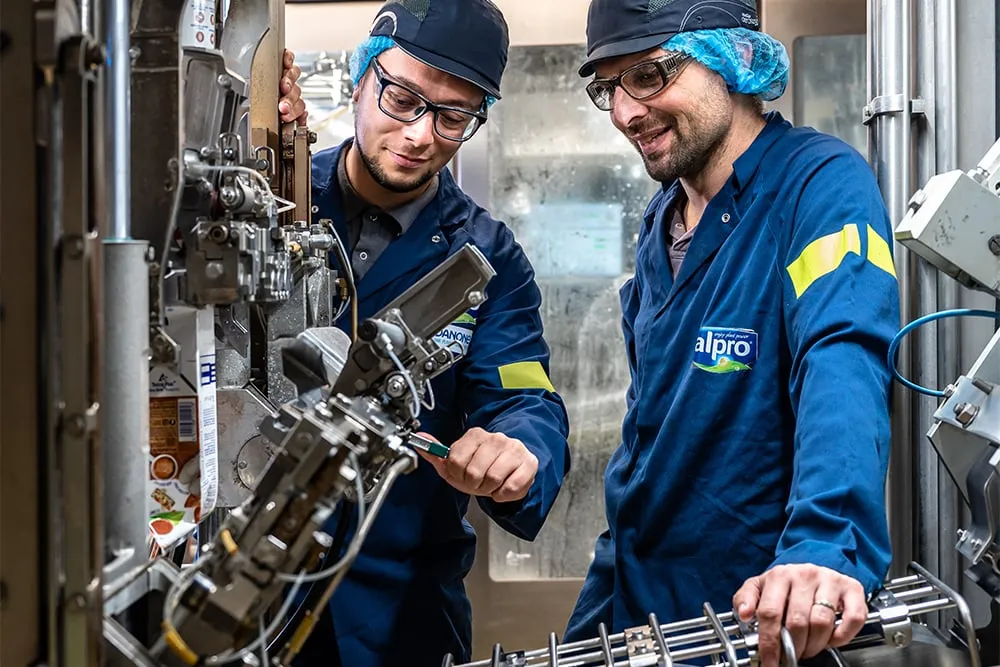
Danone had two reasons to celebrate in early February: the Alpro production site in Wevelgem received the Factory of the Future Award for the first time, while Danone’s production site in Rotselaar extended its title for a further three years. At the tenth edition of the Factory of the Future Awards, the jury, which includes members of technology federation Agoria and Flanders’ FOOD, praised both sites for their efforts in talent development, digitalisation and smart, sustainable processes.
The Power2Heat project, which focuses on the flexible use of renewable energy, and the Alpro Technical Academy are good examples of recent achievements by Alpro in Wevelgem, a pioneer in plant-based foods since 1980. “In our view, standing still is not an option for a factory that wants to keep innovating and developing. It is an ongoing story, a commitment marked by ups and downs, the essential involvement of our dedicated employees, new investment, technological progress and sustainability. In other words, a ‘Factory of the Future’ is a ‘Factory With a Future’,” explains Eugène Kusse, factory director at Alpro in Wevelgem.
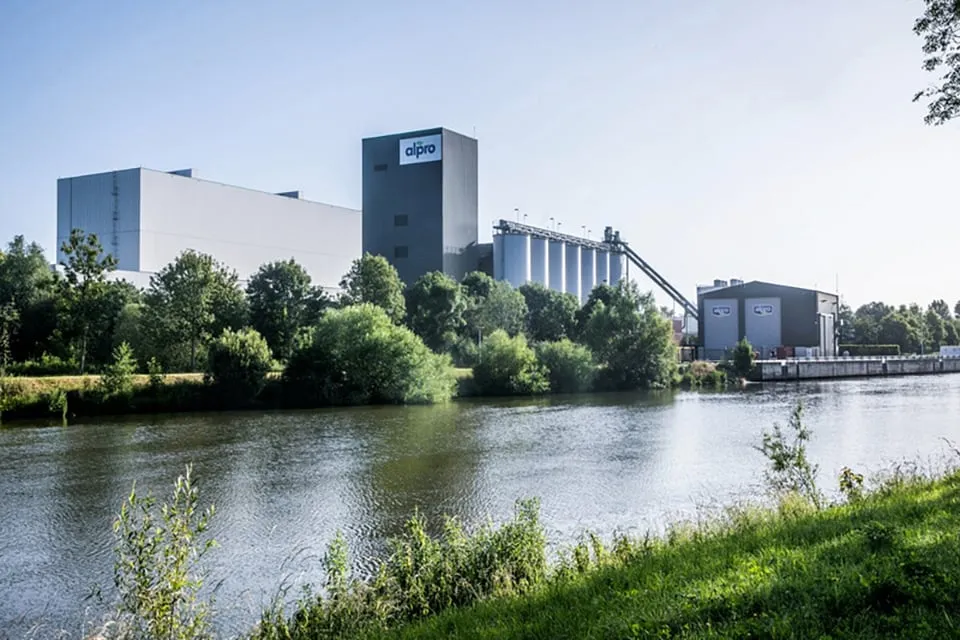
Expanding in-house electricity and process heat production
In 2021, Alpro joined forces with citizen energy cooperative Beauvent to install a 435 kWp solar array at its Wevelgem site. Soon afterwards, the large-scale, ambitious Power2Heat project got under way, expanding in-house electricity and process heat production. The Power2Heat project comprises an energy plant with a gas engine that has an electrical output of 3.4 MW and produces electricity, steam and hot water. It runs partly on local biogas produced at the wastewater treatment plant on the production site. In addition to the gas engine, electric steam boilers generate steam when there is plenty of wind and solar power.
Flexible use of electric steam boilers
Kusse says: “The gas engine uses natural gas and biogas from the wastewater treatment plant to produce electricity, steam (at both high and low pressure) and hot water. These energy flows are integrated into our hot water smart grid. Producing heat and electricity at the same time saves a considerable amount of fuel. In this project, around 10% of that fuel is recovered from wastewater.” Power2Heat is innovative because of its flexible use of electric steam boilers. “When large amounts of renewable energy are available, they kick in to produce steam using wind or solar power. In this way, Alpro supports the electricity grid, saves additional fuel and also reduces the associated CO2 emissions. Electric steam boilers are not a new phenomenon; our supplier has been working with them for years. However, this is the first application of this kind of sector coupling in Flanders,” says Frédéric Haghebaert, Managing Director of Beauvent.
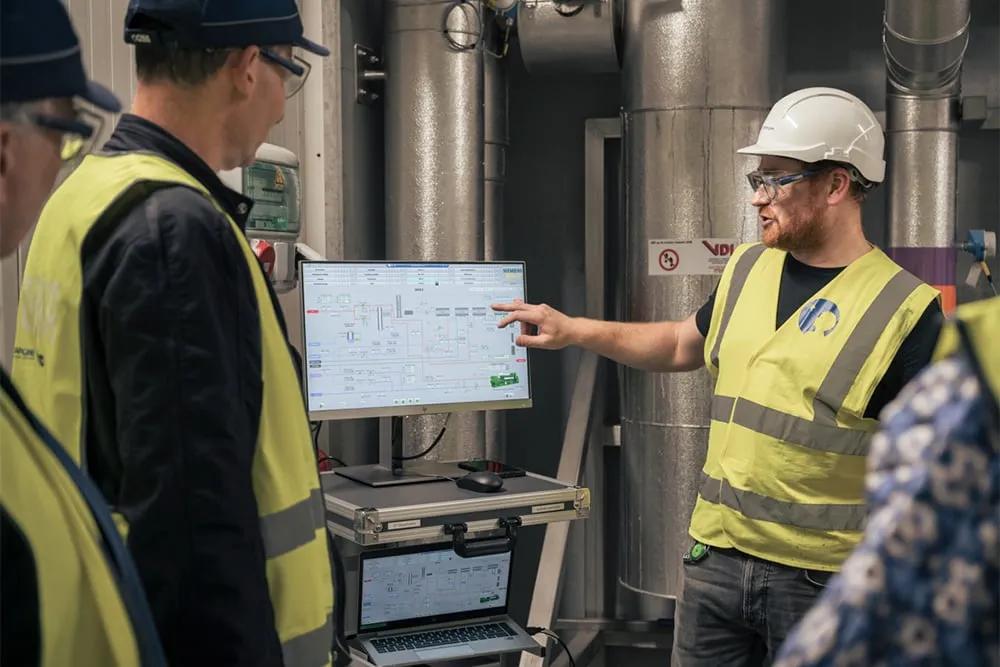
Engaged, creative and autonomous employees
As Factories of the Future, Danone in Rotselaar and the Alpro site in Wevelgem both recognise the crucial role of engaged, creative and autonomous employees. At both sites, the introduction of an ‘Integrated Work System’ (IWS) is helping to strengthen collaboration and achieve the best results together. The aim is operational excellence through sustainable improvements, smooth processes and shared standards. Empowering employees through leaders who provide trust and support is crucial to this.
Maximum integration
Both sites continue to pursue simplification and the maximum integration of tools and systems. A shared digital system on the shop floor enables everyone to monitor all production data in real time. Digital ambassadors test new digital solutions, make practical adjustments to improve factory efficiency and share their knowledge with the team through regular training sessions. Digitalisation is therefore central to remaining future-proof. The Technical Academy is another example: Alpro’s training centre addresses the shortage of technical workers by retraining its own operators as technical experts, while aiming to inspire and train the next generation of employees.
Question about this story? Ask your question
Keep following this
Get an email when a new story is published. No account needed.
- SubjectTechnology







