












CO2 or fibre? Which laser is best for your application?
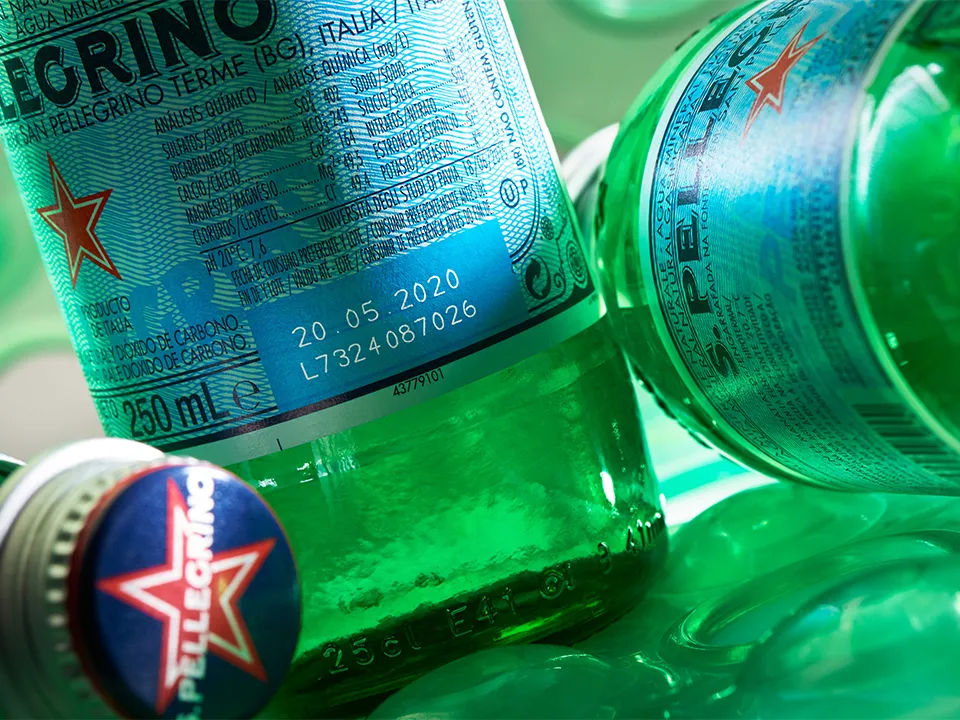
Batch and product coding are now essential elements of many production and packaging operations. Inkjet printing is well established, but as laser coding gains popularity across many sectors, the question is which technology to choose: CO2 laser or fibre laser?
Product coding and traceability are now integral to the food industry. The type of coding technology companies use depends on several factors: substrate material, production speed, product handling, line automation capabilities … The financial implications also matter. Application options, lifetime costs, OEE and the ROI of the equipment used are all important aspects to consider. Higher initial costs can often be offset very quickly by lower operating costs and reduced labour and maintenance requirements.
Laser coding
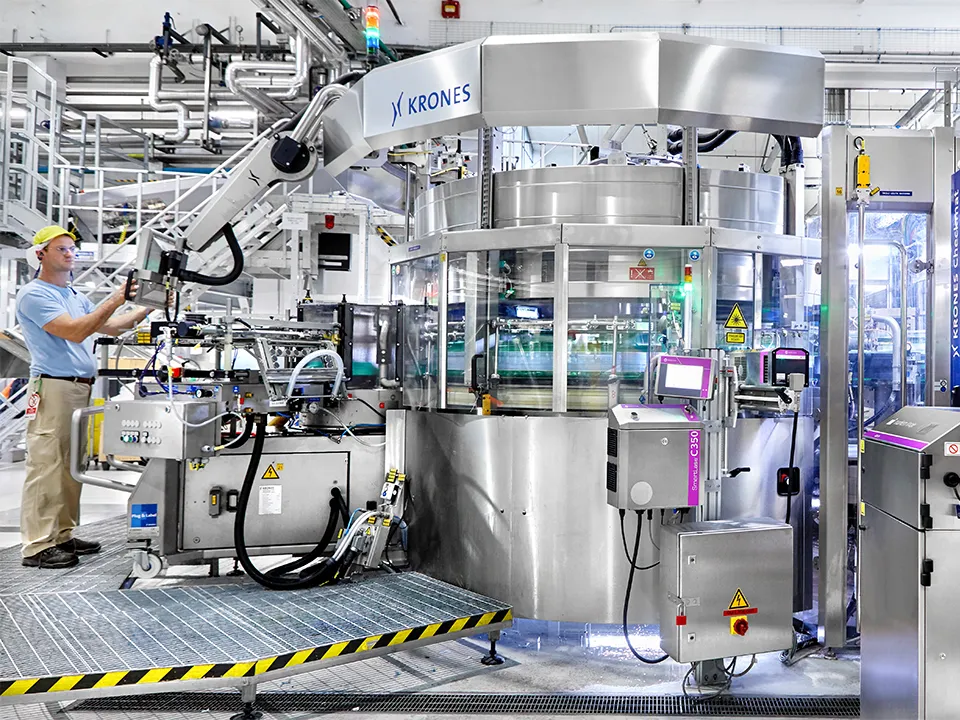
Inkjet printing is well established, but laser coding is gaining popularity across many sectors. In the drinks sector, for example, laser coding is becoming the industry standard, partly because of the durability and long life of engraved codes. But which laser technology best meets which production requirements?
CO2 laser technology
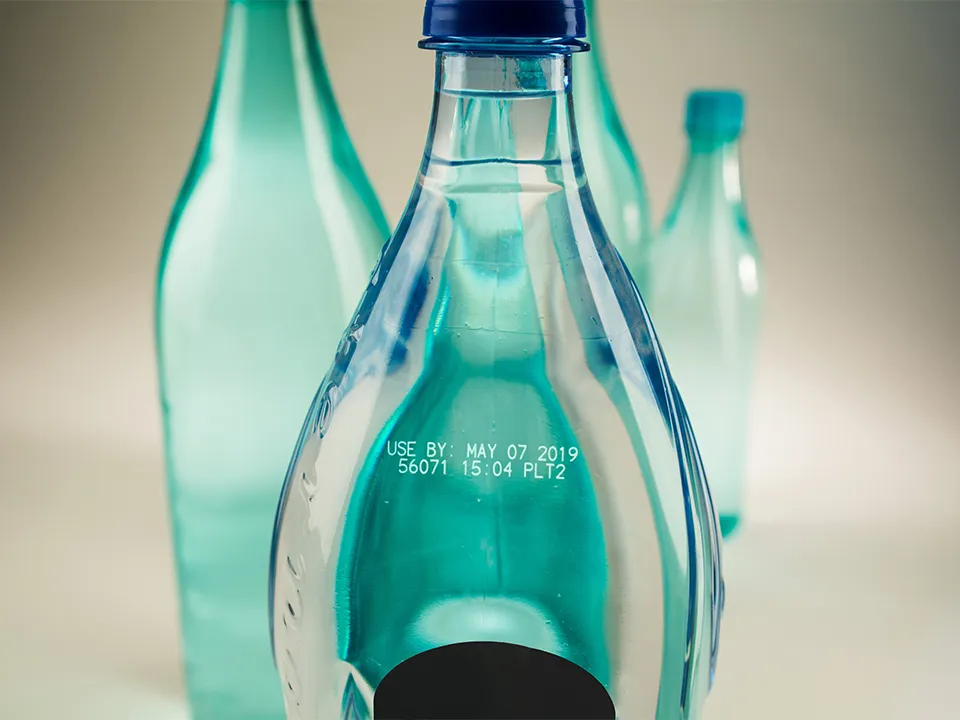
CO2 lasers are used mainly on PET bottles and cardboard substrates. Their output parameters must be matched to the application. For example, the wavelength for laser coding on a PET bottle at 1,000 bpm differs from that for a 12-pack of cans in a cardboard box at 200 bpm. Several other factors also determine whether a CO2 laser is suitable. These include how deeply the laser must penetrate a PET bottle, where on the bottle the code needs to go, and whether the substrate provides enough contrast for the code to be more legible and visible once applied. CO2 lasers are available in a range of power ratings. They are usually compact enough to fit on high-speed production lines, in blow-moulding or labelling machines, and inside high-speed cartoning machines. Their suitability for confined spaces is enhanced by the fact that they do not require complex protective enclosures. A polycarbonate shield around the area where the substrate is lasered provides the necessary protection.
Fibre laser technology
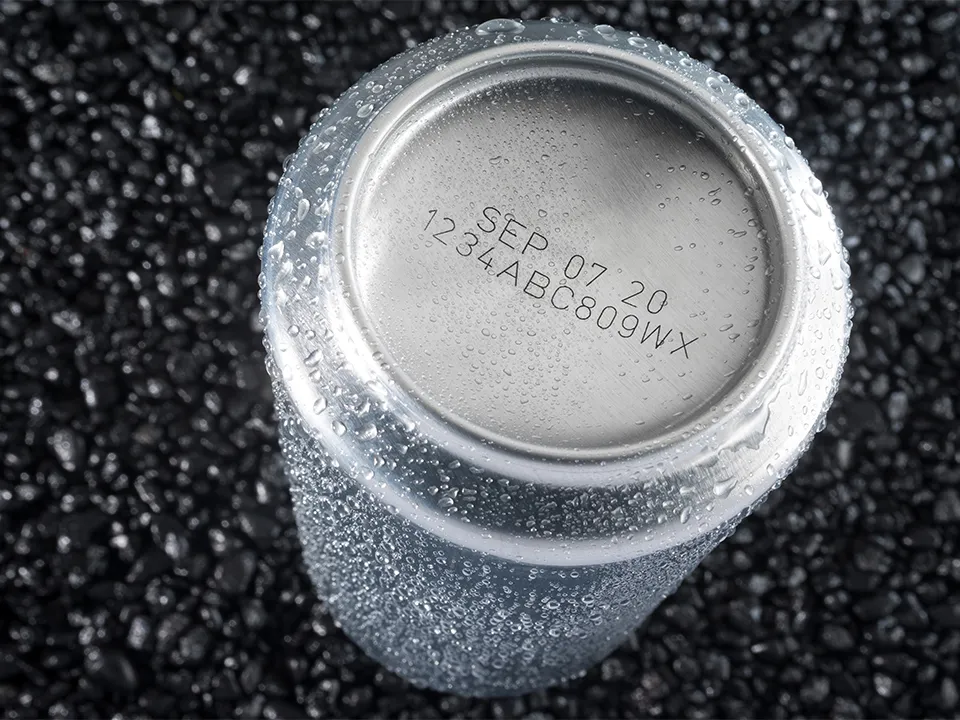
Fibre laser technology has been introduced to the drinks industry relatively recently, but its ability to focus a highly intense energy beam on a drinks can offers the sector significant benefits. Fibre laser installations for the drinks industry typically comprise fibre lasers suited to high-speed coding, fume extraction, a cooling system, a bespoke safety package, high-speed cameras, lighting and sensors to validate code integrity. Most fibre laser applications for the drinks industry can apply codes at ultra-high production speeds: 1,500 cans per minute is no limit. Like CO2 lasers, fibre lasers are available in a range of power ratings. Here too, testing is recommended to specify the right laser power.
Total lifetime costs
The capital cost of fibre laser technology is higher than that of CO2 lasers, and varies according to the power rating, laser safety enclosure and modifications required. All fibre lasers require a safety enclosure to protect operators. To offset the higher capital cost of laser technology, particularly compared with inkjet printing, it is important to consider the total operating costs of a coding solution. Lasers do not require parts that need frequent replacement. This means there is no need to store hazardous substances, nor are there high end-of-life costs for liquid disposal. Laser solutions also require less scheduled maintenance than inkjet technology. They therefore offer an affordable long-term coding solution that is cleaner and places fewer demands on operators and maintenance staff. Laser suppliers such as Markem-Imaje support companies in selecting the optimal coding solution and configuration for both mass and batch production. Markem-Imaje’s Intelli’Arc software also delivers 30% faster printing, while Intelli’cool technology guarantees quality across a wide range of ambient temperatures. Add an MTBF (Mean Time Between Failures) of 60,000 hours for CO2 lasers and 100,000 hours for fibre lasers, and the ROI of Markem-Imaje laser technology becomes immediately clear. In short, laser coding is rightly gaining popularity across many sectors.
Question about this story? Ask your question
Companies in this story
Keep following this
Get an email when a new story is published. No account needed.
- ThemePackaging and product traceability
- SubjectTechnology
- CompanyMarkem-Imaje NV







