












Crop’s conquers the world with frozen vegetables, frozen fruit and culinary meals
Text Geert Van CauwenbergeImage Crop’s
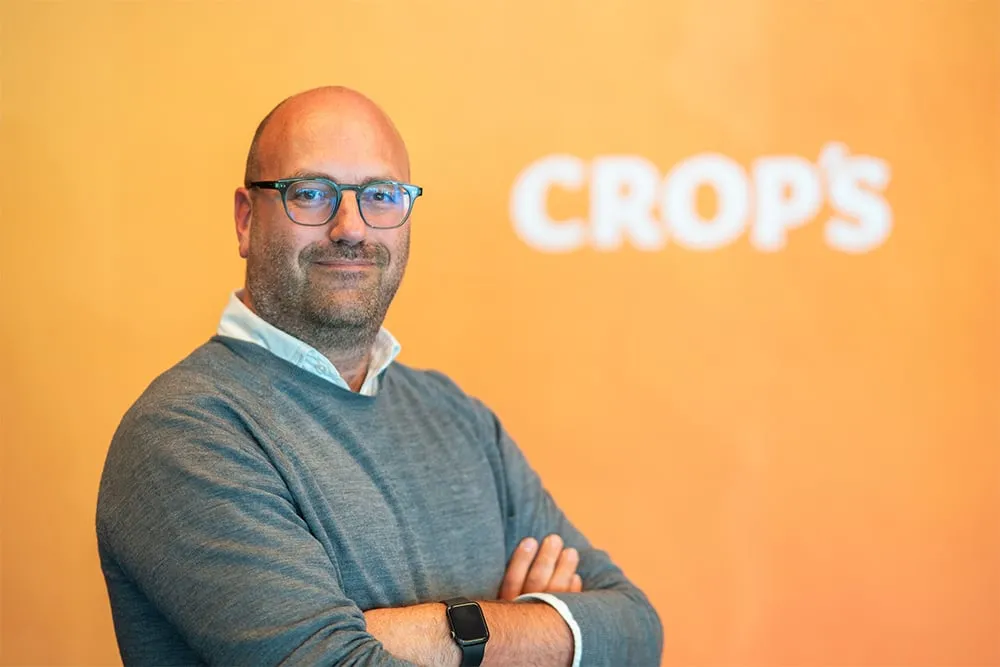
Based in Ooigem in West Flanders, family-owned Crop’s has grown since 1977 into a leading player in the cultivation, production and sale of frozen vegetables and fruit, complemented by prepared meals. A successful Belgian and international business with 2,000 employees worldwide, Crop’s processes 300,000 tonnes of fruit and vegetables every year across nine factories, exporting to more than 62 countries. How is the food business tackling the challenges facing the sector? And what is Crop’s doing in terms of sustainability and innovation?
We put these and other questions to Pieter Delbaere, who is responsible for the frozen fruit division as a second-generation family member. This division is one of the three pillars underpinning Crop’s success, alongside frozen vegetables and a range of culinary meals. “As well as being General Manager of the frozen fruit division, I am a director at Fevia Vlaanderen,” says Delbaere. “Through Fevia’s Flemish branch, we represent 3,200 companies, accounting for more than 70,000 jobs. My contacts with colleagues across the sector keep me abreast of developments at food production and processing businesses. They provide inspiring insights.”
Growing popularity
With a presence on five continents and in more than 62 countries, Delbaere and his colleagues have a clear view of how new trends and developments are affecting the production and sale of frozen vegetables and fruit. “We’re seeing our products become increasingly popular,” says Delbaere. “Frozen vegetables and fruit offer many benefits, not only for consumers’ health and wallets, but also for the environment.”
A wide range of benefits
“For more and more customers and consumers, frozen vegetables and fruit, complemented by high-quality, tasty prepared meals, have become a natural choice,” says Delbaere. “First and foremost, there is the superior taste. Thanks to our advanced freezing technology, we can preserve the flavour of vegetables and fruit to the greatest extent possible. Rapid freezing, within 2.5 hours of harvesting, preserves their natural flavour and nutrients. This can be better than with some fresh produce, which may travel a long way before reaching shop shelves and can therefore lose much of its nutritional value.” Crop’s is also working to preserve superior taste in its culinary meals: “As well as using superior ingredients, it is important to ensure optimal flavour when preparing culinary meals, while at the same time trying to limit sugar and salt intake. That sounds simple, but it takes a great deal of knowledge, expertise and innovation in product development.” Another benefit is portion control. Delbaere says: “Our frozen products and prepared meals often come in convenient packs tailored to the customer. Whether you want to add a handful of raspberries to your breakfast cereal or toss a few cubes of spinach into a pan, you can do so without food waste. Fevia figures show that around 3.6 million tonnes of food are wasted in Belgium alone every year. Crop’s is keen to help tackle this problem. It also fits perfectly with our ambition to make a difference as a sustainable food business.”
A sustainable approach
This sustainable approach, which has been part of Crop’s corporate DNA for decades, is also reflected in its focus on producing as much fruit and vegetables locally as possible. “A global market approach can go hand in hand with local growth and production,” says Delbaere. “For fruit and vegetables that can be harvested fully automatically, we are committed to local roots and have factories in the terroirs best suited to particular crops. Of course, this is not possible for exotic fruit or when (expensive) manual labour is required. In those cases, we look at how to make as much use of automation as possible, particularly as the search for new workers remains challenging.”
Innovation pioneer
The move from automation to digitalisation is a short one. Delbaere explains: “At Crop’s, we want to remain pioneers in innovative cultivation and production processes for fruit and vegetables. New technologies, from artificial intelligence to big data, can help us fulfil our sustainability ambitions and those of our suppliers. One example is the use of satellite images of pea fields, which drones then use to zoom in on areas needing extra water or weed control. GPS-guided tractors then spray with great efficiency, saving valuable resources. Reducing water and energy consumption, combined with turning residual waste into energy, is high on our company’s agenda.”
Question about this story? Ask your question
Keep following this
Get an email when a new story is published. No account needed.
- SubjectTechnology







