












Deboning pork with robots and artificial intelligence
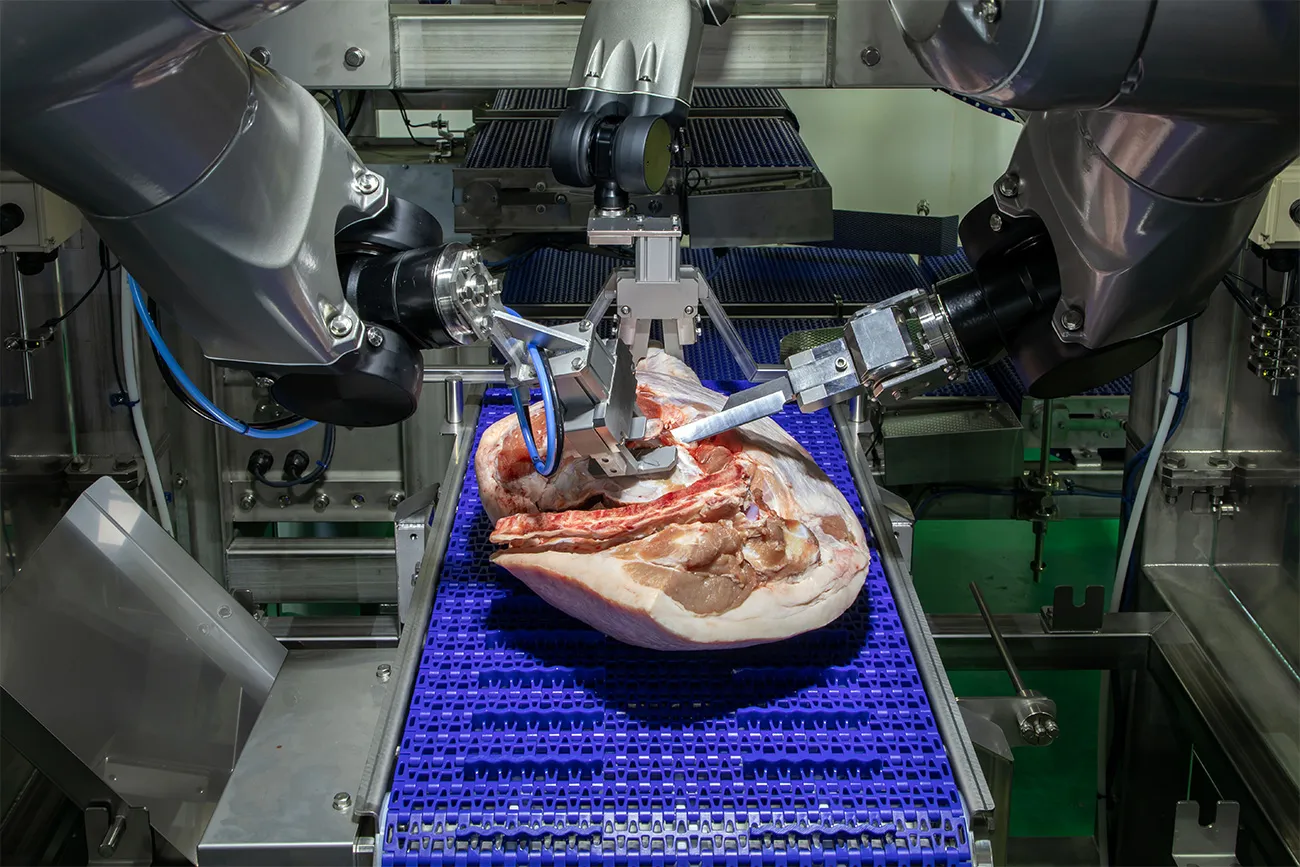
A new, fully automated system takes about 40 seconds to remove the hip bone and tailbone from a pork leg. The main work is carried out by three robots. Two position the cut of meat, while the third guides the knife. This innovative application, unique to date, was developed by Japanese industrial machinery company Mayekawa. At the heart of the deboning cell are hygienic, highly dynamic Stäubli robots.
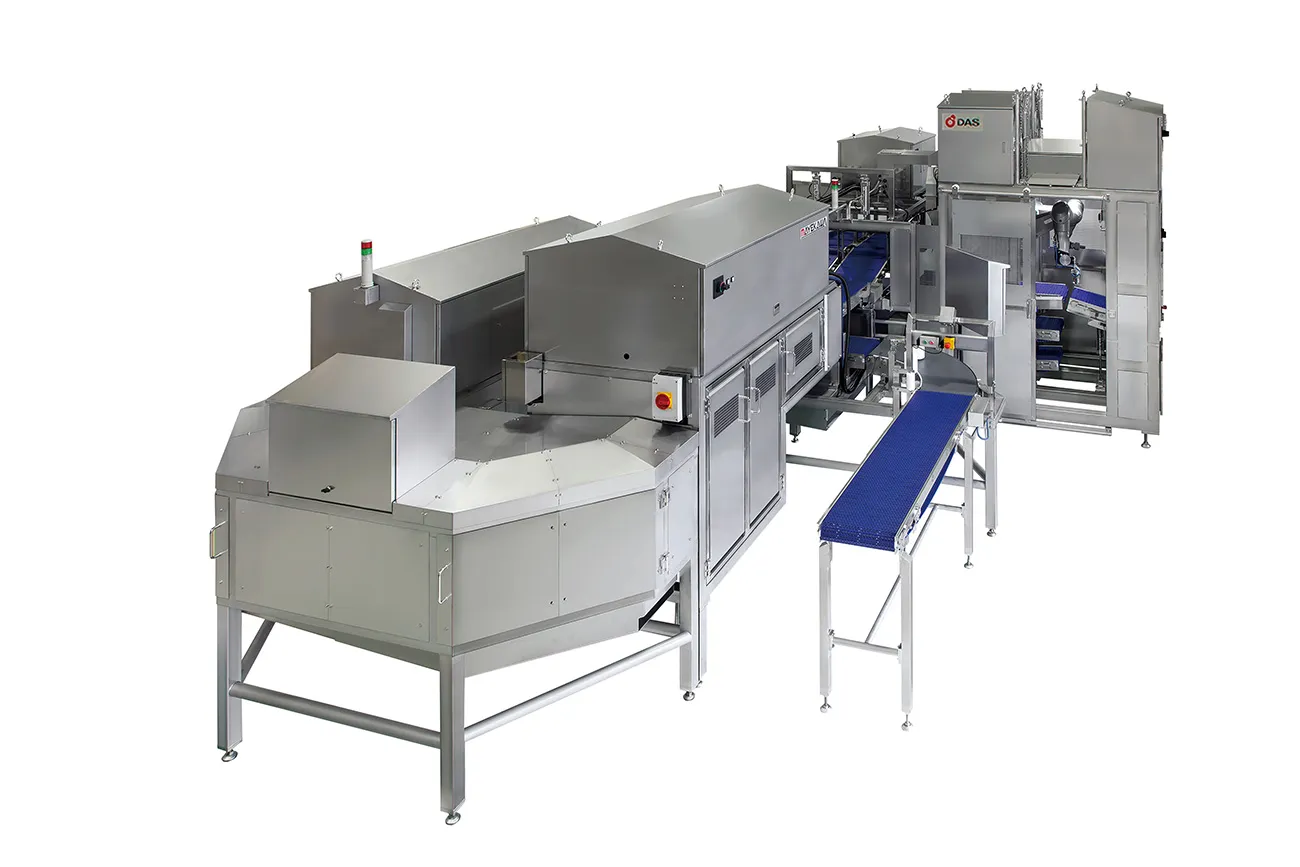
Abattoir staff face harsh working conditions due to the cold and damp. At the same time, the work is extremely labour-intensive and repetitive. Automation is not straightforward, however: every animal is different, and the hand-eye coordination of skilled staff has been essential when cutting up carcasses. This could soon change. At the international trade fair IFFA, Japanese machine builder Mayekawa presented an automated cell for deboning pork.
Three robots working together
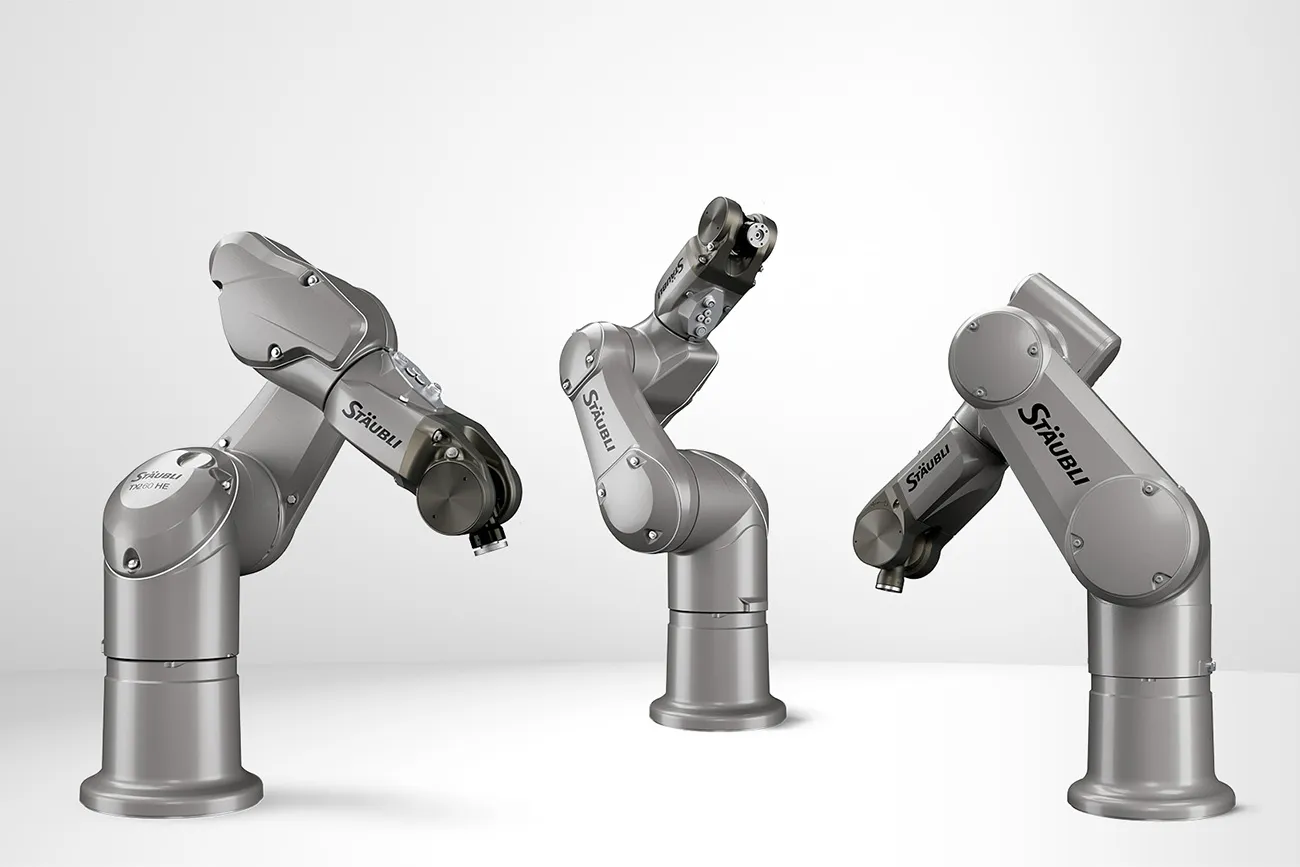
The heart of the CELLDAS robotic cell is made up of three six-axis Stäubli robots (TX2-60 HE and TX2-90 HE). Two robots handle and position the cuts of pork, while the third six-axis robot, fitted with a knife, carries out the deboning. This is an intelligent division of labour: the two robots with grippers can secure a ham or shoulder in such a way that cutting becomes child's play for the third robot. Vision systems and AI replace the human eye. So how does the robot ‘know’ where to cut and where the bones are? Mayekawa developer Tatsuya Umino explains: “The function of the human eye, as well as the ‘tactile feedback’ that staff get when they encounter resistance in the meat, is difficult to replace. We use a combination of vision systems and artificial intelligence. On the conveyor leading to the robotic cell, the cut of meat to be deboned is scanned using a 3D scanner and X-rays.” Based on this analysis, the control system draws up a meticulous deboning plan with the optimum cutting paths. The system uses artificial intelligence to improve the accuracy of the vision system, an important feature for optimising the cutting path. This makes the CELLDAS system smarter with every piece of meat it debones.
Challenge: every ham and shoulder is a different size
Then the (short) cutting process begins. The robots work highly dynamically, with great precision and near-perfect coordination. The two robots with clamping tools grip the meat around the bone. For a ham, the robot with the cutting tool skilfully cuts around the contours of the tailbone and hip bones, separating the meat from the bones. Working with the gripping robots also makes undercuts possible, for example behind the hip bone. The meat is removed via one of the two conveyors, while the bones are taken away on the other. What sounds simple is extraordinarily complex to implement and carry out. Meat is a natural product, after all, and every ham and shoulder is a different size. The position of the bones in and on the meat must also be determined separately each time.
Specific requirements for the robots
There are three main reasons why the Mayekawa engineers chose Stäubli robots. Two are obvious, while the third may be less so. In the HE version (Humid Environment), Stäubli six-axis robots are designed from the ground up to work in humid and wet conditions, for long periods and at high speeds. All robot components are hermetically sealed and can even withstand the daily cleaning procedures that are part of everyday life in meat processing. In addition, the robots' exterior has no dead spaces where bacteria or other contaminants can gather. This means they meet the requirements for the highest hygiene standards.
Another major advantage of Stäubli robots is that they can use NSF-H1-class food-grade oil. While most robots from well-known manufacturers can operate only at greatly reduced performance when using these oils, Stäubli robots are approved for use at maximum performance.
Built to withstand unexpected conditions
The third key requirement stems from the fact that the movement sequences and forces involved in deboning can never be predicted exactly. The knife on the robot arm may unexpectedly hit bones in the meat, become stuck in a bone and then suddenly come free. These events place sudden, irregular forces on the drive train. The gears in particular must be able to withstand them. Stäubli robots can do so because their proprietary JCS drive technology, developed in-house, provides sufficient reserves in every situation. The drives are also highly dynamic, a crucial attribute when the robot arm needs to accelerate and decelerate at short notice or quickly switch from a forward to a backward movement. Umino also cited the flexible programming software as an advantage of Stäubli robots, as it can easily be adapted to a wide range of requirements. It can also be readily integrated into higher-level control concepts: “The whole cell is highly flexible. If the right programmes are available, for example, it can switch from ham to shoulder and vice versa without any changeover time.”
Addressing staff shortages
Deboning the hip bone and tailbone from a pork leg in the CELLDAS cell takes about 40 seconds. An experienced butcher can do that too. The reason for automation lies elsewhere. Occupational illnesses such as tendonitis are common, and there are also the health risks associated with working in cold and damp conditions. The main driver is the shortage of skilled staff and the desire to automate unpleasant work. That is exactly what the CELLDAS system does. Other parts of the food industry are asking the same question. Umino says: “The aim of this development was not just to automate meat cutting, but more generally to automate the processing of amorphous and soft objects with an intelligent, all-purpose system. We have succeeded.” It is therefore quite possible that Stäubli’s ‘robot trio’ will also be used in other applications in the near future. ■
Automation is the way forward
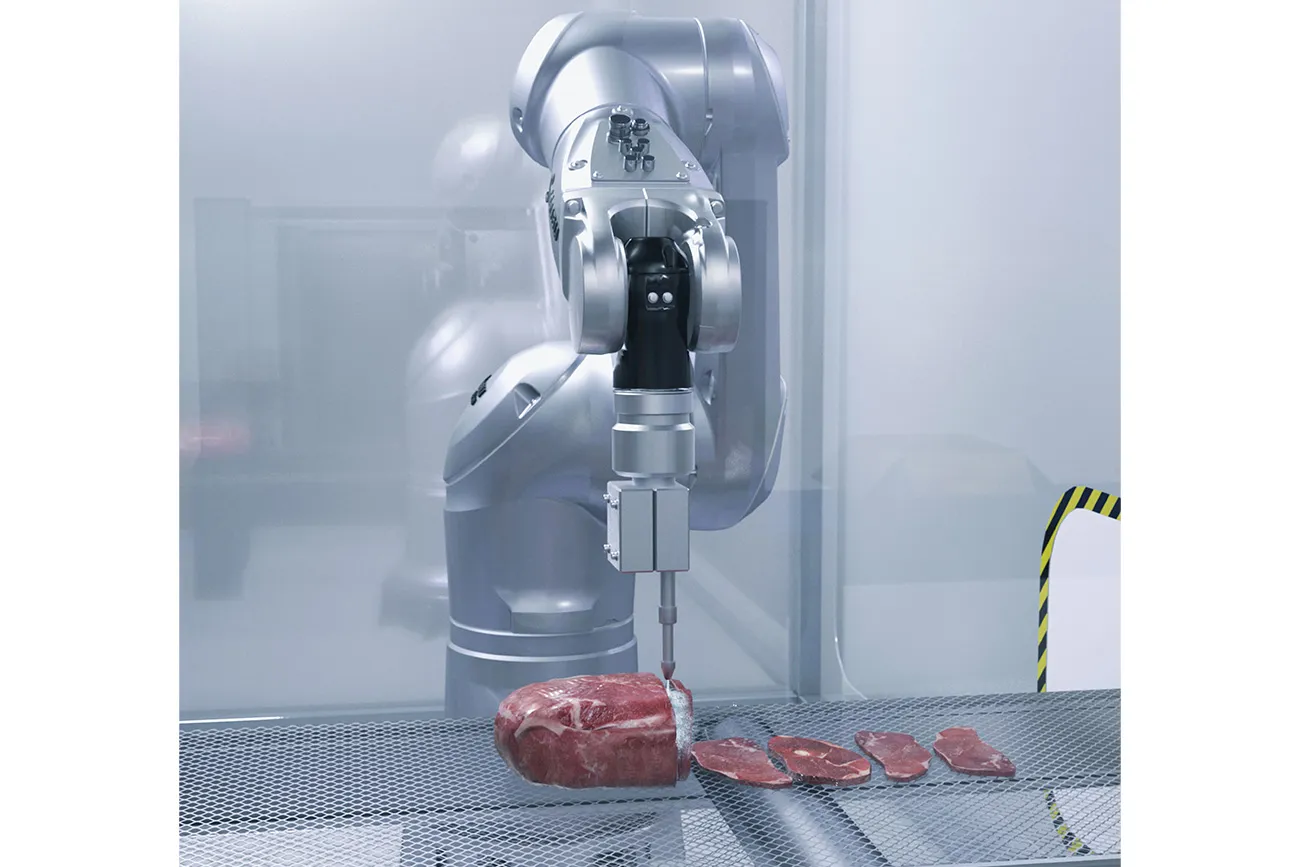
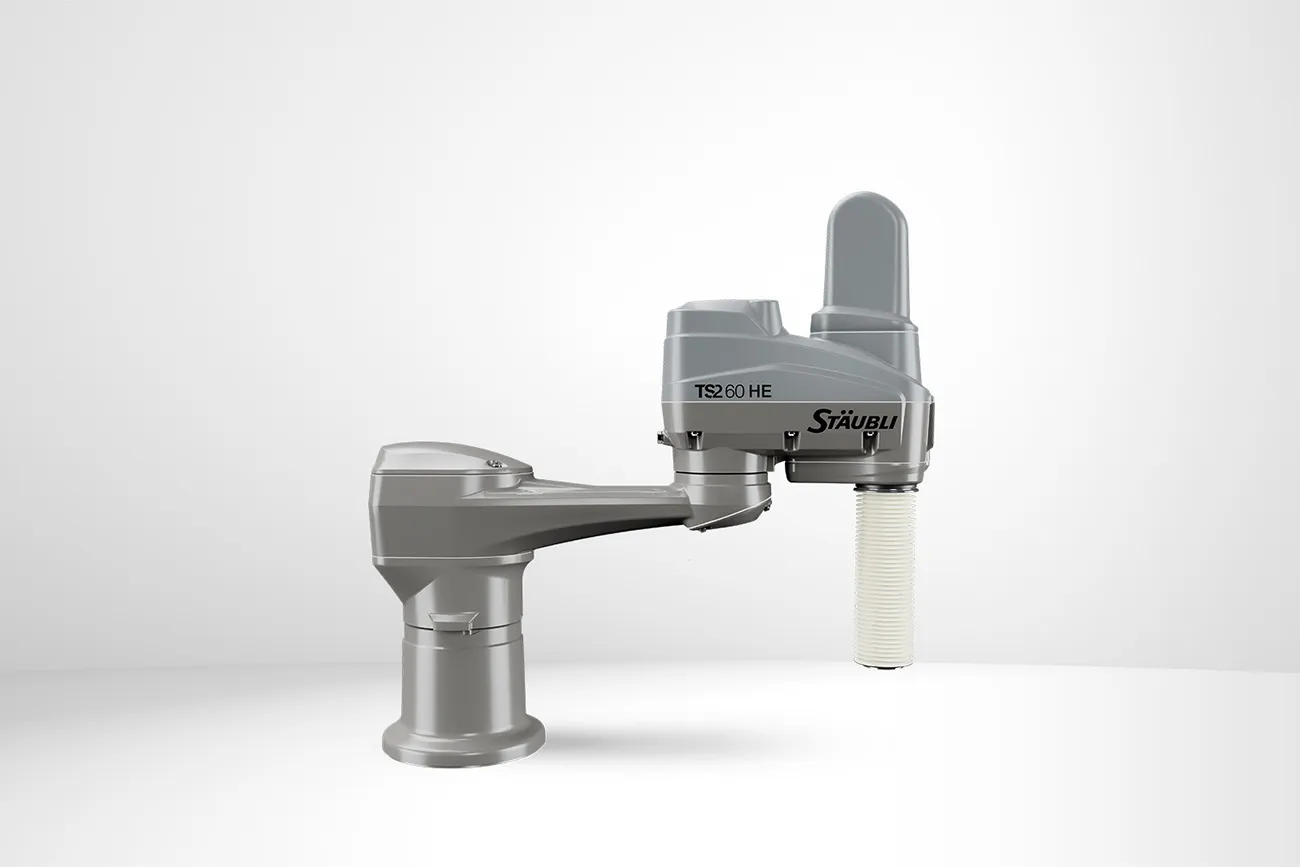
The food and beverage industry is under enormous cost pressure. At the same time, a shortage of skilled staff is creating further challenges. At the recent Interpack, Stäubli Robotics showed how tailor-made robotic solutions can address both issues. Drawing on years of experience in the food industry, Stäubli Robotics knows exactly what producers want: high-quality solutions with hygienic design that also deliver top performance in terms of versatility and operator safety. Equally important is compliance with the food industry's strict hygiene regulations, particularly when handling unpackaged food products. That is why all Stäubli robots are also available in HE versions. This includes the TS2 series SCARAs, whose impressive dynamics make them ideally suited to packaging processes. That is the theory. A robotic cell for portioning meat and cheese demonstrated it in practice. A compact six-axis TX2-60 robot carries out the cutting processes. The meat and cheese portions are then picked up by an ultra-fast TS2-60 SCARA, which takes care of the primary packaging. What really stands out is the impressive dynamics achieved by the four-axis HE robot, despite being lubricated only with NSF H1 food-grade oil. At Interpack, Stäubli showcased its expertise in delivering hygienic design solutions for applications where high performance, flexibility and operator safety are paramount.
A business enquiry for Stäubli? Get in touch
Companies in this story

Keep following this
Get an email when a new story is published. No account needed.
- SubjectTechnology
- CompanyStäubli







