












Discover the key principles of Industry 5.0
Text Valérie CouplezImage iStock
A new era of manufacturing
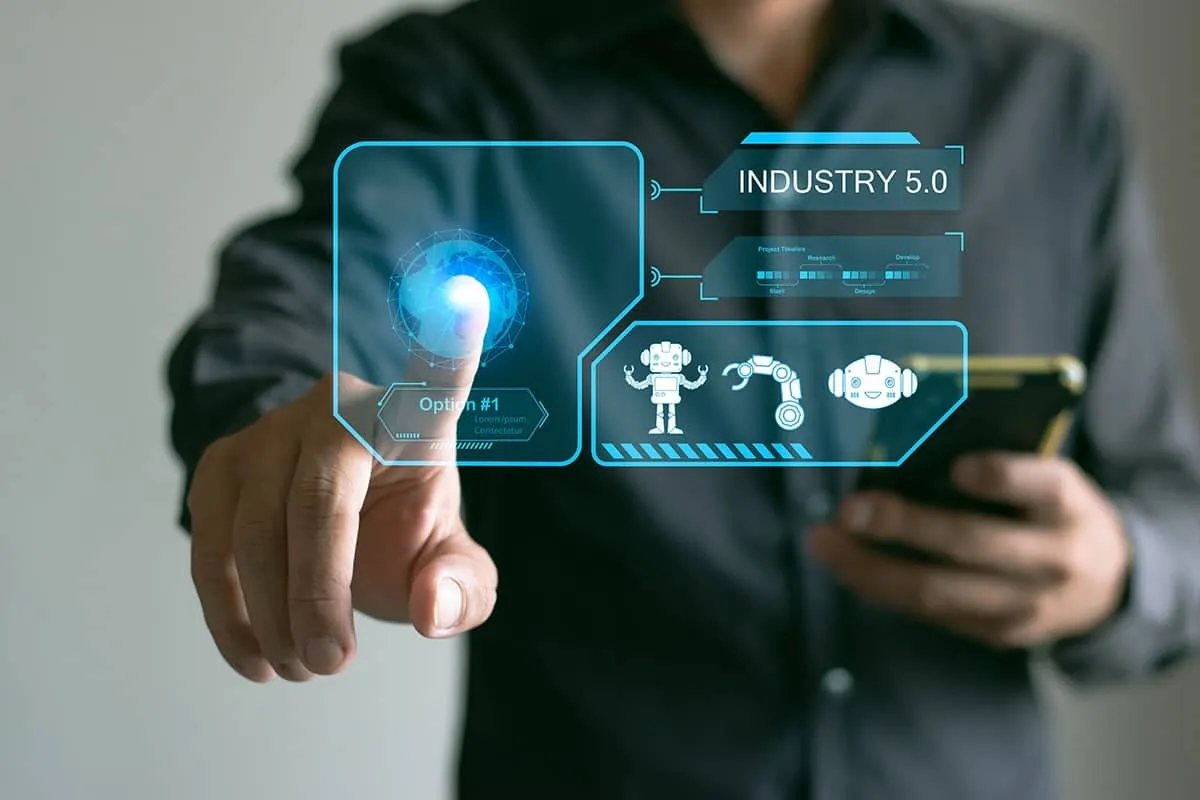
Forget Industry 4.0. A new era has begun. While Industry 4.0 was technology-driven, Industry 5.0 is value-driven. Where 4.0 focused on automation and an increased emphasis on technology, 5.0 puts people back at the centre, alongside technology primarily designed to serve society and the world around us. Although the two revolutions have much in common, there are two important distinctions, as they enable industry to actively provide solutions to today’s societal challenges: using resources sparingly, ensuring social stability and addressing climate targets.
Industry 5.0, also known as the Fifth Industrial Revolution, is a new and emerging phase of industrialisation in which people work alongside advanced technology and robots powered by artificial intelligence to improve work processes. This goes hand in hand with a more human-centric focus, greater resilience and a stronger emphasis on sustainability. This new phase is enabled by developments in IT, including areas such as artificial intelligence, automation, big data analytics, the Industrial Internet of Things (IIoT), machine learning, robotics, smart systems and virtualisation.
A fundamental difference from Industry 4.0
The European Union describes this new industrial revolution, which broadens the concepts of Industry 4.0, as ‘a vision of industry that goes beyond efficiency and productivity as the sole goals, and strengthens the role and contribution of industry to society’. This is an important difference from the Industry 4.0 approach, as described by the EU, because ‘it places worker wellbeing at the centre of the production process and uses new technologies to create prosperity that goes beyond jobs and growth, while respecting the planet’s production limits.’ This marks a shift from a focus on economic value to a broader concept of societal value and wellbeing. Although this concept has been discussed before, for example through Corporate Social Responsibility, the idea of putting people and the planet ahead of profit gives industry a new focus.
How did we reach Industry 5.0?
The first industrial revolution began in the 18th century and has undergone five iterations as technologies and processes developed over the following centuries … This first revolution began around 1780 and focused on industrial production using machines powered by steam and water. About 100 years later, in 1870, the second industrial revolution was based on electrification and brought mass production through assembly lines. Another 100 years on, around 1970, Industry 3.0 saw automation driven by the use of computers and electronics. This was reinforced by globalisation (Industry 3.5), as production moved to low-wage countries. We are currently living through the fourth industrial revolution, based on the concept of digitalisation and automation, artificial intelligence, connected devices, data analytics, cyber-physical systems and digital transformation, among much else.
Benefits of Industry 5.0
The main benefit of Industry 5.0 is the creation of higher-value jobs that enable greater personalisation for customers and greater design freedom for workers. By automating production processes, human workers can spend more of their time providing improved, tailored services and products. This began with Industry 4.0, but Industry 5.0 takes it a step further with enhanced automation and feedback to create a service-oriented model in which people can focus on adding value for end users. Meanwhile, the increased focus on sustainability and resilience means companies become more agile and flexible, while also having a positive impact on society, rather than simply mitigating negative effects.
Disadvantages of Industry 5.0
It is difficult to identify the disadvantages of Industry 5.0, but the challenge will be how organisations adapt to embrace this new concept. Companies able to become more human-centric, resilient and sustainable are likely to lead the way with future solutions, while those unable to keep up will fall behind. To understand this better, it is worth looking in more detail at the strategies behind Industry 5.0: a human-centric approach, greater resilience and a broader focus on sustainability.
A human-centric approach
Industry 5.0 involves a strategy that turns people from resources into genuine assets. In practice, this means that rather than people serving organisations, organisations will serve people. So instead of using talent solely to create a competitive advantage and value for customers, Industry 5.0 also focuses on creating added value for employees in order to attract and retain the best people.
Resilience
As the world has become more integrated over the years, we have seen the widespread impact of events such as the Covid-19 pandemic and the subsequent international supply shortages. While many companies focus on improving efficiency and optimising profits, these factors do not improve resilience. In fact, there is a view that a focus on agility and flexibility can make companies less resilient, rather than more. Instead of focusing on growth, profit and efficiency, more resilient organisations would anticipate and respond to any crisis to ensure stability in difficult times.
Sustainability
Industry 5.0 broadens sustainability from simply reducing, minimising or mitigating climate damage to actively pursuing efforts to create positive change. The aim is to make the world a better place, with companies being part of the solution rather than the problem, or merely paying lip service to sustainability goals through ‘greenwashing’.
Applications and examples
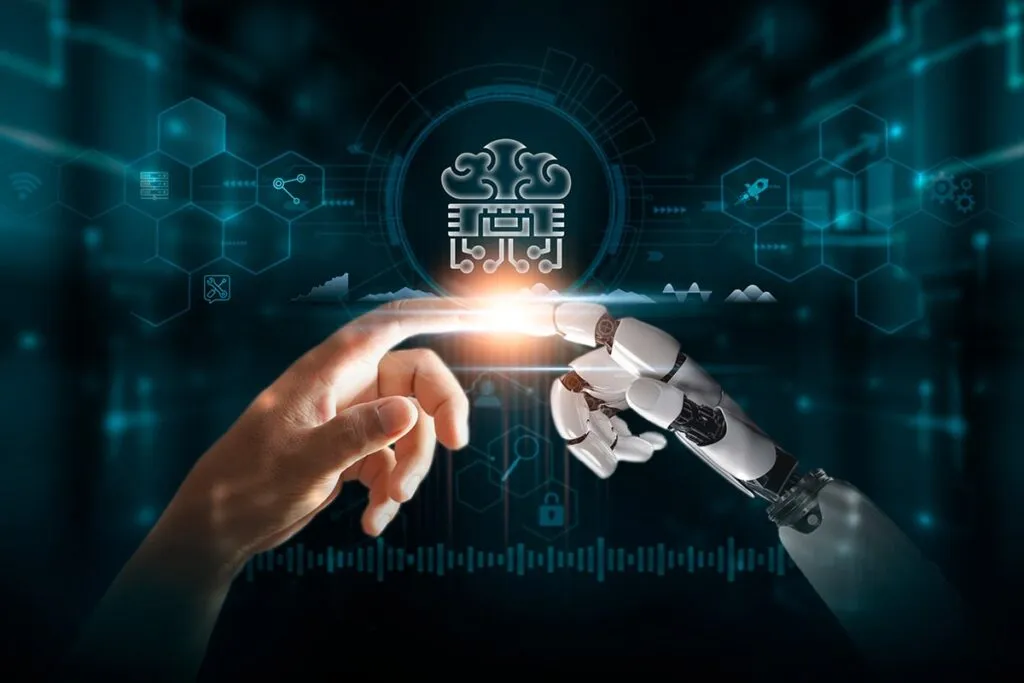
While robots have taken on dangerous, monotonous or physically exhausting work in factories and other workplaces, Industry 5.0 takes this further by enabling them to work alongside human employees. For example, a new generation of cobots that work safely alongside people, rather than being enclosed for safety, creates new opportunities for companies. By having people and machines work side by side, people can focus on value-adding processes to take product personalisation to the next level. The medical sector could, for example, use this collaborative approach to create devices tailored to individuals, such as a diabetes app that tracks your lifestyle and informs the production of a device to meet your individual needs. Tailoring products to individual needs can be extended to other industries, such as electronics and the automotive industry, adding a personal, human approach to the offering created by Industry 4.0.
Conclusion
Industry 5.0 refers to robots and smart machines working alongside people, with an emphasis on resilience and sustainability goals. While Industry 4.0 focused on technologies such as the Internet of Things and big data, Industry 5.0 aims to bring human, environmental and social aspects back into the equation. In this respect, Industry 5.0 can be seen as complementing the progress made by Industry 4.0, with the aim of supporting people rather than replacing them. This allows people to intervene where necessary and marks a move away from excessive automation towards critical thinking and adaptability, while retaining the precision and repeatability of machines.
Question about this story? Ask your question
Keep following this
Get an email when a new story is published. No account needed.
- ThemeSmart production with data
- SubjectTechnology







