












From ugly duckling to swan
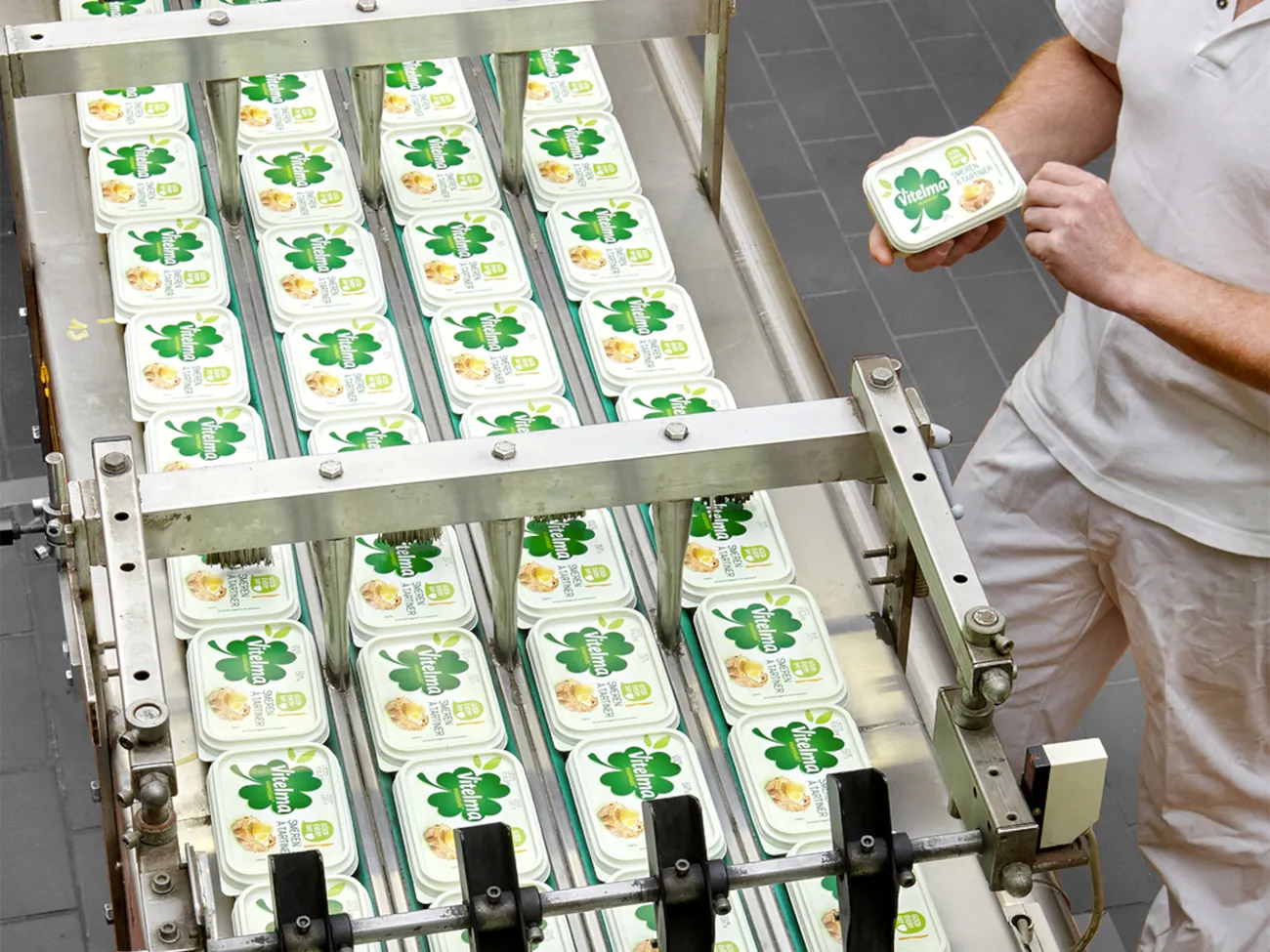
At Vandemoortele in Izegem, the digital transformation began with a concept: the lights-out factory. A broad term, but the question that followed, how can we make this a reality, provided the small spark that led to a great deal of progress. An achievement that transformed the group’s ‘ugly duckling’ into a proud swan bearing the ‘Factory of the Future’ label.
Vandemoortele is, and remains, a household name in the Flemish food industry, with a turnover of €1.4 billion and more than 4,000 employees across sites in twelve countries. The production site in Izegem has a rich history. Fat production has been a major activity there since the 19th century. This experience and expertise have made the site the group’s largest margarine factory. But what should the factory look like in a few years’ time? How can it remain competitive in the face of all the challenges facing the food industry? Vandemoortele found the answer in its lean vision for future production. The KAIZEN philosophy has become the guiding thread throughout the digitalisation programme the company has mapped out.
Eliminating waste
KAIZEN starts from the principle that every form of waste, whether of time, raw materials or people, must be eliminated. This approach aims to drive change from the factory floor. At Vandemoortele, the concept was renamed C-flow, or ‘see the flow’. By ensuring that every production step fits seamlessly with the next, the aim is to create added value. The division of twelve production lines according to processes had to make way for a new organisation built around the product. This phase was completed in 2018-2019 and led to a new vision. Performance management was then reviewed, with all the data collected being used to identify further opportunities for optimisation. Shifts are now viewed as a cascade, with time set aside between them for handover. Every day at 10 am, a multidisciplinary meeting is held to discuss the key KPIs. In this way, Vandemoortele Izegem established a feedback loop rooted in a culture of continuous improvement.
Factory dashboards
Dashboards are now positioned along all the production lines. They show operators how well each line is performing. The factory dashboards were developed together with employees to display exactly the information they need to make the right decisions. Line operators can see the status and schedule in real time, helping them decide where and when to make adjustments, or when best to carry out quality checks. Laboratory staff responsible for quality control can use predefined tolerances to determine whether production needs adjusting. Shift leaders, meanwhile, can monitor the performance of the machinery in real time. These insights provide the basis for the daily multidisciplinary meeting. The knowledge and intuition of experienced employees are, in effect, made tangible in these dashboards and backed up with data in black and white. Following its success in Izegem, this approach will now be rolled out across the group.
Putting employees first
An integrated approach has been key to this success story. The new digital tools are part of a wider system that also includes the MES and ERP packages. The result is a fully digital factory with the right data to ensure the right quality. However, employees were at the heart of Vandemoortele’s digital transformation. They had the knowledge and experience needed to make it a success. The technology introduced on the factory floor is intended to make their lives easier. In its next steps towards digitalisation, Vandemoortele aims to improve work organisation further. So-called cockpits will be introduced. Rather than tying employees to a particular line, these will enable the company to use the production schedule to determine how best to deploy everyone’s talents across the different lines. This should make it easier to manage and resolve stoppages.
Question about this story? Ask your question
Keep following this
Get an email when a new story is published. No account needed.
- ThemeSmart production with data
- SubjectTechnology







