












Helping machine builders innovate
Text Valérie CouplezImage Siemens
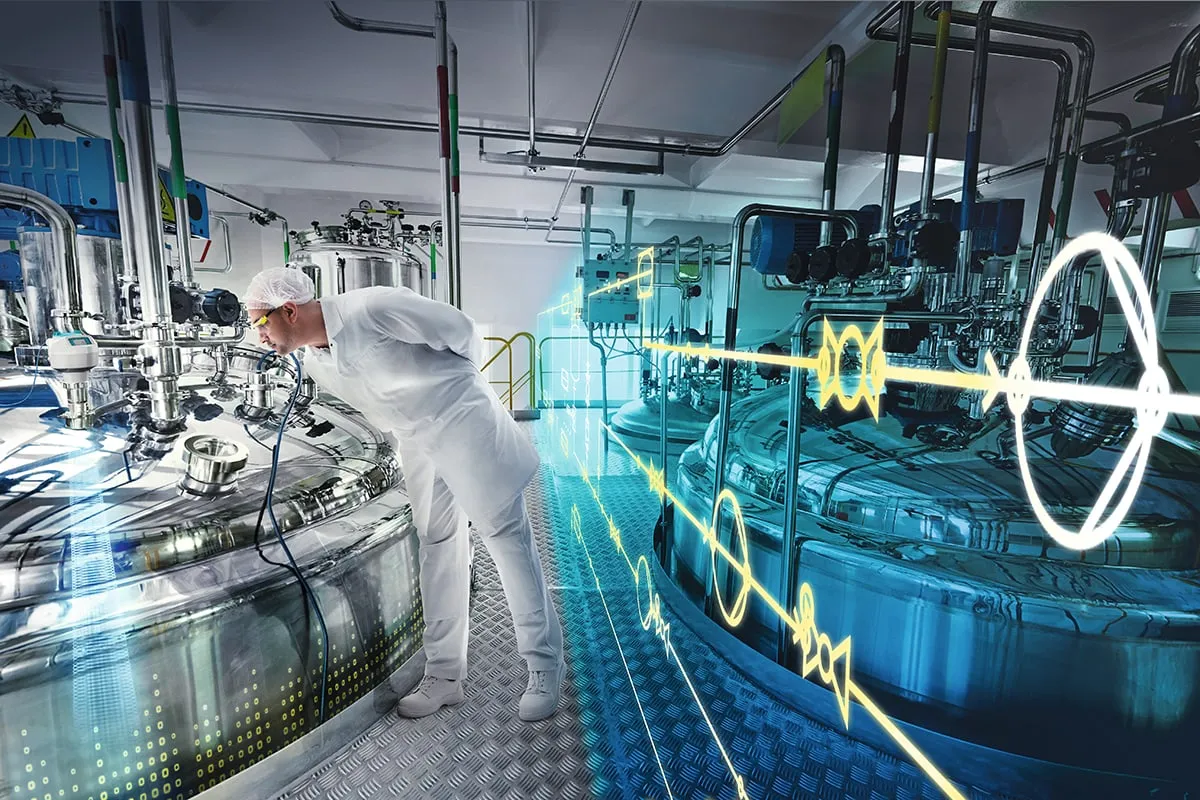
To strengthen their competitive position, machine builders need to innovate more than ever. Whereas they used to be able to draw on expertise within their own organisations, increasingly complex technology now calls for collaboration within ecosystems. The breadth of the technology offering, combined with experts with extensive experience of both products and applications, makes Siemens a key player in this ecosystem. A conversation with head of sales OEM and business segment manager Machine Tools Nick Vanden Broecke, and head of Siemens Digital Industries Belgium-Luxembourg Thierry Van Eeckhout, about how bringing the real and virtual worlds together can accelerate innovation.
The shortage of technically skilled staff is forcing the entire West European manufacturing industry to automate, whether you make biscuits or build machines. “At the same time, we are seeing automation become much more complex. It is no longer enough to deliver the highest output at the highest speed. You also have to switch flexibly between batches, take cyber threats into account, make efforts to become more sustainable, comply with the new rules on machinery safety, add software to monitor the machine throughout its service life … This calls for specialist expertise. It is virtually impossible to have all that expertise in-house. That is why we are seeing more and more ecosystems emerge in the machine-building market,” says Vanden Broecke.
A partner throughout the machine’s entire lifecycle
Their own IP naturally remains at the heart of the machine. “Machine builders remain firmly in control of that. But that does not mean they cannot find support to take the next steps. Belgium is fortunate to have a strong network of knowledge centres and research institutions. Their fundamental research can help validate innovations in IP more quickly. Ultimately, you want to bring a new machine to market as quickly as possible,” adds Van Eeckhout. Academia can also play a role here. “Our job is to engineer everything around that as competitively as possible with the customer. In the past, the customer would give us a bill of materials, a parts list. Today, we work with them to determine how best to do that, how to arrive at the best machine and how to fit it into a larger system, including connectivity and cyber security. That is our ambition for the future: to be part of the machine builder’s entire workflow.”
Sorting and pricing 1,500 books per hour
Finding, cataloguing, pricing and labelling books: sorting books can quickly take up an entire day at second-hand bookshops. Valvan’s Automated Book Processing machine (ABP) automates the entire process. The biggest challenge was centralising all the different data flows within the ABP machine and controlling its various components. A Siemens ET 200SP Open Controller is at the heart of the system: it receives data about the book (price, genre, location label, sorting position) from the vision computer and sends it on to the printer and robot. The ET 200SP Open Controller also tracks each book throughout the system, ensuring it is sorted into the correct position. A third challenge was the SCARA robot. Thanks to the 3D camera, which continually scans the height and corners of objects on the conveyor, the robot rotates in line with the position of the book and applies the label in the right place, in three dimensions. AI makes the machine even faster. The space between two books on the conveyor can vary. Using an intelligent infeed model on a digital twin of the machine, which keeps getting smarter, the conveyor can run faster between successive books. That model also runs on the ET 200SP Open Controller. “Choosing Siemens was an obvious decision for us, as we work together on all our machines. Their capabilities are unrivalled and their products remain available for a long time,” says Ruben Forceville, automation engineer at Valvan.
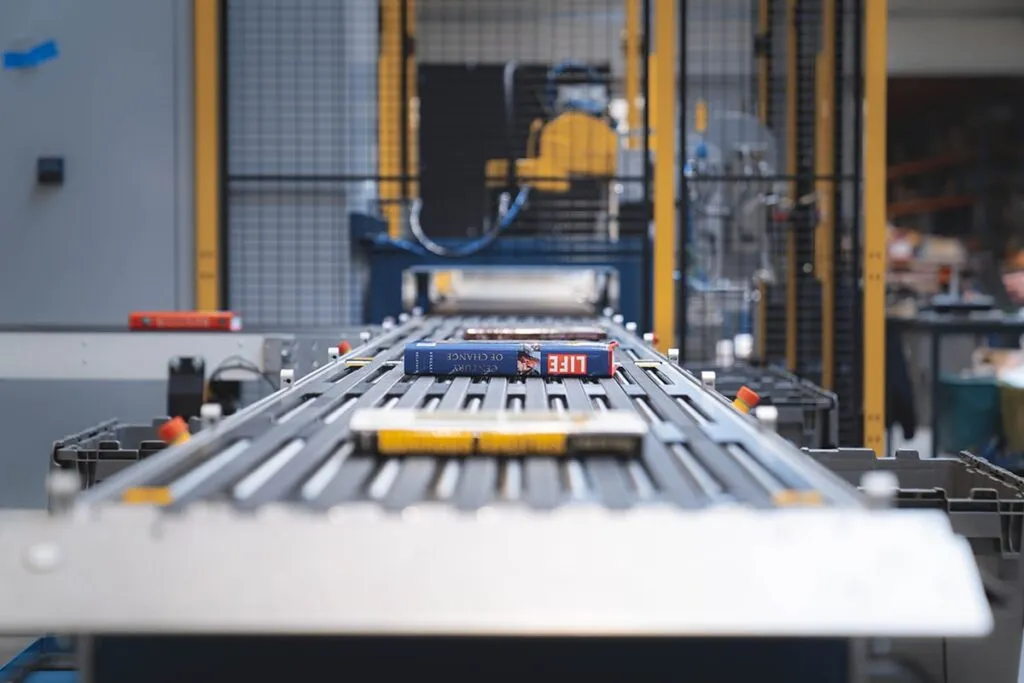
Finding, cataloguing, pricing and labelling second-hand books. Valvan’s Automated Book Processing machine (ABP) automates the entire process.
Expertise across the board and in depth
This does require a very different approach. According to Vanden Broecke, Siemens’ broadest offering of hardware, software and services on the market is invaluable in this respect. “You still need specialists who know the technology inside out, who know all the little tips & tricks that make it work perfectly in an application. We have them. But you also need a team that gets to know the world in which customers operate, who know how those machines ultimately need to work. Otherwise, you will never achieve seamless integration. We have that team too.” Lifelong learning is therefore the guiding principle for Siemens employees. In addition, for more than six years its Siemens Industry Academy has been inspiring the next generation of engineers. “We get them working on innovative projects alongside our partners, so they choose a career in industry.”
Bringing the virtual and real worlds together
Many of these innovative projects now use digital twins. “Because bringing the real and virtual worlds together on one platform can deliver enormous benefits,” explains Van Eeckhout. “A great deal depends on innovation projects for machine builders. If they fail, in extreme cases this can mean bankruptcy, because so much budget has already gone into them. But with the technology available today, machine builders can simulate new developments and validate them virtually first, without having to build dozens of machine prototypes. This is more sustainable because there is no waste, you can innovate much faster and there are fewer risks. Afterwards, you can also use it to monitor the machine throughout its entire service life, for OEE, predictive maintenance … you name it.”
Sustainable packaging, made to measure
A bespoke box for every e-commerce product: machine builder Avercon’s X7 is revolutionising packaging. Siemens technology was an essential part of it. In traditional industry, boxes are made to fit a particular product perfectly. In e-commerce, batch sizes have been reduced to one: every product has different dimensions. What is more, every product needs a unique label. Avercon designed an adjustable machine that automatically switches from product A to product B, which have different dimensions. Digital twin technology was indispensable for understanding a complex process and verifying that the components designed by Avercon actually did what they were supposed to do. “A machine like this has at least 50 servo motors: every movement has to happen at exactly the right time for the next one. Working with a digital twin made it easy to visualise the whole process,” says David Provoost, sales & marketing manager at Avercon. The machine can now prepare, pack, label and dispatch an individual parcel in 3.5 seconds. It is 30% faster than comparable systems and eight to ten times faster than a person. Products are now packed up to 40% more efficiently, saving the customer more than 20% on transport costs.
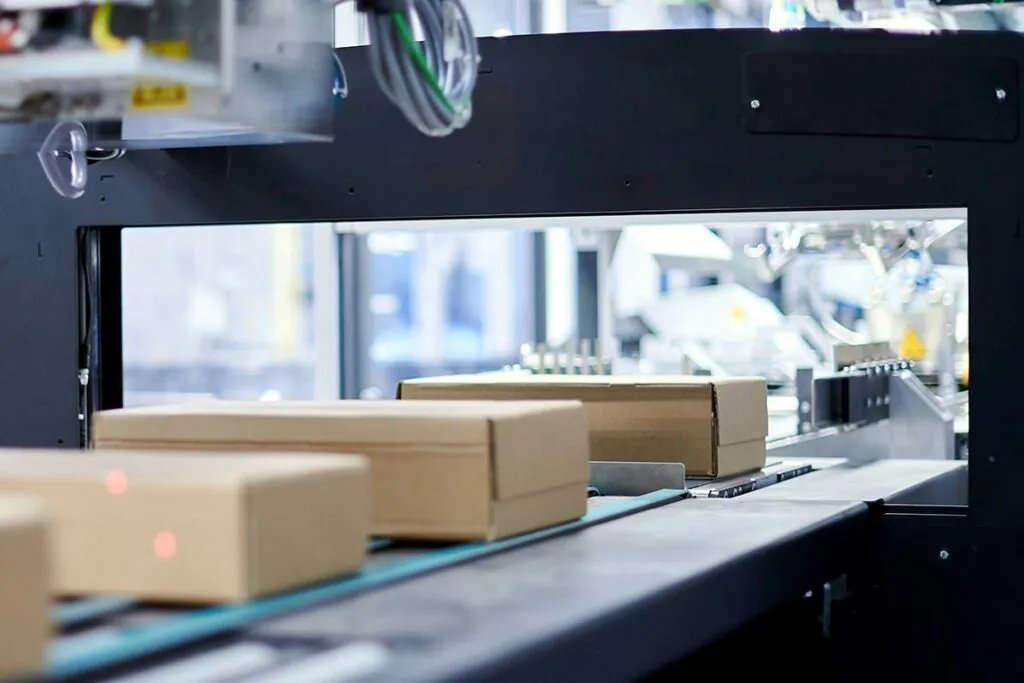
A bespoke box for every e-commerce product: machine builder Avercon’s X7 is revolutionising packaging.
Ready for artificial intelligence
A second technology trend is artificial intelligence. Vanden Broecke: “In the past, operators could tell what was wrong from the sound the machine made. That kind of knowledge is disappearing. We now need to introduce other ways of communicating and interacting with our machines. Our Siemens Industrial Copilot uses generative AI for this. The machine now reports its own status and the possible causes of problems. This offers huge potential for faster fault diagnosis, training operators or maintenance technicians, and optimising machine processes. The technology is ready to automate automation. It is now a matter of building trust. People are allowed to make mistakes, machines are not. But we already see AI as an enabler of innovation, and by sharing our experience we want to make it as easy as possible for machine builders to get started.”
Developing a data strategy
Data will therefore be indispensable. Vanden Broecke and Van Eeckhout say machine builders have now fully grasped this. “A great deal of data is already being generated, but the question is what percentage of it we are actually using. Every machine builder needs a data strategy, and is working on one. It is up to us to make the tools for working with that data increasingly easy to use, so they can take the next steps towards standardising machines, generating and simulating programme code, and delivering their machines virtually,” the two men conclude.
Growing mushrooms three times more efficiently
Harvesting mushrooms is highly labour-intensive and difficult to automate. TLT Automation therefore took a different approach, separating picking from sorting. The solution works: with the new system, pickers harvest up to 90 kg of mushrooms per hour, compared with 30 kg previously. That is three times as efficient, but each picker now also needs a sorter. Automating the sorting process was therefore the next step. A delta picker takes a photo of each individual mushroom and decides where it should go. TLT Automation developed the algorithm itself and worked with Siemens on the control system to calculate the mathematical kinematic transformations. The robots have to move perfectly in sync with the conveyor belt. Using MCD and a SIMIT Digital Twin, TLT Automation was able to test the kinematic transformations before building the mechanical parts. This was faster and avoided the risk of damage caused by calculation errors. Managing director Jan-Emiel Tack: “Because the ‘intelligence’ is in Siemens’ open ecosystem, this solution can easily be scaled to other dimensions if our customers have different requirements.” The result? Efficiency has now genuinely tripled. There are still challenges. Can we automatically close the boxes? Could this eventually work with cardboard boxes too? Thanks to the openness of the Siemens ecosystem, we can experiment to our heart’s content.”
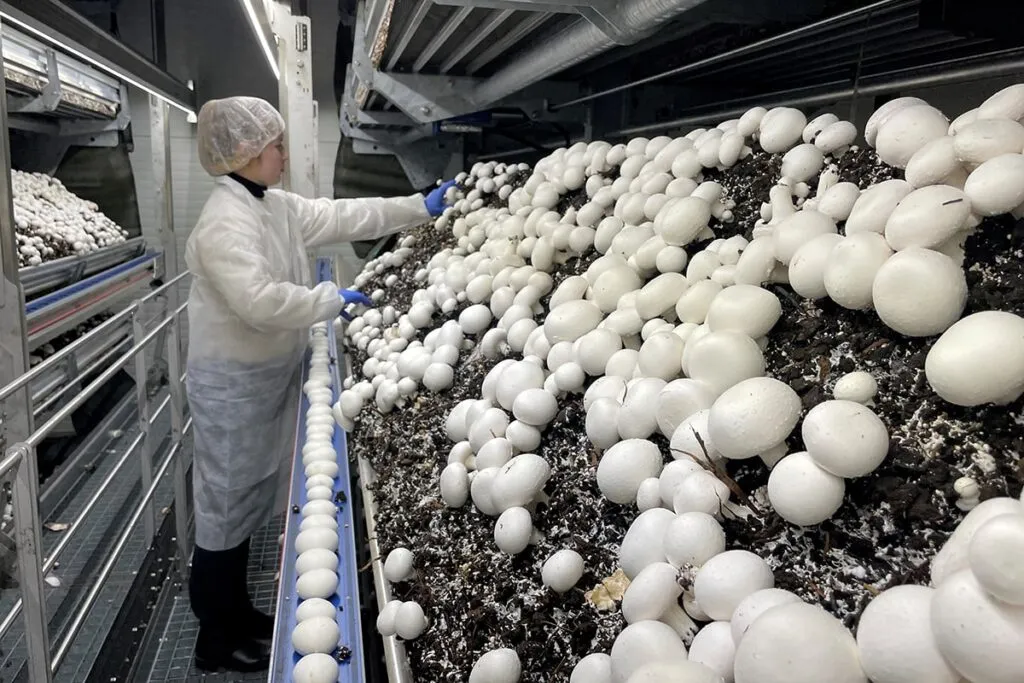
TLT Automation separated picking from sorting. With the new system, pickers harvest up to 90 kg of mushrooms per hour, compared with 30 kg previously.
A business enquiry for Siemens? Get in touch
Companies in this story
Keep following this
Get an email when a new story is published. No account needed.
- SubjectTechnology
- CompanySiemens







