












Minimal downtime thanks to a textbook retrofit
Text Joy Augustin / Alexandra Semenescu / Kerstin Schweimer / Christina JonesImage Siemens
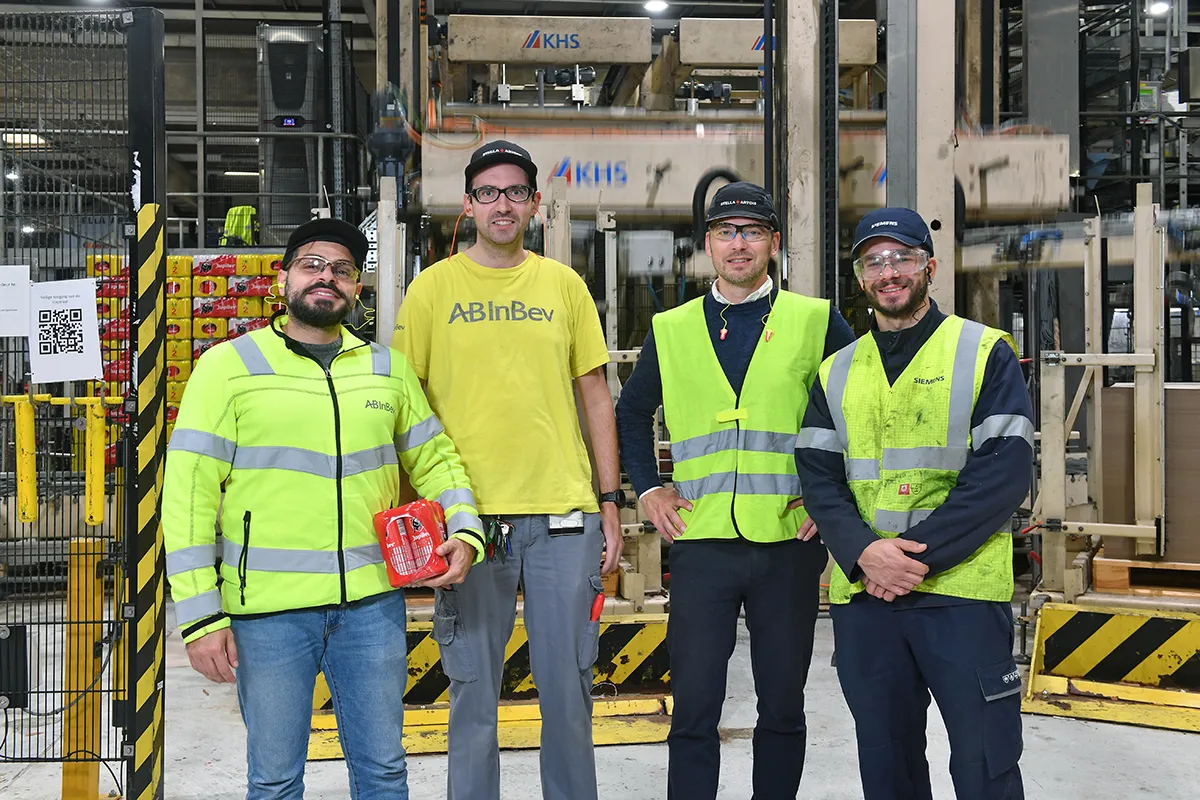
AB InBev is considered the world’s largest beer producer. After twenty years of reliable service, one of the palletising lines at its Leuven site, which processes 50,000 litres of beer a day, was due for replacement. Siemens took on the challenge. It completed the retrofit in seven days instead of the ten originally scheduled, thanks to efficient planning and the use of a digital twin. The simulation also brought numerous other benefits, including technical improvements, the implementation of new stacking patterns and extensive operator training.
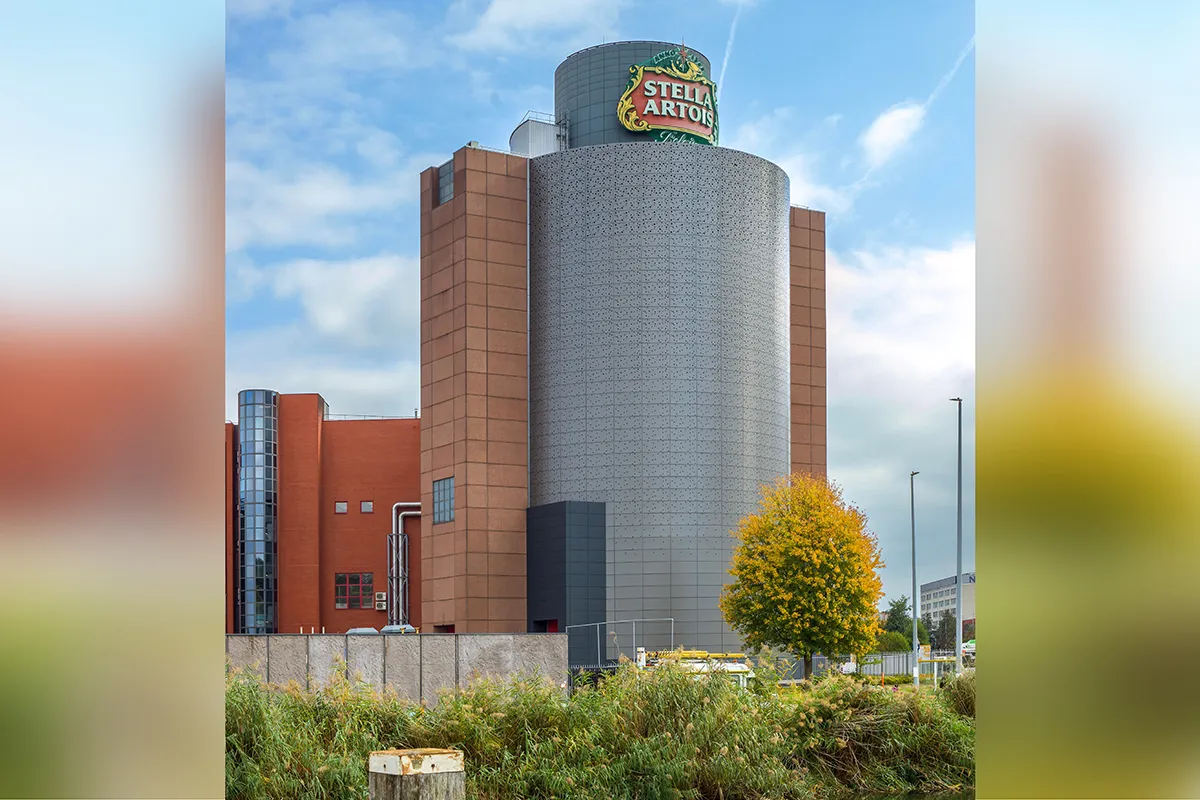
The food & beverage sector faces major production challenges: margins are tight, quality standards are high and the time available for maintenance between production batches is limited. No company can afford to have its machines out of action for long, so when maintenance is needed, it must be carried out as quickly as possible. Simulation software, including digital twins, is invaluable in making this a reality. AB InBev needs little introduction in this sector, with iconic brands such as Stella Artois, Budweiser and Corona. Its headquarters are still in Leuven. In 2024, the global leader in the beer industry brewed 576 million hectolitres of beer across more than 200 breweries in over 50 countries. With a portfolio of more than 500 brands, the company is committed to long-term partnerships, high quality and scalable solutions, serving more than 2 billion customers worldwide.
Ensuring continuity
“A ticking time bomb,” is how line manager Tom Verslype describes the state of the palletising line at AB InBev in Leuven. “It dates back to 2004 and is built from components that are no longer available. For example, a faulty drive meant that we were unable to produce for several weeks in 2022. That was the turning point for us, prompting us to look for a way to modernise the line while minimising production losses,” Verslype recalls. The challenge soon brought AB InBev’s automation engineers into contact with Siemens, which offers extensive retrofit solutions that cause minimal disruption to production. This means the line does not have to be replaced in its entirety, resulting in less downtime. What is more, retrofitting also costs less and is significantly more sustainable.
No more black box
AB InBev used the opportunity to put forward an additional requirement: more flexibility to adapt the stacking patterns for its beer cans. AB InBev regularly needs to update its patterns, for example when can sizes change. With the previous line, it had no access to the automation software, so every time a change was needed, it had to go back to the manufacturer. “An expensive way to update software on a regular basis. That’s why our new solution had to be open, so we could programme new patterns ourselves,” Verslype continues.
Benefits for the customer
Siemens service experts addressed the customer’s need for greater efficiency and reliability in its production lines with a comprehensive package of ‘Retrofit and Modernization Services’, combined with a digital twin simulation.
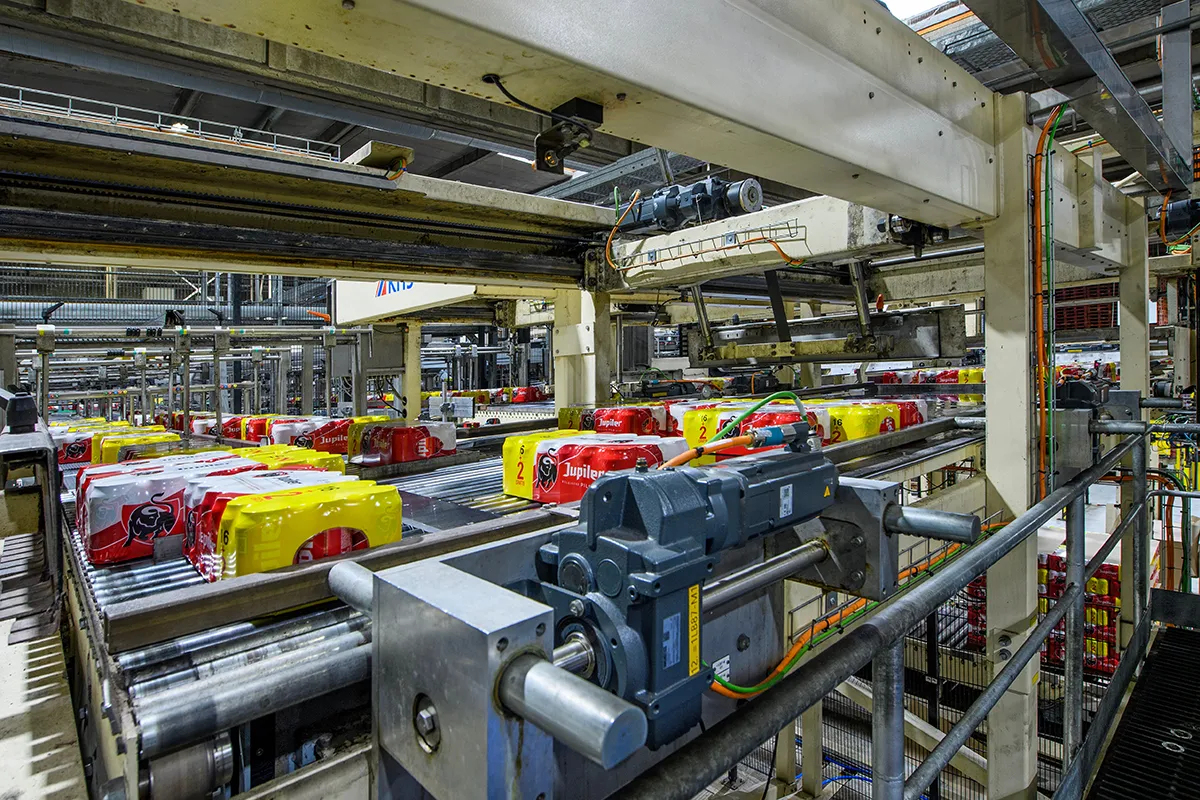
Fast and efficient modernisation: the retrofit solution involved installing new control cabinets, components, HMI-
panels, drives, motors and a PLC. The result is a production line operating with modern, efficient and reliable technology. By reducing the time needed to complete the project, production downtime was significantly shortened;
Improved employee skills: the digital twin also gives AB InBev a virtual training environment for its operators. They can gain hands-on experience in a risk-free setting. Improving operators’ skills in advance ensured a smooth transition to the upgraded system;
Greater flexibility and adaptability: the new solution offers the flexibility to configure and implement customised stacking patterns. This gives the customer greater adaptability and control over its production processes;
A path to predictive maintenance: the digital twin enables production processes to be tested and fine-tuned virtually for optimum performance and minimal downtime. It also lays the groundwork for the future integration of predictive maintenance solutions. By comparing real-time data with the reference values in the simulation, potential problems can be detected early and addressed proactively.
600 extra pallets processed
The complete retrofit of the production line took just seven days. Siemens finished three days ahead of schedule. The rapid implementation reduced downtime for AB InBev by 30%, allowing production to resume sooner than planned. “Those three days we saved meant we could stack 600 extra pallets, which is pure profit for us, of course,” Verslype said. The retrofit also meant that AB InBev no longer needed a completely new line, making it a cost-effective and sustainable alternative. By modernising the existing installation instead of replacing it entirely, the customer was able to extend the value of previous investments while making its production future-proof.
A business enquiry for Siemens? Get in touch
Companies in this story
Keep following this
Get an email when a new story is published. No account needed.
- ThemeReliable machinery and drives
- SubjectTechnology
- CompanySiemens







