












New coffee pad line takes production to the desired level
Text and images Colruyt Group
One year after commissioning, Colruyt Group Fine Food Coffee’s new pad line is running at full capacity. The teething problems have been resolved, the process has stabilised and the results speak for themselves: high speed, less waste, reduced downtime and greater operational certainty, while the line also addresses safety, ergonomics and sustainability. “We are now a year on and can see that the line is doing what it is supposed to do: running stably, with predictable output and far less variation. That gives us confidence,” says Björn De Schinckel, head of the machine park at Colruyt Group Fine Food Coffee & Wine
The decision to install a new pad line was not simply about ‘wanting to go faster’. Three drivers came together:
- Capacity and continuity: the previous line involved more intermediate process steps, with weighing integrated into the conveyor belt. That setup could no longer guarantee the required volumes and a robust production schedule;
- Sustainability and regulations: switching to sustainable paper and thinner, recyclable films calls for precise forming and sealing technology;
- Ergonomics and safety: the new system reduces manual handling and combines guarding, interlocked emergency stops and a fully enclosed process.
Roasting, grinding and degassing
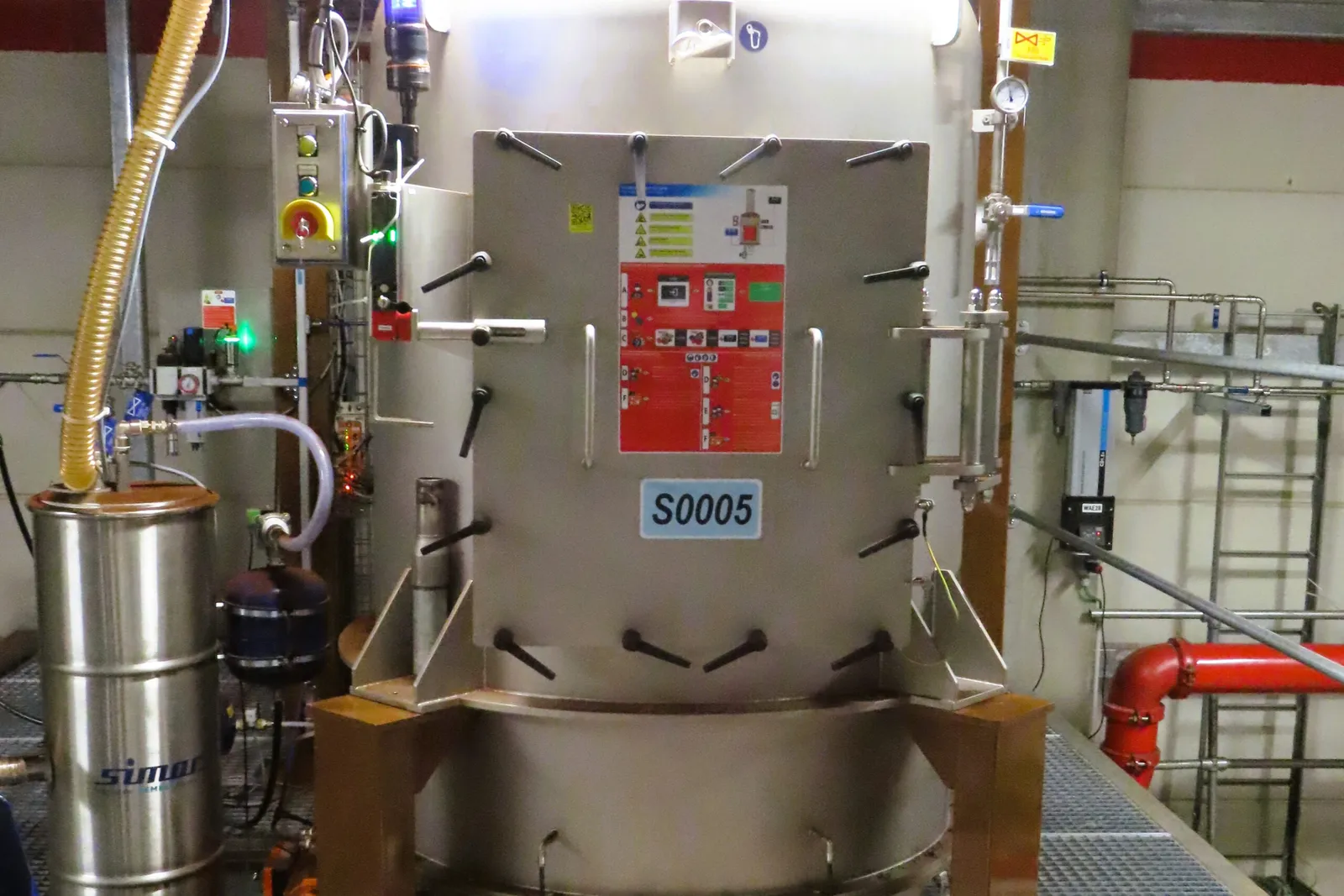
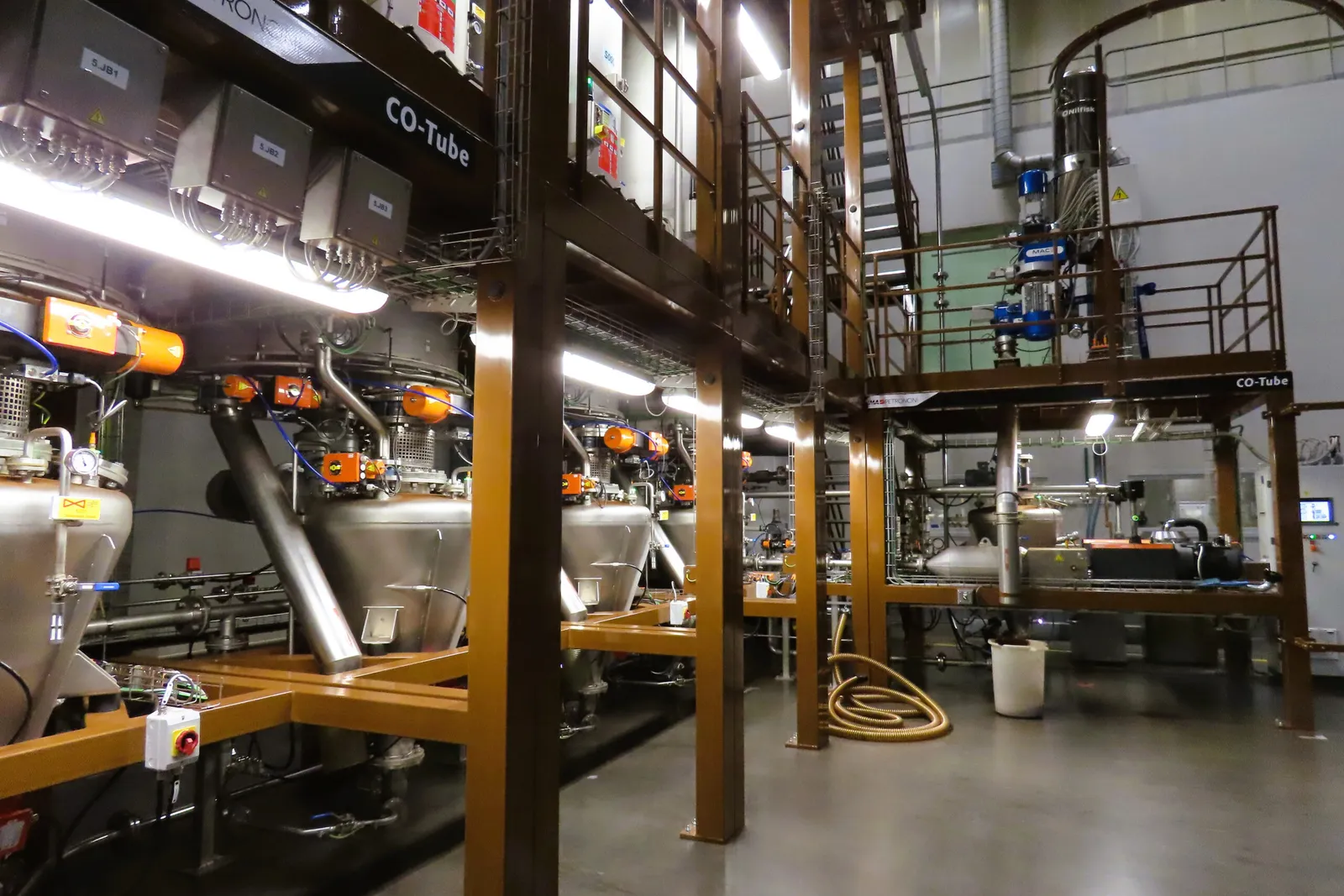
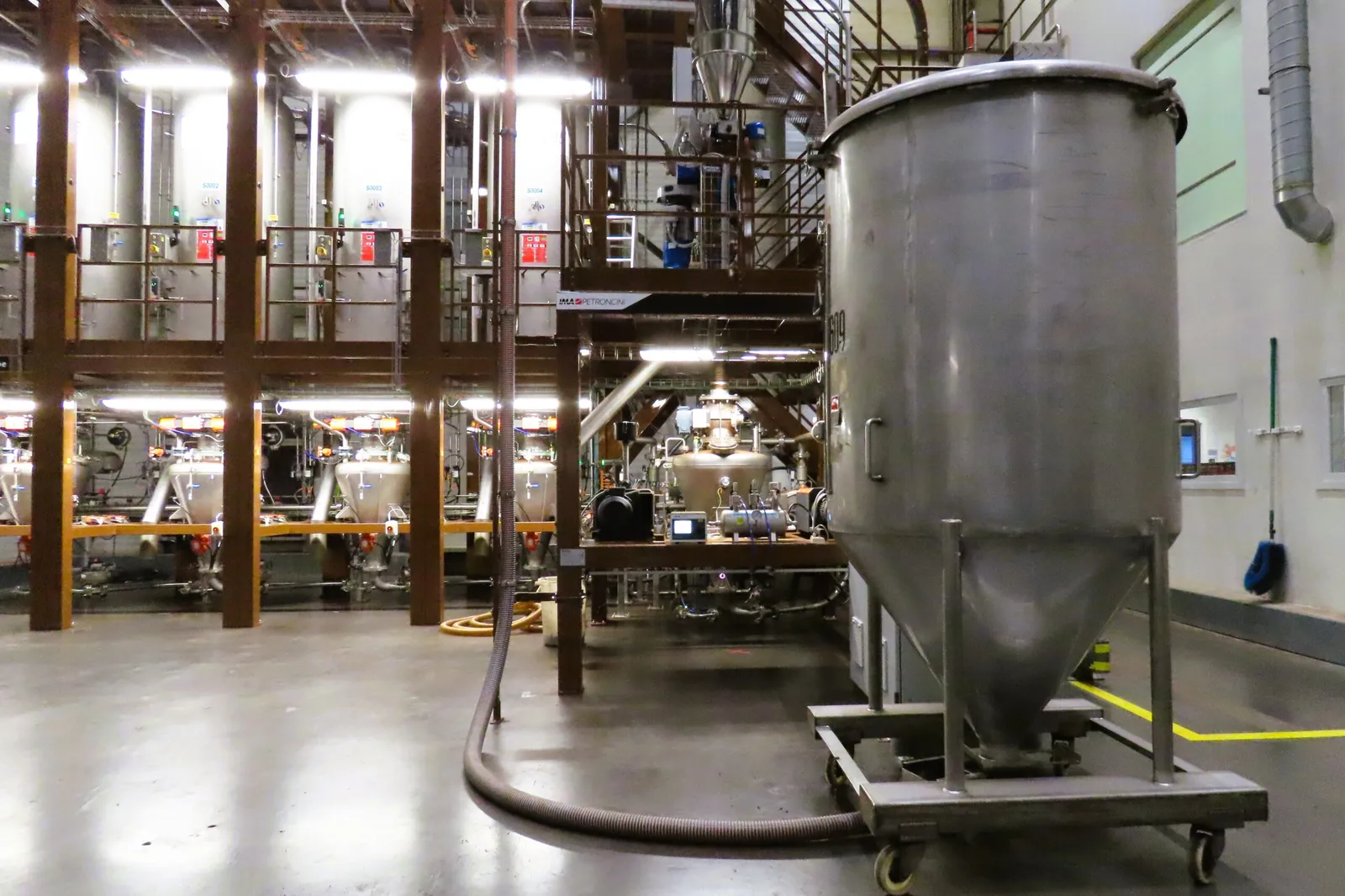
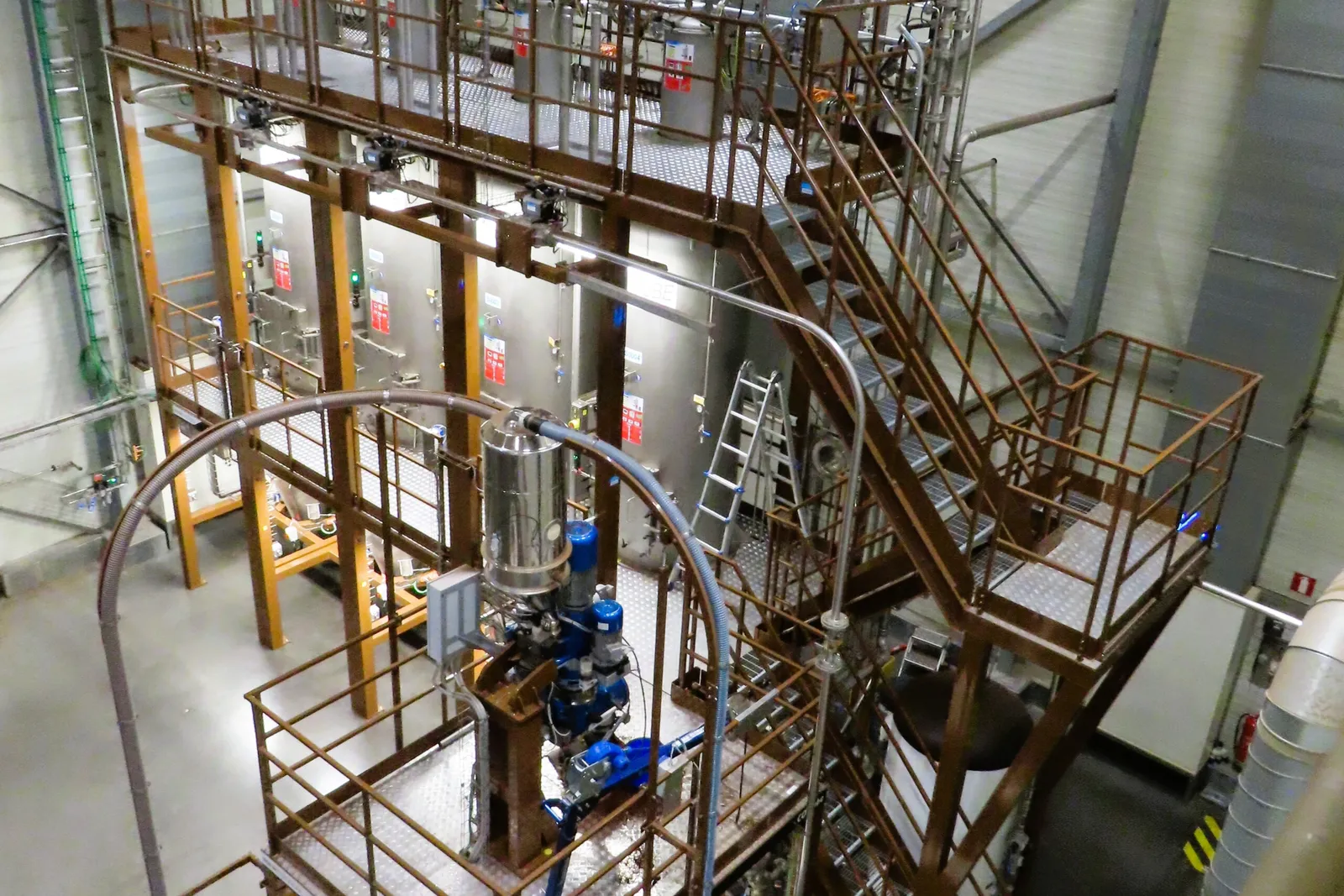
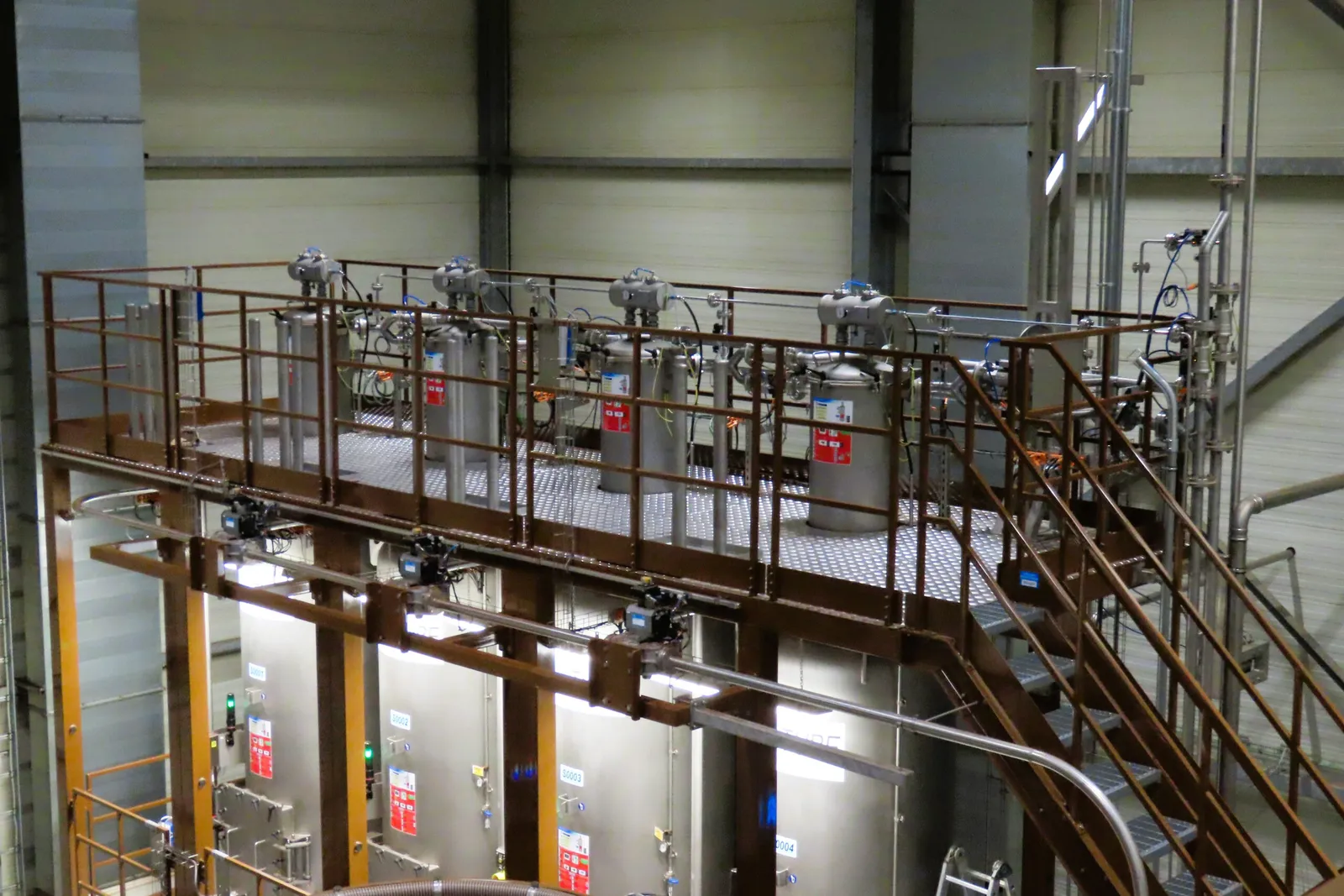
The new line is designed as a continuous, orchestrated process in which raw materials, process control and packaging work seamlessly together. After roasting, the coffee is ground and fed into four buffer tanks for controlled degassing, typically for 7 to 8 hours, depending on the recipe and bean quality. This step eliminates the need for a degassing valve in the packaging. In the past, every pack had one of these valves, meaning extra components and breakdowns. The process is now fully enclosed and stable. “The degassing system has completely replaced the valve. Fewer parts, less risk, a cleaner line,” says De Schinckel, describing the benefits.
Precise dosing and forming
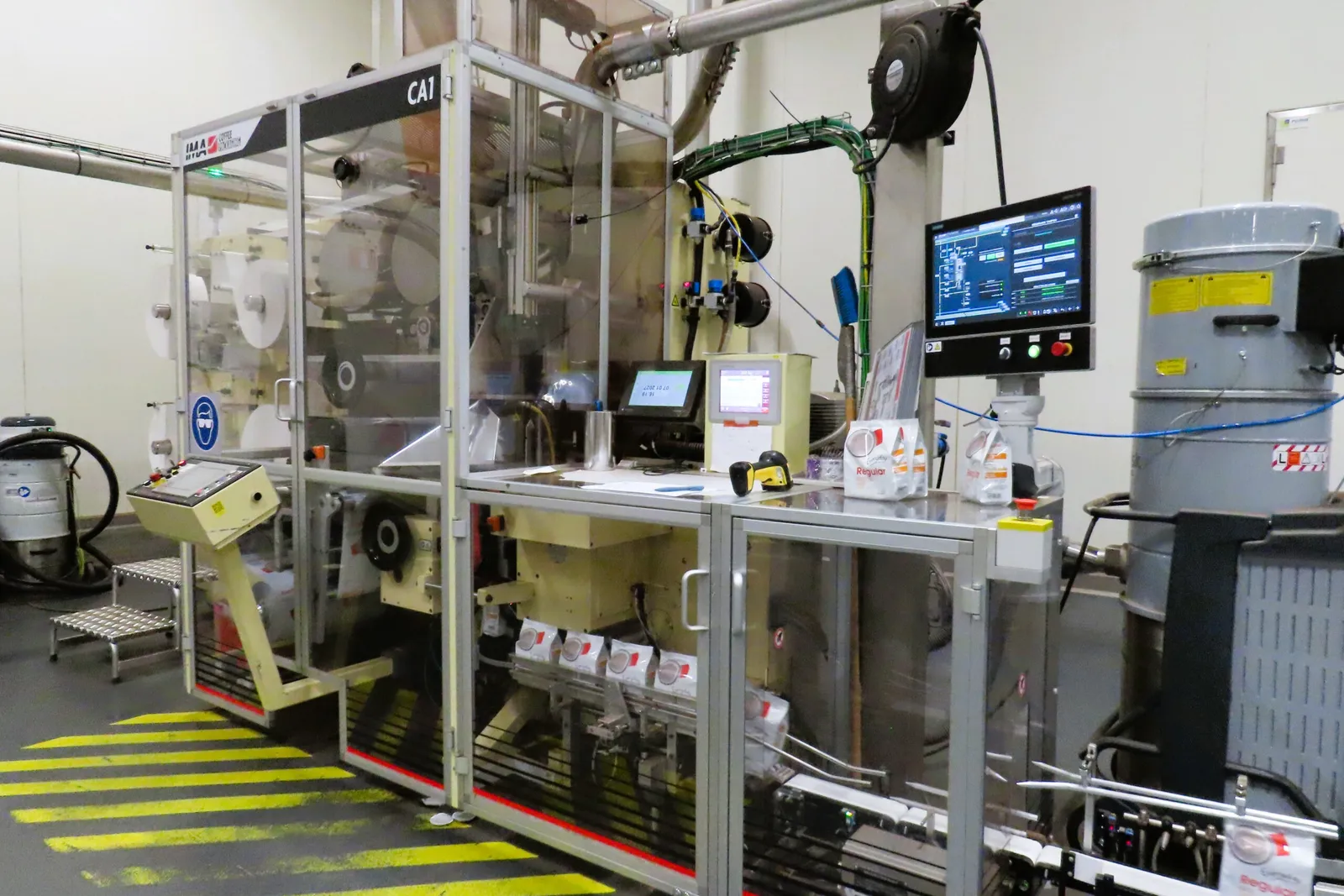
From the buffer tanks, the coffee travels through a closed pipe circuit to a hopper fitted with sensors that monitor flow rate and flow, prevent compaction and ensure a consistent mass flow. Dosing units deposit the correct amount onto the bottom paper, after which a rotary preformer shapes and seals the pad with top paper. A clean seal with no coffee residue is essential: it reduces product waste and ensures uniform pads.
Cutting, stacking and packing
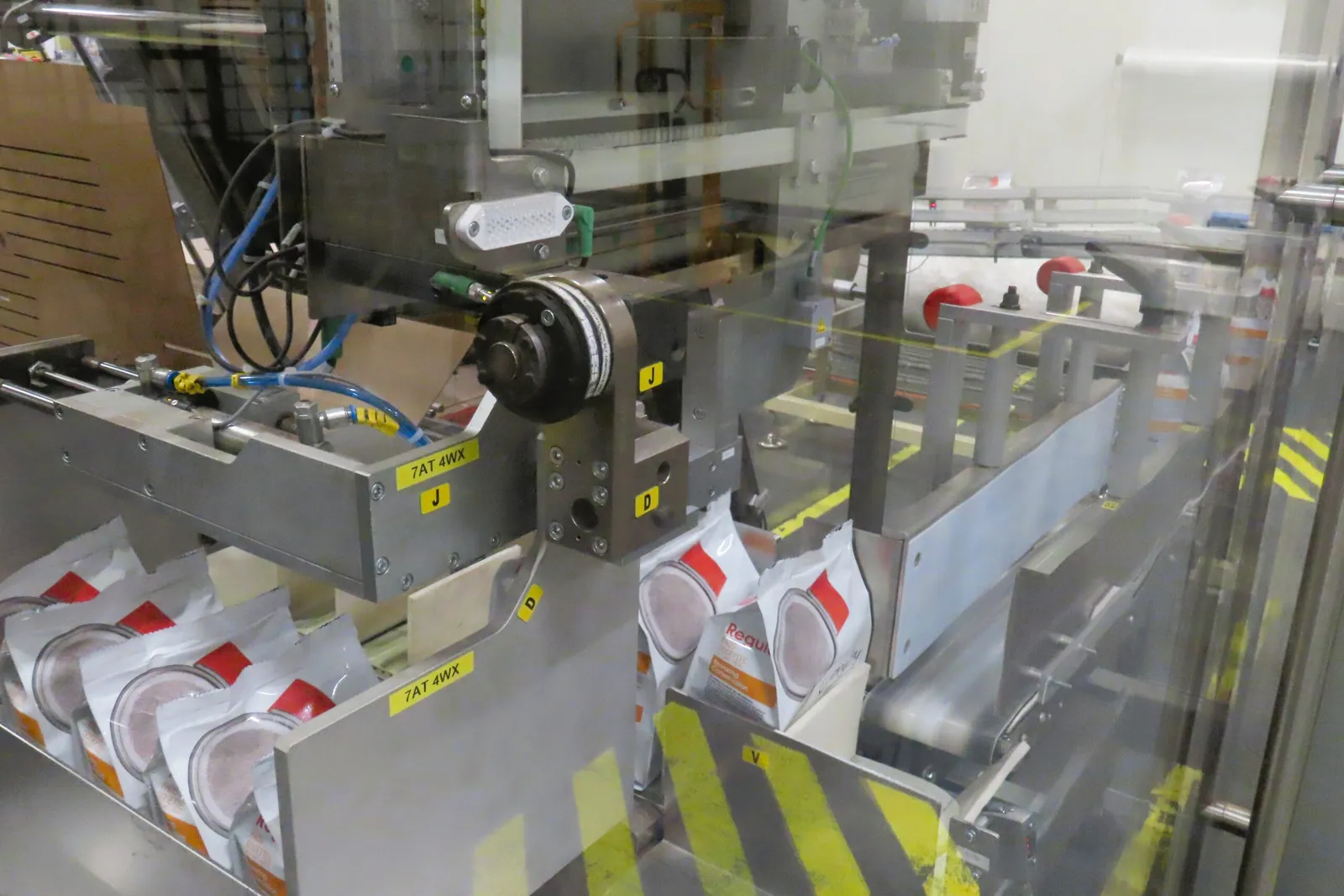
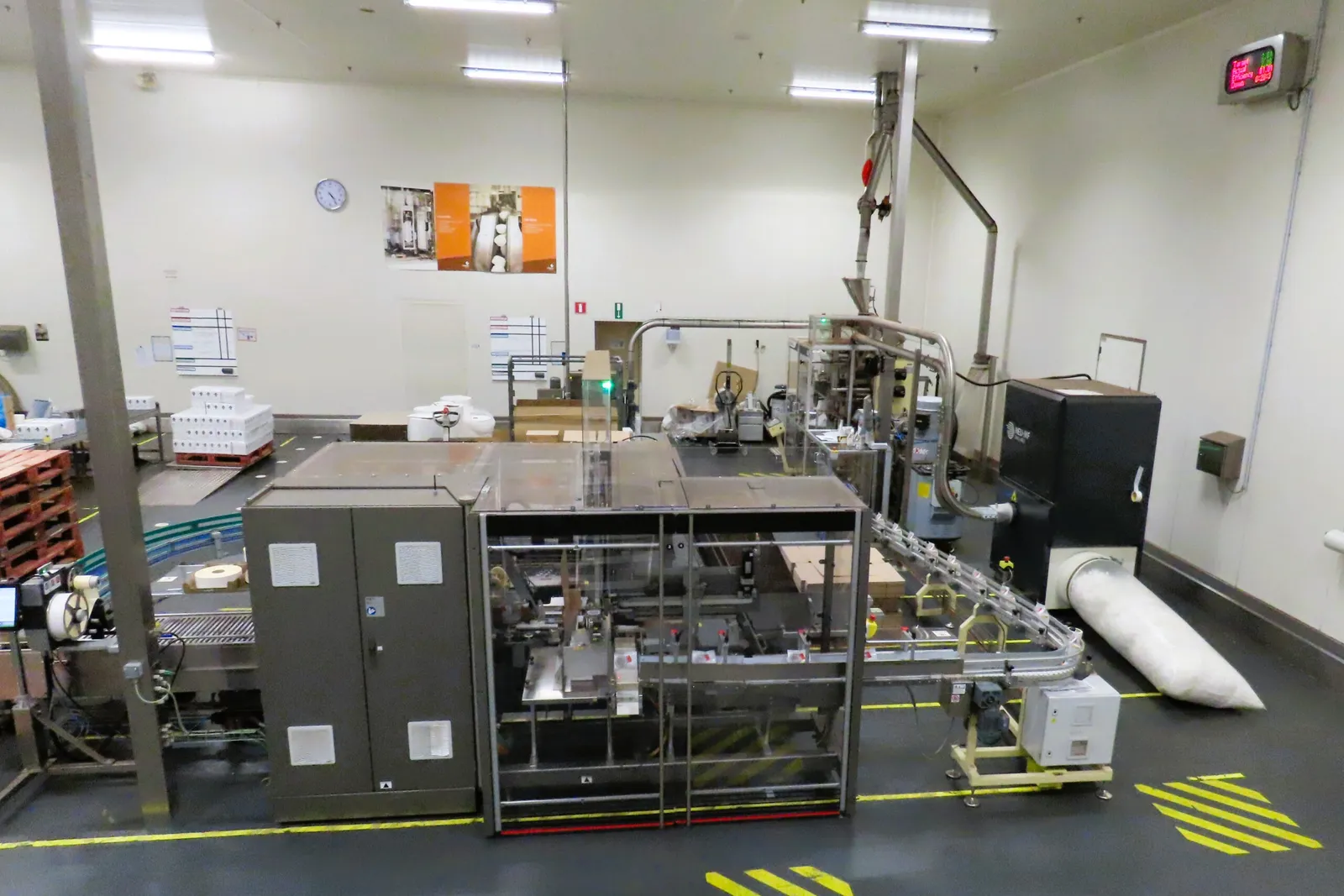
After sealing, precision blades cut each pad cleanly from the paper. The pads are stacked in cassettes (2×18, 36 in total) and transported as a set to a vertical flow wrapper. There, the corners and edges are sealed, with temperature controlled by zone to ensure that very thin, smooth films are sealed perfectly. The finished pack passes through a checkweigher and moves on to the case erector, which erects, loads and closes the cases.
Speed and stability in figures
- Speed: ~800 pads/min, stable on production days;
- Output: ~8,000 packs per shift as the standard target (range 7,500 to 9,000, depending on recipe and conditions);
- Downtime: reduced to ~6 to 7% (unplanned stops, excluding planned maintenance);
- Staffing: 1 operator on the line + 1 dedicated technician per shift (with supplier training and remote support via a secure connection);
- Materials: switch to thinner, smooth films; tight sealing reduces rejects, while clean seal edges limit product waste;
- Production runs at a steady pace, with less variation in output. The line is predictable, making planning and deliveries much smoother.
Safety, ergonomics and operation
Where the old line still had exposed mechanisms, the new installation is guarded and fitted with interlocked emergency stops and programmable safety logic. Operators use an HMI with parameters restricted by access level (operator, expert, manufacturer), preventing individual interpretations and uncontrolled adjustments. Machine operation is fully standardised: no individual tweaks, just recipes. This prevents errors and makes production reliable. This way of working also brings other benefits:
- Ergonomics: no more heavy trolleys from the roastery to the machine; raw material flow is automated;
- Operation: HMI with recipes, limited variables and standardised settings;
- Maintenance safety: interventions are standardised; no work on running machinery.
Process monitoring: from cutting quality to root cause
High-speed cameras are used in the cutting and forming zone for visual process monitoring. This monitoring has a clear engineering function: deviations, such as paper tracking, blade position or preformer timing, are located more quickly, unnecessary stops are avoided and root causes are addressed in a targeted way. “The cameras help us monitor cutting and forming at high speed. This lets us spot deviations sooner and make targeted adjustments,” says De Schinckel.
Maintenance as a stabiliser
The high speed and precision mechanics call for disciplined cleaning and inspection. Colruyt Group allocates one full 8-hour shift per week to planned maintenance: cleaning the drum and vacuum channels, checking precision components, overhauling blades and sealing units, cleaning micro-openings in fast-moving parts, validating settings and replacing wear parts on time. Maintenance is intensive, but this regime is precisely what keeps the line stable. The predictable, planned stop pays off in more stable operation and fewer unplanned stops. One dedicated technician is assigned per shift, having completed in-depth supplier training. Remote support is also available.
Sustainability and material choices
The new line supports material reduction and recyclability:
- Paper and film: designed for monomaterials and thinner films, with adapted conveying and sealing technology;
- Less product waste thanks to clean seal edges and precision cutting;
- No degassing valve needed thanks to prior degassing, meaning fewer components and simpler waste streams.
Collaboration and implementation
Colruyt Group worked with a central machine builder from Italy and its specialist subsidiaries for submodules. Together with Colruyt Group, they developed custom safety cascades (interlinked emergency stops across modules) and belts for thin films. Knowledge is also shared with industry peers on wear patterns and components at risk of failure.
Impact on the team and organisation
Over the past twelve months, the line’s teething problems have been systematically resolved through OEE sprints, in which the technical service team, engineers and operators jointly analyse scans and data, prioritise issues and turn them into action. Operators are involved in follow-up from an early stage and contribute observations that are immediately added to the improvement list. Organisationally, this has had a positive effect on key parameters:
- Engagement: operators actively take part in OEE sessions;
- Stability: recipes and restricted parameter access reduce variation between shifts;
- Comfort: ergonomic improvements (roll changes, side access for inspection) make day-to-day work easier.
Looking ahead
Palletising is still done manually. One possible next step would be to use a cobot to assist with this task, not to replace the operator but to reduce ergonomic strain. The team also sees opportunities in predictive maintenance: systematically linking sensor and HMI data could help detect wear sooner and optimise replacement schedules.
Result: faster, more efficient, more reliable, and proven in practice
After a year of intensive use, the pad line in Ghislenghien provides a stable production platform that meets market volumes and quality expectations:
- High throughput with low variation in output;
- Significantly reduced downtime;
- Faster analysis of breakdowns;
- Strong focus on ergonomics and safety to modern standards;
- Material savings and recyclable packaging choices;
- Process governance through recipes and role-based access.
Question about this story? Ask your question
Keep following this
Get an email when a new story is published. No account needed.
- ThemeBuilding and upgrading food factories
- SubjectTechnology







