












Palletising machines help transform food and beverage environments
Text Valérie CouplezImage iStock
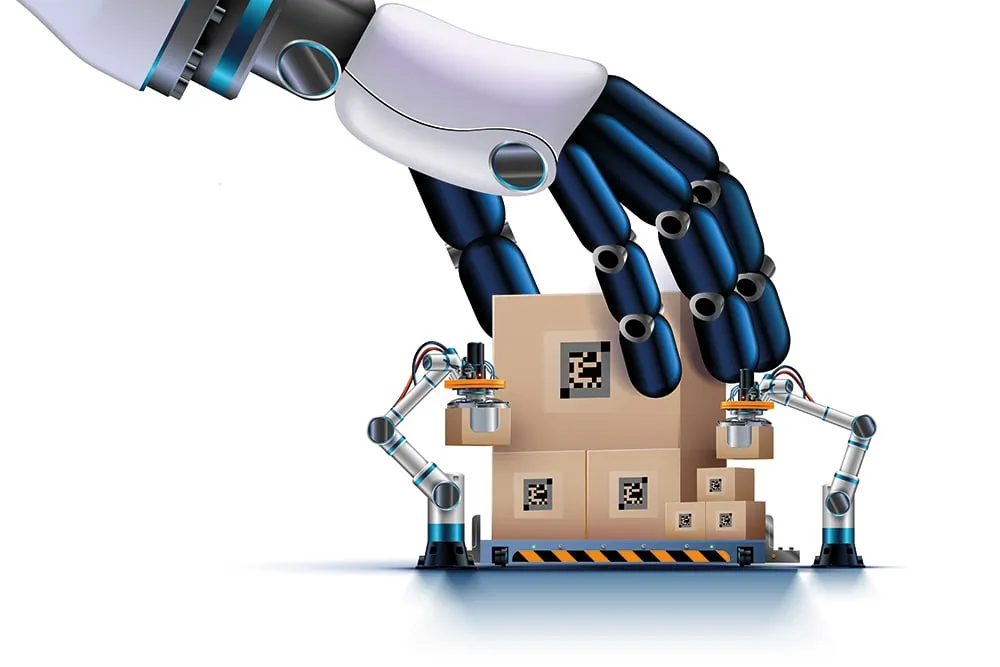
Labour shortages, cost inefficiencies and the drive for greater productivity are creating an urgent need for technological innovation in production. One potential game-changer is the introduction of palletising machines. They are transforming how food and beverage manufacturers handle products, streamline operations and drive growth. This article looks at how these innovative systems address critical challenges in the food industry while also improving safety.
Labour shortages are a global problem, and the food industry is no exception. It must adapt to the changing dynamics of the workforce. Manual palletising methods, which rely heavily on human labour, are particularly vulnerable to these challenges. How can you guarantee consistent production output and safety when staff are constantly changing? Automating the palletising process can also ease the burden on your employees. The tasks involved are often repetitive and physically demanding. You can then assign employees to tasks that require creativity, problem-solving or strategic decision-making.
Cost savings and efficiency gains
Traditional manual palletising methods are not only labour-intensive, but also prone to errors, leading to higher operating costs. Palletising machines, by contrast, offer precise handling, minimise errors and maximise throughput. By streamlining the palletising process, these systems reduce the risk of product damage, minimise waste and optimise material use, resulting in significant cost savings over time. With the ability to perform a wide range of palletising tasks quickly and accurately, palletising machines enable businesses to improve operational efficiency, increase profitability and achieve sustainable growth.
Improving safety
Safety is a top priority for many food and beverage companies. Manual palletising tasks often involve risks of injury, fatigue-related accidents and ergonomic strain, putting employees’ wellbeing at risk and reducing workplace safety. Palletising machines reduce these risks by automating repetitive and physically demanding tasks. By removing employees from hazardous working environments, palletising machines also create safer working conditions. They are themselves subject to strict safety standards and protocols, ensuring compliance with legal requirements and industry best practice.
Consistent quality
Delivering the same quality every time is essential to your brand reputation, particularly when it comes to product quality and integrity. Manual palletising methods are inherently prone to variation, resulting in inconsistencies in pallet loads, product stacking and pallet stability. This can lead to damaged products, rejected shipments and customer complaints. Palletising machines, by contrast, provide precise control over the palletising process, ensuring uniformity, accuracy and consistency in pallet formation for shipment. Using advanced sensors, algorithms and robotics, these systems can detect product variations, adjust palletising parameters in real time and optimise pallet configurations to maximise load stability and minimise product damage.
Optimising efficiency and scalability
Palletising machines offer unparalleled speed, accuracy and flexibility, enabling manufacturers to adapt flexibly and precisely to changing production requirements. They can handle a wide range of product types, packaging formats and pallet configurations, allowing businesses to accommodate different product lines, production schedules and market requirements. They can also be easily integrated into existing production lines, enabling palletising processes to be automated seamlessly without disrupting ongoing operations. In addition, palletising machines allow businesses to scale their operations effectively in response to market growth, fluctuations in demand and expansion opportunities. Whether increasing production volumes, launching new product lines or entering new markets, manufacturers can rely on palletising robots.
Question about this story? Ask your question
Keep following this
Get an email when a new story is published. No account needed.
- SubjectTechnology







