












Smart factories in the food industry: automation, data and AI in practice
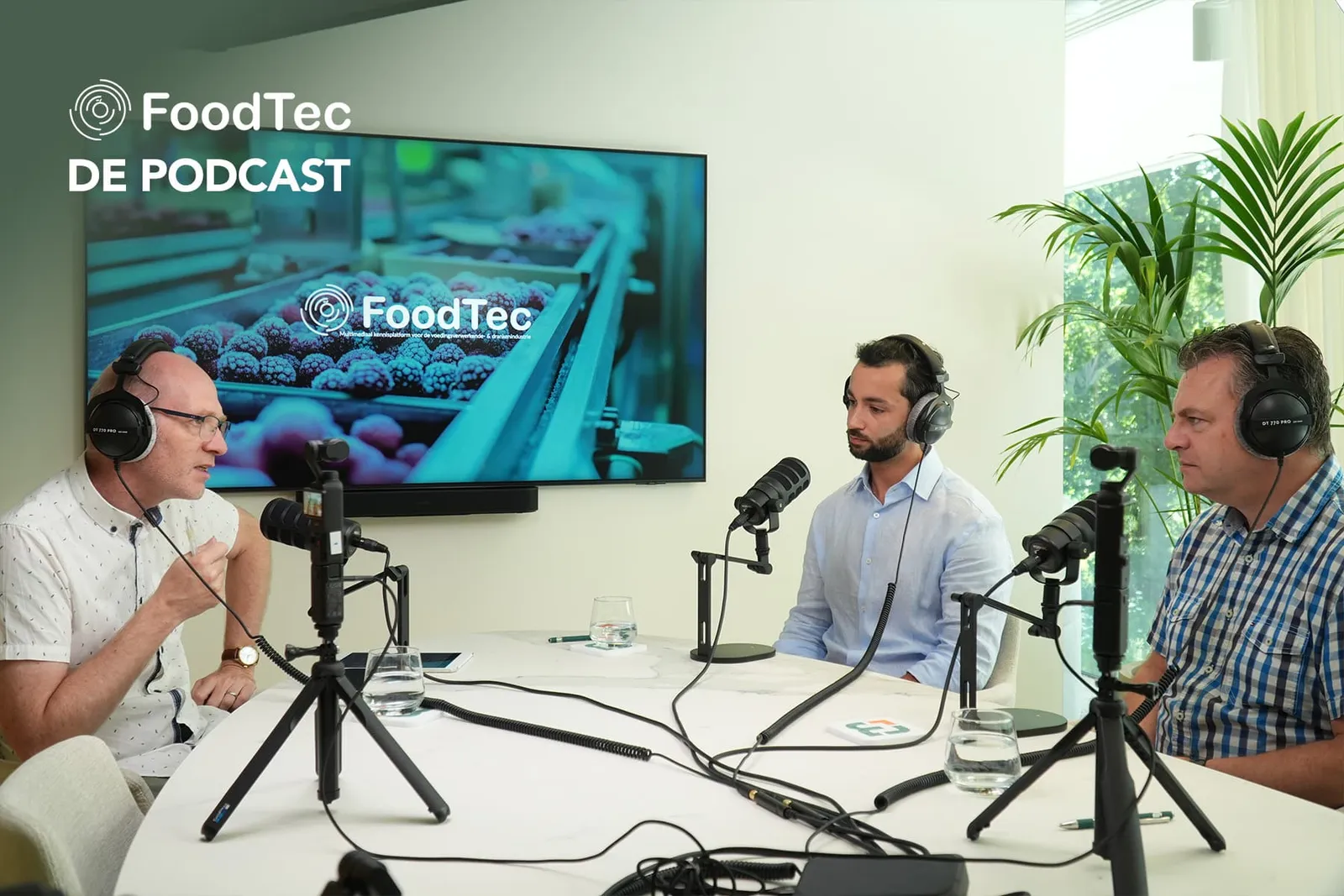
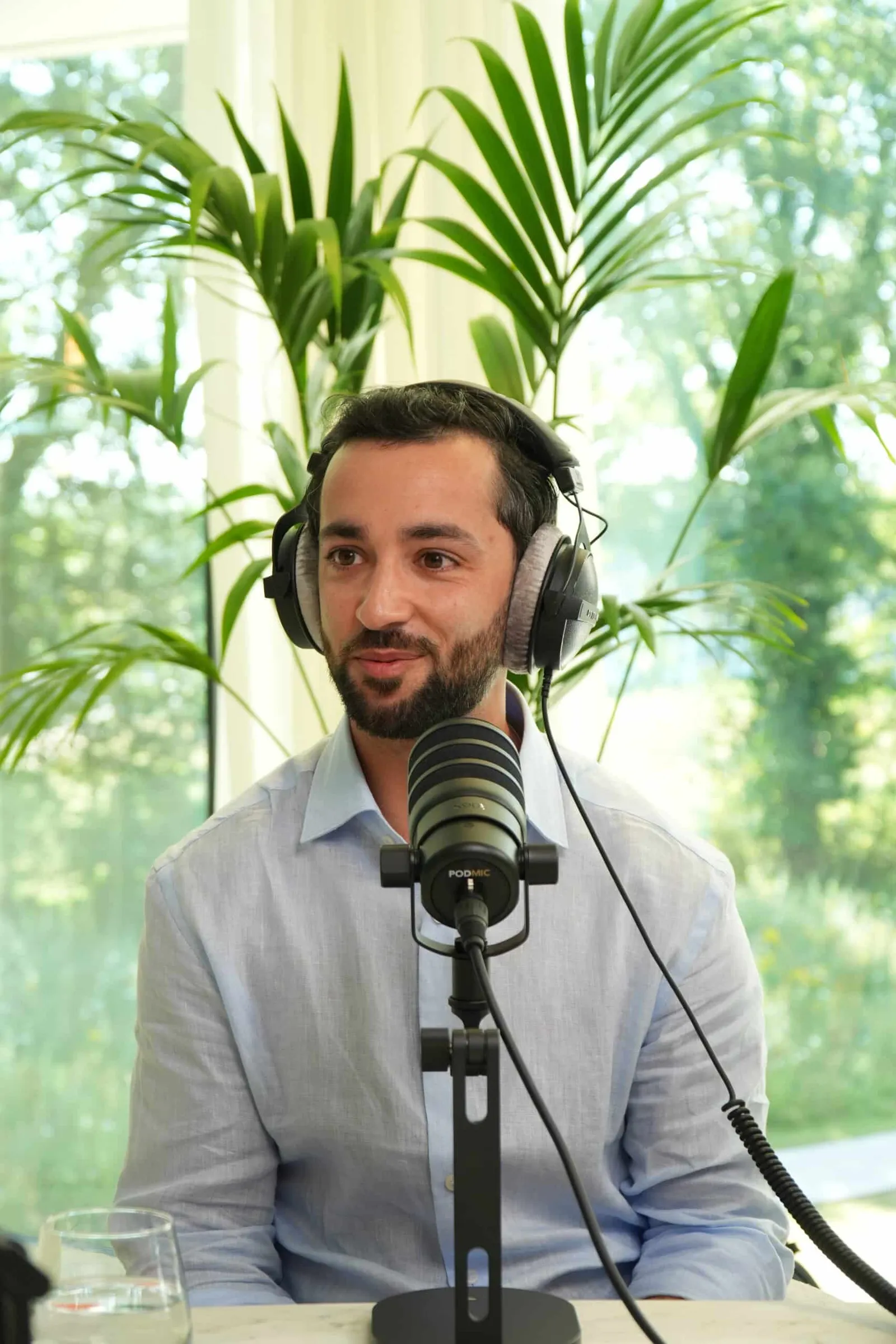
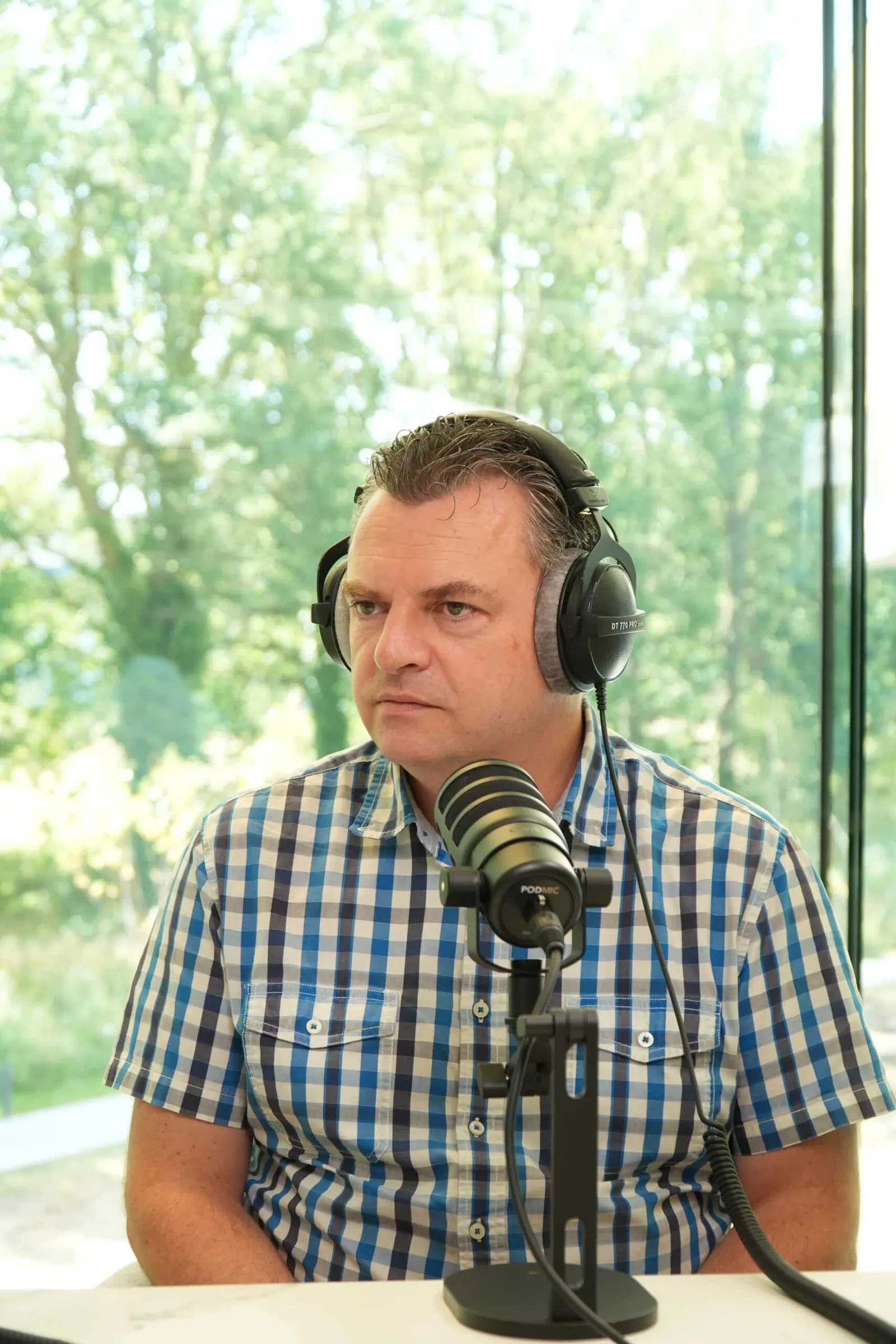
How are food companies building the factory of the future? Björn Crul talks to Werner Fransen and Samir Barrahmun of Yitch about automation, digitalisation, data quality, AI and the pitfalls of digital transformation. They explain why a strong business case, engaged operators and a step-by-step approach are essential for smarter, more efficient and more sustainable production.
Een zakelijke vraag aan Yitch? Get in touch
Full transcript
All chapters (31)
- Factories of the future
- Producing more smartly and sustainably
- Building blocks of the smart factory
- Digital transformation and scale
- The analysis phase
- Roadmap and scaling up
- Greenfield and brownfield
- Project team and iterative approach
- Bespoke or standard solutions
- Support and continuity
- Investments in machinery and software
- ROI of SaaS and digitalisation
- The importance of the business case
- Specific challenges in the food sector
- Unlocking and structuring data
- The data foundation
- Process optimisation without AI
- Sustainability reporting
- The first step towards using data
- AI applications in the food sector
- AI for process optimisation
- The changing role of line operators
- Training and support
- The evolution towards dark factories
- Pitfalls in digitalisation projects
- Solutions, buy-in and continuity
- A strategic choice
- No big bang
- Continuously adjusting and optimising
- Closing
- More information
Factories of the future
Björn Crul Hello, listeners. Welcome to this new Foodtec podcast. Food companies today face a dual challenge. On the one hand, they must deliver high-quality, food-safe products while also becoming smarter, faster, more efficient and more sustainable. All this must preserve profitability and facilitate long-term growth. Automation, digitalisation, data and AI are no longer just buzzwords, but the foundations of what we call factories of the future. What does a digitalisation strategy involve, and what pitfalls should you avoid? I'm Björn Crul, and today I'm discussing this with Werner Fransen, Co-CEO of Yitch, and his colleague Samir Barrahmun, Strategic Account Manager. Gentlemen, welcome to our studio.
Werner Fransen Thank you.
Producing more smartly and sustainably
Björn Crul Samir, let me start with you. Today's topic is factories of the future, which are already being developed at full speed. How would you describe such a factory? What should we imagine?
Samir Barrahmun Factories that enable us to produce more smartly, efficiently, quickly and sustainably. I think they also help ensure that we can continue producing locally.
Björn Crul And technology plays a very important role in that?
Samir Barrahmun Yes, absolutely. I think it's essential to help us maintain that efficiency, but also to keep managing those processes. If we don't know how efficiently or sustainably we're producing, it's very difficult to optimise those things. So it's certainly important.
Building blocks of the smart factory
Björn Crul We're talking about automation, digitalisation and making more use of data and AI. That's your business. So tell us how you view the different elements of such a strategy.
Werner Fransen For us, these are different building blocks that ultimately lead to the smart factory. Perhaps I can add something to what Samir just said. The aim is to help our customers, manufacturing companies, produce close to their consumers. We do that by using these building blocks intelligently. For us, automation means controlling the machines, production lines and process equipment in those factories. This is typically done using PLC programming, SCADA applications and so on. Digitalisation means digitising business processes on the shop floor. Here, you mainly need to look at operators. They write down and enter a lot of information in Excel files and notebooks. We centralise that in a single platform, making it easier to control and manage.
Björn Crul So, going paperless?
Werner Fransen Going paperless means ensuring full traceability of everything. It also means optimising and digitalising quality testing.
Björn Crul Planning production orders and so on. Could you also start using AI in a later phase?
Werner Fransen A lot of data is collected by all those systems. You can then use that data to generate smart insights for your management, operators and anyone else working in your company.
Read the full transcriptCollapse transcript28 more chapters
Digital transformation and scale
Björn Crul From your perspective on the Belgian food sector, are our companies pioneers in what I would call digital transformation?
Werner Fransen I think Belgian and Dutch companies are certainly pioneers in digitalisation. Compared with other countries, even elsewhere in Europe, we see a strong focus on these systems and on automation.
Björn Crul But you probably need a certain scale to be able to invest in this.
Werner Fransen A certain size is obviously important to be able to make these investments. You also need a certain organisational structure to bring a project like this to a successful conclusion. But there are also solutions that can help smaller companies and SMEs, or provide solutions for them.
The analysis phase
Björn Crul Yitch has a great deal of experience with automation and digitalisation projects across a wide range of industries, including the food sector. What is the ideal way for you to run a project like this? How do you prefer to approach it?
Werner Fransen We prefer to start by gaining a good understanding of the customer's problem. We typically do this by starting with an analysis phase. We work together with people from our customer, or their employees. That means people on the shop floor as well as management. We want to understand everyone's needs very clearly so we can develop a successful project or concept. With management, we look at where they want to be in the long term and what their strategy is. We want to know from the operations director what they would like to improve in production. And you really shouldn't underestimate the operators. We need to capture the challenges they face. We need to work with them to see how we can improve things. It's essential to involve these people from the outset.
Roadmap and scaling up
Björn Crul Samir, that's the first phase, the analysis phase. What happens next?
Samir Barrahmun I think that after the analysis phase, we draw up a roadmap based on the requirements that emerge. It's a comprehensive roadmap, with a business case attached to each step, which we can then implement step by step. In the project phase, we typically start with small steps. We often begin, for example, by digitalising or automating a single line. We then scale that up across the factory, to the rest of the site and potentially to other sites as well.
Greenfield and brownfield
Björn Crul Is there a major difference between building a completely new factory and digitalising or automating a line in an existing factory?
Samir Barrahmun Both have advantages and disadvantages. With a greenfield project, you can typically start with a blank sheet of paper. You work entirely with new machines and new systems. The analysis phase is still very important, of course. We still need to draw up a very solid plan and roadmap. But I think it makes things a little easier at the start. In brownfield projects, as Werner also said, involving the operators is especially important. They can explain that certain processes work in a particular way for a particular reason, and provide that context. That's something we can apply more easily in brownfield projects.
Project team and iterative approach
Björn Crul Werner, you always work with a project team on your projects, which also includes people from the customer. Who should be around the table, and why is that project team so important?
Werner Fransen That's the logical next step after the analysis phase. During that phase, it's also very important to involve the right people from the customer. You need to carry that through the entire implementation process. It's certainly important to have enough people around the table who understand their process, know how production works, know their products and understand the impact of any changes we may make. It's also important to have management at the table. They should be represented at steering committee meetings so they can keep a close eye on the project, and so it remains and becomes a strategic project for them.
Björn Crul Does that mean you sometimes have to make changes or adjustments as you go along?
Werner Fransen Absolutely. That's also characteristic of these kinds of projects. We often work iteratively, showing customers things in short iterations. We start with a particular idea, but our understanding develops as we go along. If you can incorporate those insights through an iterative way of working, you can arrive at the best solution for the customer.
Bespoke or standard solutions
Björn Crul Samir, when developing the solution, do you tend to opt for bespoke systems or more standardised solutions?
Samir Barrahmun Yes, that's often a question that comes up very early in discussions with potential customers or partners. We try to start with standard solutions as much as possible. That simply has a number of advantages. Updates are easier to implement. Rolling it out to other sites is easier. Implementation is also easier. But at Yitch, we fully understand that for many manufacturing companies, particularly food companies, the process itself can be a source of competitive advantage. We can certainly look at how to support that process. I think Yitch is brand-independent. We work with different hardware and software, so we can always choose what best suits a specific customer. That also means we're not limited when it comes to applying a degree of bespoke development.
Support and continuity
Werner Fransen I think it's important that we work with standard platforms. We also need to be able to continue supporting those customers afterwards. We have a whole support team working on this today, our continuity team. The closer we stick to standard solutions, the easier it is for them to provide support. If you use too much bespoke development, you have to keep investing too much in training those people so they can continue to provide good support.
Investments in machinery and software
Björn Crul You may have machines or production lines that are upgraded. But this often also involves a software layer, giving you a combination of investment, capex, but with an opex component as well. Werner, how should finance teams in these companies deal with that? And what issues do you sometimes encounter?
Werner Fransen Those are indeed often challenges. You know exactly how much each brick costs, and you can also see the building going up. It is easy to calculate the cost of the building. The same goes for a production line. You have a specific investment cost, and you know how much extra the line will produce, so you can calculate your ROI very easily. And the more you move towards software solutions, which are absolutely essential in smart factories today, the less directly measurable the ROI becomes.
ROI of SaaS and digitalisation
Björn Crul And presumably that is especially true for SaaS?
Werner Fransen Definitely not easy to measure for SaaS or digitalisation solutions. So you really have to look at where you can make efficiency gains. But here too, we work very closely with the customer to look at their process. Suppose we could eliminate that problem with a software solution. What would that be worth to you? We try to estimate that as accurately as possible. That often helps them make smart choices.
The importance of the business case
Björn Crul Yes, it is about much more than simply thinking about digitalisation. You also have to think about the business case.
Werner Fransen Absolutely. Everything depends on having a good business case. If you do not have one, you will never deliver a good project. Or you may start a project, but it will be stopped halfway through because people no longer believe in it.
Specific challenges in the food sector
Björn Crul Food companies face a number of very specific issues, including requirements around traceability, food safety and labelling. They also need to be able to produce very flexibly, in smaller or larger packs, perhaps with different product formulations. On top of that, there is everything related to sustainability: reducing water wastage and being highly energy-efficient. The solution often lies in smarter production and using real-time insights. The question, of course, is whether that data is easy to find. Do companies actually have it?
Unlocking and structuring data
Werner Fransen Companies have huge amounts of data. The biggest problem is that it is often held in systems or siloed. Our job is to make that data accessible. It is very important to bring the data together in one central layer, on one central platform, but above all to structure it. That is indeed the future, and everyone needs to be working on it and thinking about it.
The data foundation
Björn Crul But you first need to get your foundations in order.
Werner Fransen First, you need to get your foundations in order. You need to make sure the data is available, high quality and properly labelled. Once you have all that, you can start doing smart things with AI, for example. But do not underestimate what you can already do with data today, simply by applying statistics and analysing it. AI has become a bit of a buzzword that everyone likes to use, but there are so many straightforward things you can already do today.
Process optimisation without AI
Björn Crul Can you give an example of a company where you have achieved immediate results in a very straightforward way, simply by bringing data together?
Werner Fransen Yes. Many of our customers already collect data in historians and time-series databases. It is very easy to analyse that data and see how your process is evolving. Even without using AI, you can apply some statistical calculations to identify the optimum process and see how far your current process deviates from it, then make adjustments accordingly. You do not even need AI for that.
Sustainability reporting
Björn Crul You mentioned earlier that you need to bring data together from those silos. That is becoming very important for larger companies today, given the European CSRD rules requiring sustainability reporting. Not just for companies themselves, but often for their customers too. I imagine that makes everything even more complex.
Werner Fransen Yes, I think what makes it more complex above all is the huge administrative burden involved. That is what companies are mainly concerned about and find daunting. But a lot of this data is already available in the systems used in production companies today. You can automate a great deal and make it easier to produce those reports. And you can see that many companies are giving this a lot of thought today.
The first step towards using data
Björn Crul Samir, what is the first step a food company should take to make real use of its data?
Samir Barrahmun Well, I think the first step, as Werner just mentioned, is to make the data accessible. A lot of data is already logged in different systems, and is sometimes already in the various machines and PLCs too. So I think that is really the first step. After that, you need to ensure data quality by standardising the data. Which data will be useful to your company? Where are we going to collect all that data? How are we going to contextualise it? A vibration measurement from one machine, for example, does not mean the same thing as a vibration measurement from another machine. And which data does your company need? It may be much more important to you than it is to other companies. So I think that is the first step.
AI applications in the food sector
Björn Crul Werner, you mentioned this earlier. AI is a hot topic in every boardroom. The question, of course, is whether you are already seeing AI applications in the food sector that are delivering results. We often hear that a lot is happening with AI, but that there is still a way to go before it can be scaled up and deliver results.
Werner Fransen Absolutely. AI is already being used in vision applications. Many companies have cameras that, for example, film potatoes. Based on those images, they can assess the quality and size of each potato. They can then make smart decisions about what to do with them next, such as whether to sort them or do something else. AI for vision is already being used extensively by many companies today.
AI for process optimisation
Werner Fransen Next, we will use AI for process optimisation. We will look at when our process ran at its best in the past. Which batch was produced perfectly? All that data is available. If you can then compare the data you are generating during production today with that golden batch and see how much it deviates, you can use AI and other applications to make rapid adjustments.
Björn Crul Samir, one question that arises, of course, is this: the more companies invest in automation and digitalisation, the greater the initial impact on line operators will be.
The changing role of line operators
Björn Crul How do you see things today? Are the profile and skill set of line operators changing in these smart factories?
Samir Barrahmun Yes, I think there are really two sides to it. On the one hand, things are becoming easier for operators and for people from all walks of life, simply because smarter systems can guide operators through the process more easily. So, on the one hand, it is becoming easier for factories to recruit people. On the other hand, the role is also starting to change. We are seeing many operators currently spending more time carrying out tasks during the process and monitoring it with the help of AI. AI or machine learning might, for example, say: “Last night the line ran in this way, and that was due to this cause. So I suggest producing a little more slowly during the afternoon shift to avoid downtime.”
Training and support
Björn Crul Werner, what does that mean for the operators in the projects you carry out? Do you also provide training, for example?
Werner Fransen Certainly. Training is important, but so is supporting people through the change. By involving them from the outset, we bring them along throughout the whole process, and they become co-owners, in a way, of the project and the new implementation. That means they are trained along the way. We also, of course, make sure they are properly prepared through training on the new factory, so they can work with it effectively.
The evolution towards dark factories
Björn Crul If we take that a step further, the question is how these smart factories will continue to evolve in the future. Are we heading towards so-called dark factories, where only robots and automation are needed?
Werner Fransen We will certainly see factories become highly automated. That will mean certain parts of the factory can operate without people. On the other hand, perhaps that is not necessarily something we should be afraid of. Many companies are already operating with fewer people today, but that is actually enabling them to grow. They have been able to produce more with the same number of people, simply by deploying those people elsewhere. They have enabled them to focus on tasks that add more value. They are no longer picking a sandwich up off the floor because it has fallen off the line, for example. Instead, they can look at how to improve quality. Can they carry out additional quality tests? Can they ensure the end customer gets a better product? Roles will change. People will change. Factories may become partly dark factories, to use a term that is not very popular. But that does not necessarily mean they will operate without people.
Pitfalls in digitalisation projects
Björn Crul Digitalisation projects do sometimes fail. I certainly do not want to comment on Yitch specifically, but it is something that can happen in general, let’s say. Based on your experience, what pitfalls should companies look out for to prevent things from going wrong, Samir?
Samir Barrahmun Well, I think Werner touched on this a little at the beginning. Our approach is to start with an analysis phase. Where am I now? Which existing systems am I already using? Do I want to keep using them? What requirements do we need to meet during the process? And what are our business objectives as a company? For one company, for example, producing quickly may be more important. For another factory, producing flexibly may be more important because it wants to respond more quickly to market demand.
Solutions, buy-in and continuity
Samir Barrahmun Don’t start by looking at which product to choose. First, look at the solutions available. I think a second point is to involve as many people as possible from different levels of the company, from management through to the people on the shop floor, the operators. You can make a solution as good as you like, but if the people on the shop floor don’t want to use it, it will never be successful. And I think, thirdly, you need to see it as an ongoing process. It’s never really finished, so to speak. It’s actually just the start. And you need to keep optimising as you go.
A strategic choice
Björn Crul Werner?
Werner Fransen Yes, I don’t think I can add much. The only thing I would add is that a digitalisation project, or the building of a smart factory, must be a strategic choice made by management. The organisation also needs to be fully geared towards it. And what we see with customers who do that is that their projects get under way and succeed. Companies that see it as, “We’re going to implement software” don’t give the project the attention it needs at that point. You really have to see it as a business project, not an IT project.
No big bang
Björn Crul And perhaps it often comes down to the fact that people try to work towards a kind of big bang, switching from one system, or no system at all, to a new system overnight. What would you advise?
Werner Fransen That analysis often also points to the best approach. It comes back to the organisation. The organisation needs to be able to handle it. So it’s often much smarter to ask: which smaller components should we start with? What’s the priority? What will deliver the most value at the start? Then you can gradually expand. And don’t dream too big either. Start small. Learn during the project, during the process. Then expand further.
Continuously adjusting and optimising
Björn Crul That almost naturally leads to the fact that the process is never finished.
Werner Fransen Customers evolve, and so do the products that need to be made. That means you have to keep adjusting. That’s why we also have a continuity team within our company, to ensure production or business continuity, but also to keep optimising these smart factory projects.
Closing
Björn Crul Werner Fransen, Samir Barrahmun, may I thank you both for this interesting conversation?
Werner Fransen and Samir Barrahmun: Certainly, thank you.
More information
Björn Crul You can already do a great deal with data before you move on to AI. Would you like to find out more? Visit our website, Foodtec.be. Thanks for listening, and until next time.
Companies in this story
Keep following this
Get an email when a new story is published. No account needed.
- ThemeSmart production with data
- SubjectTechnology
- CompanyYitch







