












The right pump for the application
Text Valérie CouplezImage iStock
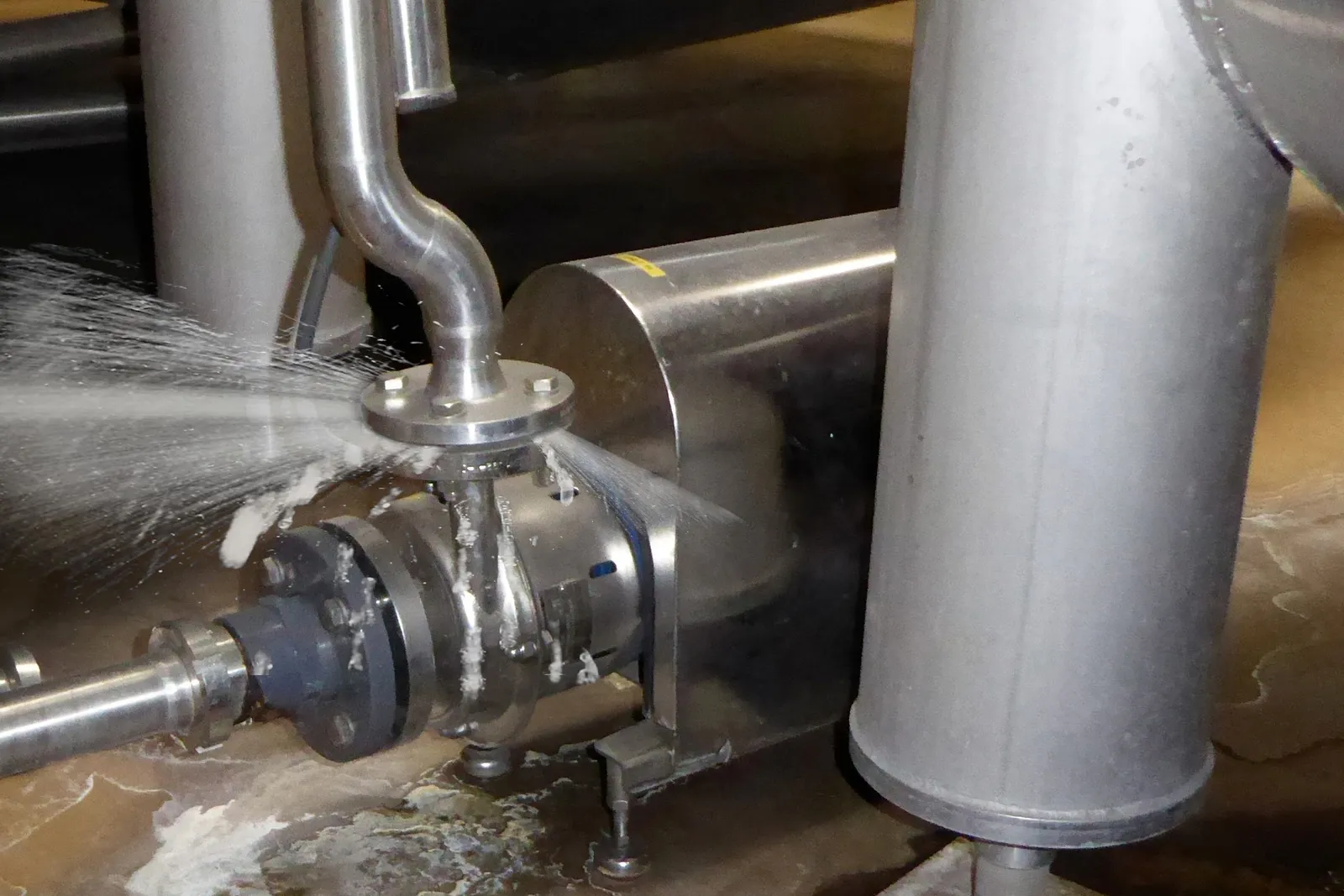
Every food business has a story about process equipment that left a bitter aftertaste. For example, operators ran a viscous product through a centrifugal pump designed for low-viscosity liquids to make way for a new product. They discovered that the tomato pieces had turned into tomato soup. Or a technician accidentally closed a valve in the discharge line of a gear pump, causing the pressure to rise, damaging downstream equipment and sending mayonnaise across the floor. In many cases, the pump itself is not to blame: the wrong type of pump has been selected for the application. So which one should you choose for your application?
The traditional design of an air-operated double-diaphragm pump resembles the number eight. After the inlet, the pipework splits into two sets of pipes leading to liquid chambers on either side of the pump. Air pressure is supplied in the centre and, via valves, causes two diaphragms to move back and forth. This movement alternately creates pressure and suction in the chambers. Ball valves prevent backflow. This type of pump can handle products across a wide range of viscosities. It can pump both low-viscosity liquids and very viscous products, from water to peanut butter. Unlike rotary pumps, double-diaphragm pumps are unaffected by suspended particles and abrasive products. They can handle large solids without cutting them up or reducing their value. Another advantage is that they can run against a closed valve (deadhead) without causing damage, because the pump stops when the pressure in the discharge line reaches the operating air pressure. They generate suction without needing to be primed and can draw products several metres ‘dry’, for example from the top of a vessel. Dry running is not a problem, as there are no rotating parts that can overheat. One drawback of this design is pulsation in the discharge line. Double-diaphragm pumps may be less suitable for precise filling applications that require constant inlet pressure. Another drawback is the time needed to dismantle this type of pump for cleaning or maintenance. The two sets of pipes contain many parts and bolts that must be removed before the diaphragms can be accessed. A newer alternative routes the process fluid through the centre of the pump and the air around the outside. An operator can then reach the internal parts by removing a single large nut. This design eliminates additional pipework and provides a central mounting point in the pump assembly.
Lobe pumps
Lobe pumps are rotary pumps. Their rotors can have rounded or pointed lobes. The process fluid enters through the centre. As the twin rotors turn, they carry the product along the pump casing wall and force it out through the discharge port. This is a gentle processing method. Lobe pumps have large chambers that can pump large solids and particles without damaging the product. Lobe pumps are usually cleaned by CIP. In some applications, such as pumping minced meat, CIP is not sufficient and manual cleaning is used. For these applications, a lobe pump suitable for COP (Cleaning Out of Place) is important. These designs have fewer parts and can sometimes be dismantled without tools. Hygienic lobe pumps are available in a range of sizes, with a wide range of flow rates. Very low flow rates are sometimes needed in the food industry, and smaller lobe pumps can be ideal for these applications. They are suitable for a wide range of products, including highly viscous and shear-sensitive products, even at high flow rates.
Gear pumps
There are two types of gear pump: the external gear pump, with two synchronised gears, and the internal gear pump, with an inner and an outer gear.
Despite their different mechanical designs, they share the same characteristics and benefits. Gear pumps are often used for low-viscosity liquids, especially lubricating fluids such as oils, fats and glycerine. They can also pump moderately viscous products and are relatively inexpensive. This technology has a single drive shaft. Most gear pumps are small to medium-sized and offer less size variation than lobe pumps. They are ideal for dosing applications because of their consistent, repeatable output. They are usually cleaned by COP because of their mechanical design.

Centrifugal pumps
Centrifugal pumps have an impeller that moves the process fluid in the direction in which the impeller is rotating. They are particularly suitable for high-flow, low-pressure applications. They are usually used for low-viscosity liquids. Their high speed and impeller design can damage solid particles. Cleaning is generally done by CIP; many CIP systems use centrifugal pumps to circulate the cleaning fluid. Manual cleaning is possible but time-consuming. They usually run at 1,750 or 3,500 rpm. Higher speeds increase the flow rate, but also increase wear and shorten service life. They have suction capability, but it is limited. When deadheading, the same fluid continues to circulate in the pump chamber and heat up, which can cause damage.
Twin-screw pumps
Twin-screw pumps are a relatively new category. They are highly precise and handle shear-sensitive products without loss of quality. Highly viscous products and solids are no problem. Unlike other pumps, they can pump products containing up to 60% entrained air, which can cause cavitation in other pumps. They are usually cleaned by CIP; manual dismantling is time-consuming. A key advantage is their versatility: they function as two pumps in one. They can pump low-viscosity liquids at high speeds (up to 4,000 rpm) and viscous products at low speeds. They can also pump CIP fluid at the correct speed, cleaning both the pump and the pipework. They also have good suction capability.
Progressive cavity pumps
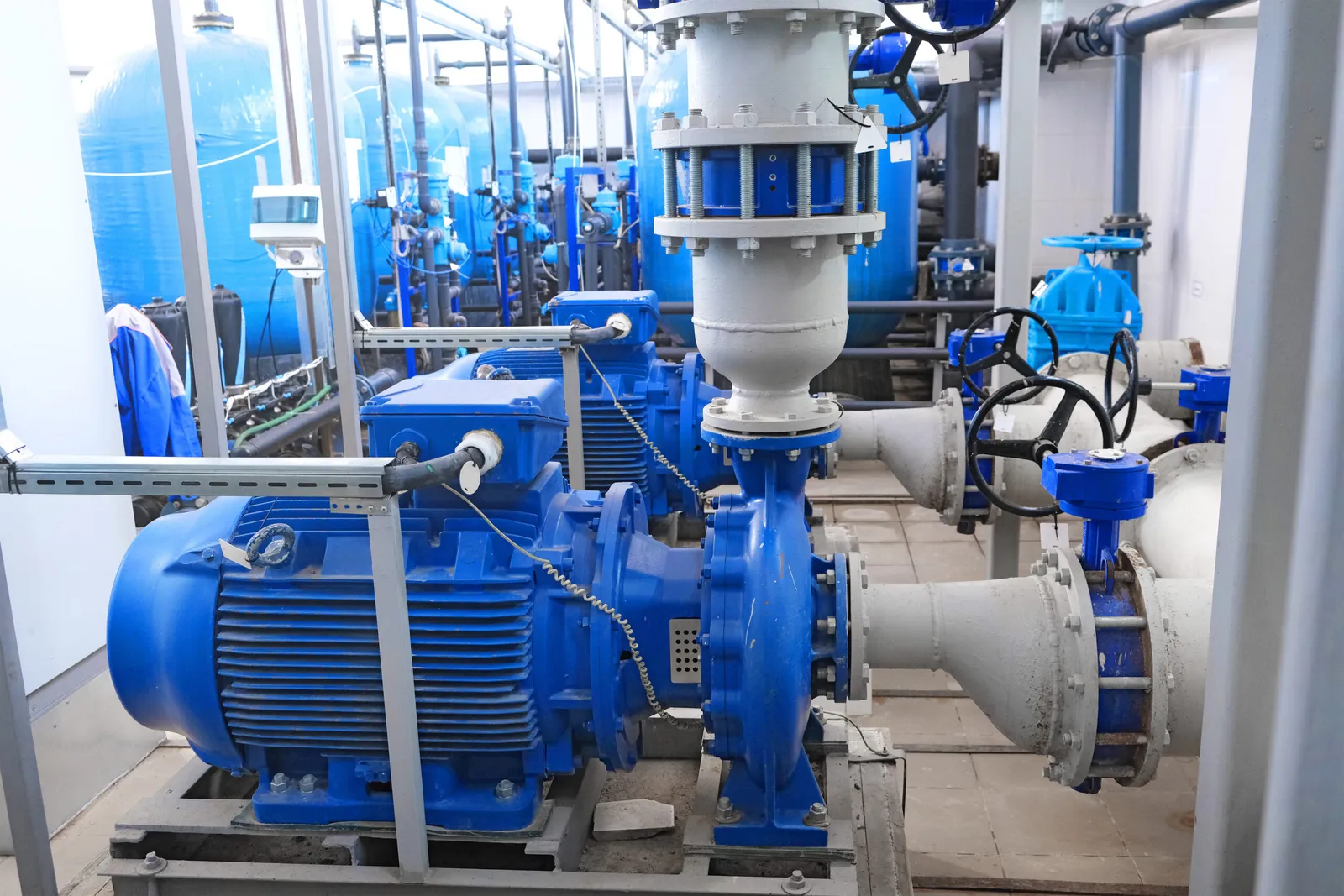
This type of pump uses a long, helical rotor and a flexible stator. As the rotor turns, the fluid moves forwards through cavities between the rotor and stator. They operate gently and are suitable for shear-sensitive materials. Large solids are no problem. They are ideal for very viscous products because of their high pressure capacity and ability to pump over long distances. They have good suction capability and are suitable for drawing products out of containers. One drawback is that dry running can cause damage, because the rotor and stator are in constant contact and require lubrication. Friction and heat can damage the stator. CIP is difficult; manual cleaning is usually required. Some brands are suitable for CIP with external pipework. Because of their length, they take up more floor space than other pump types.
Every application is different
Good engineering requires an understanding of the technologies available and their optimum applications. By understanding the advantages and disadvantages of these six commonly used pump types in the food industry, operators can select the right pump for their application.
Question about this story? Ask your question
Keep following this
Get an email when a new story is published. No account needed.
- SubjectTechnology







