












We do it together, and we do it smart
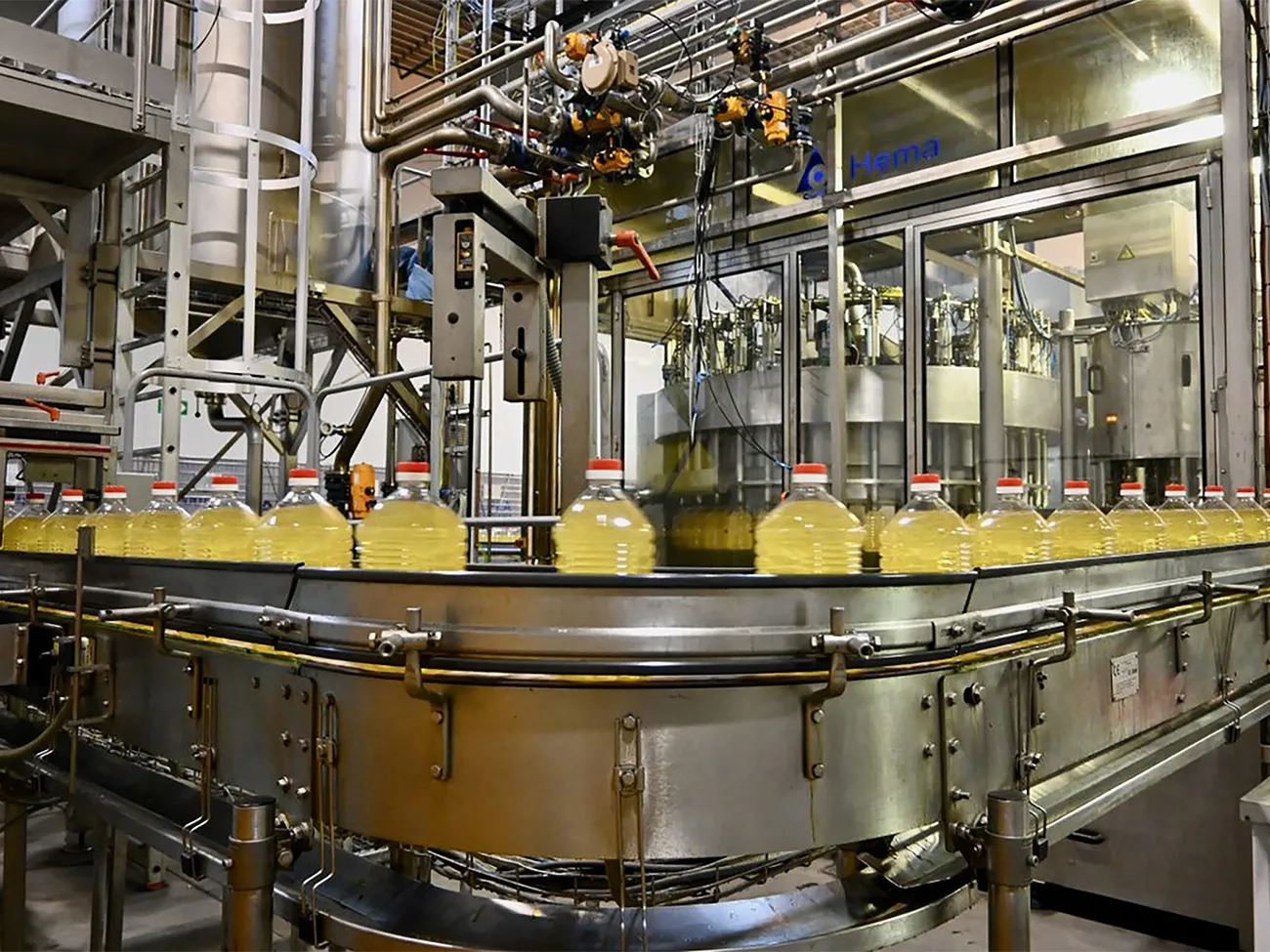
Whatever you take a bite of, there’s a good chance it contains an ingredient from Cargill. The world’s largest family-owned business has around 160,000 employees. For more than twenty years, the production site in Izegem has been refining vegetable oils and fats for various segments of the food industry. In recent years, the company has already invested heavily in state-of-the-art production facilities, automation and process improvements to work more flexibly and deliver higher quality. But it was the focus on the ‘why’ that really made the difference. The goal: world-class production.
At Cargill Izegem, around 55,000 tonnes of oils and fats are refined and bottled each year. A million bottles are filled every day. The ‘Factory of the Future’ label gave the company the perfect incentive to strive for world-class production. But it all started with establishing a benchmark. Where are we today? What is holding us back from taking that next step? What can help us overcome those barriers? And, above all, what will it deliver? The challenge was taken up with the three Ps in mind: purpose, people and processes.
In a nutshell
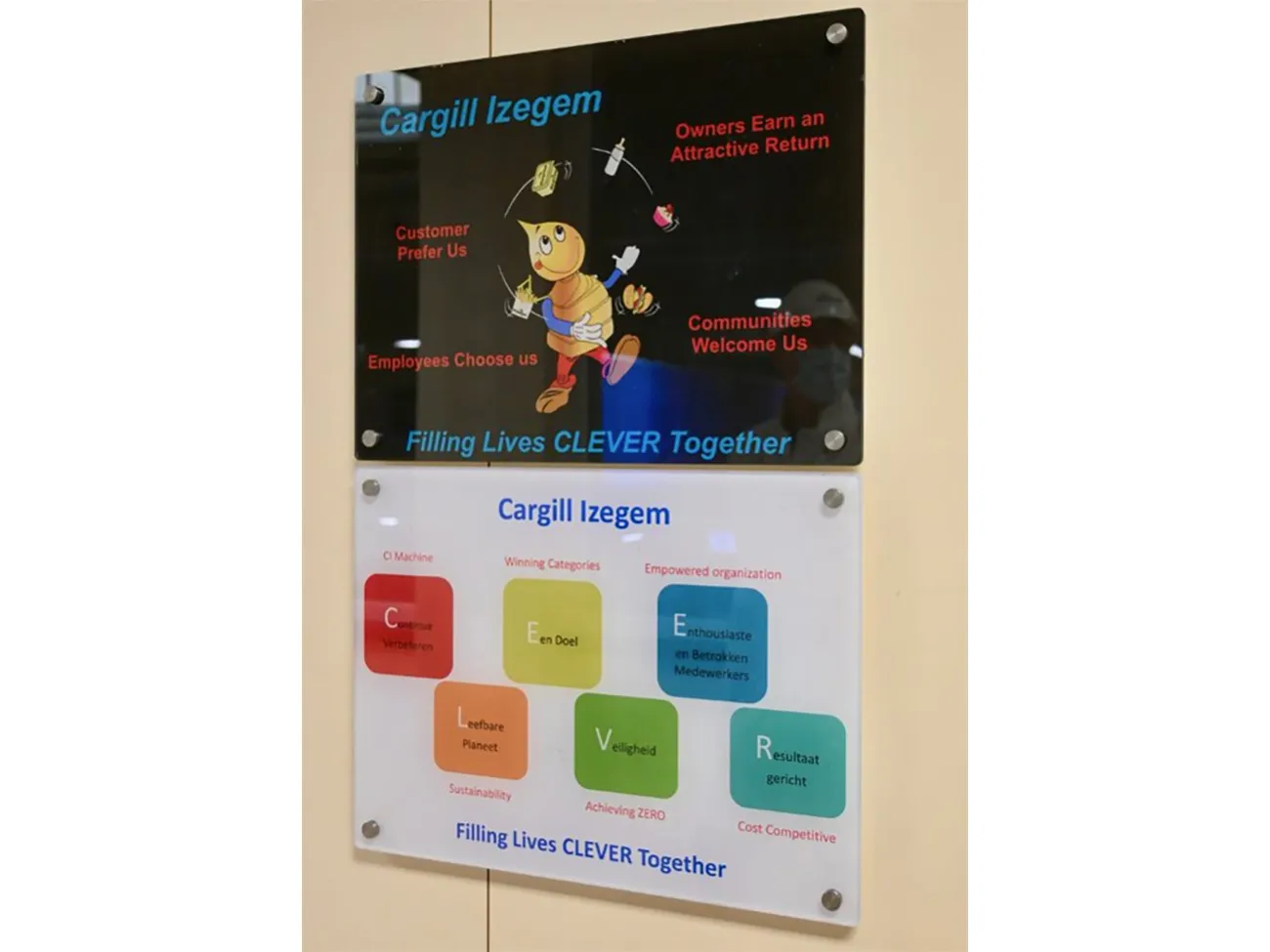
For Cargill, it was important to make changes without actually starting anything new. A number of programmes were already under way, but had not delivered the desired results. So the focus now had to be firmly on employees: making sure they understood the value of each change and were willing to adopt it. Digitalisation and sustainability were also key priorities. In other words, Cargill wanted to create a people-centred culture, where everyone has the data they need, when they need it, so that there are continuous opportunities for improvement. To inspire employees, the message was summed up succinctly on a single A4 sheet, displayed throughout the company. ‘Filling lives clever together’ became the new slogan, encompassing four core elements: working together, working smart, and working towards better health and a healthier planet. CLEVER is an acronym for continuous improvement, a liveable planet, one goal, safety, enthusiastic and engaged employees, and results orientation.
Feedback loops
Cargill used the lean X-Matrix (Hoshin Kanri) as its starting point. This was the compass guiding the company towards the factory of the future. What do we want to achieve in three to five years? Which programmes will we need to get there? What will they deliver this year? Who is responsible? The changes are first and foremost reflected in leadership. Previously, the supervisor knew everything. Now, their role is simply to coach the team. Employees have the autonomy to organise their own work. This was accompanied by extensive training to build knowledge. Technical skills and insights into processes and techniques, certainly, but also skills for working better with people. It was important for Cargill to link every action plan to the necessary KPIs, creating feedback loops at different levels and at different times. Before the next shift starts, it must always be clear what needs to be done. Visual aids on the shop floor help make this clearer. Cargill started small, with a number of projects that delivered quick results and built credibility with both shop-floor employees and management. Progress comes in small steps, which can be celebrated and shared. For Cargill, the Factory of the Future award was the icing on the cake.
Don’t misuse digitalisation
One of the most important lessons Cargill learned was not to misuse digitalisation. Use only the technology that people need in their processes. Make sure they know what they are doing, why they are doing it and what effect their actions have. The focus must always be on people, not technology. Think in terms of a marathon, not a sprint. Don’t focus on the grumblers, who will always be there, but on those who are willing to come along. Help that group grow.
Question about this story? Ask your question
Keep following this
Get an email when a new story is published. No account needed.
- ThemeSmart production with data
- SubjectTechnology







