












What is happening in maintenance?
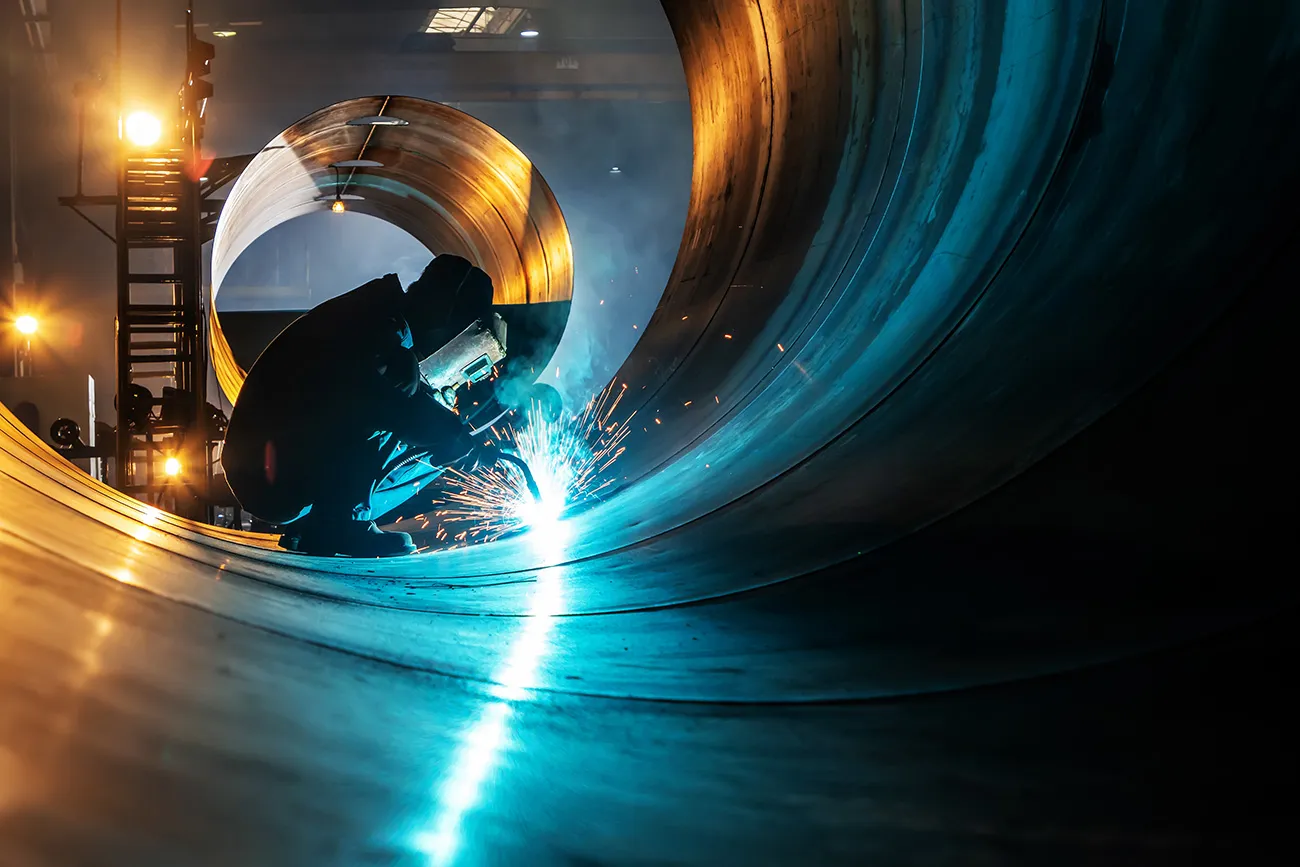
Companies are increasingly turning to big data and automation to streamline processes. Maintenance is also receiving more attention. After all, a competitor that can demonstrate 15% less downtime has a clear advantage. It not only saves on maintenance costs, but can also produce more. It is therefore high time to take a closer look at the key maintenance trends that can bring your business right up to date.
IoT sensors have reshaped the maintenance landscape. They enable maintenance teams to monitor machinery remotely. By automating the processes that capture maintenance data, companies can move towards predictive maintenance and get better and better at predicting when a particular component will fail. Vibration remains the key parameter to monitor. It can be used to detect worn bearings, correct misalignment or identify insufficient lubrication. Companies that manage to anticipate downtime can make substantial savings. After all, how does the cost of most replacement parts compare with the production losses they prevent? The number of sensors in the field is estimated to quadruple in 2023 compared with 2020.
Towards more decentralised maintenance teams
With sensor technology at their fingertips, companies can also restructure their maintenance services. Open networks containing repair logs, combined with real-time machine data, enable maintenance managers to monitor productivity very closely. If an incident occurs, they can send a maintenance team to the relevant location. But companies are also actively experimenting with decentralised maintenance management. Maintenance then becomes a shared responsibility among staff, rather than the sole responsibility of maintenance technicians. Machine operators can, for example, carry out simple maintenance tasks such as cleaning equipment or checking the oil. An ideal approach for large organisations with multiple facilities.

Do it right or don't do it
A report by Industrial IT predicts that the market for CMMS software (computerised maintenance management systems) will grow to $1.9 billion by 2028. It should enable companies to gain greater insight into their inventories and, through better monitoring, minimise downtime. Downtime costs industrial manufacturers worldwide $50 billion every year. That is reason enough to investigate what a CMMS can do for you. But it does require a thorough change in the way your maintenance organisation works. Good preparation is crucial to ensure it delivers a more efficient approach. Change management will also be needed to get everyone pulling in the same direction. Only then can a CMMS start to deliver results.
The impact of VR and AR is becoming more tangible
When repairing a pump on an assembly line, a technician is shown step-by-step instructions on a smartphone or through special glasses. They explain how to carry out the repair. Combined with IoT sensors, the platform can provide real-time data on pump pressure, temperature and other crucial information. It has long been known that augmented and virtual reality exist and have potential for maintenance. But these technologies are gradually moving beyond the hype. More and more practical applications are emerging, as in this example. A recent report by Industrial Data Corporation predicts that commercial use of VR and AR, particularly in training and industrial maintenance, will increase significantly in 2023.
AI takes over the world
A CMMS can become an even more powerful tool when combined with artificial intelligence. This can largely automate repetitive tasks in the software and the scheduling of maintenance work. AI can also identify the right resources for tasks, determine their priority in the schedule and select the most suitable employee to carry out the work. It can help reduce maintenance costs further by improving predictions of when machines or components will fail. AI can detect anomalies in data patterns and increasingly recognise the symptoms, ultimately helping organisations move towards zero unplanned downtime.
Question about this story? Ask your question
Keep following this
Get an email when a new story is published. No account needed.
- ThemeReliable machinery and drives
- SubjectTechnology







