












World’s largest maltings site under seamless control
Text Valérie CouplezImage Imtech
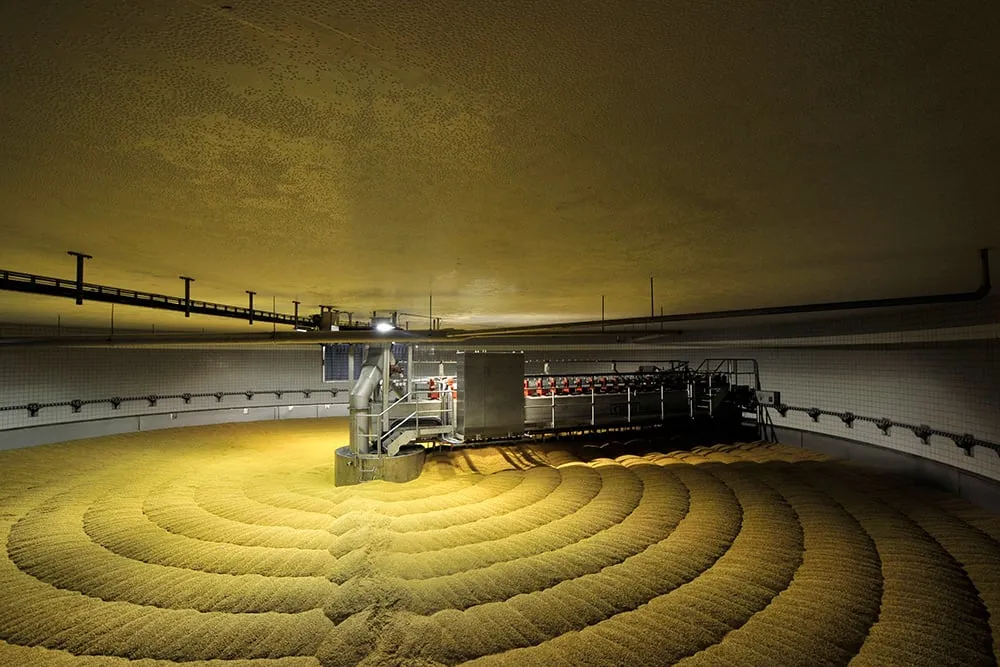
We can be proud of our Belgian beers. High-quality ingredients are essential to the top quality we stand for. With Boortmalt, the world’s largest malting company, we are assured of the best possible malt. Made at industrial volumes, this product is tailored to each customer with a wealth of expertise. Imtech’s Implant seamlessly controls all these processes.
Boortmalt’s headquarters are right in the port. Anyone standing on the roof of one of the four maltings on the site is treated to a fantastic view, especially when the sun is shining. Every month, 36,000 à 37,000 tonnes of malt leave here for breweries at home and abroad, mostly by water, with the rest transported by lorry.
Production in three stages
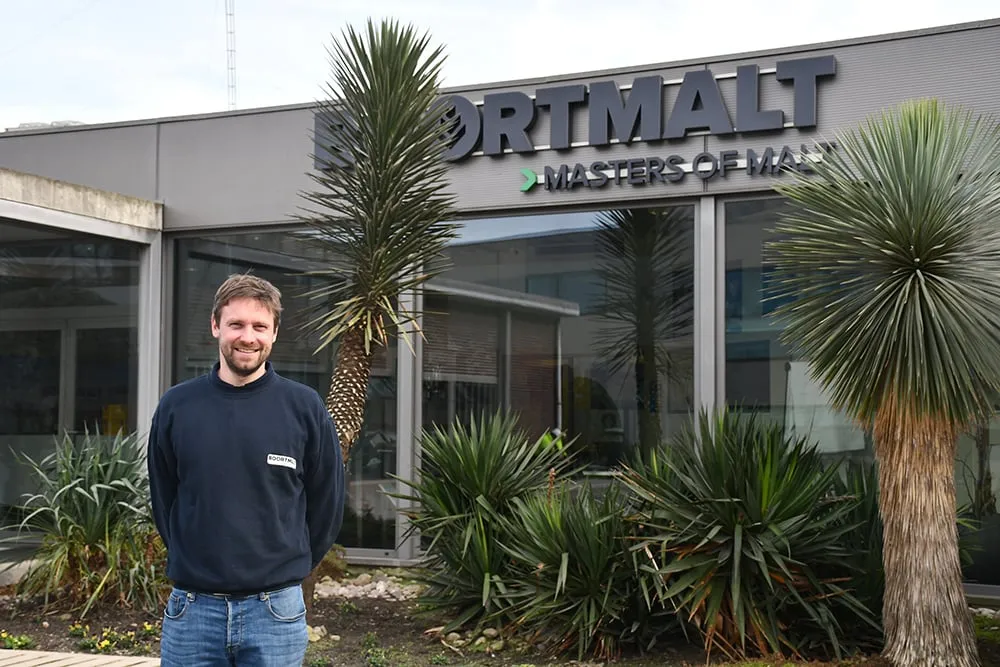
Plant Manager Michiel Jorissen explains exactly how production works. “There are three key stages in turning barley into malt: steeping, germination and kilning. The barley arriving here is first placed in a steeping vessel for 24 to 48 hours. This raises its moisture content from 14.5 to 45%. The second stage is germination. Over 4 à 5 days, we carefully break down the grain’s internal structure. Finally, everything has to be dried, but not forcibly, otherwise you break down the enzymes produced during germination, which are important to the flavour profile of our customers’ beers.” From there, the material is held in a silo with a capacity of 70,000 tonnes of malt.
Visual monitoring and control
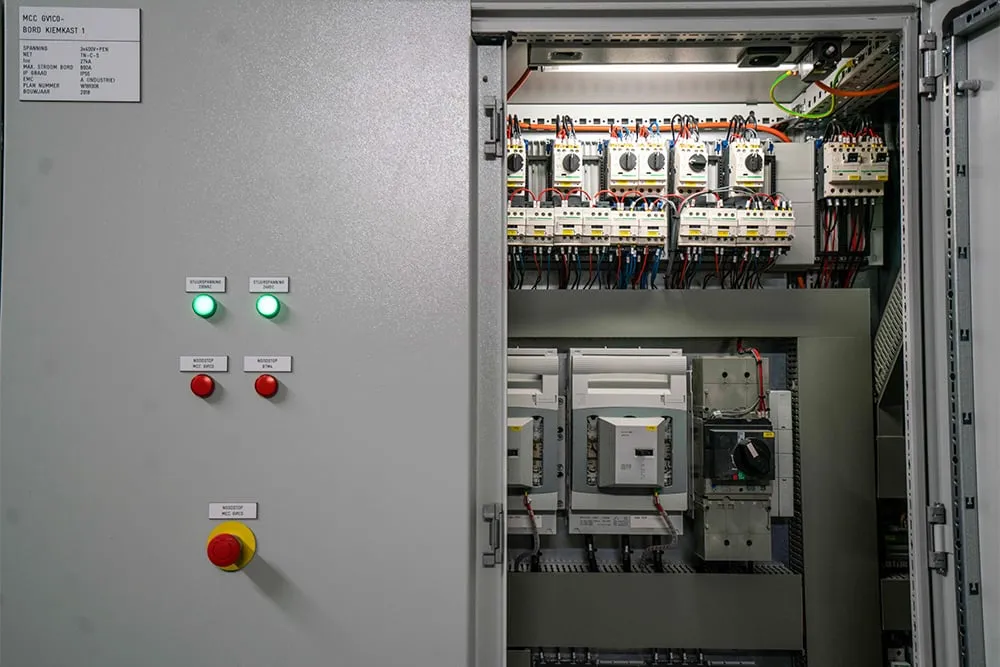
What does he like about his job? “This is essentially a biological process that we try to control as automatically as possible. We need the experience of the entire production team to make the right malt for each customer every time.” Boortmalt has 129 employees in Antwerp. The four maltings, which operate 24/7, are controlled from a single central control room. Since 2019, the key tool used there has been ImPlant, Imtech’s MES package. “It has become a very important link in the chain,” says Jorissen. “The silo is already running on it. In the maltings, ImPlant is currently running in parallel with the old system. The sooner we are fully running on ImPlant, the better. Combined with the Systems Platform, it allows us to monitor and control our processes very visually.”
Direct access to specialists
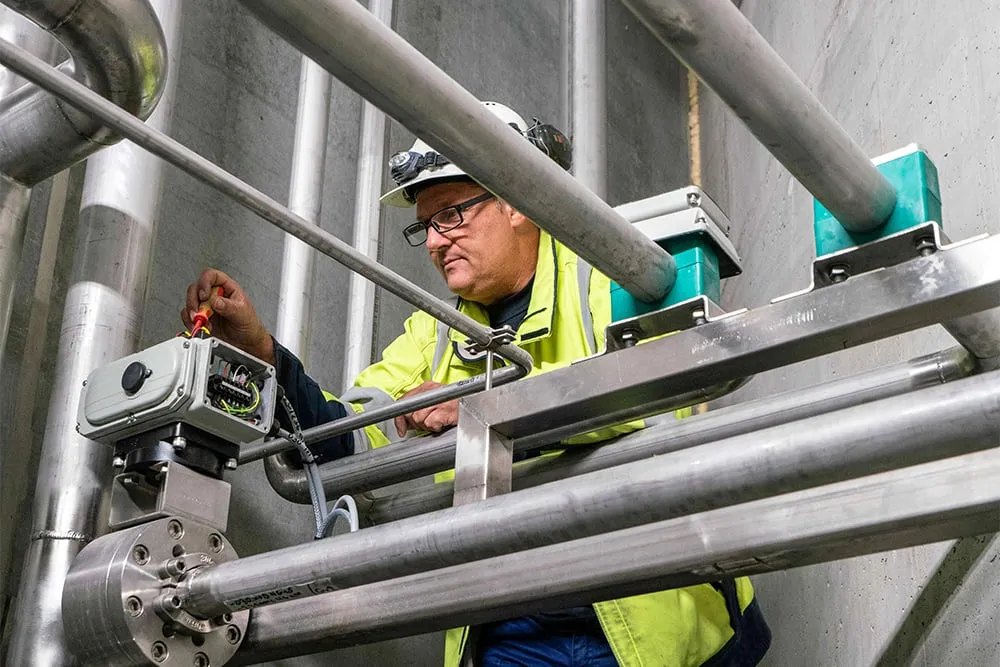
The partnership began on a small scale, when Boortmalt was looking for an electrical contractor in the 1990s. “Our production has since more than quadrupled. They have grown alongside us and our installations.” Today, two Imtech employees are permanently based at Boortmalt, where they also take care of the electrical work. “They know our site and installations inside out,” says Jorissen with a smile. “That is one of the great things about working together. If an issue arises, we can speak directly to specialists who always get us back up and running quickly.”
80,000 tonnes less CO2
A recent project that made the news was Boortmalt’s connection to the Warmtenetwerk Antwerpen Noord. Boortmalt handled the mechanical side, while Imtech took care of the software. They met almost daily to keep everything on track, with great success. “Through this heat loop, heat from Indaver is supplied to us at a temperature of around 103 °C. We then reduce that temperature to between 60 à 85 °C, depending on the product and process requirements. This allows us to significantly reduce our dependence on gas, cutting CO2 emissions by 80,000 tonnes. Sustainability is not about talking, it is about getting started and taking action. By 2030, we want to operate with fully carbon-neutral emissions. To achieve that, we will need to automate and modernise further, with the help of reliable partners such as Imtech,” Jorissen concludes.
Een zakelijke vraag aan Imtech? Get in touch
Companies in this story
Keep following this
Get an email when a new story is published. No account needed.
- SubjectTechnology
- CompanyImtech







